When can babies eat buckwheat?
Most babies are ready to begin solids at around 6 months, when they can sit with support, hold their head steady, and show interest in food. Buckwheat is a great early grain to offer because it cooks down soft and can be prepared as a smooth porridge, mixed into purees, or served as soft pieces for babies practicing self-feeding. Despite its name, buckwheat is not a type of wheat at all. It is a seed from a flowering plant, and it is naturally gluten-free.
Like all new foods, buckwheat is best introduced on its own for the first few days so you can watch for any reaction before combining it with other foods. While buckwheat is not one of the most common allergens, it can trigger an allergic response in some children, so it is worth offering it early and paying attention the first few times. There is no benefit to delaying buckwheat or any other common allergen past 6 months, and introducing a variety of foods early helps support your baby's developing palate.
How to serve buckwheat safely
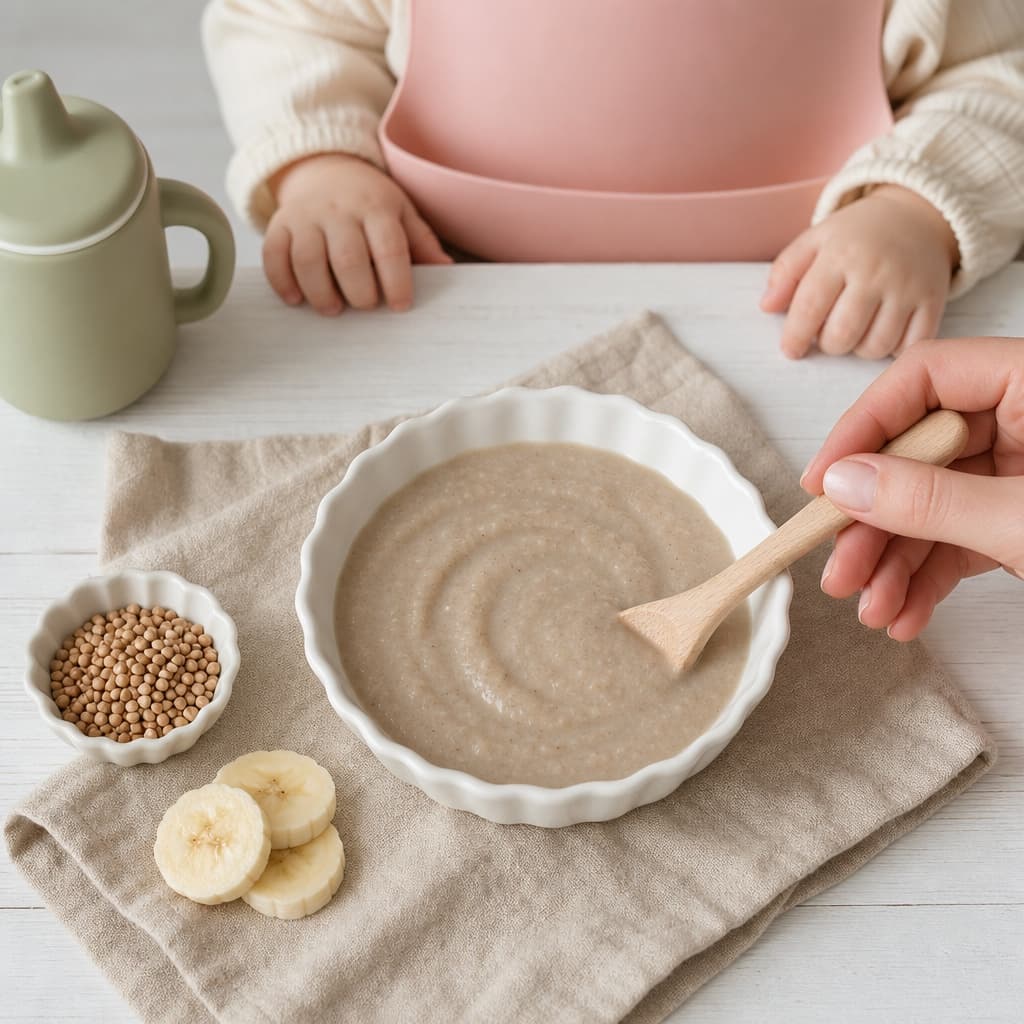
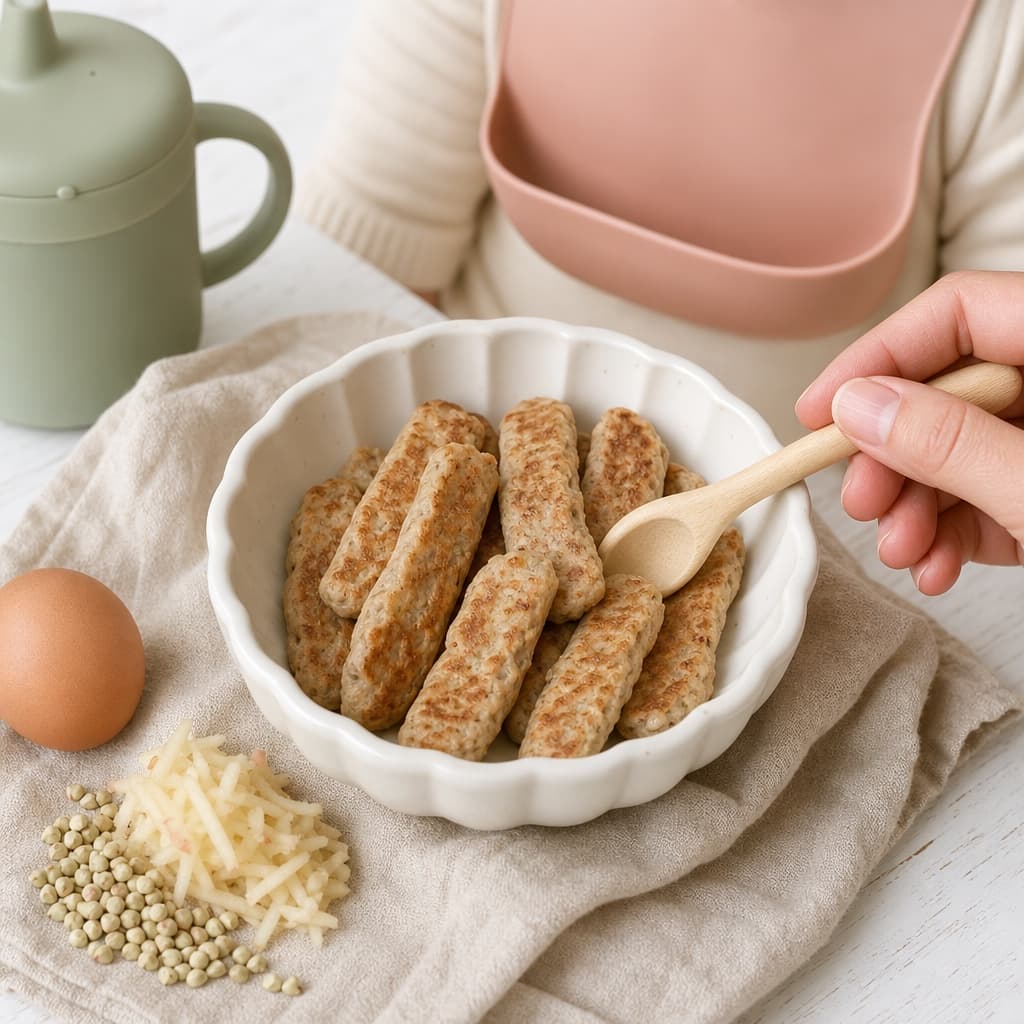
From 6 to 9 months, cook buckwheat groats until very soft and mash or blend them into a smooth porridge with breast milk, formula, or water. You can also stir cooked, mashed buckwheat into vegetable or fruit purees to add texture and nutrients. Keep the consistency loose and lump-free at first, then gradually thicken it as your baby gets used to eating. Buckwheat flour can be used in soft pancakes or baby-friendly baked goods cut into easy-to-hold strips.
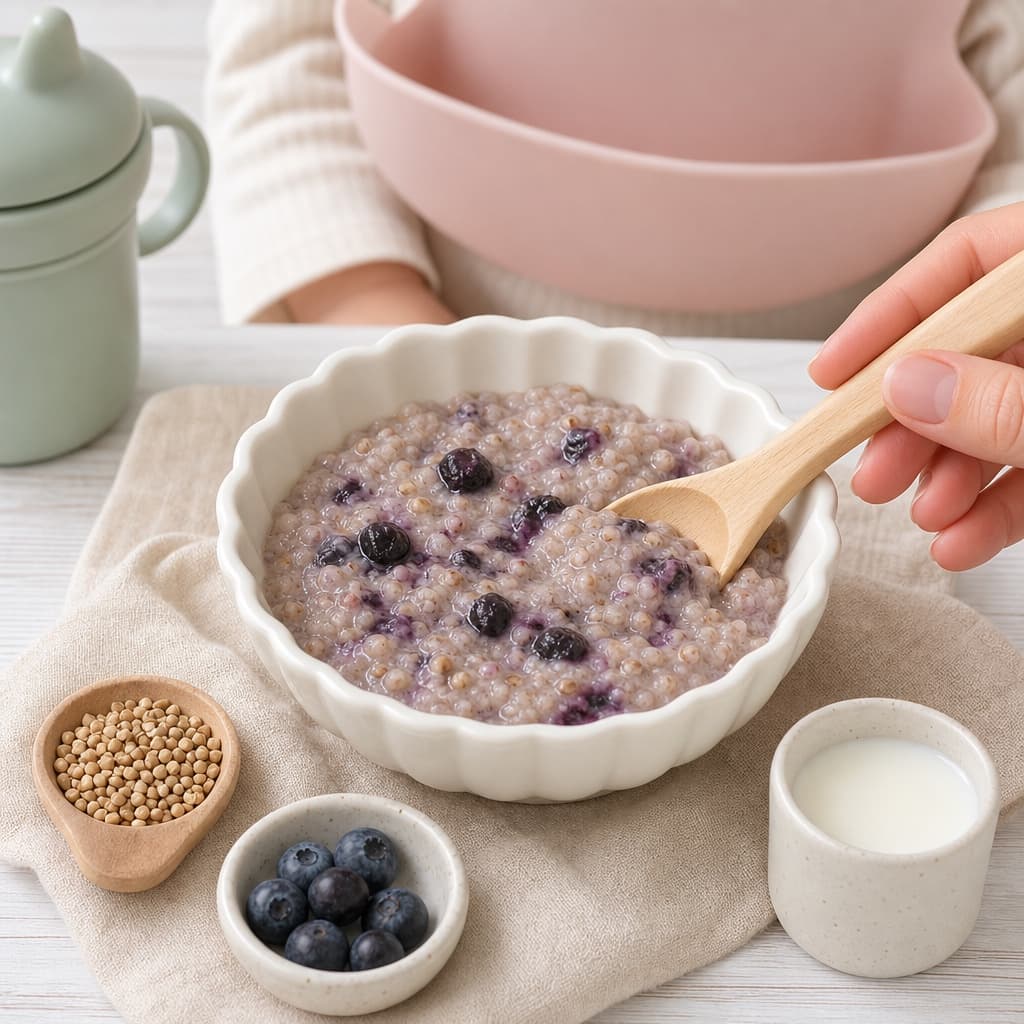
From 9 to 12 months and beyond, you can offer softer-cooked whole buckwheat groats that your baby can pick up and self-feed, as long as they are tender and squish easily between your fingers. Always cook grains and seeds until soft and serve them in textures appropriate for your baby's stage to lower choking risk. Avoid serving dry, hard, or undercooked groats, and stay close and supervise during every meal.
Nutritional benefits for babies
- 💚A good source of plant-based protein with all nine essential amino acids
- 💚Provides iron, which supports healthy growth and brain development
- 💚Rich in magnesium for nerve, muscle, and bone health
- 💚Naturally gluten-free, making it a useful grain alternative
- 💚Contains fiber to support healthy digestion
- 💚Delivers B vitamins and minerals like manganese and copper
Safety considerations
- ✓Buckwheat is not a top common allergen, but it can cause allergic reactions in some children, so introduce it early and watch closely the first few times. Do not delay common allergens such as sesame, tree nuts, dairy, and wheat, which should also be introduced early and one at a time.
- ✓Always cook buckwheat groats until soft and mash or blend them to a texture suited to your baby's stage to reduce choking risk.
- ✓Offer buckwheat on its own for a few days before mixing with other new foods, so you can identify the source of any reaction.
- ✓Watch for signs of an allergic reaction such as hives, swelling, vomiting, or trouble breathing, and seek medical help right away if they appear.
- ✓Always supervise your baby while eating, keep them seated upright, and never leave them alone with food.
Recipes with buckwheat for babies
Frequently asked questions
Is buckwheat the same as wheat?
No, buckwheat is not related to wheat at all. It is the seed of a flowering plant, and it is naturally gluten-free. The name can be confusing, but it does not contain the gluten found in wheat.
Is buckwheat gluten-free for babies?
Yes, buckwheat is naturally gluten-free, which makes it a useful grain alternative for babies. Just be sure to choose products labeled gluten-free if your baby needs to avoid gluten, since some buckwheat products are processed alongside wheat and can be cross-contaminated.
Can buckwheat cause an allergic reaction in babies?
Yes, although it is not one of the most common allergens, buckwheat can cause allergic reactions in some children. Introduce it early and on its own for a few days, and watch for signs like hives, swelling, or vomiting. Seek medical help right away if you notice trouble breathing.
How do I cook buckwheat for my baby?
Rinse the groats, then simmer them in water until very soft, usually around 15 to 20 minutes. Mash or blend the cooked buckwheat into a smooth porridge for younger babies, or serve soft tender groats for older babies practicing self-feeding. Keep it lump-free and appropriately textured for your baby's stage.
Can I give my baby buckwheat pancakes?
Yes, soft buckwheat pancakes made without added salt or sugar can be a nice option for babies. Cut them into strips your baby can easily hold and chew, and make sure they are soft rather than crisp or dry. Always supervise your baby while they eat.
Is buckwheat or oatmeal better for babies?
Both are nutritious first foods, and neither is clearly better than the other. Buckwheat is naturally gluten-free and offers complete plant protein, while oatmeal is gentle and widely tolerated. Offering a variety of grains helps expose your baby to different nutrients and tastes.
How often can babies eat buckwheat?
Buckwheat can be part of your baby's regular rotation of grains a few times a week as one of many foods. Aim for variety across grains, vegetables, fruits, proteins, and healthy fats rather than relying on any single food. Mixing it up supports balanced nutrition and a broad palate.
Get recipes + a feeding plan for your baby
Save this food to your baby's list, get age-appropriate recipes and follow a personalized feeding schedule - 350+ baby-safe meals in the app.
verifiedSources & References
This guide is informed by current guidelines from leading health organizations: