Quick answer
Babies can eat well-cooked buckwheat from around 6 months, once they show signs of readiness for solids.
Buckwheat is mild, easy to digest, and offers plant-based iron and protein - making it a strong addition to a baby's iron-rich rotation alongside meat, eggs, beans, and lentils.
When babies can eat buckwheat
Babies can eat well-cooked buckwheat from around 6 months, once they show signs of readiness for solids.
Buckwheat is gluten-free, so it is suitable for babies on a gluten-free diet and is often used as one of the very first grains in cultures that traditionally cook it.
Buckwheat is not on the major allergen lists, but reactions do occasionally happen - introduce it on its own the first time (without other new foods) and watch for 2–3 days.
Use roasted (kasha) or unroasted buckwheat groats. Roasted has a deeper toasty flavour; unroasted is milder and lighter - both work for babies.
See our first foods for baby guide for more ideas.
Nutritional benefits for babies
- 💚Plant-based iron - important from 6 months as birth iron stores fall. Pair with vitamin C foods (apple, pear, broccoli) for better absorption.
- 💚Complete protein profile - buckwheat contains all 9 essential amino acids, rare for a plant food.
- 💚Magnesium supports nerve and bone development.
- 💚Soluble fibre supports a healthy gut and bowel regularity.
- 💚Naturally gluten-free - suitable for babies with celiac disease or family gluten sensitivity.
- 💚Rutin (a flavonoid) supports healthy blood vessel development.
How to serve buckwheat for babies
6–9 months (porridge): Rinse 30g (¼ cup) buckwheat groats, simmer with 200ml water or milk for 18–20 minutes until very soft, then blend or mash with breast milk / formula / whole milk (12+ mo) to your baby's preferred texture. Stir in mashed banana, pear, or applesauce for natural sweetness.
6–9 months (BLW): Buckwheat doesn't make a finger-food shape on its own; serve loaded onto a pre-loaded spoon, or fold into thicker baked dishes (mini pancakes, small patties).
9–12 months: Whole-grain buckwheat as a side (cook a little firmer); buckwheat fritters with grated zucchini; buckwheat-and-yogurt breakfast bowl with berries.
12+ months: Buckwheat pilaf with vegetables and a soft-cooked egg; buckwheat pancakes (galettes); kasha with mushrooms and onion (omit added salt for baby's portion).
How to serve grains for BLW
For safe shapes and sizes by age, see our detailed How to serve grains for BLW guide.
Also check how to cut food for baby-led weaning for general BLW cutting tips.
Buckwheat recipes for babies
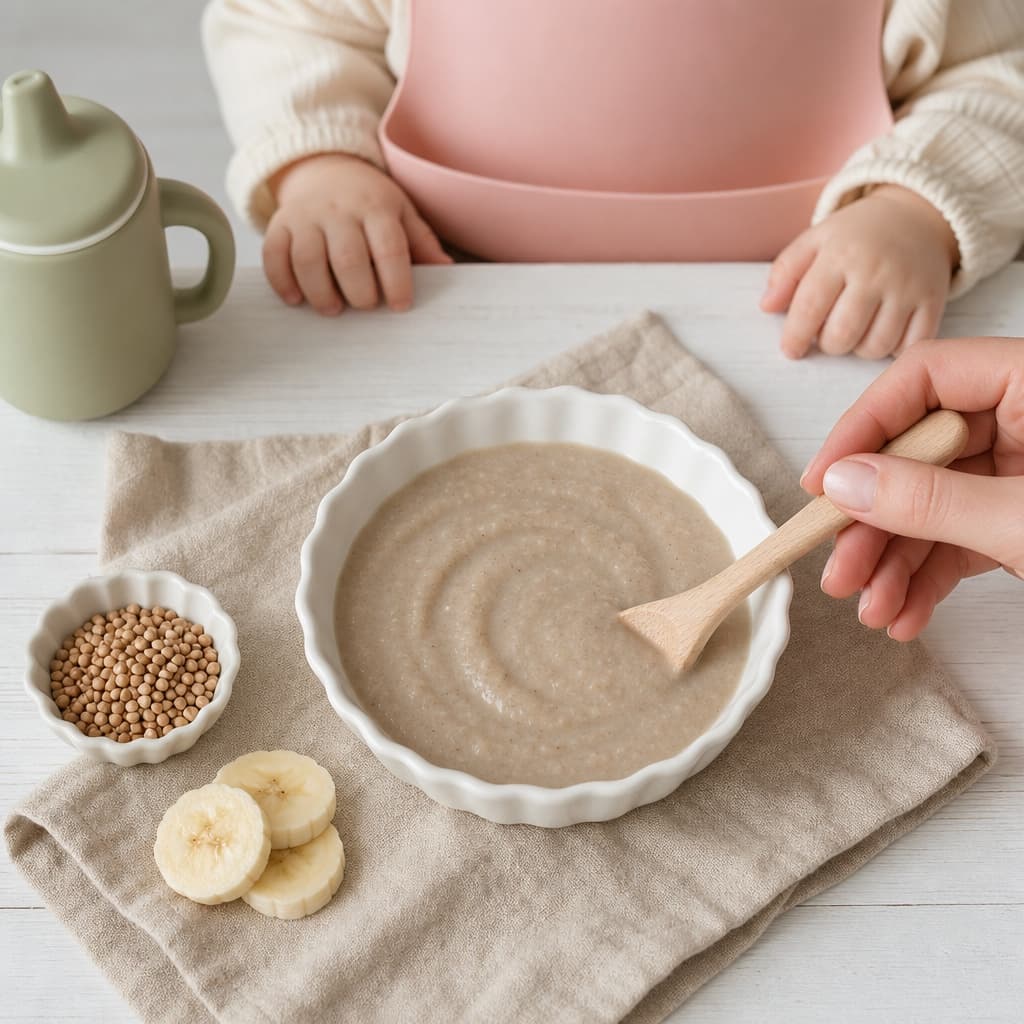
Creamy Buckwheat Banana Bowl
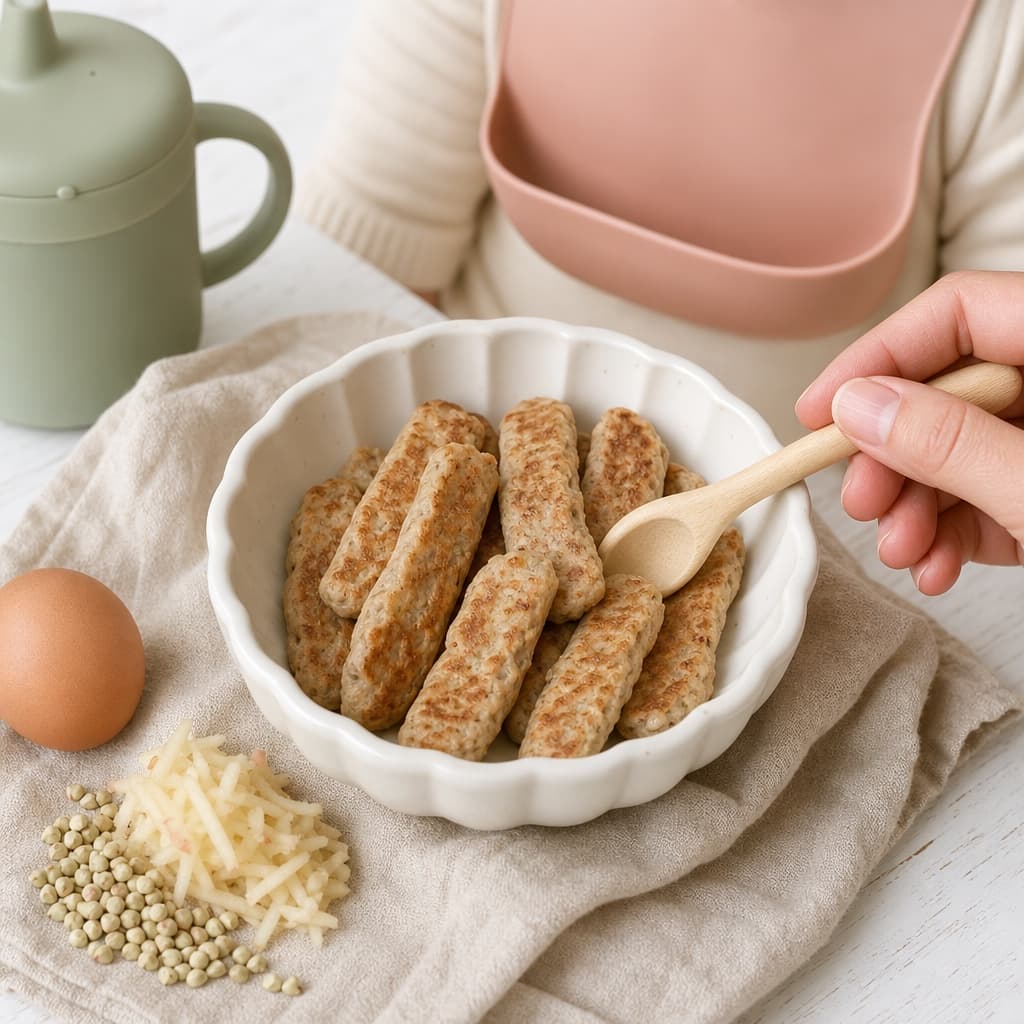
Apple Buckwheat Pancake Strips
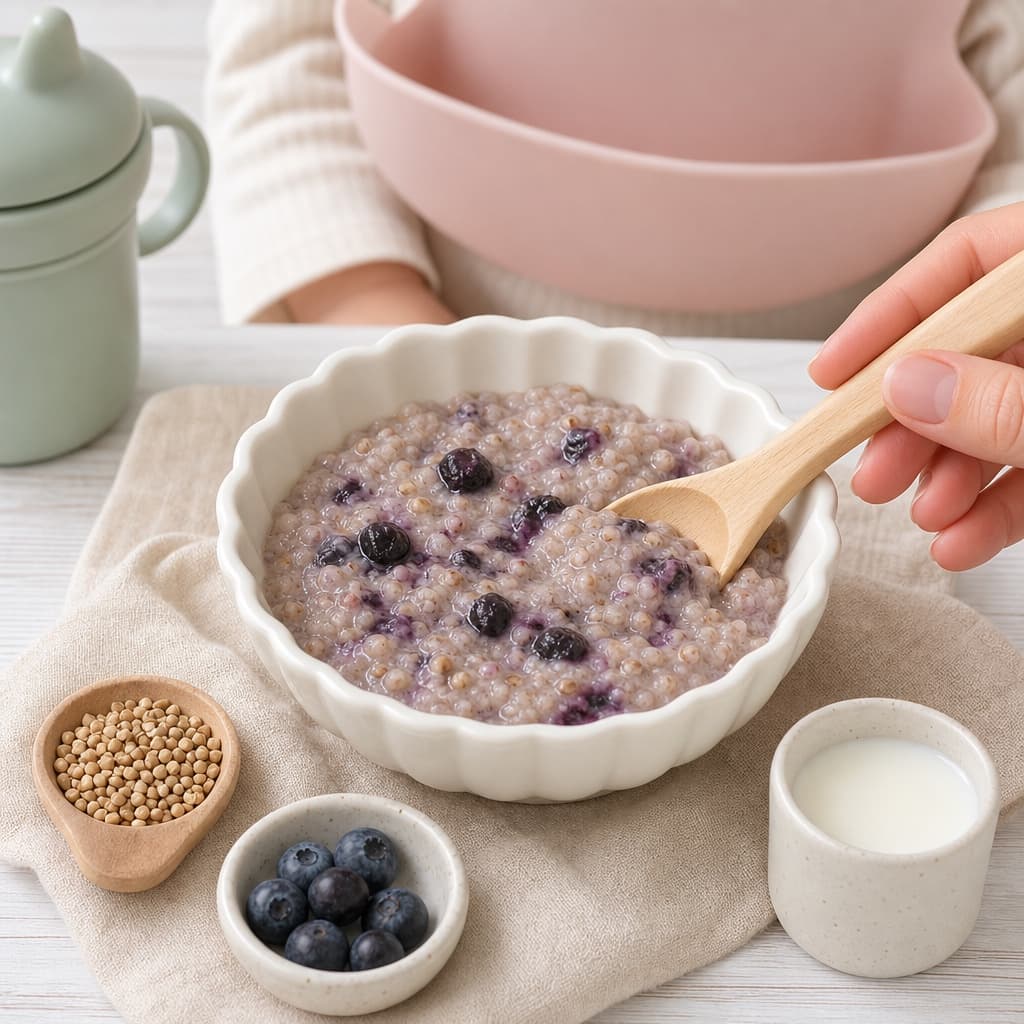
Blueberry Buckwheat Porridge
See all buckwheat recipes for babies. Explore baby breakfast recipes, baby-led weaning recipes and first foods for baby for more ideas.
Frequently Asked Questions
Can babies eat Buckwheat?
Yes. Babies can eat Buckwheat starting around 6 months when they begin solid foods. It should be served in a safe texture and size for babies.
When can babies eat Buckwheat?
Babies can eat Buckwheat from around 6 months when starting solids. Babies can eat well-cooked buckwheat from around 6 months, once they show signs of readiness for solids. Buckwheat is gluten-free, so it is suitable for babies on a gluten-free diet and is often used as one of the very first grains in cultures that traditionally cook it. Buckwheat is not on the major allergen lists, but reactions do occasionally happen - introduce it on its own the first time (without other new foods) and watch for 2–3 days. Use roasted (kasha) or unroasted buckwheat groats. Roasted has a deeper toasty flavour; unroasted is milder and lighter - both work for babies.
Is Buckwheat a choking hazard for babies?
Buckwheat is generally safe for babies when prepared properly. 6–9 months (porridge): Rinse 30g (¼ cup) buckwheat groats, simmer with 200ml water or milk for 18–20 minutes until very soft, then blend or mash with breast milk / formula / whole milk (12+ mo) to your baby's preferred texture. Stir in mashed banana, pear, or applesauce for natural sweetness. 6–9 months (BLW): Buckwheat doesn't make a finger-food shape on its own; serve loaded onto a pre-loaded spoon, or fold into thicker baked dishes (mini pancakes, small patties). 9–12 months: Whole-grain buckwheat as a side (cook a little firmer); buckwheat fritters with grated zucchini; buckwheat-and-yogurt breakfast bowl with berries. 12+ months: Buckwheat pilaf with vegetables and a soft-cooked egg; buckwheat pancakes (galettes); kasha with mushrooms and onion (omit added salt for baby's portion).
Is Buckwheat a common allergen?
Some babies may be allergic to Buckwheat. Introduce Buckwheat carefully when babies start solids and watch for reactions.
How should Buckwheat be served to babies?
6–9 months (porridge): Rinse 30g (¼ cup) buckwheat groats, simmer with 200ml water or milk for 18–20 minutes until very soft, then blend or mash with breast milk / formula / whole milk (12+ mo) to your baby's preferred texture. Stir in mashed banana, pear, or applesauce for natural sweetness. 6–9 months (BLW): Buckwheat doesn't make a finger-food shape on its own; serve loaded onto a pre-loaded spoon, or fold into thicker baked dishes (mini pancakes, small patties). 9–12 months: Whole-grain buckwheat as a side (cook a little firmer); buckwheat fritters with grated zucchini; buckwheat-and-yogurt breakfast bowl with berries. 12+ months: Buckwheat pilaf with vegetables and a soft-cooked egg; buckwheat pancakes (galettes); kasha with mushrooms and onion (omit added salt for baby's portion).
What nutrients does Buckwheat provide for babies?
Buckwheat provides nutrients like fibre, vitamin C, iron, protein that support babies' growth and development.
How long can I store Buckwheat for babies?
Cook Buckwheat to a safe temperature and store it in the refrigerator for up to 2 days, or freeze in single-serving portions for up to 1 month to preserve nutrients.
Should I buy organic Buckwheat for my baby?
Organic Buckwheat isn't strictly necessary for babies, but some families prefer to reduce pesticide exposure. Wash conventional produce thoroughly. Variety and freshness matter most.
How should I introduce Buckwheat for the first time?
Offer a small amount of Buckwheat in an age-appropriate texture when your baby is hungry but not starving, ideally early in the day so you can watch for any reactions over several hours.
Is Buckwheat a good finger food for babies?
Yes. Buckwheat can be an excellent finger food for babies when cut into strips or soft pieces they can grasp. Make sure the texture mashes easily between your fingers.
What foods pair well with Buckwheat for baby?
Buckwheat pairs well with mashed fruit, soft cooked vegetables, yogurt, or pureed protein for a balanced bowl your baby can enjoy.
Should I cook Buckwheat before serving it to my baby?
Yes. Cook Buckwheat until tender and easily mashable before serving it to your baby. Steaming, boiling, or roasting softens it enough to be safe.
How much Buckwheat can a baby eat?
There's no fixed amount. Start with 1-2 tablespoons of Buckwheat from around 6 months and let your baby regulate intake. Breast milk or formula remains the main source of nutrition in the first year.
Should I peel or remove the pit from Buckwheat for my baby?
For Buckwheat, peeling or pitting is usually not required, but wash it well and serve in a size and texture safe for your baby.
How should I store Buckwheat fresh for my baby?
Store fresh Buckwheat in a cool, dry place or in the refrigerator crisper drawer, depending on the food. Wash just before preparing and use it when ripe and firm for the best quality for your baby.
Safety tips
- ✓Cook buckwheat until very soft - undercooked groats are gritty and harder to swallow.
- ✓Don't add salt, sugar, or stock cubes - babies under 12 months should have less than 1g salt per day.
- ✓If you use store-bought roasted buckwheat (kasha), check the label for added salt or sugar - plain unsalted is best for babies.
- ✓Buckwheat soba noodles often contain wheat flour and salt; choose 100% buckwheat noodles if you want a gluten-free option, and rinse to reduce sodium.
- ✓Introduce buckwheat on its own first time, then watch for any rash, vomiting, or unusual fussiness for 2–3 days before adding other new foods.
Get recipes + a feeding plan for your baby
Save this food to your baby's list, get age-appropriate recipes and follow a personalized feeding schedule - 350+ baby-safe meals in the app.
Try Nibli today to start planning your baby's meals.
verifiedSources & References
This guide is informed by current guidelines from leading health organizations: