When can babies eat corn?
Corn is safe to introduce to babies from around 6 months of age, once they are ready for solid foods.
At this stage, corn should be cooked until soft and prepared to reduce choking hazards.
How to serve corn safely
Serve corn as creamed corn, polenta, or kernels that are lightly mashed or halved to avoid whole, slippery kernels that pose a choking risk.
Avoid giving babies whole intact corn kernels or mini corn-on-the-cob, as these can be difficult to chew and swallow safely.
Nutritional benefits for babies
- 💚Provides carbohydrates for energy to support growth and development.
- 💚Contains dietary fiber which aids digestion.
- 💚Includes essential vitamins such as B vitamins and vitamin C.
- 💚Offers minerals like magnesium and potassium important for overall health.
Safety considerations
- ✓Always cook corn thoroughly until soft before serving to babies.
- ✓Mash or halve kernels to reduce choking risk from whole, slippery kernels.
- ✓Avoid mini corn-on-the-cob as it is not suitable for babies.
- ✓Corn is not a common allergen but introduce it gradually and watch for any adverse reactions.
Recipes with corn for babies
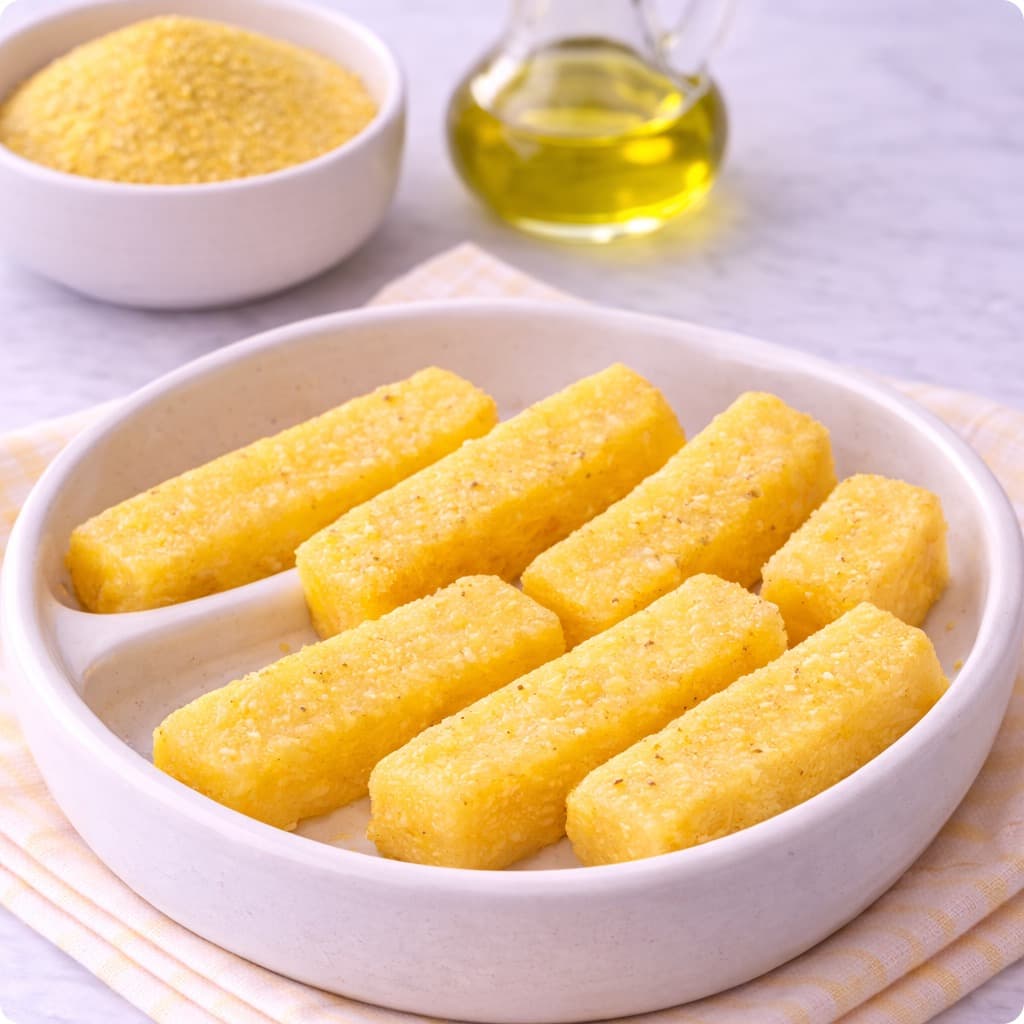
Polenta Fingers
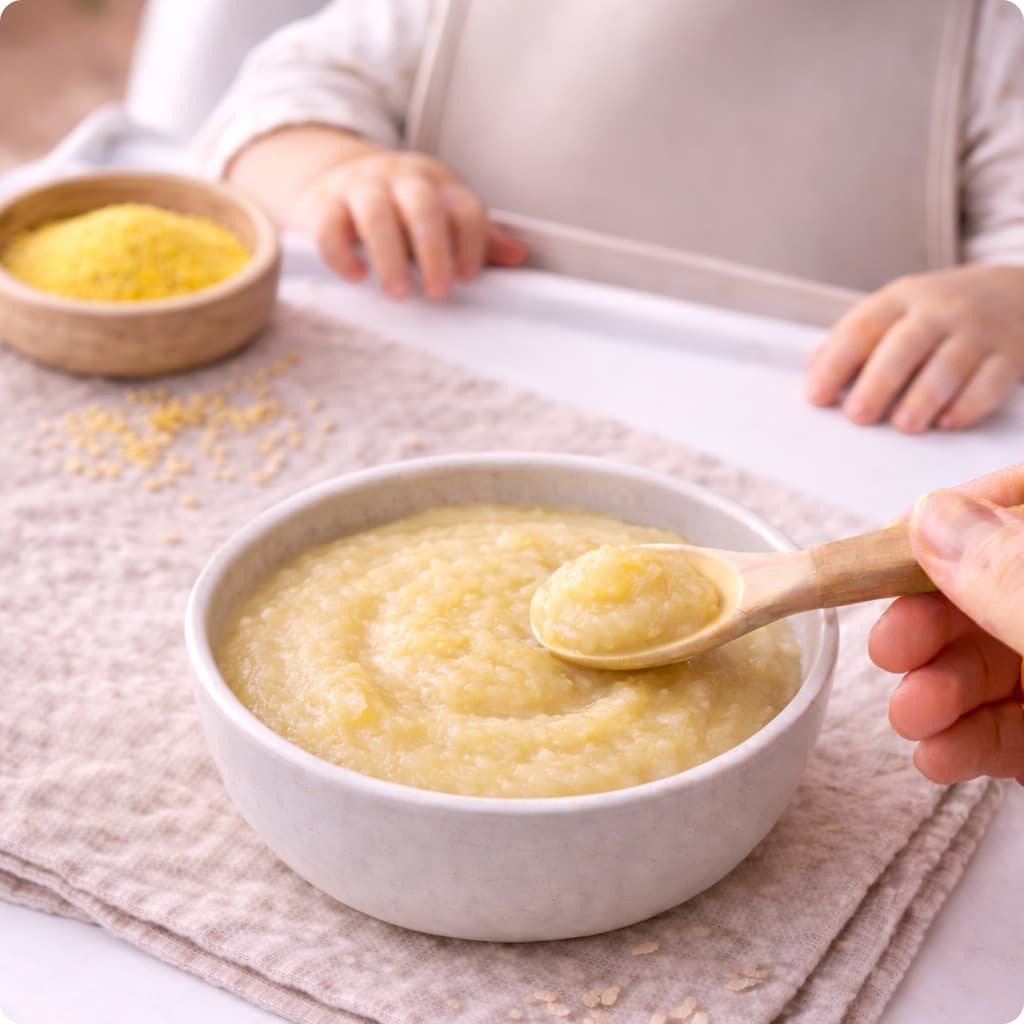
Baby Polenta Porridge
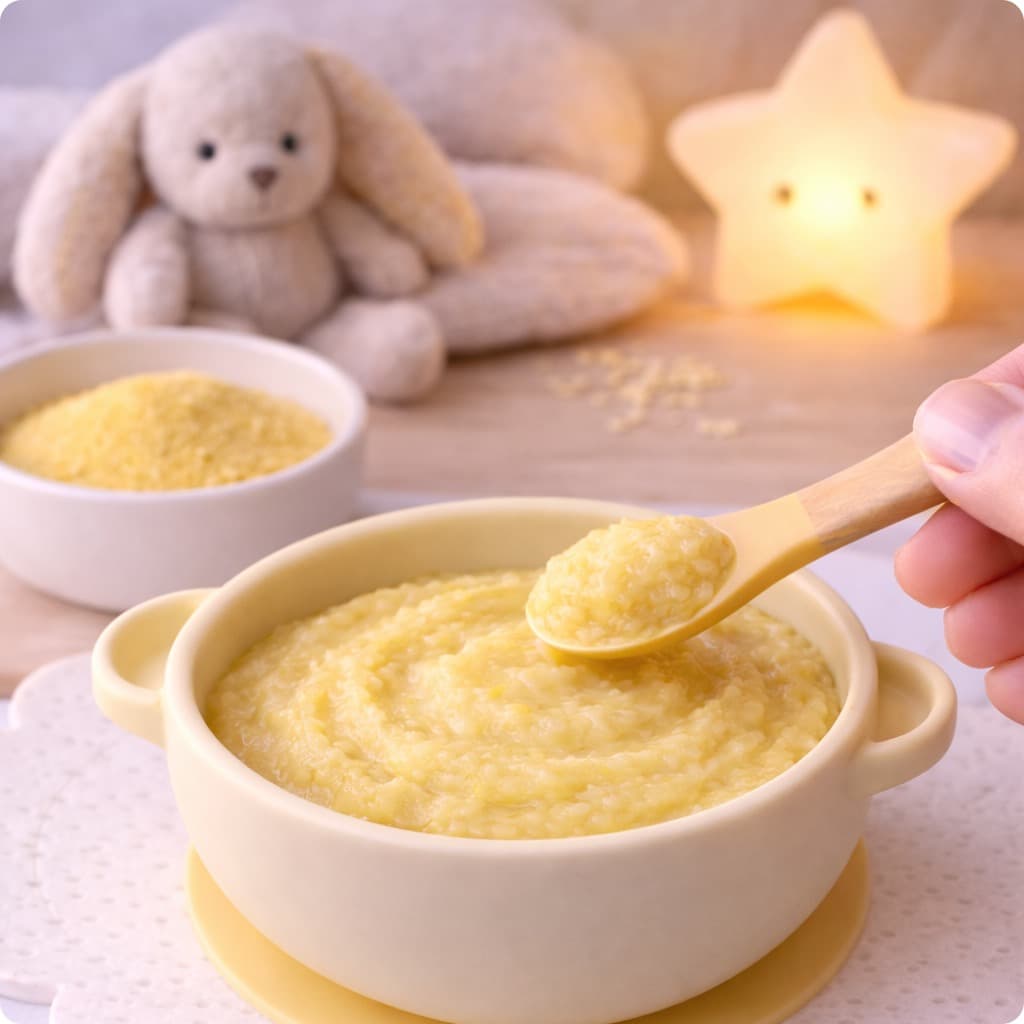
Evening Polenta
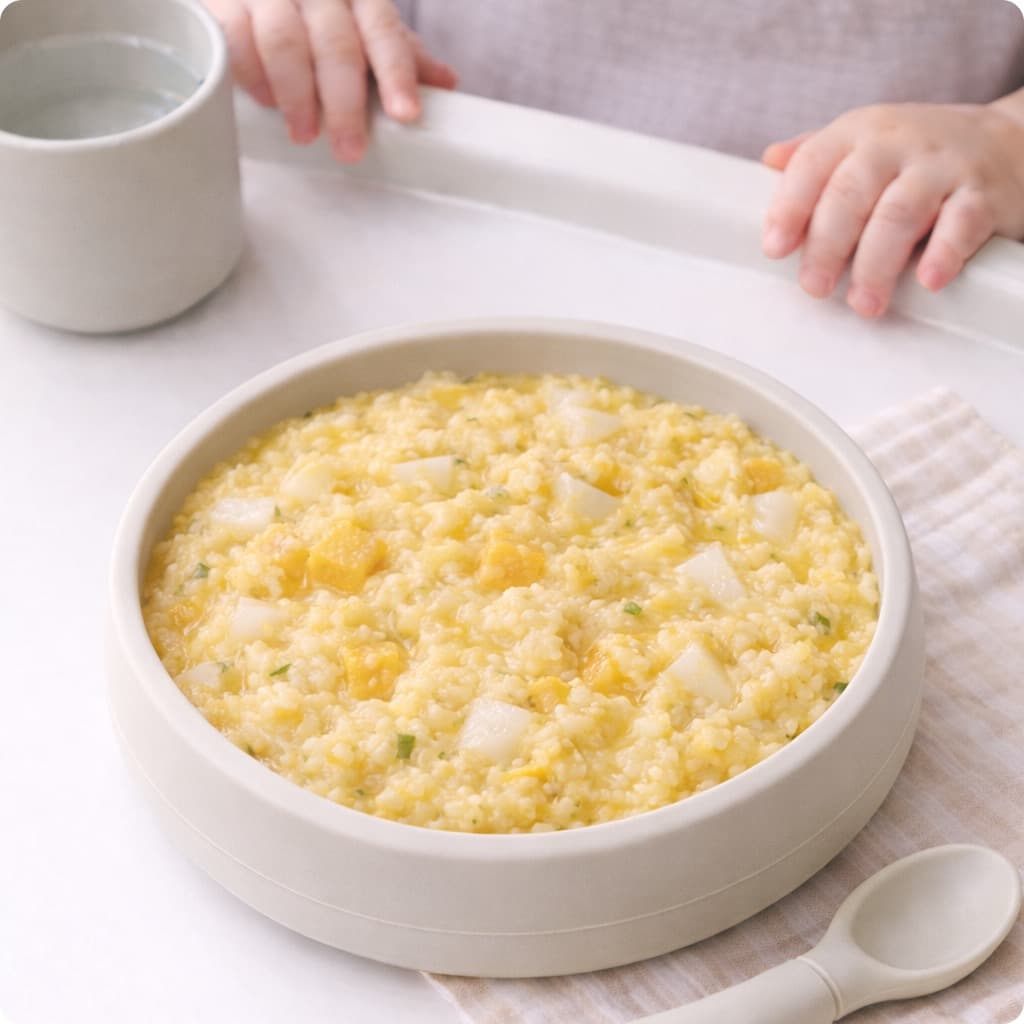
Polenta + Pear + Olive Oil Cream
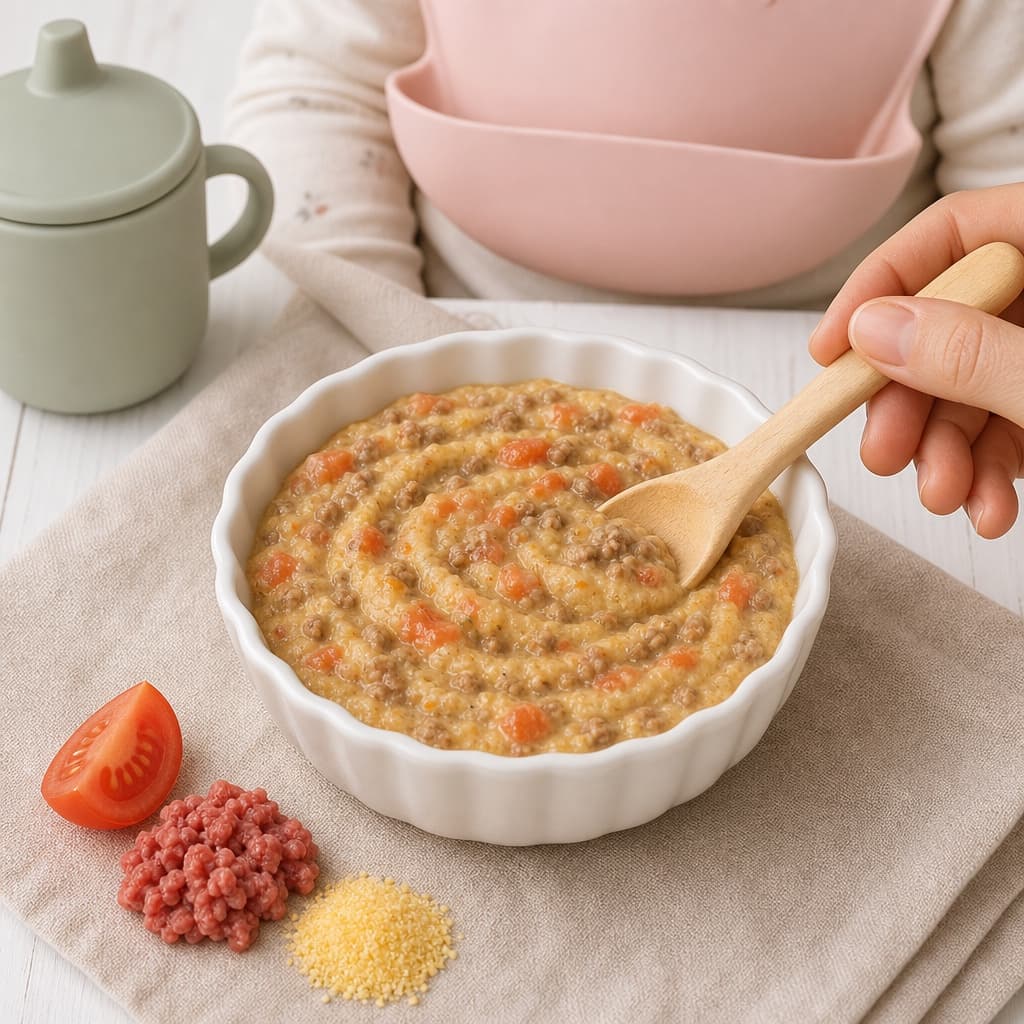
Beef Tomato Polenta Bowl
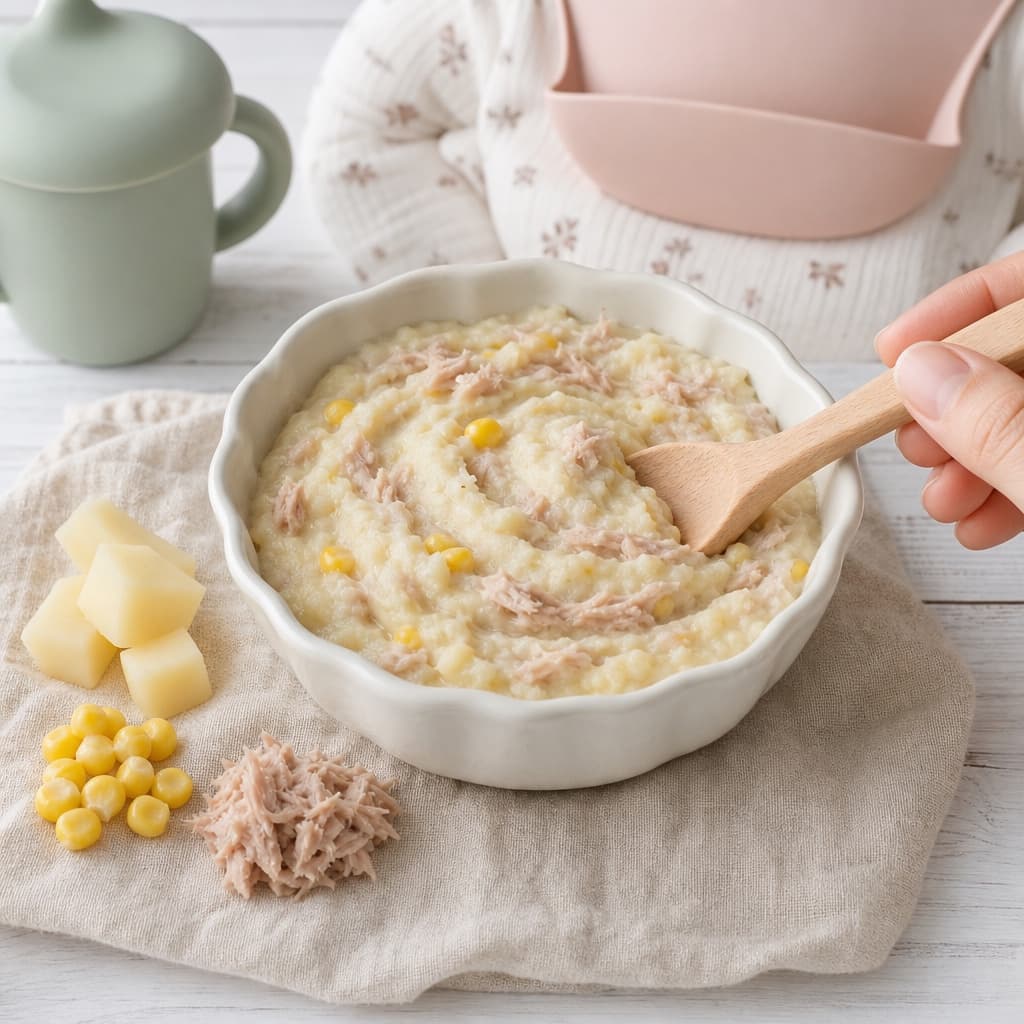
Tuna Potato Sweetcorn Mash
Frequently asked questions
Is corn a common allergen for babies?
Corn is not listed among the top 9 allergens and is generally considered low risk for allergic reactions. However, introduce it gradually and monitor your baby for any signs of intolerance or allergy.
Can I give my baby whole corn kernels?
Whole corn kernels are slippery and round, which can pose a choking hazard for babies. It is safer to serve corn mashed, halved, or as creamed corn.
When is it safe to introduce corn to my baby?
Corn can be introduced from around 6 months of age, once your baby is ready for solid foods and can handle soft textures.
Is mini corn-on-the-cob safe for babies?
Mini corn-on-the-cob is not recommended for babies due to the risk of choking and difficulty in chewing.
How should I prepare corn for my baby?
Cook corn thoroughly until soft, then mash or halve the kernels to reduce choking risk. Creamed corn or polenta are also good options.
Does corn provide important nutrients for babies?
Yes, corn provides carbohydrates, fiber, vitamins like B vitamins and vitamin C, and minerals such as magnesium and potassium, supporting healthy growth.
Can corn cause choking in babies?
Yes, whole corn kernels are a choking hazard due to their size and shape. Always prepare corn by mashing or halving kernels before serving.
Should I watch for allergies when introducing corn?
While corn is not a common allergen, it is best to introduce it gradually and observe your baby for any allergic reactions or digestive issues.
Get recipes + a feeding plan for your baby
Save this food to your baby's list, get age-appropriate recipes and follow a personalized feeding schedule - 350+ baby-safe meals in the app.
verifiedSources & References
This guide is informed by current guidelines from leading health organizations: