When can babies eat eggplant?
Eggplant can be introduced around 6 months of age, when your baby shows signs of readiness for solids. These signs include sitting up with little or no support, holding their head steady, showing interest in food, and being able to move food to the back of the mouth and swallow rather than push it out. Eggplant is naturally soft when cooked, which makes it a friendly early vegetable for both spoon-feeding and baby-led weaning.
There is no reason to delay eggplant for allergy concerns, since it is not one of the common food allergens. As with any new food, it helps to offer eggplant on its own for the first few tries so you can watch for any reaction before mixing it with other ingredients. Always cook eggplant until it is very tender, because raw or undercooked eggplant is firm, bitter, and harder for a baby to manage safely.
How to serve eggplant safely
For babies 6 to 9 months, serve eggplant cooked until it is completely soft and easy to squish between your fingers. You can roast or steam thick wedges or strips that are large enough for your baby to grasp with the whole hand, with a little sticking out of the fist. Alternatively, mash or puree the cooked flesh until smooth, or scoop the soft inside away from the skin and offer it on a preloaded spoon. The skin can be tough for young babies, so peeling it or offering only the soft interior at this stage is a good idea.
From 9 to 12 months and beyond, as your baby develops the pincer grasp, you can move to smaller, soft, bite-sized pieces of cooked eggplant that they can pick up themselves. Continue to make sure each piece is fork-tender and not firm or chunky. Avoid serving raw eggplant or large, dense chunks, which can be a choking hazard. Soft, well-cooked shapes that compress easily are the safest choice at every age.
Nutritional benefits for babies
- 💚Provides dietary fiber to support healthy digestion
- 💚Contains potassium, which supports normal fluid balance and muscle function
- 💚Offers folate, an important nutrient for growth and development
- 💚Supplies small amounts of vitamin C and vitamin K
- 💚Naturally low in calories with a soft, easy-to-mash texture for new eaters
- 💚The skin contains antioxidant plant compounds when cooked and offered to older babies
Safety considerations
- ✓Eggplant is not a common allergen, so there is no need to delay it, but introduce it on its own for the first few tries.
- ✓Always cook eggplant until very soft; raw or firm chunks can be a choking hazard. Avoid large, dense pieces.
- ✓Offer age-appropriate shapes: graspable soft strips or smooth mash for younger babies, small soft pieces once the pincer grasp develops.
- ✓Always supervise your baby closely during meals and keep them seated upright and never eating while crawling, walking, or reclining.
- ✓Introduce one new food at a time so you can watch for any signs of a reaction before combining foods.
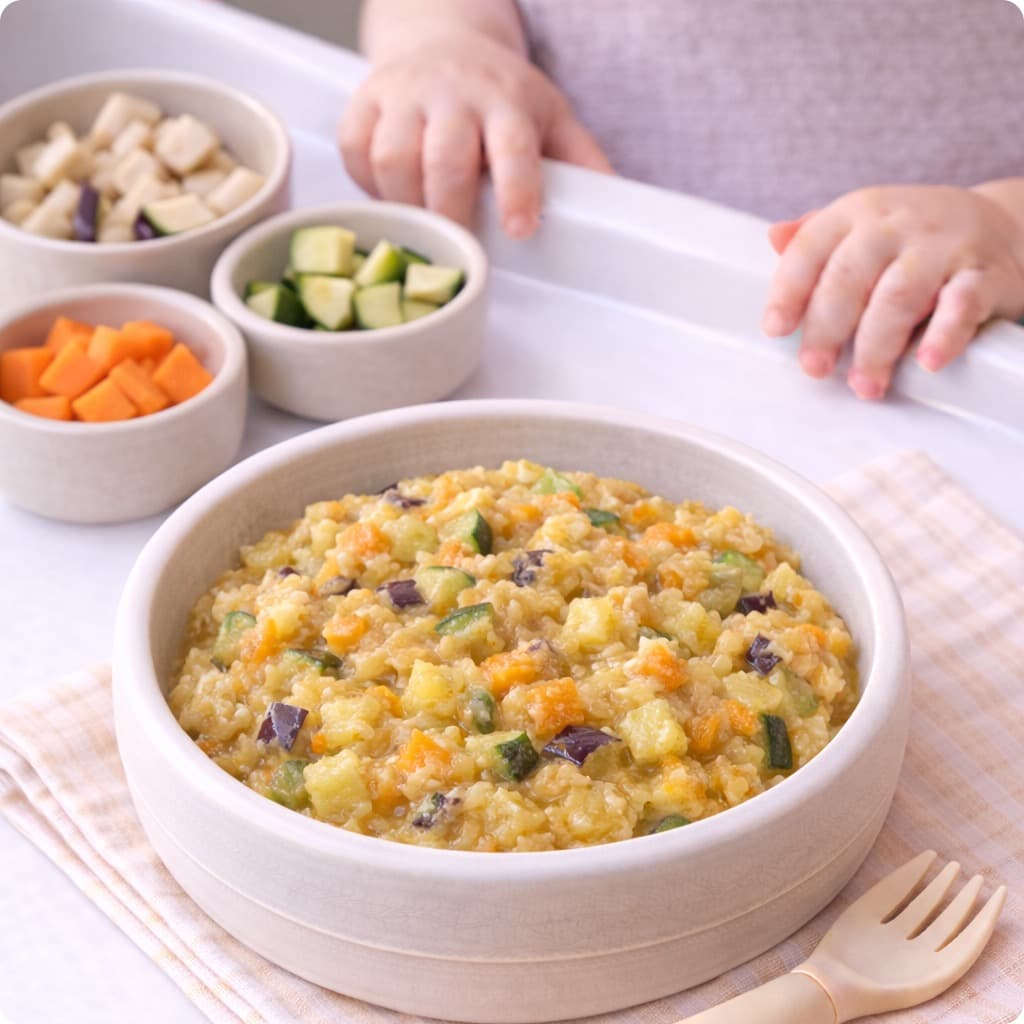
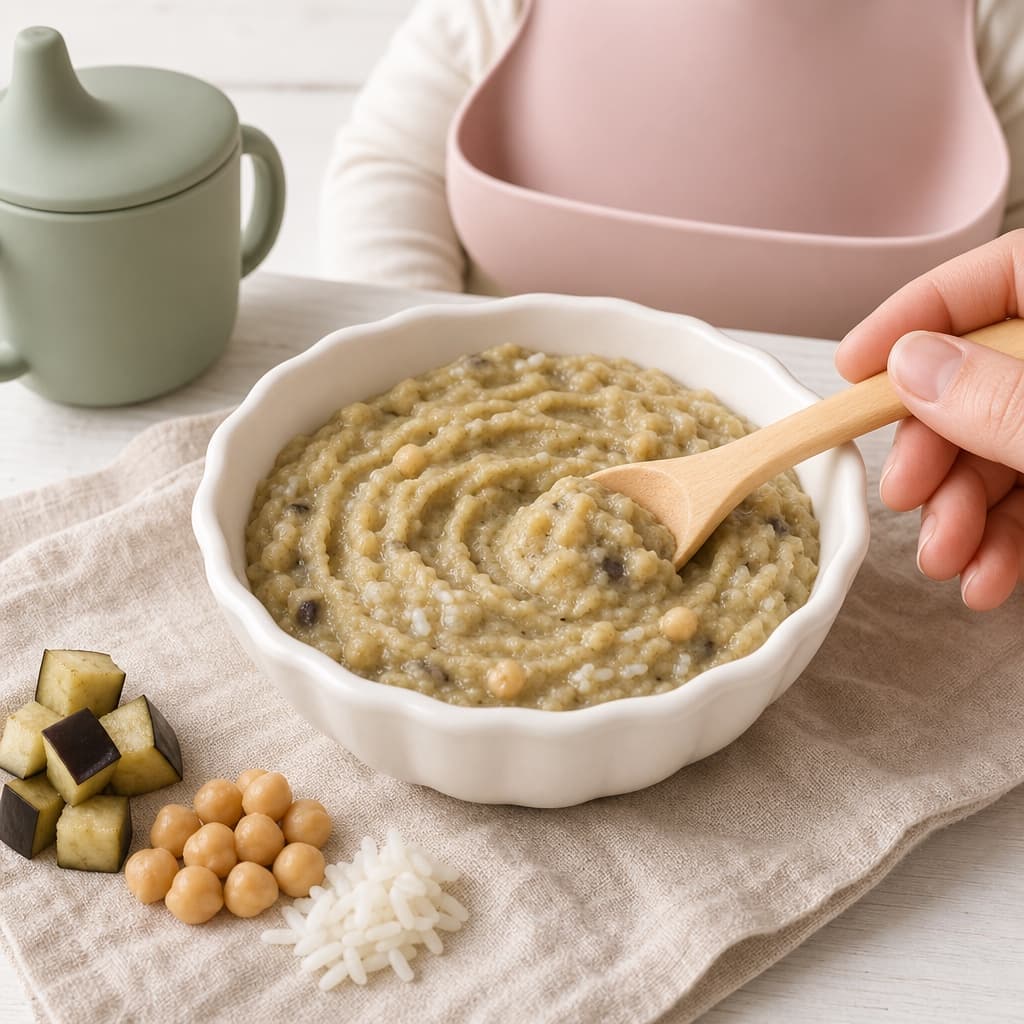
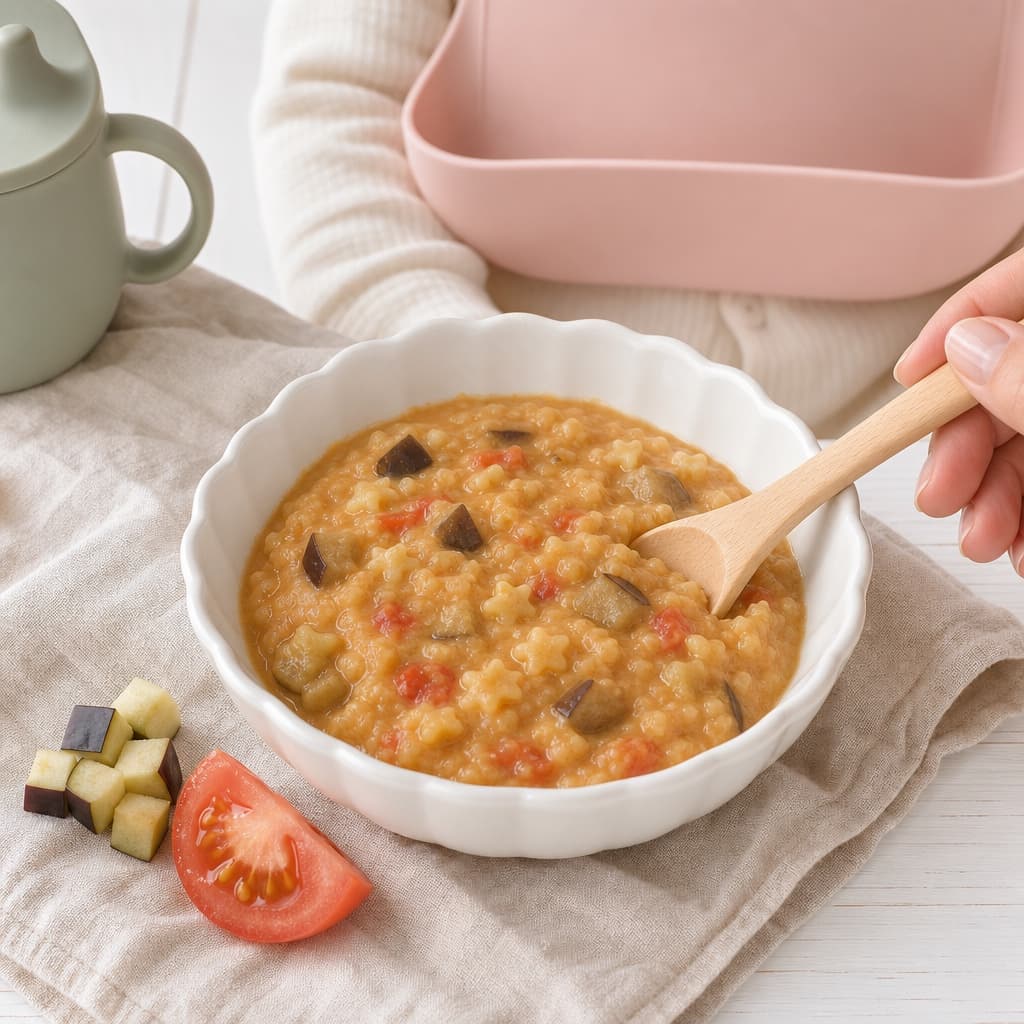
Recipes with eggplant for babies
Frequently asked questions
Is eggplant a common allergen for babies?
No, eggplant is not considered one of the common food allergens. Allergic reactions to eggplant are uncommon, but as with any new food, watch for signs of a reaction the first few times you serve it.
Do I need to peel eggplant for my baby?
Peeling is helpful for younger babies because the skin can be tough to chew. For babies 6 to 9 months, peel the eggplant or offer only the soft interior. Older babies can usually manage the skin once it is well cooked and soft.
Can babies eat eggplant skin?
Yes, once it is cooked until very soft, but the skin can be chewy for young babies. It is fine to peel eggplant for early eaters and gradually offer the soft cooked skin as your baby gets more comfortable with textures.
Why is my eggplant bitter, and is that a problem for babies?
Some eggplant can taste slightly bitter, especially when larger or older. Choosing smaller, firm, glossy eggplants and cooking them until very tender helps reduce bitterness. Salting and rinsing is a common cook's trick for adults, but skip added salt when preparing eggplant for babies.
Should I add salt or seasoning to eggplant for my baby?
Skip the salt for babies, since their kidneys cannot handle much sodium. You can add baby-friendly flavor with a little olive oil or mild herbs and spices, which is a great way to expand your baby's palate without salt or sugar.
What is the safest way to prepare eggplant to avoid choking?
Cook eggplant until it is fork-tender and squishes easily, then serve it as smooth mash or as soft, graspable strips for younger babies and small soft pieces for older ones. Avoid raw eggplant and large, firm chunks, which are harder to manage and can be a choking hazard.
Can babies eat fried or breaded eggplant?
It is best to skip fried and breaded eggplant for babies because of the added oil, salt, and tougher texture. Roasting, steaming, or mashing keeps eggplant soft and nutritious without unnecessary salt or coatings.
Get recipes + a feeding plan for your baby
Save this food to your baby's list, get age-appropriate recipes and follow a personalized feeding schedule - 350+ baby-safe meals in the app.
verifiedSources & References
This guide is informed by current guidelines from leading health organizations: