When can babies eat hummus?
Most babies can start hummus from around 6 months, when they show signs of readiness such as sitting up with support, holding their head steady, and showing interest in food. Hummus is soft and easy to mash or thin, which makes it a flexible first food. Because it is made with sesame paste (tahini), it doubles as an easy way to introduce a common allergen.
Current pediatric guidance (AAP, NHS, WHO) encourages introducing common allergens like sesame early rather than delaying them, as long as your baby is developmentally ready for solids. If your baby has severe eczema, an existing food allergy, or a family history of allergies, talk with your pediatrician about the best timing and approach before you start.
How to serve hummus safely
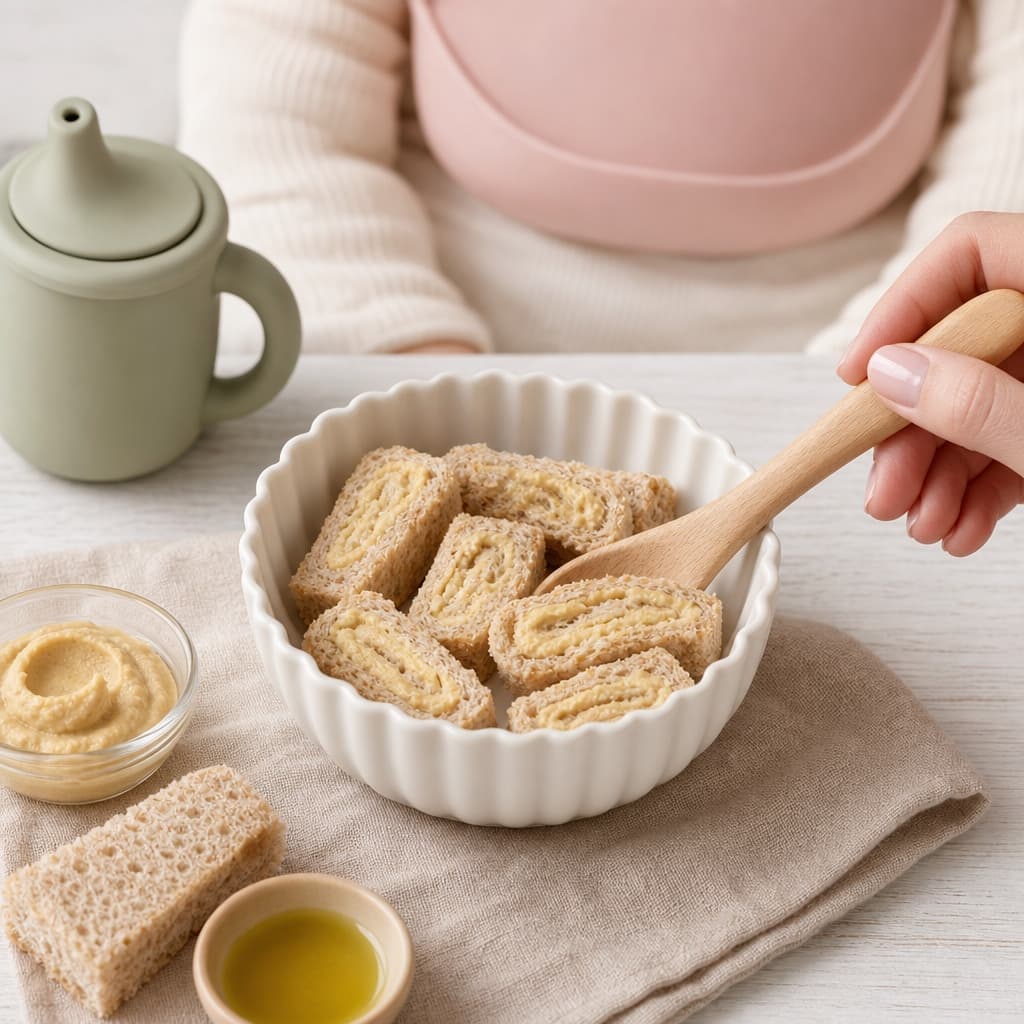
At 6 to 9 months, keep hummus smooth and thin. Thick, sticky pastes can be hard for young babies to manage, so loosen plain hummus with a little water, breast milk, formula, or a splash of olive oil until it is the texture of a smooth puree. You can offer it on a preloaded spoon, spread thinly on a strip of soft toast or a long piece of soft cooked vegetable for your baby to grasp, or stirred into other mashed foods.
From 9 to 12 months and beyond, babies can handle slightly thicker textures and more variety. Spread hummus on soft toast fingers, soft pita strips, or steamed vegetable sticks, or use it as a dip for soft, baby-safe foods. Avoid giving thick spoonfuls of dense paste on their own, since the sticky texture can be a choking risk, and always make sure the beans and any grains served alongside are well cooked and soft.
Nutritional benefits for babies
- 💚Plant-based protein from chickpeas to support growth
- 💚Iron, an important nutrient for babies starting at 6 months
- 💚Fiber to support healthy digestion
- 💚Healthy fats from tahini and olive oil for brain development and energy
- 💚Folate, zinc, and other minerals from chickpeas and sesame
- 💚Calcium from sesame paste (tahini)
Safety considerations
- ✓Hummus contains sesame (tahini), a common allergen. Many store-bought versions also include or are processed near tree nuts, dairy, or wheat, so check the label, especially flavored varieties.
- ✓Choose low-salt or no-added-salt hummus, as babies under 12 months need very little sodium and many store brands are salty. Homemade hummus lets you skip the added salt.
- ✓Keep the texture smooth and thin for younger babies, and spread thinly rather than offering thick spoonfuls, since sticky pastes can be a choking hazard.
- ✓Always supervise your baby while they eat, keep them seated upright, and never leave them alone with food.
- ✓When introducing hummus or any new allergen, offer it on its own first and wait a few days before adding another new food, so you can spot any reaction such as rash, swelling, vomiting, or trouble breathing.
Recipes with hummus for babies
Frequently asked questions
Can babies eat store-bought hummus?
Yes, babies can eat store-bought hummus, but read the label first. Choose a plain variety that is low in salt and check for added ingredients like garlic-heavy seasoning or other allergens. Homemade hummus is an easy way to control the salt and keep it simple.
Is hummus a choking hazard for babies?
Plain hummus that is smooth and thinned is generally low risk, but thick, sticky spoonfuls can be harder to swallow. Loosen it with a little water or olive oil and spread it thinly on soft toast or vegetables. Always serve hummus with your baby seated upright and supervised.
Does hummus count as introducing sesame?
Yes, traditional hummus is made with tahini, which is sesame paste, so it is a convenient way to introduce sesame, one of the common food allergens. Check that the brand you choose actually contains tahini, since some lower-cost versions leave it out. Offer it on its own and watch for any reaction.
How much hummus can a baby eat?
There is no fixed amount; let your baby's appetite guide you and start with a small taste, especially the first few times you offer sesame. A spoonful or a thin spread on toast is plenty to begin with. Because hummus can be salty, keep portions modest if you are using a store-bought brand.
Can babies eat hummus with garlic?
A small amount of garlic in hummus is generally fine for babies who are eating solids, and gentle flavors can help them accept new tastes. If a brand tastes very strongly of garlic or has a lot of added seasoning, you may prefer a milder or homemade version. Watch for any signs of tummy upset, as with any new food.
Can babies have flavored hummus, like roasted red pepper?
Flavored hummus can be fine once your baby has tried plain hummus, but check the label carefully, as flavored versions often have more salt and sometimes added allergens. Stick to simple, low-salt options when possible. Introduce one new flavor at a time so you can spot any reaction.
Can I make baby-friendly hummus at home?
Yes, homemade hummus is great for babies because you control the salt and ingredients. Blend soft-cooked or canned chickpeas with tahini, a little olive oil, and lemon until very smooth, and skip the added salt. Thin it with water until it is easy for your baby to manage.
Get recipes + a feeding plan for your baby
Save this food to your baby's list, get age-appropriate recipes and follow a personalized feeding schedule - 350+ baby-safe meals in the app.
verifiedSources & References
This guide is informed by current guidelines from leading health organizations: