Quick answer
Babies can eat hummus from around 6 months, once they're starting solids.
It's also a convenient way to introduce sesame (one of the common allergens, via the tahini) and to keep it in your baby's diet once tolerated.
Babies can have hummus from around 6 months; homemade or low-salt shop versions are best, as many shop-bought tubs are high in salt.
When babies can eat hummus
Babies can eat hummus from around 6 months, once they're starting solids.
Hummus contains tahini (sesame) and chickpeas - both common allergens - so introduce a small amount first and watch for any reaction, then keep it in the diet.
Choose low-salt or homemade hummus; many shop-bought versions are high in salt, which babies should have very little of.
See our first foods for baby guide for more ideas.
Nutritional benefits for babies
- 💚Plant protein - from chickpeas and tahini, supporting growth.
- 💚Iron - an important plant iron source from 6 months (pair with vitamin C to boost absorption).
- 💚Healthy fats - from tahini and olive oil, supporting brain development.
- 💚Introduces sesame - helps with early, regular allergen exposure.
- 💚Fibre - supports healthy digestion.
- 💚Calcium and magnesium - from tahini, supporting bones.
How to serve hummus for babies
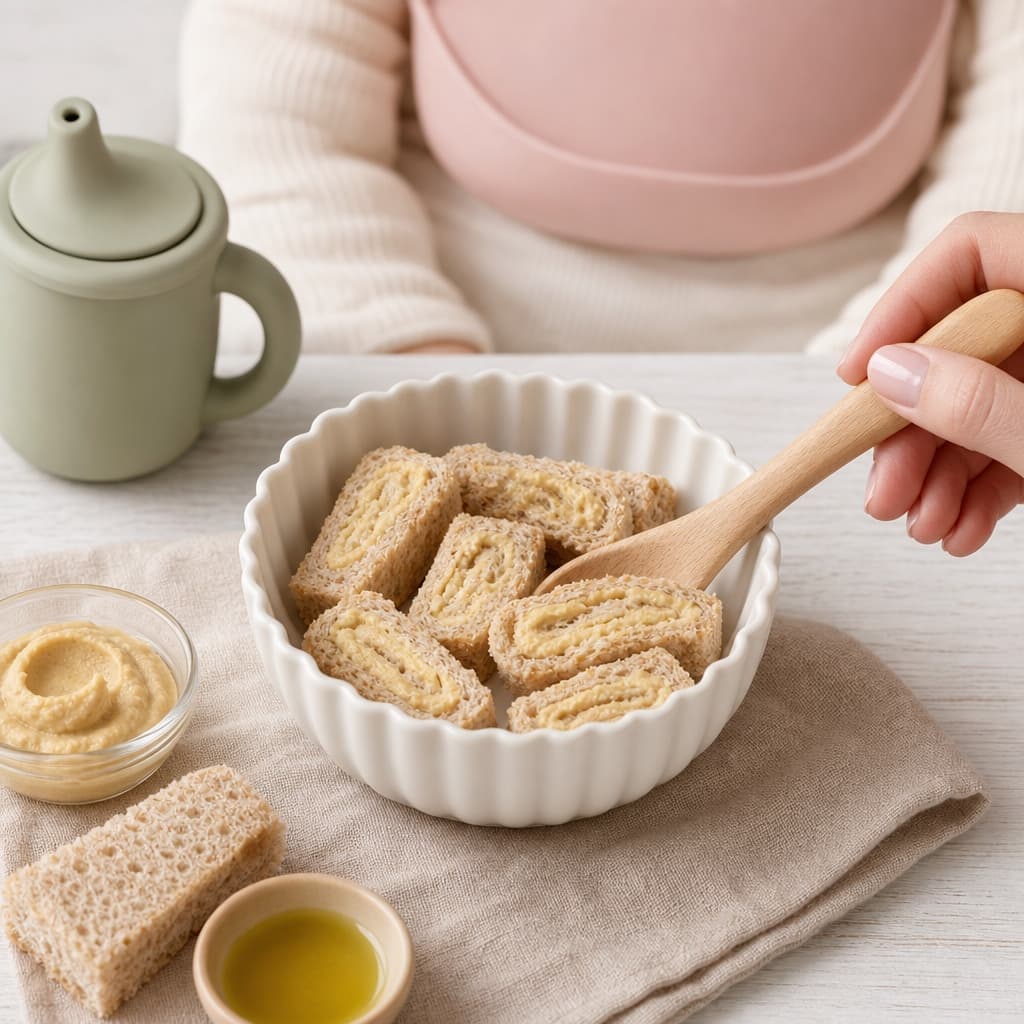
First taste: Offer a small amount of smooth, low-salt hummus on a pre-loaded spoon, or spread thinly on soft toast fingers.
6–9 months: Use hummus as a spread on toast, soft pitta strips, or steamed vegetable sticks - a great way to add flavour and nutrition.
9–12 months: Let your baby dip soft vegetable sticks or bread into a little hummus as self-feeding skills grow.
12+ months: Hummus as a dip, sandwich spread, or stirred into grain bowls - homemade or low-salt.
Hummus recipes for babies
See all hummus recipes for babies. Explore baby breakfast recipes, baby-led weaning recipes and first foods for baby for more ideas.
Frequently Asked Questions
Can babies eat Hummus?
Yes. Babies can eat Hummus starting around 6 months when they begin solid foods. It should be served in a safe texture and size for babies.
When can babies eat Hummus?
Babies can eat Hummus from around 6 months when starting solids. Babies can eat hummus from around 6 months, once they're starting solids. Hummus contains tahini (sesame) and chickpeas - both common allergens - so introduce a small amount first and watch for any reaction, then keep it in the diet. Choose low-salt or homemade hummus; many shop-bought versions are high in salt, which babies should have very little of.
Is Hummus a choking hazard for babies?
Hummus can be a choking hazard if served in unsafe shapes. Choose low-salt or homemade hummus - many shop-bought tubs are high in salt, which babies should limit. Hummus contains sesame (tahini) and chickpeas - introduce as allergens: a small amount first, watching for a reaction. Make sure hummus is smooth - avoid whole chickpeas, which can be a choking risk for young babies. Spread thinly rather than offering thick spoonfuls of stiff hummus, which can be hard to swallow. Skip added salt and avoid versions with lots of preservatives. Once tolerated, keep sesame in the diet regularly to help maintain tolerance.
Is Hummus a common allergen?
Some babies may be allergic to Hummus. Introduce Hummus carefully when babies start solids and watch for reactions.
How should Hummus be served to babies?
First taste: Offer a small amount of smooth, low-salt hummus on a pre-loaded spoon, or spread thinly on soft toast fingers. 6–9 months: Use hummus as a spread on toast, soft pitta strips, or steamed vegetable sticks - a great way to add flavour and nutrition. 9–12 months: Let your baby dip soft vegetable sticks or bread into a little hummus as self-feeding skills grow. 12+ months: Hummus as a dip, sandwich spread, or stirred into grain bowls - homemade or low-salt.
What nutrients does Hummus provide for babies?
Hummus provides nutrients like fibre, vitamin C, healthy fats, iron that support babies' growth and development.
How long can I store Hummus for babies?
Cook Hummus to a safe temperature and store it in the refrigerator for up to 2 days, or freeze in single-serving portions for up to 1 month to preserve nutrients.
Should I buy organic Hummus for my baby?
Organic Hummus isn't strictly necessary for babies, but some families prefer to reduce pesticide exposure. Wash conventional produce thoroughly. Variety and freshness matter most.
How should I introduce Hummus for the first time?
Offer a small amount of Hummus in an age-appropriate texture when your baby is hungry but not starving, ideally early in the day so you can watch for any reactions over several hours.
Is Hummus a good finger food for babies?
Yes. Hummus can be an excellent finger food for babies when cut into strips or soft pieces they can grasp. Make sure the texture mashes easily between your fingers.
What foods pair well with Hummus for baby?
Hummus can be combined with a variety of baby-friendly foods like grains, soft fruits, vegetables, or yogurt to build balanced meals.
Should I cook Hummus before serving it to my baby?
Yes. Cook Hummus until tender and easily mashable before serving it to your baby. Steaming, boiling, or roasting softens it enough to be safe.
How much Hummus can a baby eat?
There's no fixed amount. Start with 1-2 tablespoons of Hummus from around 6 months and let your baby regulate intake. Breast milk or formula remains the main source of nutrition in the first year.
Should I peel or remove the pit from Hummus for my baby?
For Hummus, peeling or pitting is usually not required, but wash it well and serve in a size and texture safe for your baby.
How should I store Hummus fresh for my baby?
Store fresh Hummus in a cool, dry place or in the refrigerator crisper drawer, depending on the food. Wash just before preparing and use it when ripe and firm for the best quality for your baby.
Safety tips
- ✓Choose low-salt or homemade hummus - many shop-bought tubs are high in salt, which babies should limit.
- ✓Hummus contains sesame (tahini) and chickpeas - introduce as allergens: a small amount first, watching for a reaction.
- ✓Make sure hummus is smooth - avoid whole chickpeas, which can be a choking risk for young babies.
- ✓Spread thinly rather than offering thick spoonfuls of stiff hummus, which can be hard to swallow.
- ✓Skip added salt and avoid versions with lots of preservatives.
- ✓Once tolerated, keep sesame in the diet regularly to help maintain tolerance.
Get recipes + a feeding plan for your baby
Save this food to your baby's list, get age-appropriate recipes and follow a personalized feeding schedule - 350+ baby-safe meals in the app.
Try Nibli today to start planning your baby's meals.
verifiedSources & References
This guide is informed by current guidelines from leading health organizations: