Food Allergies in Babies: Signs, Triggers, and Next Steps
Last updated May 2026
Understand how to spot, prevent, and respond to food allergies when starting solids.
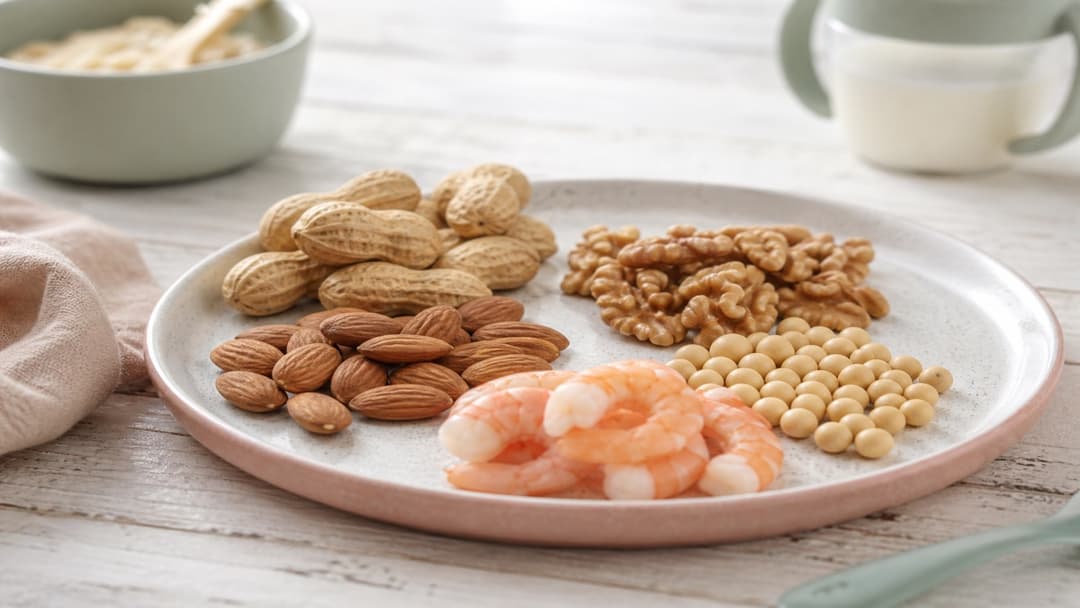
Starting solids is exciting, but it can also bring worry-especially around food allergies in babies. You might notice a rash after a new food or wonder if a reaction is normal. The good news is that most babies tolerate foods well, and early, informed introduction can actually reduce allergy risk.
Food allergies happen when the immune system reacts to a food protein as if it were harmful. While only a small percentage of babies develop true allergies, knowing what to look for and how to respond can help you feel more confident and prepared during mealtimes.
This guide walks you through common triggers, symptoms to watch for, and how to introduce allergens safely, based on guidance from bodies like the NHS, AAP, and WHO. If you ever feel unsure, your child’s paediatrician is the best source of personalised advice.
Key takeaways
- Food allergies affect around 6–8% of young children.
- Common allergens include milk, eggs, peanuts, wheat, soy, fish, and nuts.
- Symptoms often appear within minutes to 2 hours after eating.
- Introduce allergens from around 6 months in small amounts.
- Repeat tolerated allergens regularly to maintain tolerance.
- Mild reactions can be monitored, but severe symptoms need emergency care.
- Always consult a doctor before removing major foods from your baby’s diet.
What Is a Food Allergy?
A food allergy is an immune system response to a specific protein in food. When a baby with an allergy eats that food, their body mistakenly treats it as harmful and releases chemicals like histamine. This can cause symptoms ranging from mild skin reactions to more serious breathing or digestive issues.
Food allergies are different from food intolerances. Intolerances (like lactose intolerance) affect digestion and are usually less serious, while allergies involve the immune system and can be severe. According to the NHS and AAP, true food allergies affect around 6–8% of young children.
Allergic reactions can occur even with a tiny amount of food, and symptoms often appear quickly. Understanding this difference helps parents respond appropriately and avoid unnecessary food restrictions, which can impact nutrition during a critical growth period.
Common Allergenic Foods
Certain foods are responsible for most allergic reactions in babies. These are often called the ‘top allergens’ and are the focus of early introduction guidance. Introducing them safely and early (around 6 months, not before 4 months) may help reduce the risk of developing allergies, according to AAP and NHS recommendations.
It’s important not to delay introducing these foods without medical advice. Waiting too long may actually increase allergy risk, especially for peanuts and eggs. Always introduce new allergenic foods one at a time and in small amounts so you can monitor for reactions.
- Cow’s milk (dairy products like yogurt or cheese)
- Eggs (especially egg white)
- Peanuts and tree nuts (as smooth pastes or powders)
- Fish and shellfish
- Wheat (bread, pasta)
- Soy (tofu, soy yogurt)
Signs and Symptoms
Allergic reactions can vary widely in severity. Mild symptoms might include a rash or hives around the mouth, while more serious reactions can affect breathing or circulation. Symptoms typically appear within minutes to two hours after eating the trigger food.
Skin reactions are the most common in babies. You may notice redness, swelling, or itchy bumps. Digestive symptoms like vomiting, diarrhoea, or excessive fussiness can also occur, especially in younger infants who cannot communicate discomfort clearly.
In rare cases, babies can experience anaphylaxis, a severe and potentially life-threatening reaction. This requires immediate emergency care. Knowing the difference between mild and severe symptoms helps you act quickly and appropriately.
- Hives, rash, or swelling of lips/face
- Vomiting or diarrhoea soon after eating
- Persistent coughing or wheezing
- Runny nose or sneezing
- Pale, floppy, or unusually sleepy behaviour
When Reactions Happen
Most allergic reactions happen quickly-often within minutes of eating the food. However, some delayed reactions can occur several hours later, especially with conditions like non-IgE-mediated allergies, which mainly affect the gut.
Timing can give clues about the type of reaction. Immediate reactions (within 2 hours) are more likely to involve hives, swelling, or breathing issues. Delayed reactions may present as eczema flare-ups, reflux-like symptoms, or changes in stool.
Because timing can vary, it’s helpful to introduce new foods earlier in the day. This allows you to observe your baby for several hours rather than overnight, when symptoms may be harder to notice or manage.
How to Introduce Allergens Safely
Current guidance from the NHS and AAP supports introducing allergenic foods from around 6 months, alongside other solids. Start with a very small amount-about 1/4 teaspoon-and gradually increase if no reaction occurs. Always offer allergens in a safe texture, such as smooth peanut butter thinned with water or breast milk.
Introduce one new allergen at a time and wait about 2–3 days before adding another. This makes it easier to identify the cause if a reaction occurs. Once an allergen is tolerated, aim to include it regularly (for example, 2–3 times per week) to maintain tolerance.
Avoid whole nuts, large chunks, or thick nut butters due to choking risk. Texture safety is just as important as allergy safety when feeding babies.
- Start with a small amount (1/4 teaspoon)
- Introduce at home, not at daycare or restaurants
- Offer earlier in the day for monitoring
- Repeat regularly once tolerated
- Use smooth, age-appropriate textures
What to Do During a Reaction
If your baby shows mild symptoms like a few hives or slight redness, stop feeding the food and monitor closely. Symptoms often resolve on their own, but you should avoid giving that food again until you’ve spoken with a healthcare professional.
For more serious symptoms-such as swelling of the lips or face, difficulty breathing, or repeated vomiting-seek emergency medical help immediately. These may be signs of anaphylaxis, which requires urgent treatment.
If your baby has been diagnosed with a food allergy, your doctor may prescribe an adrenaline auto-injector. Make sure you understand how and when to use it, and keep it accessible at all times.
Testing and Diagnosis
If you suspect a food allergy, your paediatrician may refer you to an allergy specialist. Diagnosis typically involves a detailed history, symptom review, and sometimes tests such as skin prick testing or blood tests (IgE levels).
It’s important not to self-diagnose or remove major food groups without guidance, as this can lead to nutrient deficiencies. According to the NHS, testing should always be interpreted alongside clinical symptoms, not used alone.
In some cases, a supervised oral food challenge may be recommended. This is considered the most accurate way to confirm or rule out a food allergy.
When to See a Doctor
You should speak to your paediatrician if your baby has any suspected allergic reaction, even if mild. Early evaluation helps confirm whether it’s a true allergy and prevents unnecessary dietary restrictions.
Seek urgent medical care if your baby has trouble breathing, swelling of the face or lips, or becomes floppy or unresponsive. These are emergency signs and require immediate attention.
If your baby has eczema or a family history of allergies, asthma, or hay fever, discuss allergen introduction with your doctor. These babies may have a higher risk and benefit from a tailored approach.
Frequently Asked Questions
What does a baby allergic reaction to food look like?
Common signs include hives, swelling, vomiting, or coughing within 2 hours of eating. Severe symptoms like breathing difficulty need urgent care.
How soon do food allergy symptoms appear in babies?
Most reactions happen within minutes to 2 hours after eating, though some delayed reactions can appear several hours later.
What are the most common food allergies in babies?
Milk, eggs, peanuts, tree nuts, wheat, soy, fish, and shellfish cause most allergic reactions in babies.
Should I delay giving allergenic foods to my baby?
No. NHS and AAP recommend introducing allergens from around 6 months, as delaying may increase allergy risk.
Can a baby outgrow food allergies?
Yes, many children outgrow allergies to milk, egg, soy, and wheat, but peanut and tree nut allergies are more likely to persist.
What should I do if my baby gets a rash after eating?
Stop the food and monitor. If symptoms are mild, contact your doctor. Seek urgent care if symptoms worsen or involve breathing.
How do I safely introduce peanuts to my baby?
Offer smooth peanut butter thinned with water or milk, starting with 1/4 teaspoon, and monitor closely.
Can breastfeeding prevent food allergies?
Breastfeeding supports overall health, but evidence on preventing allergies is mixed. Early allergen introduction remains important.
Do I need allergy testing before introducing allergens?
Not usually. Testing is only recommended for high-risk babies or after a suspected reaction-check with your paediatrician.
Is eczema linked to food allergies in babies?
Yes, babies with eczema have a higher risk of food allergies and may need a more guided introduction plan.
verifiedSources & References
This guide is informed by current guidelines from leading health organizations:
Track allergens and plan safe meals with the Nibli app
Use Nibli to introduce allergens step-by-step, track reactions, and get personalised meal ideas so you can feed your baby with more confidence and less stress.