Healthy Fats for Babies: Essential for Growth and Brain
Last updated May 2026
Understand why fats matter, which types to choose, and how to include them safely in your baby’s meals.
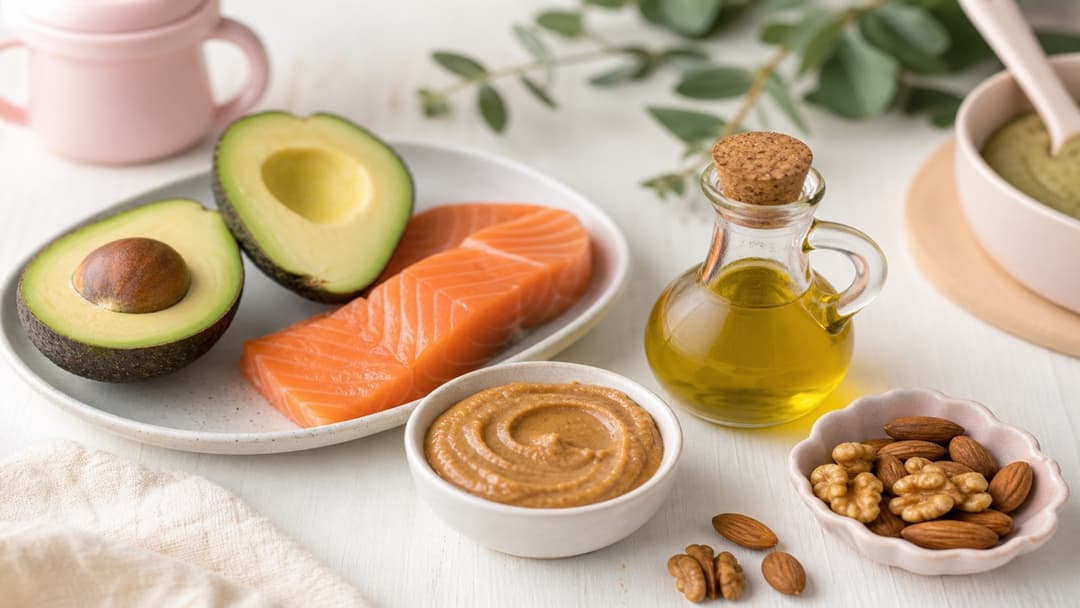
When you start solids, it’s natural to focus on vegetables, fruits, and proteins-but fat is just as important. In fact, babies need a higher proportion of fat than adults to support rapid growth, brain development, and energy needs. Breastmilk and formula are naturally rich in fat, and this continues to matter as your baby transitions to family foods.
Healthy fats are not something to limit in infancy. According to the World Health Organization (WHO) and NHS guidance, fats should make up a significant portion of a baby’s diet through the first two years of life. The key is choosing the right types of fats and offering them in safe, baby-friendly forms.
This guide explains why healthy fats for babies matter, which foods to offer, how much your baby needs, and how to add fats easily to everyday meals. You’ll also learn what to avoid and common mistakes parents make when introducing fats.
Key takeaways
- Healthy fats are essential for baby growth, energy, and brain development.
- Babies need around 40–50% of calories from fat in the first year.
- Include fats like avocado, olive oil, fish, and nut butters daily.
- Full-fat dairy is recommended up to age two unless advised otherwise.
- Omega-3 fats like DHA support brain and eye development.
- Avoid trans fats and highly processed foods.
- Add small amounts of fat to meals to boost nutrient absorption.
Why Babies Need Fat
Fat is a primary energy source for babies. Gram for gram, fat provides more than twice the energy of carbohydrates or protein, which is essential for infants with small stomachs and high calorie needs. During the first year, about 40–60% of a baby’s total energy intake should come from fat, according to EFSA and WHO recommendations.
Fat also supports the absorption of key vitamins-A, D, E, and K-which are essential for immunity, vision, and bone development. Without enough fat in meals, your baby may not fully benefit from nutrient-rich foods like vegetables.
Perhaps most importantly, fat plays a central role in brain development. The brain grows rapidly in the first two years, and specific fats like DHA contribute to the formation of brain cells and neural connections. This is why breastmilk naturally contains high levels of fat.
Limiting fat too early can impact growth and development. Unlike adult diets, babies should not follow low-fat or reduced-fat eating patterns. Full-fat options are generally recommended unless advised otherwise by a paediatrician.
Types of Healthy Fats
Not all fats are equal. Healthy fats for babies mainly include unsaturated fats, which support heart and brain health. These are found in foods like avocados, oily fish, nuts (served safely), seeds, and plant oils such as olive oil. These fats are beneficial and should be included regularly in your baby’s meals.
Saturated fats, found in foods like dairy, meat, and coconut, are also appropriate for babies in moderate amounts. Full-fat yogurt, cheese, and milk (after 12 months as a drink) provide both energy and essential nutrients like calcium.
Omega-3 fatty acids, especially DHA, are particularly important for brain and eye development. The American Academy of Pediatrics (AAP) highlights the importance of including sources like salmon, sardines, or DHA-fortified foods in a baby’s diet.
Trans fats and highly processed fats should be avoided. These are often found in fried foods, packaged snacks, and baked goods, and offer no nutritional benefit for babies.
- Unsaturated fats: olive oil, avocado, nut butters, seeds
- Omega-3 fats: salmon, sardines, mackerel
- Saturated fats: full-fat dairy, eggs, meat
- Avoid trans fats: processed snacks and fried foods
Best Fat-Rich Foods for Babies
Many everyday foods are naturally rich in healthy fats and easy to prepare for babies. Avocado is one of the best first foods-soft, nutrient-dense, and easy to mash or serve as finger food. Just 2–3 tablespoons (30–45 g) provide a good dose of healthy fats.
Oily fish like salmon or sardines are excellent sources of omega-3 fats. Aim to offer these 1–2 times per week in small portions (20–30 g cooked, flaked and deboned). Eggs are another versatile option, providing both fat and protein.
Nut and seed butters (such as peanut, almond, or tahini) are rich in healthy fats but should always be served thinly spread or mixed into foods like porridge or yogurt to reduce choking risk. About 1–2 teaspoons (5–10 g) is an appropriate portion.
Full-fat dairy products like yogurt and cheese are also helpful for adding calories and fat. Choose plain, unsweetened varieties and offer small portions, such as 2–4 tablespoons (30–60 g) of yogurt or 10–15 g of cheese.
- Avocado: mashed or sliced
- Salmon or sardines: flaked and deboned
- Eggs: scrambled or boiled
- Nut butters: thinly spread or mixed
- Full-fat yogurt and cheese
- Olive oil: drizzled over foods
How Much Fat Do Babies Need?
Babies naturally regulate their fat intake when offered a balanced diet. From 6–12 months, fat should remain a major energy source, with approximately 40–50% of daily calories coming from fat, as guided by EFSA. This typically happens when babies continue breastmilk or formula alongside solids.
Rather than counting grams, focus on including a source of healthy fat at most meals. For example, adding 1–2 teaspoons (5–10 ml) of olive oil to vegetables or including avocado or yogurt in a meal can help meet daily needs.
After 12 months, fat intake remains important, though the proportion of calories from fat gradually decreases as the diet diversifies. Full-fat dairy is still recommended up to age 2 unless advised otherwise by a healthcare provider.
If you are concerned about your baby’s growth or intake, consult your paediatrician. Growth patterns, appetite, and feeding style can all influence how much fat a baby needs.
Adding Fats to Meals
Incorporating healthy fats into your baby’s meals doesn’t require complicated recipes. Simple additions can significantly boost energy and nutrient absorption. For example, drizzling olive oil over cooked vegetables or stirring nut butter into porridge adds both flavour and calories.
Combining fats with vegetables is especially helpful because it improves the absorption of fat-soluble vitamins. For instance, adding a teaspoon (5 ml) of oil to carrot or spinach puree can increase vitamin uptake.
Texture and safety are key when adding fats. Avoid large chunks of fatty foods that could pose a choking risk. Instead, mash, spread, or finely chop foods like avocado, fish, or eggs to suit your baby’s developmental stage.
As your baby grows, you can gradually introduce more variety and textures, including soft finger foods with natural fats. Always supervise meals and adapt textures based on your baby’s chewing ability.
- Drizzle olive oil over vegetables or grains
- Mix nut butter into porridge or yogurt
- Add mashed avocado to toast or meals
- Include oily fish in weekly meals
- Use full-fat dairy instead of low-fat options
Fats to Limit or Avoid
While healthy fats are essential, some fats should be limited or avoided entirely. Trans fats, often found in processed foods, baked goods, and fast food, should not be part of a baby’s diet. These fats offer no nutritional value and may negatively impact health.
Highly processed foods that are high in unhealthy fats and salt-such as chips, fried foods, and packaged snacks-are not suitable for babies. These foods can displace more nutritious options and may shape long-term taste preferences.
Be cautious with added fats like butter or cream in large amounts. While small quantities are fine, focus more on unsaturated fats from plant sources and fish. Balance is key.
Also avoid giving whole nuts due to choking risk. Instead, offer nut butters or finely ground nuts mixed into foods, in line with allergen introduction guidance from the NHS and AAP.
Fat and Brain Development
The first two years of life are critical for brain growth, and fat plays a central role in this process. DHA, a type of omega-3 fatty acid, is a major structural component of the brain and retina. Adequate intake supports cognitive development and visual function.
Breastmilk naturally contains DHA, and many infant formulas are fortified with it. As solids are introduced, including DHA-rich foods like salmon or sardines helps maintain intake. Aim for 1–2 servings of oily fish per week (20–30 g per serving).
Choline and other nutrients found in fatty foods like eggs also contribute to brain development. A varied diet that includes healthy fats alongside iron, protein, and micronutrients provides the best foundation for learning and growth.
There is no need for supplements unless recommended by a healthcare provider. Most babies can meet their needs through a balanced diet that includes natural sources of healthy fats.
Common Feeding Mistakes
One common mistake is offering low-fat or reduced-fat foods too early. Babies need energy-dense meals, and choosing low-fat yogurt or milk alternatives can reduce calorie intake. Full-fat options are generally recommended until at least age two.
Another mistake is not including fat in meals consistently. Meals made up only of fruits, vegetables, or grains may be low in energy and may not keep babies satisfied. Adding even a small amount of fat can make a big difference.
Some parents avoid allergenic foods like nuts or fish due to fear of reactions. However, current NHS and AAP guidance supports early, safe introduction of these foods to help reduce allergy risk-provided they are offered in age-appropriate forms.
Finally, relying too heavily on processed baby snacks can crowd out nutrient-rich, fat-containing whole foods. Homemade or minimally processed meals are usually better for meeting nutritional needs.
Frequently Asked Questions
Do babies really need fat in their diet?
Yes. Babies need fat for energy, brain development, and vitamin absorption. Around 40–50% of their calories should come from fat in the first year.
What are the best healthy fats for babies?
Great options include avocado, olive oil, oily fish, nut butters, seeds, eggs, and full-fat dairy products.
How much fat should I add to baby food?
You can add about 1–2 teaspoons (5–10 ml) of healthy fats like olive oil per meal, along with naturally fatty foods.
Can babies eat butter?
Yes, in small amounts. Butter is safe but should be balanced with healthier unsaturated fats like olive oil and fish.
Are low-fat foods okay for babies?
No. Babies need full-fat foods for growth and energy. Low-fat options are not recommended before age two unless advised by a doctor.
When can I give my baby oily fish?
From 6 months, you can offer well-cooked, deboned oily fish like salmon or sardines in small portions.
Can I give nuts to my baby?
Whole nuts are a choking risk, but smooth nut butters or ground nuts can be safely introduced from 6 months.
Do healthy fats help brain development?
Yes. Fats like DHA are essential for brain and eye development, especially in the first two years.
Is olive oil good for babies?
Yes. Olive oil is a healthy fat that can be added to vegetables, grains, or purees to boost calories and nutrients.
Can too much fat be harmful for babies?
Babies naturally regulate intake. Focus on offering healthy fats rather than limiting them, unless advised by your paediatrician.
verifiedSources & References
This guide is informed by current guidelines from leading health organizations:
Plan balanced baby meals with healthy fats using Nibli
Get personalised meal ideas, portion guidance, and nutrient insights to ensure your baby gets the right healthy fats for growth and brain development.