How to cut carrots for your baby
Last updated October 2026
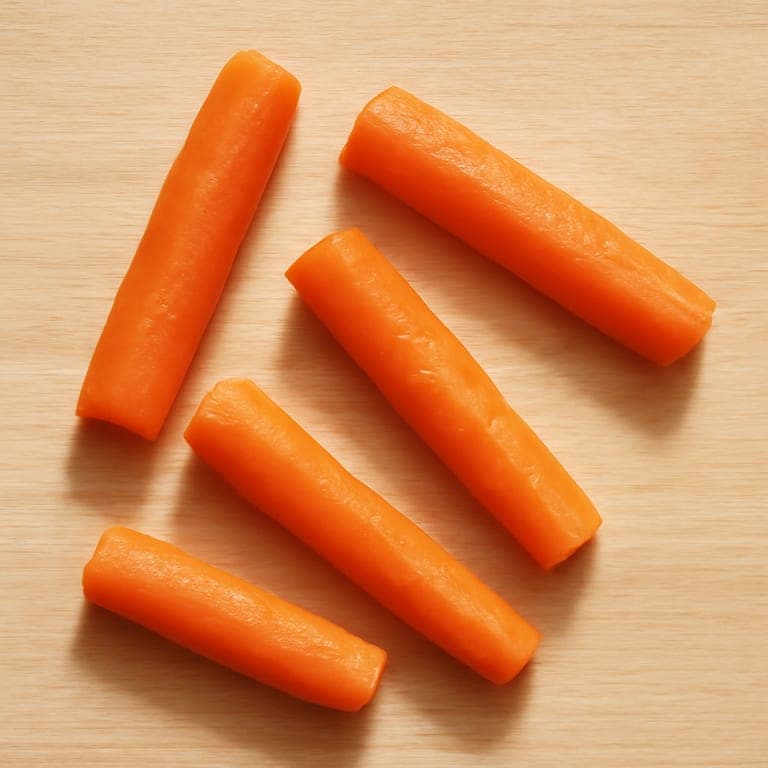
Cook carrot until it is soft all the way through, then cut it lengthways into narrow batons your baby can hold in their fist with a bit sticking out. Raw carrot is hard: the NHS advises avoiding raw carrot when babies start solids, and the CDC lists pieces of hard raw carrot as a choking hazard for young children.
As your baby learns to pick up smaller pieces and chew, you can offer soft cooked carrot cut smaller, mashed, or grated and cooked into other food. One check stays the same throughout: cooked carrot should squash easily between your finger and thumb. Reaching a birthday doesn't make hard raw carrot sticks suitable on its own.
Quick answer
Cooked carrot can be one of your baby's first foods once they're ready for solids, at around 6 months. The NHS suggests "mashed or soft, cooked sticks" of vegetables including carrot as early foods.
Select Baby's Age
6–8 months
Starting solids: soft cooked batons to hold
Rinse and peel the carrot, then steam or simmer it in unsalted water until the thickest part squashes easily between your finger and thumb. Check the centre, not only the surface: a piece that still feels firm needs longer cooking. Cut it lengthways into narrow batons roughly the length of your finger, so your baby can grip one in their fist with some carrot showing above it. Avoid coins and chunks: the NHS advises cutting vegetables like carrots into narrow batons and avoiding round shapes and firm foods. You can also mash cooked carrot with a fork and offer it on a spoon. Let it cool before serving, keep your baby upright in a highchair and stay within arm's reach.
6 month baby feeding schedule for more tips.
9–11 months
Picking up smaller pieces: soft carrot, cut small or grated
When your baby starts picking up small bits of food between finger and thumb, you can cut soft cooked carrot into small, thin pieces, or keep offering batons if they prefer to hold and bite. Check every batch with the squash test, because carrots cook unevenly and a firm centre can remain. Finely grated carrot cooked into porridge, a risotto or a pasta sauce gives the flavour without a firm piece. Choose the shape by how your baby is managing chewing and swallowing, not by the month alone.
12+ months
Confident chewers: keep carrot cooked and soft
As your child chews more confidently, soft cooked carrot can be cut into bite-size pieces or served as part of family meals, taken out before any salt is added. Raw carrot is a different texture, and advice on it differs: NHS snack ideas from 12 months include raw carrot sticks, while the CDC lists pieces of hard raw carrot as a choking hazard and the AAP suggests keeping high-risk foods such as raw carrot sticks from children until 4 years or older, depending on each child's development. Finely grating raw carrot removes the hard stick shape, but it does not make every raw serving suitable for every child. If your child still struggles with firm textures, keep carrot cooked and soft and ask a health professional for individual guidance. Sit with your child while they eat.
When can babies have carrots?
Carrot isn't on the NHS list of foods that commonly trigger allergic reactions, so it doesn't need a special introduction pattern. It is naturally sweet, so the NHS suggests offering vegetables with more bitter flavours too, such as broccoli and cauliflower, rather than only the sweeter ones like carrot and sweet potato.
See our first foods for baby guide for more ideas.
Ways to serve soft carrot
Cooked carrot works on its own or mixed into meals. Keep it soft and unsalted.
- Steamed carrot batons with plain full-fat yoghurt for dipping
- Carrot and parsnip mash with a little unsalted butter
- Finely grated carrot cooked into porridge or a lentil and tomato sauce
- Soft roasted carrot batons from the family tray, taken out before any salt is added
Explore our baby-led weaning food list and first foods for baby for more inspiration.
More Cutting Guides
Related Guides
View all feeding guidesFrequently Asked Questions
Should I peel carrots for my baby?
Peeling helps, especially for younger babies. The NHS says removing the skin from fruit and vegetables makes them easier to swallow for very young children, and that peeling root vegetables such as carrots also reduces hygiene risk when they'll be eaten raw. Wash them either way.
Can I use bagged baby carrots or frozen carrot slices?
Yes, as long as you cook them until soft. Bagged baby carrots are small and hard when raw, so don't serve them whole or raw. Frozen carrot usually comes as round coins: once cooked soft, cut them into strips or mash them rather than serving the rounds.
Do I need to start with carrot purée?
No. The NHS says some babies like to start with mashed, lumpy or finger foods, and suggests moving on from purées to mashed, lumpy or finger foods as soon as your baby can manage them. Smooth carrot is fine if your baby prefers it at first.
My baby gags on carrot. Should I stop offering it?
Not necessarily. The NHS describes gagging as a normal reflex while babies learn to chew and swallow. Check the carrot is soft enough and in a manageable shape, stay with your baby and keep offering it. If your baby often coughs or struggles to swallow at meals, talk to your health visitor or doctor.
Sources & References
This guide is informed by current guidelines from leading health organizations:
- ●NHS - Preparing Food Safely for Babies NHS
- ●NHS - Your Baby's First Solid Foods NHS
- ●CDC — Choking Hazards (reviewed March 2026) CDC
- ●AAP - Choking Prevention AAP
- ●NHS - Foods to Avoid Giving Babies NHS
- ●NHS — Choking and Gagging on Food NHS
- ●NHS - How to stop a child from choking NHS
- ●NHS - Children's food: safety and hygiene NHS
