How to Cut Sweet Potato for Baby
Last updated October 2026
Sweet potato is a familiar first food because it can be steamed or baked to a soft, mashable texture. Peel tough skin, cook the thickest part until it crushes with a fork, then offer mash or a soft piece the baby can grasp.
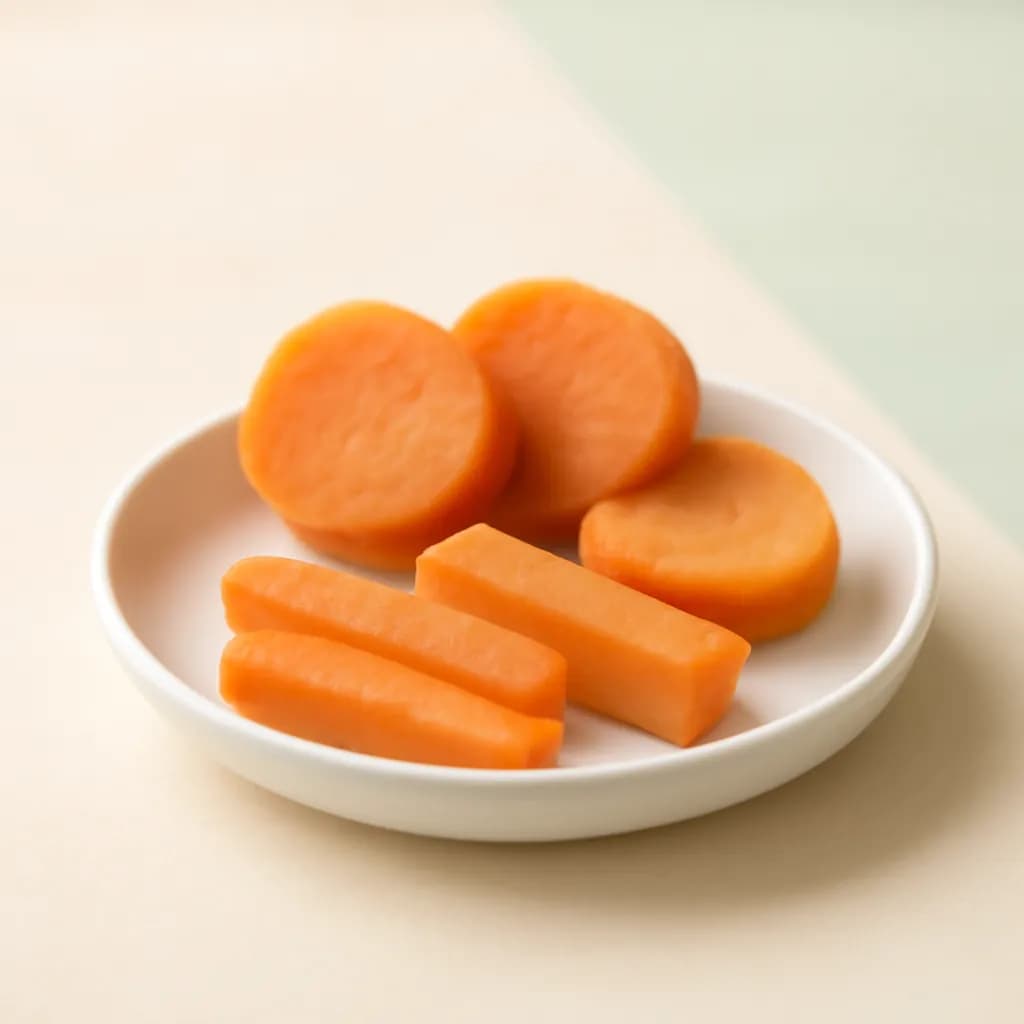
Roasting can leave firm or leathery corners even when the middle is tender. Check the whole portion, remove hard edges and cool before serving; neither a particular centimetre size nor an age-labelled photo proves safety.
Quick answer
Sweet potato may be offered once a baby is ready for solids, generally around six months. NHS first-food guidance includes sweet potato as a suitable soft cooked starchy finger food.
Select Baby's Age
6–8 months
Starting solids: soft graspable wedge or mash
Wash and peel the sweet potato, cut into broad wedges or finger-shaped pieces, then steam or bake until both outside and centre crush readily. Offer a soft piece with enough length to hold if the baby can grasp and manage finger foods, or fork-mash completely for a spoon. Remove any hard roasted skin or edges; an underripe or undercooked firm wedge is not made safe by having the shape of a finger.
6 month baby feeding schedule for more tips.
9–11 months
Developing pincer grasp: soft pieces if ready
If the baby picks up smaller pieces and manages lumpy textures, offer soft torn pieces or tender pieces of sweet potato that can be flattened easily. A whole-hand grasper can stay with longer soft wedges or spoonable mash. Avoid crisp roasted cubes and tough skins; the child does not need to transition at precisely nine months.
12+ months
Toddler meals: continue to check cooked texture
Toddlers may enjoy mashed sweet potato, tender wedges or a soft low-salt side dish. Scrape away hard crusts and any chewy skin, and check the largest piece before serving. A first birthday does not remove choking concerns from firm pieces or crunchy sweet-potato chips. Serve while seated and supervised.
When can babies try sweet potato?
Steam, boil or bake until the thickest flesh yields readily under a fork. A mash on a preloaded spoon works for an early eater; another baby may manage a long soft piece with part protruding from the fist.
Sweet potato offers vegetable variety and carotenoids but is not a substantial stand-alone iron source. Combine it with other age-appropriate iron-containing foods rather than treating it as a complete meal.
See our first foods for baby guide for more ideas.
Soft sweet-potato serving ideas
Use a fully cooked, tender texture; these are serving combinations rather than physically tested recipes.
- Plain fork-mashed sweet potato on a preloaded spoon
- Soft steamed wedges with the skin removed
- Sweet potato blended with fully cooked red lentils
- Tender sweet potato and broccoli mash without added salt
Explore our baby-led weaning food list and first foods for baby for more inspiration.
More Cutting Guides
Related Guides
View all feeding guidesFrequently Asked Questions
Do babies need teeth to eat soft sweet potato?
Not necessarily. A baby ready for solids may manage mashed or fully tender textures as mouth and chewing skills develop.
Should I peel sweet potato for baby-led weaning?
Peel tough or leathery skin for an early eater; inspect any skin left on later servings to ensure it is not chewy or hard.
Is roasted sweet potato appropriate for a six-month-old?
It can be when cooked until very soft throughout and any hard roasted crust is removed. Cool it and adapt presentation to the child.
Are sweet-potato chips good finger foods?
Crispy or firm chips are not suitable first finger foods. Use fork-soft wedges or mash rather than crunchy edges or hard pieces.
Sources & References
This guide is informed by current guidelines from leading health organizations:
- ●NHS - Your Baby's First Solid Foods NHS
- ●NHS - Feeding your baby from around 6 months NHS
- ●NHS - Preparing Food Safely for Babies NHS
- ●CDC — Choking Hazards (reviewed March 2026) CDC
- ●CDC - When, What, and How to Introduce Solid Foods CDC