Carrot for Baby
Last updated October 2026
Carrot is a versatile vegetable for a baby beginning solids at around six months. The critical detail is cooking: crisp raw carrot is a recognized choking hazard, while fully softened carrot can be mashed or used in a manageable self-feeding portion.
Quick answer
From around six months after developmental readiness, offer fully cooked carrot in a texture your baby can swallow. Start with soft mashed carrot if a self-feeding piece is difficult to manage.
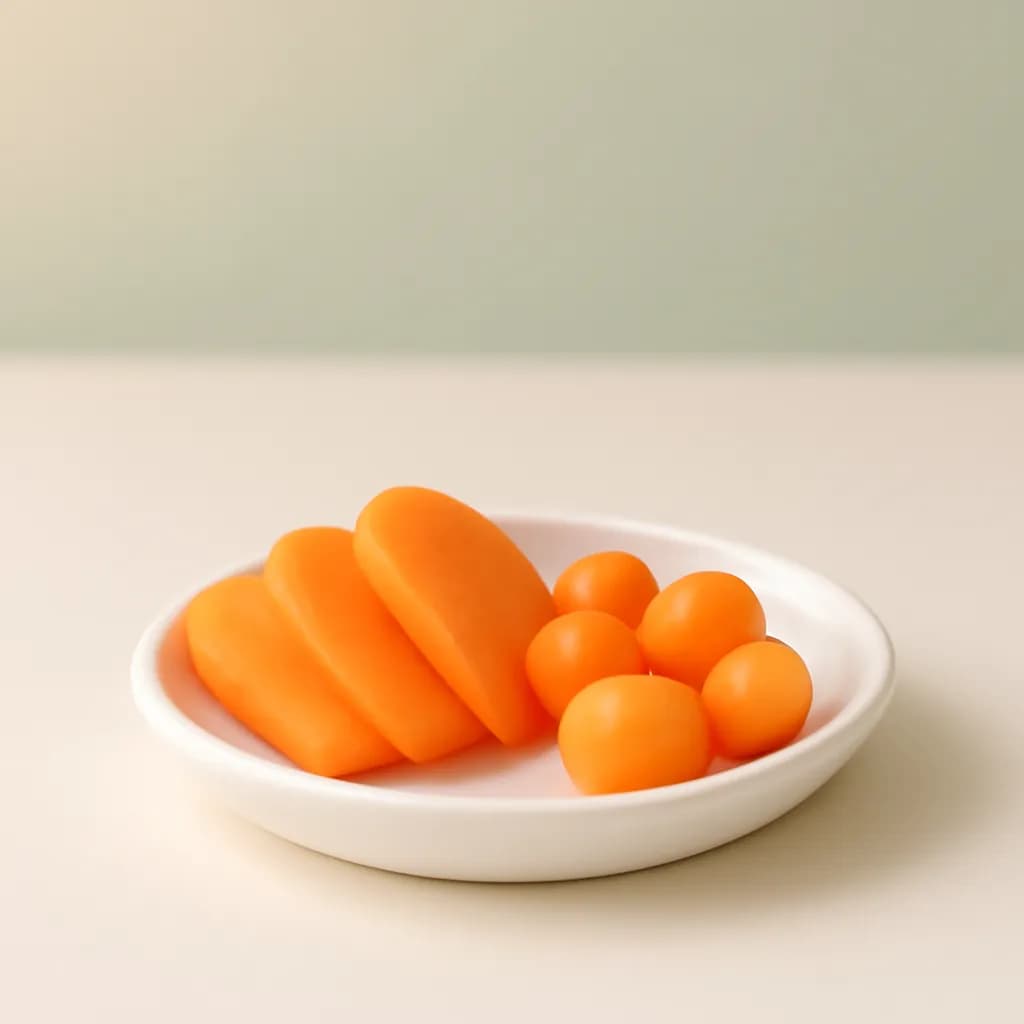
How to cook and serve carrot for babies
Wash and trim carrots, remove any tough peel, and steam or simmer until the middle of the thickest piece crushes under a fork. If roasting, remove any crisp edges.
For spoon-feeding, mash or blend tender carrot, checking that no dense pieces remain.
For self-feeding, use a portion soft enough to break down easily. A long stick is not choking-proof; do not offer firm raw or partly cooked carrot.
As pincer grasp and chewing skills improve, serve smaller soft carrot pieces in a low-salt meal. Recheck the centre, skin and temperature before offering.
The right shape and size depend on your baby's eating skills, not on age alone. Step-by-step preparation: How to cut vegetables for BLW
Also check how to cut food for baby-led weaning for general BLW cutting tips.
When can babies try carrots?
Hard raw carrot pieces are a choking concern, including sticks and rounds. Cooking time varies; judge firmness from the actual batch rather than a timer.
Variety matters more than a universal carrot serving quota. Carrots can be rotated with other vegetables and served alongside beans, meat or other iron sources.
Steam, simmer or roast until the thickest part breaks down easily under a fork. A rigid finger-shaped baton, whole carrot round or small hard cube is not made safe simply by its shape.
Orange carrots contain carotenoids used by the body to make vitamin A. They are not a meaningful substitute for iron-rich foods, so combine them with other complementary foods as meals develop.
See our first foods for baby guide for more ideas.
Carrot cutting and softness precautions
CDC lists hard raw carrot among choking hazards for young children.
Check the thickest cooked centre, not only the outside, for softness.
A fixed finger-length baton or an exact birthday does not make raw carrot safe.
Avoid hard rounds, stiff sticks and crisp roast edges for beginning eaters.
Do not add salt; combine carrot with iron-rich foods for a more balanced meal.
Have the child sit upright and supervise eating closely.
Carrot recipes for babies
View all recipes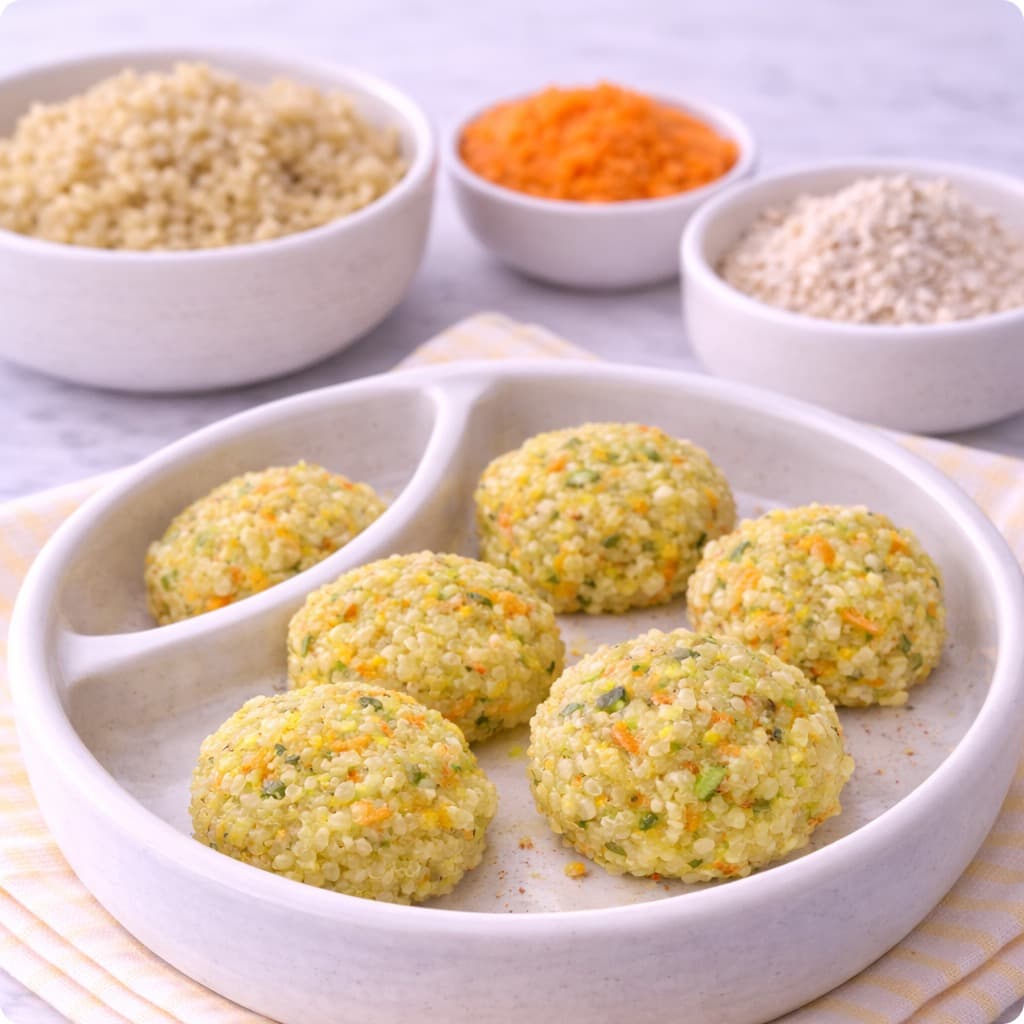
Quinoa Veggie Patties

Lentil Veggie Nuggets
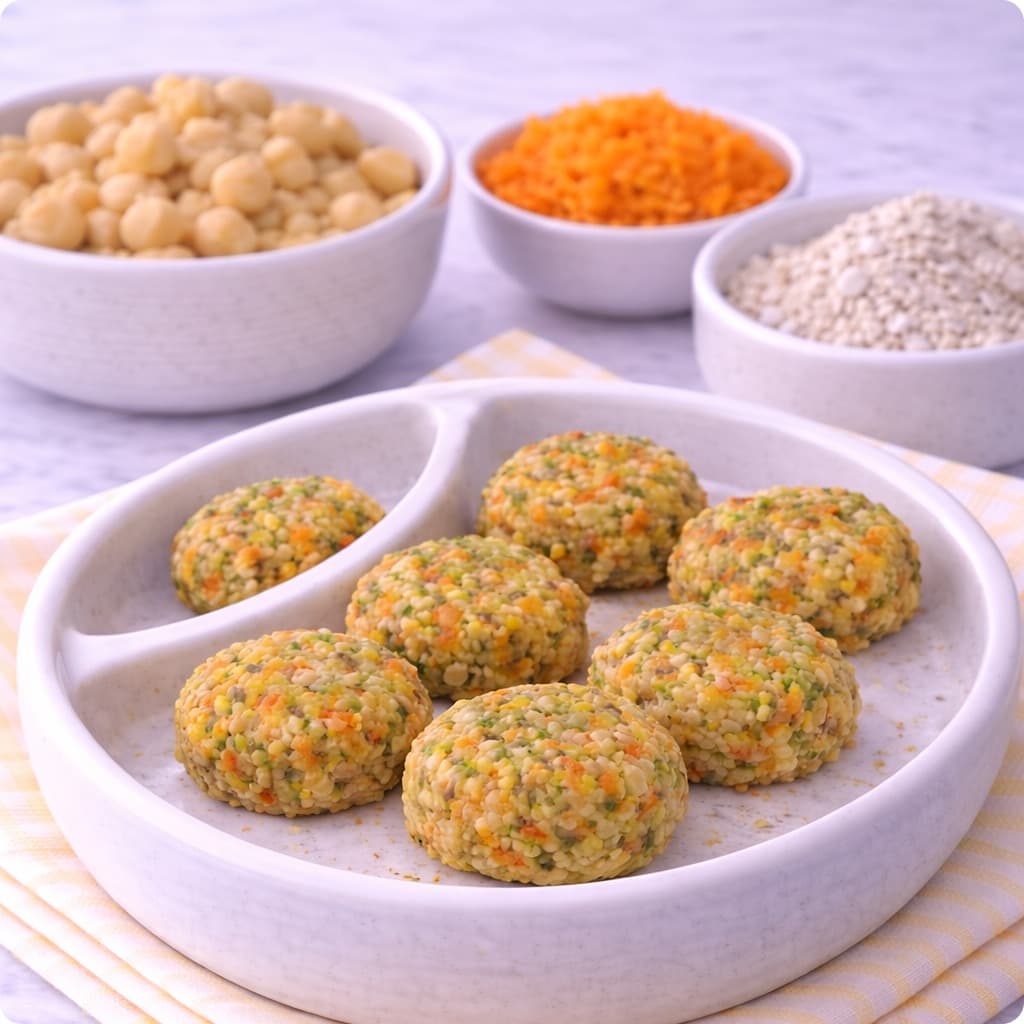
Baby Falafel Patties
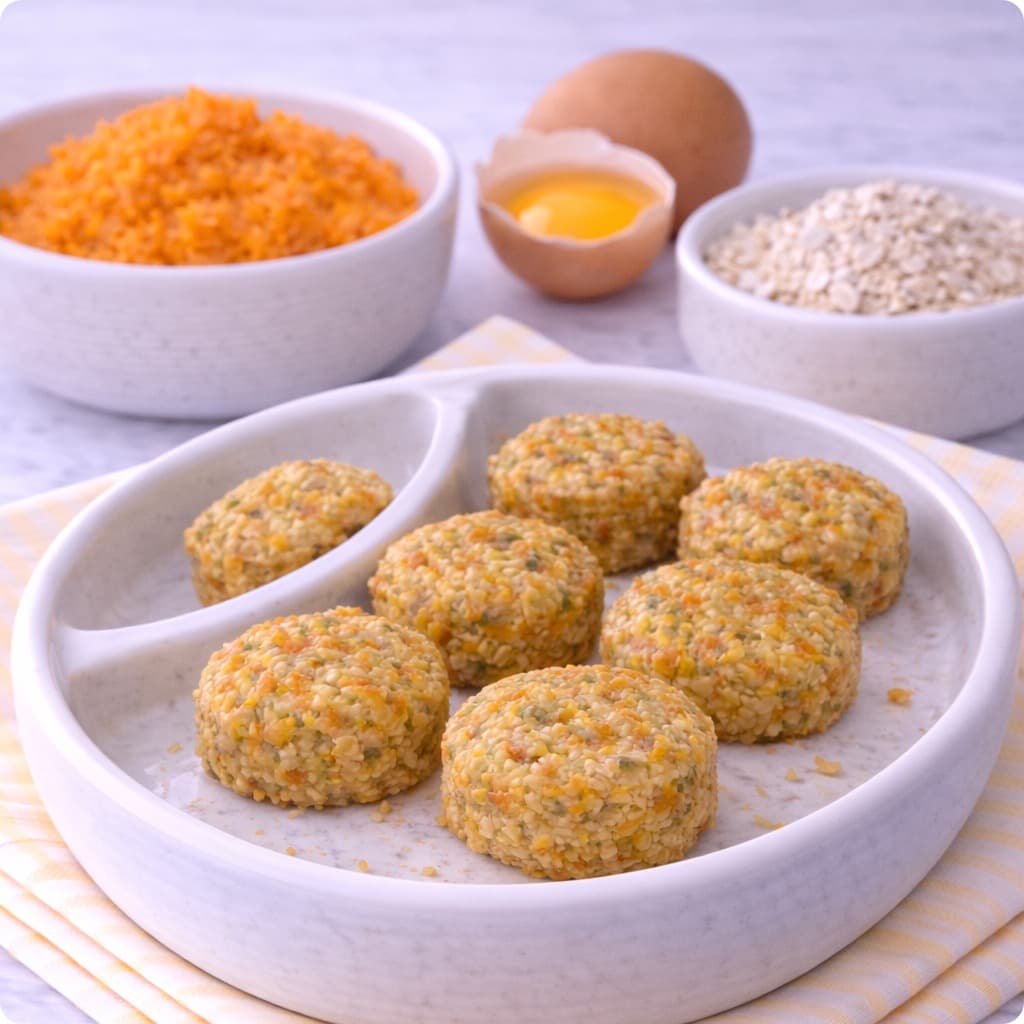
Carrot Oat BLW Muffins
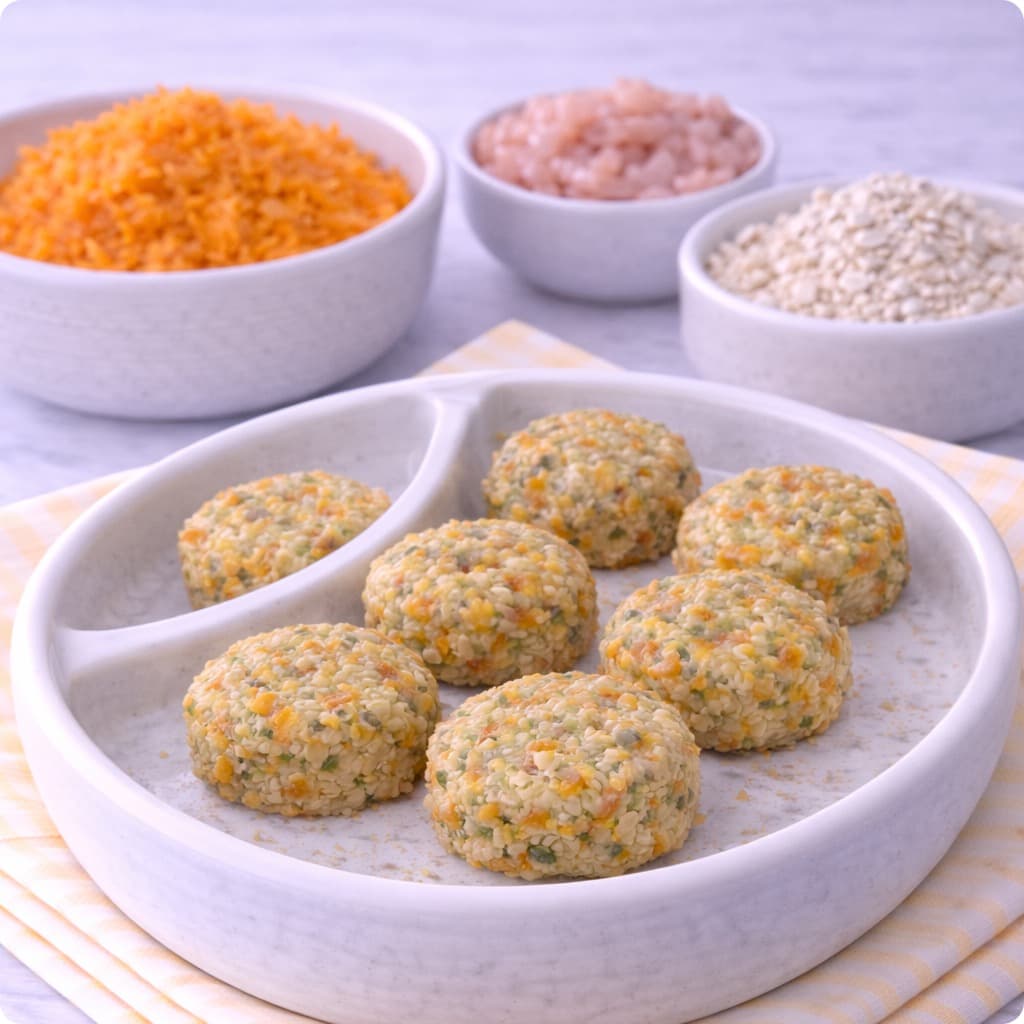
Chicken Veggie Nuggets
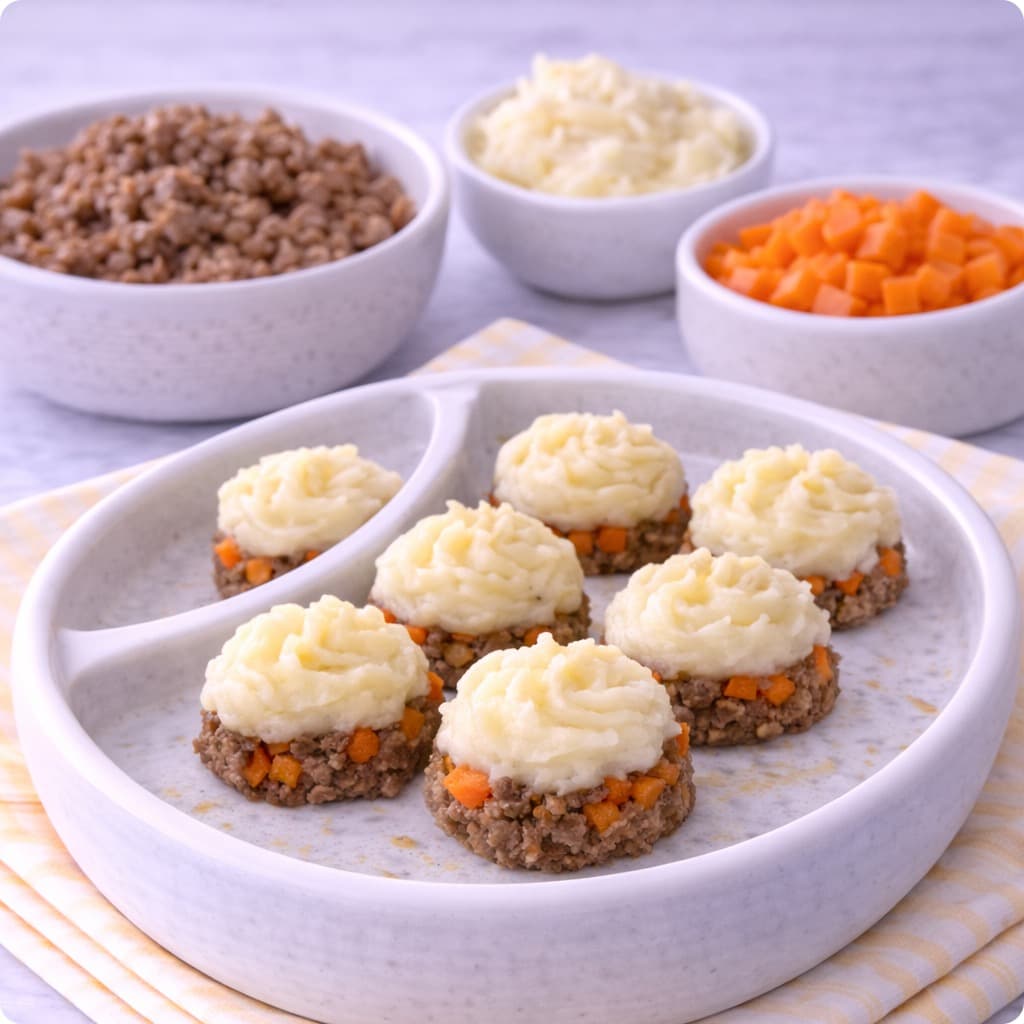
Mini Shepherd's Pie Bites
See all carrot recipes for babies. Explore baby breakfast recipes, baby-led weaning recipes and first foods for baby for more ideas.
Related Guides
Frequently Asked Questions
Is Carrot a common allergen?
Carrot is not typically a common allergen for babies. Many babies can try it from around 6 months as part of a varied diet.
What nutrients does Carrot provide for babies?
Carrot provides nutrients like fibre, vitamin A, iron that support babies' growth and development.
Sources & References
This guide is informed by current guidelines from leading health organizations:
- ●NHS - Your Baby's First Solid Foods NHS
- ●NHS - Preparing Food Safely for Babies NHS
- ●CDC — Choking Hazards (reviewed March 2026) CDC
- ●CDC - When, What, and How to Introduce Solid Foods CDC
