How to Cut Cauliflower for Baby
Last updated October 2026
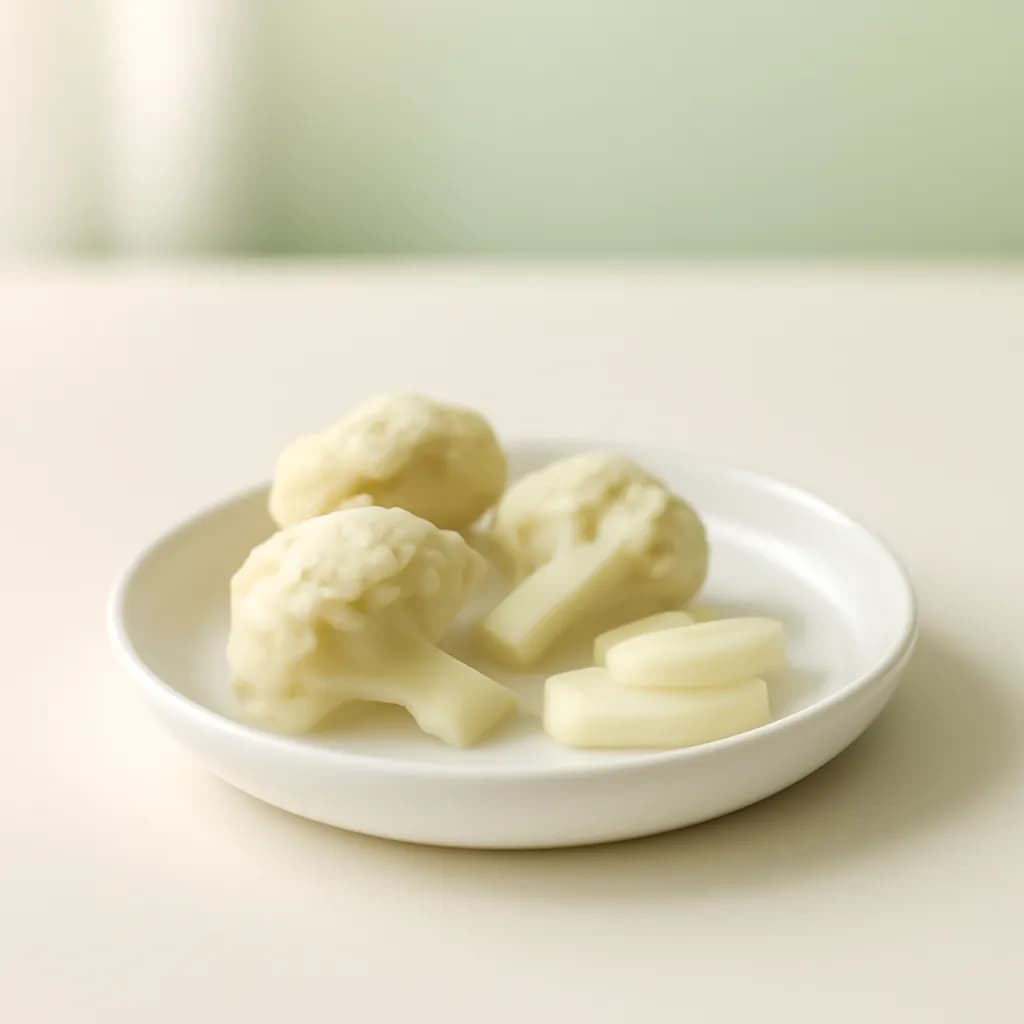
Cook cauliflower until the stem and head of the floret squash easily with a fork. Beginning eaters may use a soft, graspable floret with a tender handle or cauliflower mash; the real texture matters more than an exact centimetre size.
Raw stalks and undercooked florets are difficult to chew. Remove tough woody stems, avoid crisp roasted edges and adapt the presentation as your baby's grasp and chewing skills develop.
Quick answer
Cauliflower is among the vegetables the NHS lists for complementary feeding from around six months once a baby shows readiness for solids. Steam, simmer or roast it until the whole edible serving, including the stem, is soft enough to crush.
Select Baby's Age
6–8 months
Beginning solids: tender graspable floret or mash
Rinse cauliflower, trim leaves and woody stalk, then divide into florets with a short portion of tender stem. Steam or simmer until both head and stem collapse under gentle fork pressure. If a baby can grasp finger food, offer a soft, manageable floret that extends beyond the fist; otherwise mash and offer on a preloaded spoon. A golf-ball size or long hard stalk is not a safety guarantee, and crisp edges or crunchy raw florets are unsuitable.
6 month baby feeding schedule for more tips.
9–11 months
Improving grasp: smaller soft florets if manageable
Once your baby can use thumb and forefinger and move textured food in the mouth, try smaller fork-soft floret pieces or a moist mash with soft cauliflower. Peel away hard stem portions and check for any tough centre. Some babies will still manage a larger soft floret or spoonful better than tiny pieces; the switch is guided by skills, not a nine-month deadline.
12+ months
Toddler meals: soft florets in family dishes
Offer cooked cauliflower in tender pieces, mashed into potatoes or mixed into a low-salt family meal. Confirm the thickest stems are soft and trim browned hard edges from roasted florets. Age twelve months does not make raw crunchy cauliflower, hard stalks or dense crispy fritters automatically easy to manage. Remain present while the child eats.
When can babies eat cauliflower?
A beginning eater may practise with a soft floret or mashed cauliflower on a preloaded spoon. Never assume a firm stalk is safe because the head looks cooked; test the centre and remove any tough sections.
Vegetable variety is valuable, but cauliflower alone is not an iron-rich meal. Pair it with suitable iron-containing foods over the course of the day.
See our first foods for baby guide for more ideas.
Ways to serve very soft cauliflower
Serving ideas only; check food texture, allergens and any family recipe before offering.
- Plain steamed cauliflower mashed with a little water
- Fork-soft cauliflower mixed into potato mash
- Soft cauliflower and fully cooked lentil mash
- Well-cooked cauliflower and a previously tolerated cheese sauce without added salt (milk allergen)
Explore our baby-led weaning food list and first foods for baby for more inspiration.
More Cutting Guides
Related Guides
View all feeding guidesFrequently Asked Questions
Can a six-month-old have cauliflower florets?
Yes, once ready for solids, if the entire floret including its stem is very soft. Try a manageable tender floret or mash according to feeding skills.
Should cauliflower stems be removed?
Remove woody or hard stalk portions and test the remaining stem after cooking. It should mash easily rather than stay tough.
Is roasted cauliflower suitable for baby-led weaning?
It can be if all parts are very soft and any hard browned or crispy edges are removed. Steam or simmer if roasting makes a tough crust.
Do cauliflower florets have to be a certain size?
No measurement removes choking risk. Start with a soft piece the child can manage and adapt to observed grip and chewing rather than a birthday-specific chart.
Sources & References
This guide is informed by current guidelines from leading health organizations:
- ●NHS - Your Baby's First Solid Foods NHS
- ●NHS - Feeding your baby from around 6 months NHS
- ●NHS - Preparing Food Safely for Babies NHS
- ●CDC — Choking Hazards (reviewed March 2026) CDC
- ●CDC - When, What, and How to Introduce Solid Foods CDC
