How to Prepare Salmon for Baby
Last updated October 2026
Salmon can be introduced when a baby is ready for solids, typically around six months. It contributes protein and omega-3 fats, but what matters at the table is fully cooked fish that breaks into soft moist flakes, with bones checked and removed.
Both fresh and frozen salmon may be used if handled and cooked properly. Salmon is on the FDA/EPA lower-mercury 'Best Choices' list. A specific finger-sized strip, cube or photograph cannot guarantee safety, and fish remains a common allergen.
Quick answer
NHS guidance allows well-cooked fish among complementary foods once solids are started around six months, one new allergenic food at a time in a small suitable amount. Seek individual clinical advice if your baby has a known fish allergy or a reaction.
Select Baby's Age
6–8 months
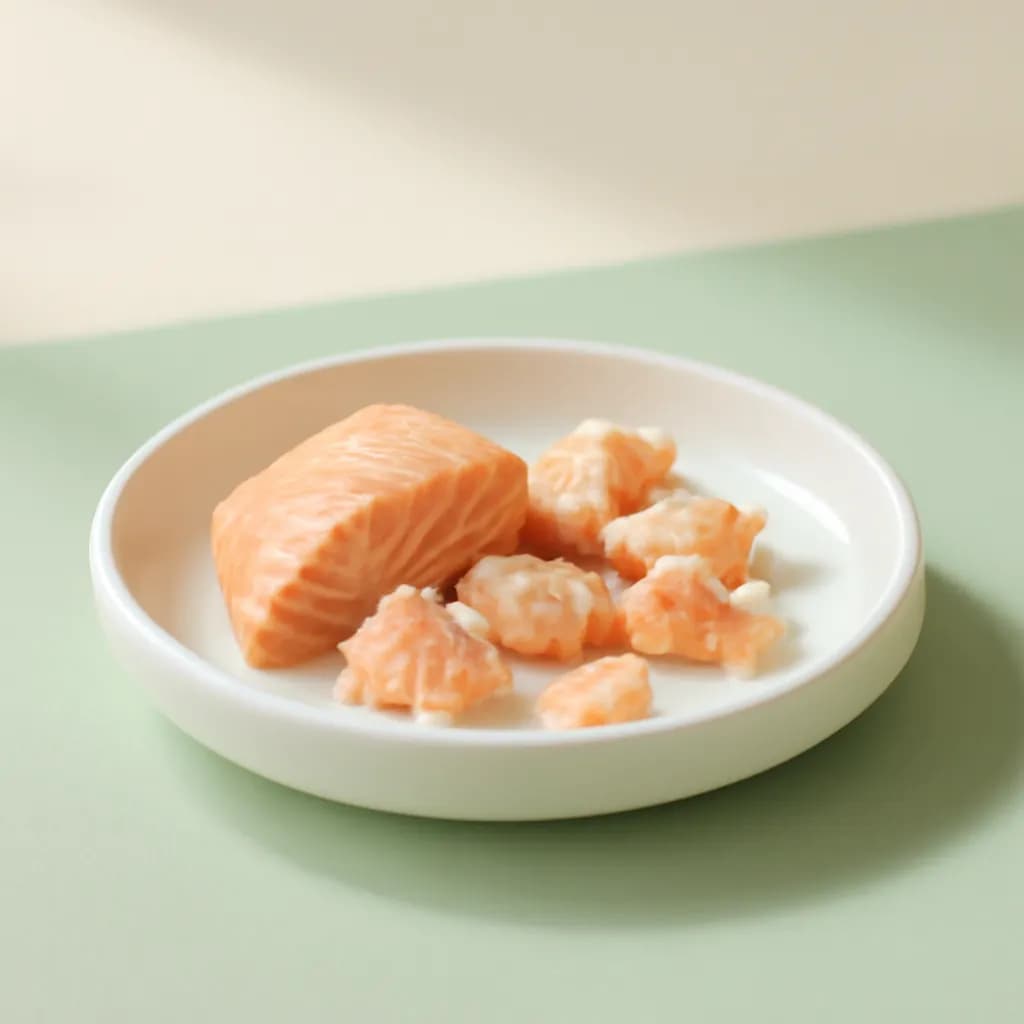
Beginning eater: moist mashed or tender flaked salmon
Bake, poach or steam a fresh or thawed salmon portion and confirm the thickest part has reached 63°C (145°F). Allow it to cool, run fingers carefully through the flesh to find pin bones, and remove all bones and any tough skin. Offer gently mashed or finely flaked moist fish from a preloaded spoon or in soft vegetables. A soft graspable piece is an alternative for a baby managing finger foods, not a required centimetre-sized strip.
6 month baby feeding schedule for more tips.
9–11 months
Developing finger skills: soft, thoroughly checked flakes
When a child can pick up smaller food, separate the cooked salmon into moist tender natural flakes rather than firm cubes. Check each flake for bones and break up pieces that stay dense or dry. Salmon can be combined with an already tolerated soft vegetable mash or offered as a small manageable flake for self-feeding. There is no automatic nine-month transition size.
12+ months
Toddler: continue bone checks in family dishes
Use fully cooked, boneless salmon in a low-salt soft family meal such as mash, pasta or vegetables. Natural moist flakes can be adapted to the toddler's chewing and swallowing ability; continue checking for pin bones even when labelled boneless. Avoid crunchy fried crusts, very dry flakes and salty smoked preparations. Supervise eating throughout.
When can a baby try salmon?
Cook salmon to an internal temperature of 63°C (145°F) using a food thermometer, following U.S. FDA advice. The thickest part should reach that temperature even if the outside looks opaque. Do not offer raw, smoked-raw or undercooked salmon to an infant.
Remove every pin bone and hard bone, inspect the skin and discard tough edges. The cooked flesh should separate into soft moist flakes; add unsalted mash if it has become dry. Follow local guidance about fish variety and mercury.
See our first foods for baby guide for more ideas.
Ways to use cooked salmon
Illustrative combinations only; actual cooking and food safety have not been kitchen-tested for these suggestions.
- Moist salmon flakes folded into plain potato mash
- Cooked deboned salmon with soft broccoli mash
- Fully cooked salmon and sweet potato served from a preloaded spoon
- Moist salmon in low-salt pasta with already tolerated dairy (milk allergen)
Explore our baby-led weaning food list and first foods for baby for more inspiration.
More Cutting Guides
Related Guides
View all feeding guidesFrequently Asked Questions
When can babies try salmon?
From around six months, once ready for solids, salmon can be offered fully cooked, thoroughly deboned and moist. Fish is an allergen, so introduce a small amount on an appropriate occasion.
What is the safe cooking temperature for salmon?
The U.S. FDA recommends cooking finfish to 63°C (145°F) internally. Measure the thickest portion with a thermometer and make sure the finished fish is easy to flake.
Are salmon pin bones always removed in fillets?
No. Examine each cooked portion with fingers and eyes and remove any remaining pin bones before offering it to a child.
Can a baby have smoked or raw salmon?
Avoid uncooked or cold-smoked raw preparations for a baby. Use properly cooked salmon, without salty coatings or tough skin.
Sources & References
This guide is informed by current guidelines from leading health organizations:
- ●FDA — Selecting and Serving Fresh and Frozen Seafood Safely FDA
- ●FDA - Mercury Levels in Fish FDA
- ●NHS - Preparing Food Safely for Babies NHS
- ●NHS - Food Allergies in Babies NHS
- ●NHS - Your Baby's First Solid Foods NHS
- ●CDC — Choking Hazards (reviewed March 2026) CDC