When can babies eat salmon?
Salmon can be introduced from around 6 months, when your baby shows signs of readiness: sitting up with little or no support, good head and neck control, and reaching for and bringing food to the mouth. There is no need to wait until after the first birthday. Current pediatric guidance encourages introducing common allergens, including fish, early and often once solids have begun, since delaying them does not lower allergy risk and may even raise it.
If your family has a history of food allergy or your baby has severe eczema or an existing food allergy, talk with your pediatrician about the best way to introduce fish. Otherwise, you can offer salmon as one of your baby's early proteins. Always cook salmon thoroughly until it flakes easily and reaches a safe internal temperature, and never serve it raw, smoked, or cured to a baby.
How to serve salmon safely
From 6 to 9 months, fully cook the salmon, let it cool, and check it carefully with your fingers to remove every small pin bone. Flake the fish into soft pieces your baby can pick up, or mash it and mix it into a familiar puree, mashed potato, or yogurt to add moisture. You can also offer a larger, soft strip of cooked fillet that your baby can hold and gnaw, which supports self-feeding while keeping pieces easy to manage.
From 9 to 12 months and up, as your baby's pincer grasp develops, serve smaller bite-sized flakes of boneless salmon that they can pick up themselves. Continue to feel through every piece for bones before serving and keep the texture soft and moist. Salmon mixes well into baby-friendly cakes, fritters, and pasta dishes. Whatever the age, avoid hard chunks and always double-check that no bones remain.
Nutritional benefits for babies
- 💚Rich in omega-3 fatty acids (DHA and EPA), which support brain, eye, and nervous-system development
- 💚A complete source of high-quality protein for growth and tissue repair
- 💚Naturally high in vitamin D, which helps the body absorb calcium and build strong bones
- 💚Provides vitamin B12 and other B vitamins that support energy use and red blood cell formation
- 💚Contains iodine and selenium, minerals that support thyroid function and healthy metabolism
- 💚Offers some easily absorbed iron, an important nutrient as babies' iron stores decline after about 6 months
Safety considerations
- ✓Salmon is a common allergen. Introduce it on its own when your baby is well, then watch for reactions before adding other new foods.
- ✓Introduce only one new allergen at a time, ideally earlier in the day, so you can spot and respond to any reaction.
- ✓Remove every bone. Run your fingers through the cooked, cooled flesh to find and pull out small pin bones before serving.
- ✓Cook thoroughly until the fish flakes easily, and never offer raw, smoked, or cured salmon to a baby.
- ✓Always supervise your baby while eating, seat them upright, and never leave them alone with food.
Recipes with salmon for babies
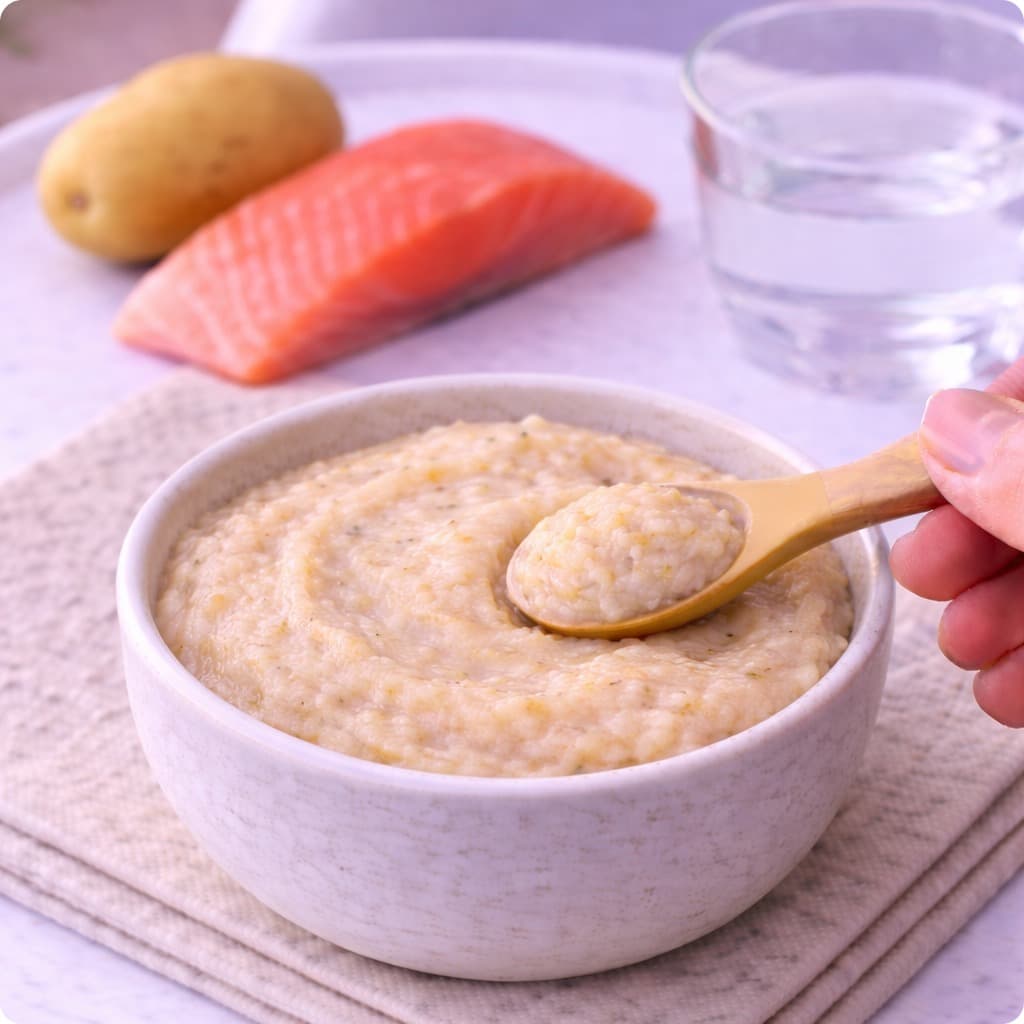
Salmon & Potato Purée
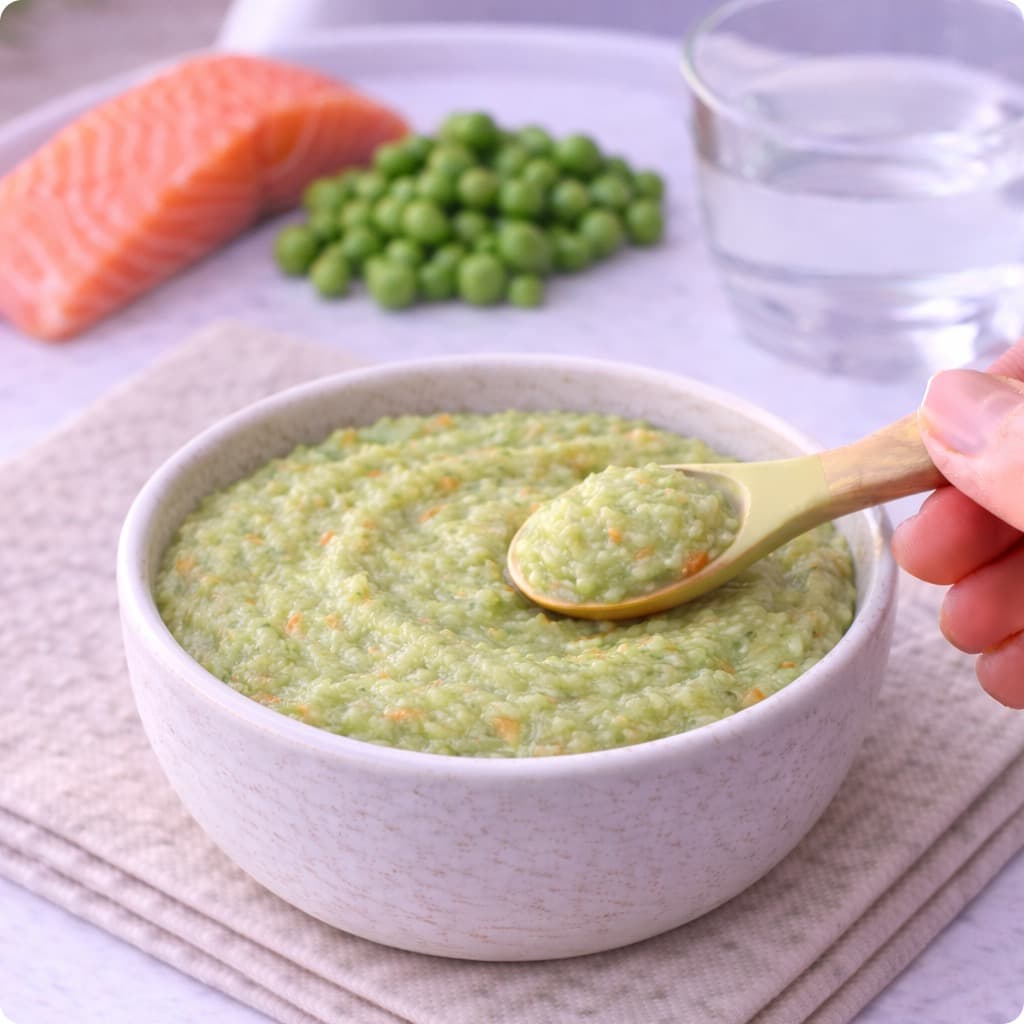
Salmon & Pea Mash
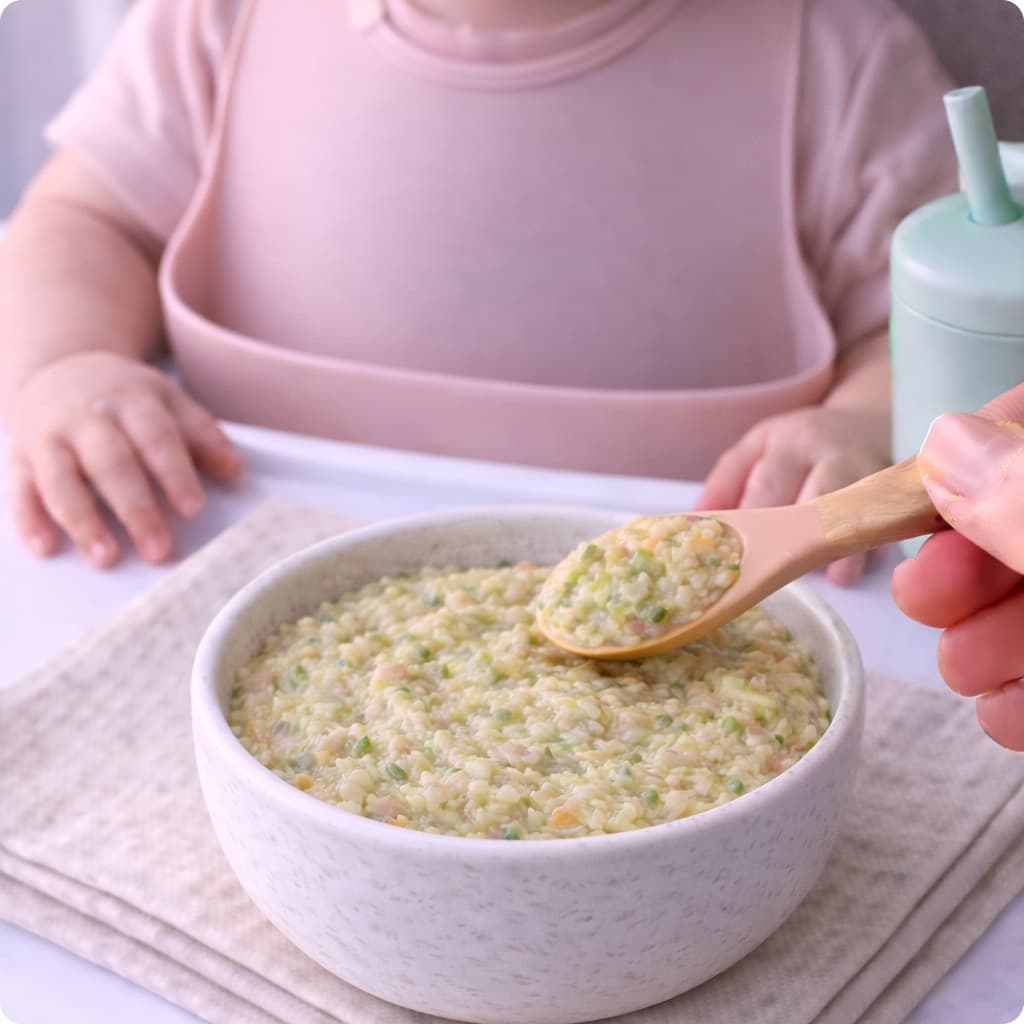
Salmon, Potato & Peas
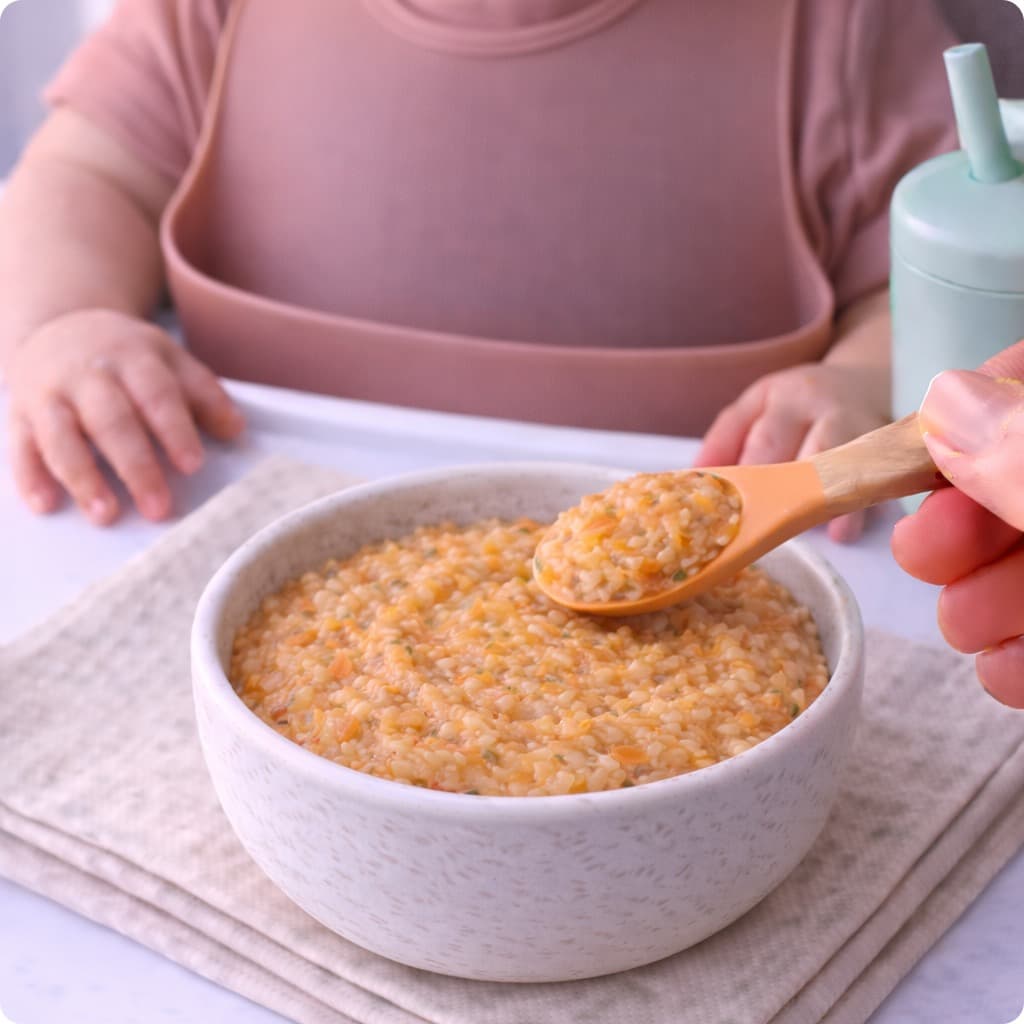
Salmon, Carrot & Rice
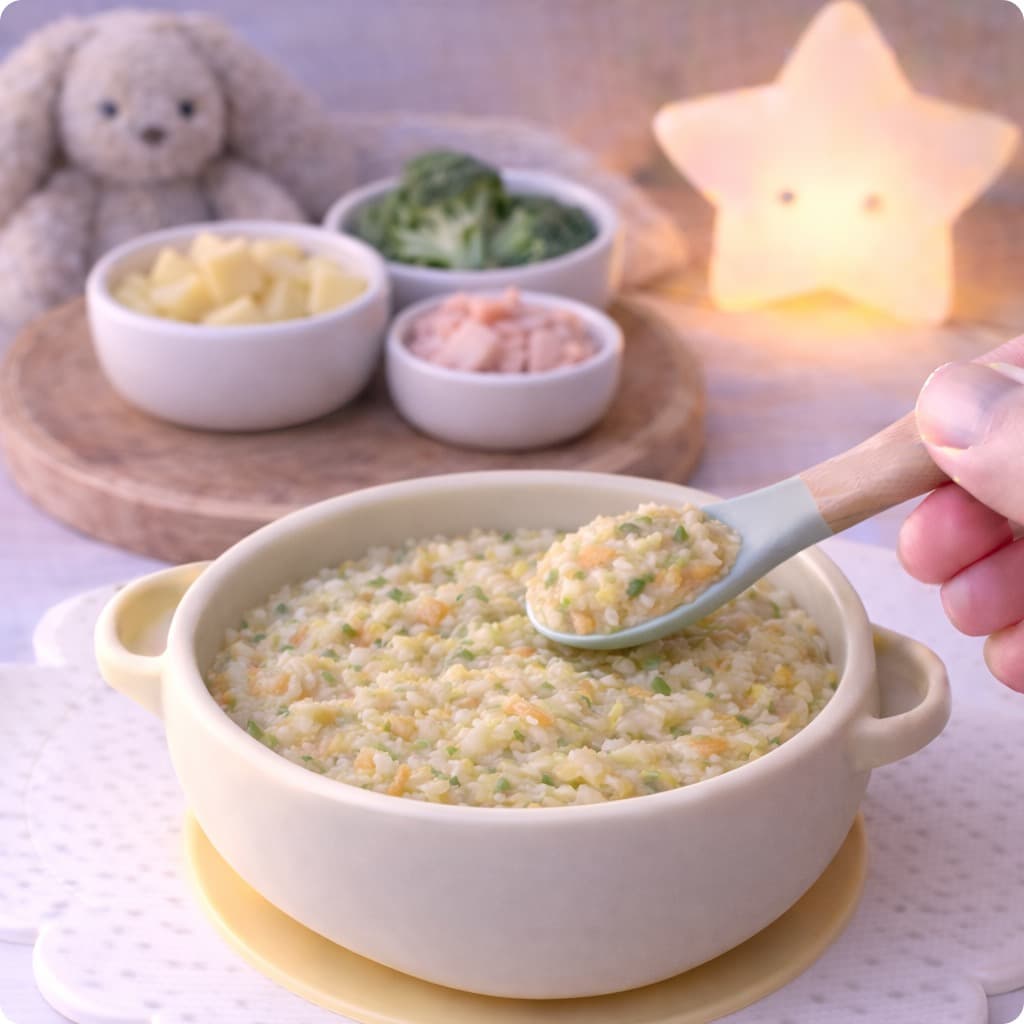
Salmon, Broccoli & Potato Bowl
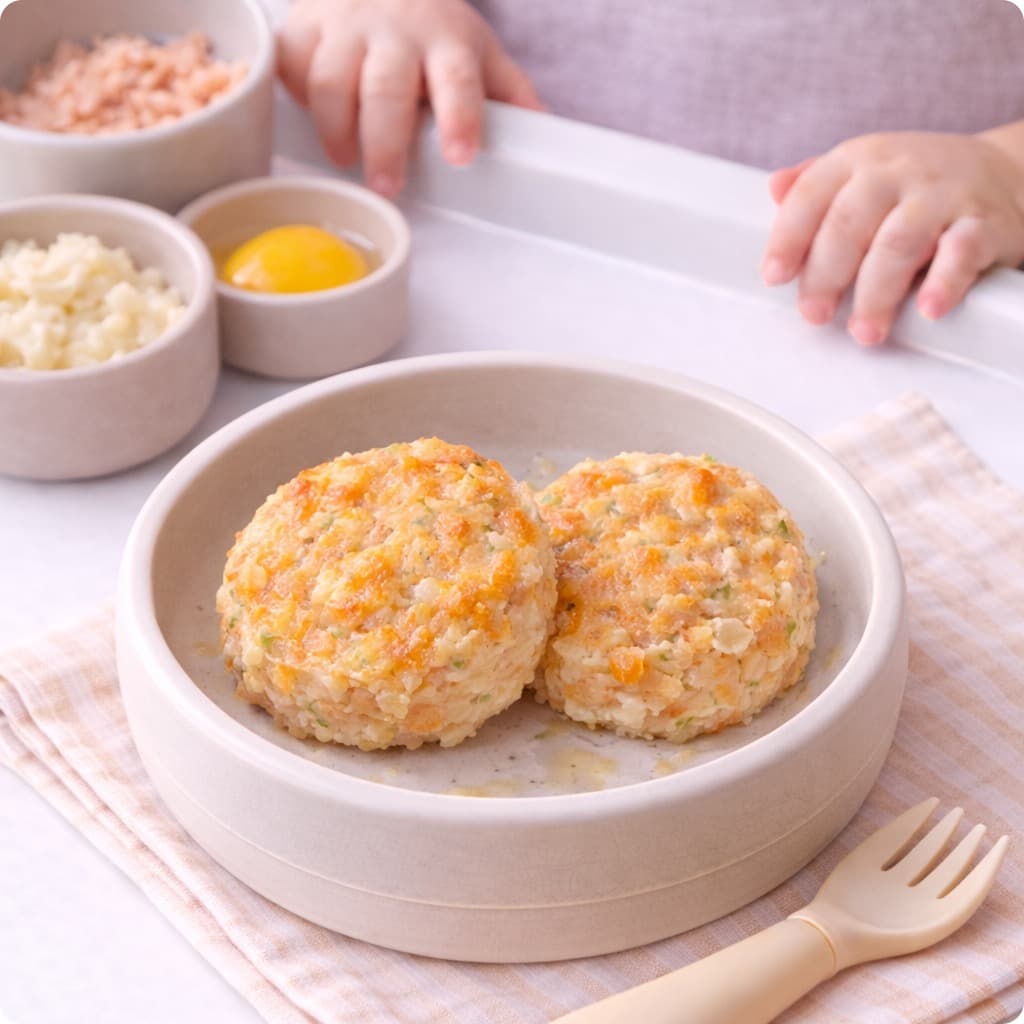
Salmon BLW Cakes (Soft Flakes)
Frequently asked questions
Is salmon a common allergen for babies?
Yes, fish is one of the more common food allergens. The good news is that introducing it early, from around 6 months, is recommended rather than delaying it. Offer salmon by itself the first few times and watch for any reaction such as hives, swelling, vomiting, or breathing changes.
How much salmon can my baby eat?
Start with a small taste and let your baby's appetite guide the amount from there. There is no fixed portion for babies, since intake varies day to day. Serving fish like salmon once or twice a week is a reasonable way to include it in a varied diet.
Can babies eat canned salmon?
Yes, plain canned salmon can be a convenient option once it is well drained and any large bones are removed. Choose varieties packed in water with no added salt, and mash or flake it into soft, moist pieces. Always check the texture and remove bones before serving.
Can babies eat smoked salmon?
It is best to avoid smoked, cured, and raw salmon for babies. These are not fully cooked and can be high in salt, and raw or lightly processed fish carries a higher risk of foodborne illness for little ones. Stick to salmon that has been cooked thoroughly until it flakes.
Is there mercury in salmon, and is it safe for babies?
Salmon is considered one of the lower-mercury fish, which is why it is often recommended as a good choice for babies and young children. Serving it about once or twice a week fits within typical guidance for low-mercury fish. If you have specific concerns, check current local advisories or ask your pediatrician.
How do I make sure all the bones are removed?
Cook the salmon, let it cool slightly, then gently flake or press the flesh apart with your fingers and feel for any small pin bones. Pull out any you find before serving. Doing this every time, even with fillets labeled boneless, keeps the meal choking-safe.
Can I give my baby salmon every day?
It is best to offer salmon and other fish a couple of times a week rather than daily, as part of a varied diet that includes other proteins. Rotating different foods gives your baby a wider range of nutrients. If you have questions about how often, your pediatrician can offer guidance for your family.
Get recipes + a feeding plan for your baby
Save this food to your baby's list, get age-appropriate recipes and follow a personalized feeding schedule - 350+ baby-safe meals in the app.
verifiedSources & References
This guide is informed by current guidelines from leading health organizations: