Mushrooms for Baby
Last updated October 2026
Babies ready for solids, usually around six months, can try thoroughly cooked cultivated mushrooms from a reputable shop. Offer a little finely minced or blended mushroom in a moist soft meal.
Quick answer
Ordinary edible shop-bought button, chestnut or portobello mushrooms can be offered once the baby is ready for solids, after cooking until tender and chopping to match actual eating skills.
How to cook and prepare mushrooms
Buy clearly identified cultivated edible mushrooms from a reputable food seller; do not use unknown foraged mushrooms. Clean off dirt, trim damaged or woody stalks, then cook thoroughly and test the thickest piece for tenderness. A cooked cap can still feel rubbery: mince or blend it into soft food instead of offering a slippery whole cap to a beginning eater.
Finely chop or blend cooked mushroom into mashed potato, lentils or a soft sauce for beginners. Inspect for rubbery strands and slippery intact caps.
As chewing develops, offer tender chopped pieces as appropriate instead of relying on a particular 9-month cutoff or fixed size. Avoid dense salty sauces, and check any milk, egg or wheat used in a dish.
Cool hot food to a serving temperature and watch the baby throughout the meal.
The right shape and size depend on your baby's eating skills, not on age alone. Step-by-step preparation: How to cut vegetables for BLW
Also check how to cut food for baby-led weaning for general BLW cutting tips.
When may babies try cultivated mushrooms?
The mushroom's origin is essential: do not feed a baby home-foraged mushrooms or mushrooms found outdoors, even if they resemble familiar species. If accidental wild-mushroom ingestion is suspected, seek urgent advice from poison control or emergency services without waiting for symptoms.
Mushrooms are not among major listed allergens, but an individual food reaction remains possible.
The flesh of a mushroom can be rubbery or slippery even when cooked. Whole caps, tough stems and age-based size rules do not make a serving suitable for every baby.
Never give unidentified wild, lawn or foraged mushrooms to a baby. The CDC cautions that some deadly wild-mushroom toxins are not removed by cooking.
See our first foods for baby guide for more ideas.
Choking and wild-mushroom safeguards
Never serve unidentified wild or foraged mushrooms: poisonous species may look edible and cooking does not always deactivate their toxins.
Contact poison control or emergency care promptly after suspected toxic wild-mushroom exposure, even if symptoms have not started.
Cook cultivated mushrooms thoroughly and mince, blend or chop to prevent rubbery, chewy chunks.
Remove tough stalks and avoid whole slippery caps for early eaters.
Choose plain low-salt food and monitor for any suspected reaction.
Have the baby seated upright and supervised throughout eating.
Mushroom recipes for babies
View all recipes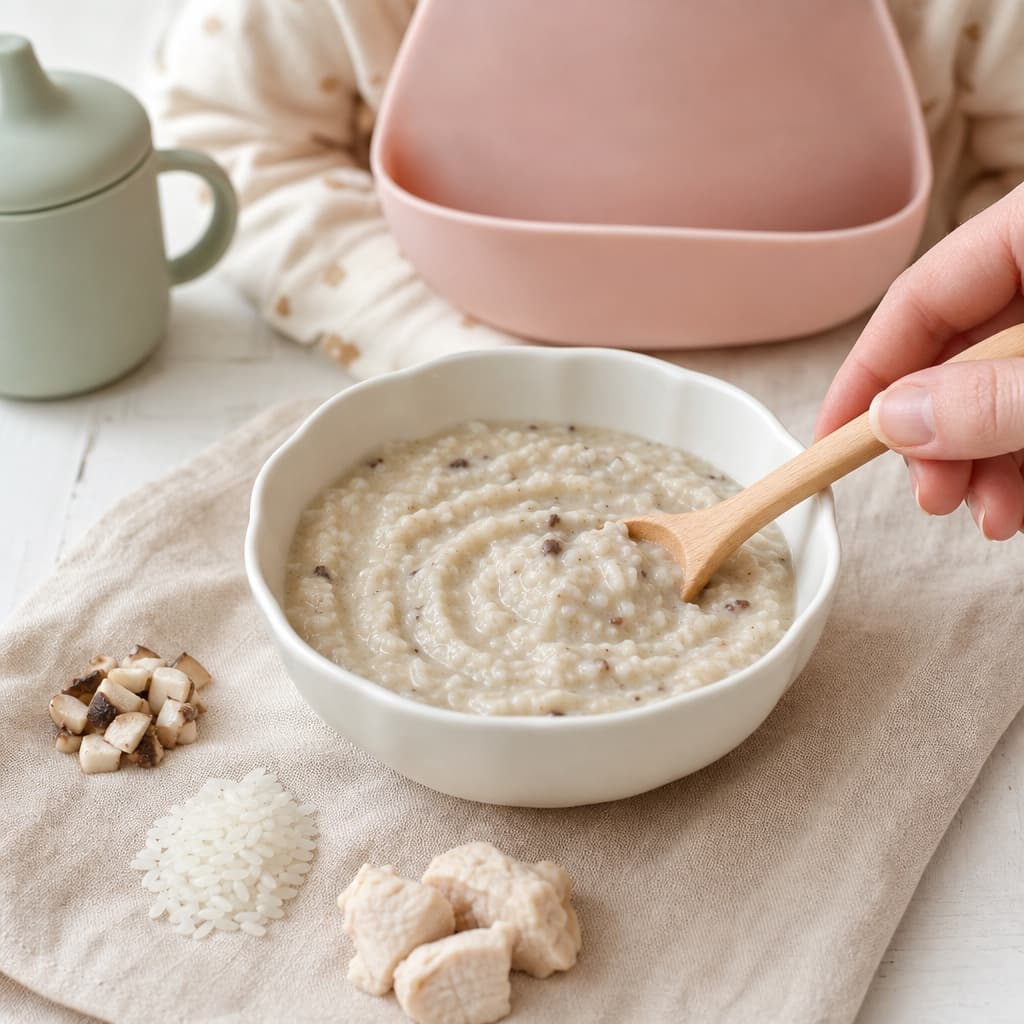
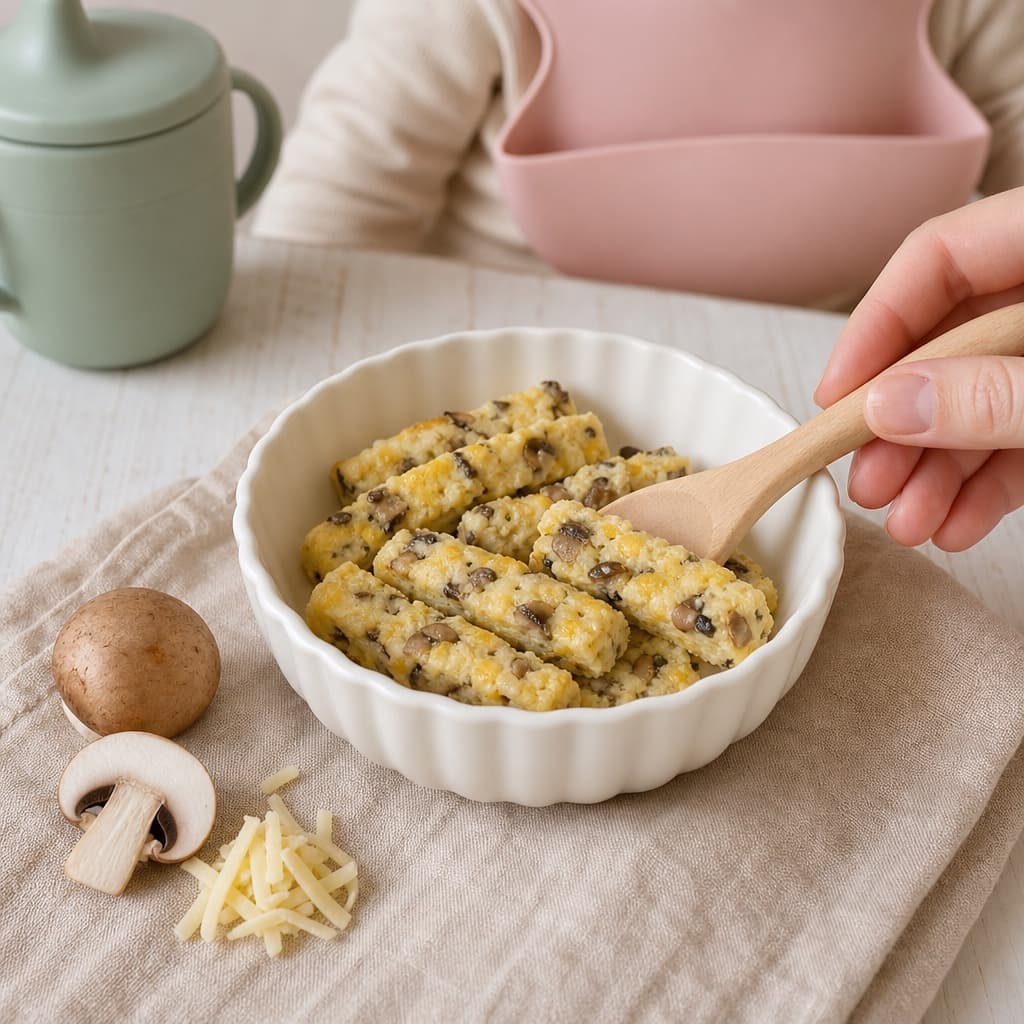
See all mushroom recipes for babies. Explore baby breakfast recipes, baby-led weaning recipes and first foods for baby for more ideas.
Related Guides
Frequently Asked Questions
Are cooked wild mushrooms safe if they look like shop-bought mushrooms?
No. Poisonous wild species may resemble cultivated mushrooms, and cooking does not reliably remove mushroom toxins. Do not feed unidentified or foraged mushrooms to a baby; if an unknown mushroom has been eaten, obtain poison-control or urgent medical advice immediately.
Sources & References
This guide is informed by current guidelines from leading health organizations:
- ●CDC - When, What, and How to Introduce Solid Foods CDC
- ●NHS - Your Baby's First Solid Foods NHS
- ●WHO - Complementary Feeding WHO
- ●CDC MMWR — Poisonous Mushroom Ingestions CDC
- ●NHS - Preparing Food Safely for Babies NHS
- ●CDC — Choking Hazards (reviewed March 2026) CDC
