Pork for Baby
Last updated October 2026
Plain pork can be offered from around 6 months when a baby is ready for solids. The challenge is preparing it both food-safe and easy to manage: a safely cooked piece can still be too dry, stringy or tough to chew.
Quick answer
From around 6 months, pork can join other iron- and zinc-containing foods alongside breast milk or formula. Start with a texture the baby can actually move and swallow, not a dry cube from an adult meal.
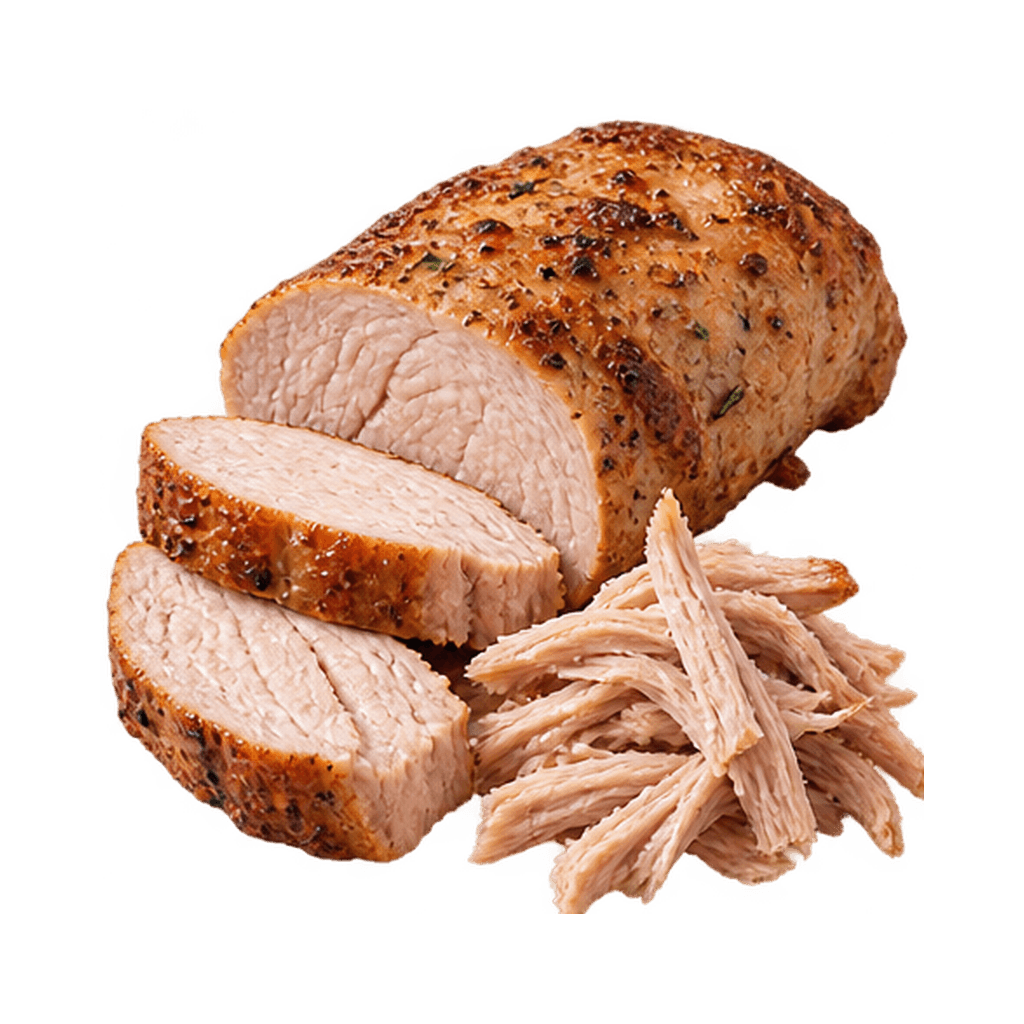
How to cook and serve pork for babies
Start with fresh pork and keep raw meat separate from ready-to-eat foods. Cook to the temperature required for the cut, check with a thermometer, and allow any required rest before preparing the baby's serving.
For a beginning eater, trim off bones, gristle and tough membrane, then finely mince or shred the fully cooked tender meat. Add a little unsalted cooking liquid or sauce if it is dry, or mix it into mashed vegetables.
For self-feeding, a soft, moist preparation that stays together can be easier to handle than loose dry fibres. Check that a meatball is cooked through and crumbles readily; do not assume a large strip is safe merely because it is graspable.
For older babies developing a pincer grasp, offer small, soft shreds or well-cooked mince in a stew or sauce. Recheck chewy edges and connective tissue even when using family leftovers.
The right shape and size depend on your baby's eating skills, not on age alone. Step-by-step preparation: How to cut pork for BLW
Also check how to cut food for baby-led weaning for general BLW cutting tips.
When can babies eat pork?
For U.S. food-safety recommendations, check a whole cut with a thermometer at 63°C (145°F) and rest three minutes; cook ground pork to 71°C (160°F). Higher or different requirements may apply in other countries. Tenderness and safe cooking temperature are separate checks.
Choose unprocessed pork where possible. Processed pork products can contain a great deal of salt, and sausage-shaped or rubbery pieces add choking risks.
Use a food thermometer for doneness rather than judging by pinkness or clear juices. For U.S. guidance, whole pork cuts reach at least 63°C (145°F) followed by a three-minute rest; ground pork reaches 71°C (160°F). Follow applicable local requirements.
For an early meal, finely shred tender meat and moisten it with an unsalted sauce or mix well-cooked mince into a mash. Avoid using bacon, ham and salty sausages as everyday substitutes for plain pork.
See our first foods for baby guide for more ideas.
Pork cooking and serving safety
Use a thermometer: U.S. USDA minimum for pork steaks, chops and roasts is 63°C (145°F) plus three minutes' rest; for ground pork it is 71°C (160°F). Observe local rules.
Pinkness or clear juices do not reliably show that pork has reached the correct internal temperature.
Remove bones, cartilage, tough fat and gristle; cut away any chewy browned crust before serving.
Moisten finely shredded or minced meat if it is dry; avoid tough cubes, stringy strips and rubbery pieces.
Limit salty processed pork such as bacon, ham and sausages; some also have risky firm or round shapes.
Wash hands and surfaces after handling raw meat and serve your child upright with continuous supervision.
Pork recipes for babies
We're adding more pork recipes. Check back soon.
Browse all baby recipes →See all pork recipes for babies. Explore baby breakfast recipes, baby-led weaning recipes and first foods for baby for more ideas.
Related Guides
Frequently Asked Questions
Is Pork a common allergen?
Pork is not typically a common allergen for babies. Many babies can try it from around 6 months as part of a varied diet.
What nutrients does Pork provide for babies?
Pork provides nutrients like iron, protein that support babies' growth and development.
Sources & References
This guide is informed by current guidelines from leading health organizations:
- ●AAP - Starting Solid Foods AAP
- ●AAP - Iron Needs for Babies and Toddlers AAP
- ●CDC — Choking Hazards (reviewed March 2026) CDC
- ●NHS - Preparing Food Safely for Babies NHS
- ●USDA FSIS - Safe Minimum Internal Temperatures USDA