Can babies eat pork?
Last updated October 2026
Yes.
Babies who are ready for solids, usually around 6 months, can eat pork that has been cooked to a safe internal temperature and prepared in a very soft, moist texture. For food safety, USDA guidance distinguishes whole cuts (63°C/145°F plus a three-minute rest) from ground pork, which needs 71°C/160°F. For feeding safety, remove bones, gristle and tough edges and offer finely minced, shredded or mashed meat a baby can manage. Cooking temperature and chewable texture are separate checks.
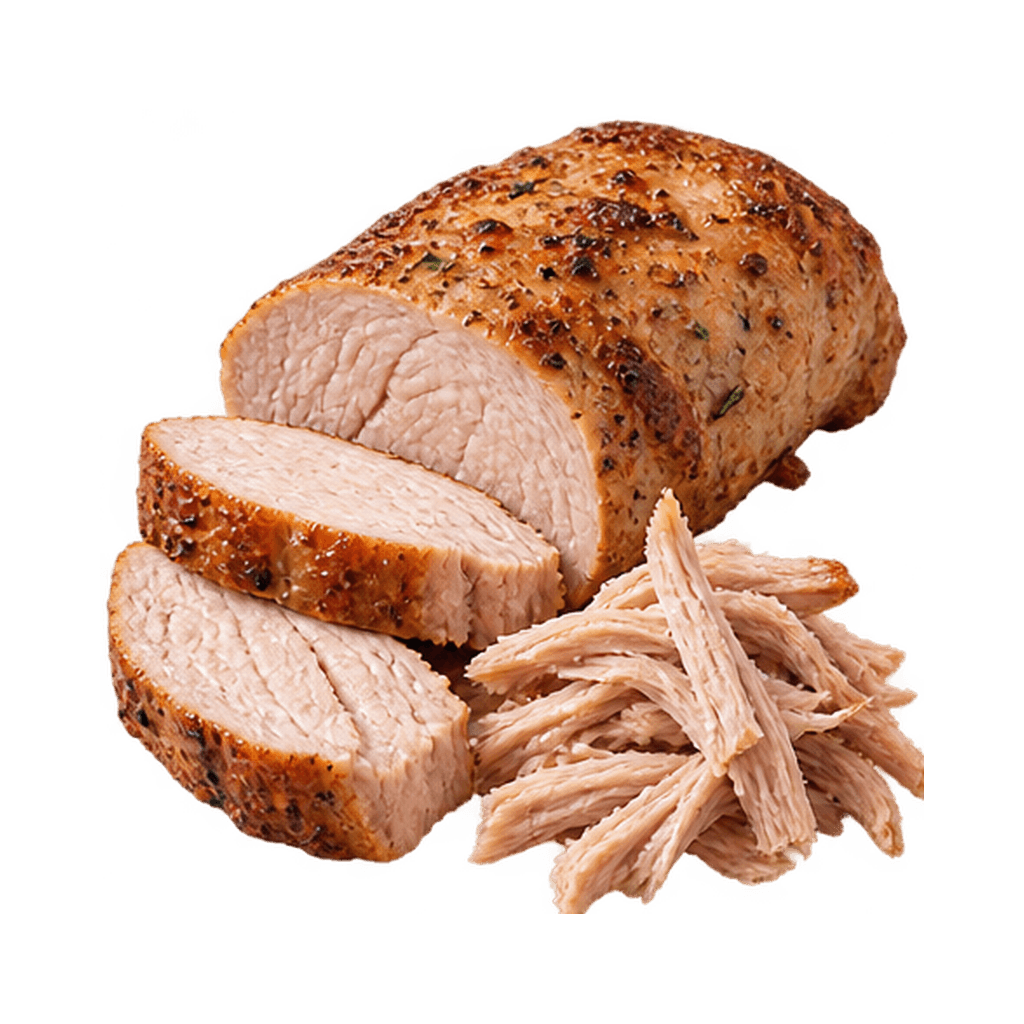
When can babies try pork?
Pork can be part of complementary foods from around six months, when the baby shows feeding readiness such as head control, sitting with support and swallowing food. It can supply protein, zinc and some iron, though actual iron content varies by cut. Keep offering other iron-rich foods and breast milk or infant formula alongside solids.
Plain fresh pork is easier to tailor for a baby than cured bacon, ham or sausage. Processed meats often contain substantial salt and may be firm, round or chewy. Pork is not among the most common food allergens, but any new food can still cause a reaction.
Cook pork thoroughly, then make it soft enough to eat
Use a food thermometer at the thickest part, away from bone. Under USDA guidance, whole pork steaks, chops and roasts reach at least 63°C (145°F) and rest for at least three minutes; ground pork reaches 71°C (160°F). Ground mixtures and leftovers may have different required temperatures. Cooking until the meat 'looks white' or its juices run clear is not a reliable thermometer substitute. Check your local food-safety rules if they differ.
Choose pork that has met the appropriate measured cooking temperature, then remove every bone, hard fat edge and gristle before shredding or mincing. Braise or slow-cook to make it moist and easy to mash; cooking until food-safe does not by itself make fibrous meat easy to chew. Mix the tender meat into a suitable soft vegetable or bean dish, and cool before serving.
For a beginner, mash, mince or finely shred tender pork into a cohesive soft meal; for a child who can manage pieces, consider moist soft bite-size portions. Long finger-length strips and pea-sized cubes are not automatically safe based on age alone. Watch the actual chewing skills and keep the baby seated upright throughout the meal.
Food-safety temperatures and choking checks
Use a thermometer: USDA whole cuts need 63°C/145°F plus a three-minute rest; ground pork needs 71°C/160°F. Color is not a dependable doneness test.
Trim all bones, gristle, tough roast edges and hard fat. Avoid dry stringy meat and chewy, round chunks that are hard for a beginner to manage.
Choose plain unprocessed pork where possible; bacon, sausage and ham can be salty and may add separate choking hazards.
Avoid raw-meat cross-contamination; clean surfaces, separate raw and ready-to-eat foods, refrigerate leftovers promptly and reheat safely.
Keep the baby seated upright and watch every mouthful; seek medical advice for suspected allergic reactions or persistent chewing or swallowing difficulty.
What pork can add to a baby's meal
Pork provides complete protein needed as part of a varied diet for growth.
It supplies iron and zinc, with quantities depending on the cut and preparation; pork is not necessarily the richest iron source compared with other meats.
Thiamin (vitamin B1), vitamin B6 and vitamin B12 are found in pork, but a serving does not guarantee improved development.
Tender pork can bring variety to iron-containing meals; avoid allowing salty processed meat to become the routine choice.
Related guides
Frequently asked questions
Can a 6-month-old eat pork?
Yes, when they are ready for solids. Cook pork safely, then offer it tender, moist and minced, shredded or mashed to match the baby's eating skills. Remove bones and gristle.
What temperature should pork reach for baby food?
USDA guidance is 63°C/145°F for whole pork chops, steaks or roasts followed by at least three minutes of resting, and 71°C/160°F for ground pork. Check the center with a food thermometer rather than using color alone.
Is pork a choking hazard?
Tough, chewy or dry meat pieces, bones and gristle can be choking hazards. Shred or mince fully cooked, tender meat into a manageable moist texture and supervise the baby while seated upright.
Can I serve slow-cooked pulled pork?
Plain pulled pork may work if it has reached the correct cooking temperature, becomes very tender and is finely shredded or mashed with moisture. Avoid stringy dry strands, bones and salty barbecue sauces.
Is pork an iron-rich first food?
Pork contributes iron and zinc, but amounts vary widely by cut. Include a range of iron-containing foods rather than assuming every pork serving is high in iron.
Can my baby have bacon, ham or sausage instead?
These products can be high in salt and some have round or firm shapes that are harder to manage. Plain, properly cooked pork is easier to adapt for a baby; do not treat a sausage round as equivalent to soft minced meat.
Does pork need to be cooked until completely white?
No. Colour does not verify doneness: USDA guidance uses a food thermometer (63°C/145°F and a three-minute rest for whole cuts, 71°C/160°F for ground pork). Follow applicable local rules, remove hard parts and check that the cooked meat is also tender enough for the child.
Sources & References
This guide is informed by current guidelines from leading health organizations:
- ●NHS - Your Baby's First Solid Foods NHS
- ●AAP - Iron Needs for Babies and Toddlers AAP
- ●AAP - Choking Prevention AAP
- ●USDA FSIS — Safe Minimum Internal Temperature Chart USDA
- ●CDC — Choking Hazards (reviewed March 2026) CDC
- ●NHS - Preparing Food Safely for Babies NHS
- ●CDC — Foods and Drinks to Avoid or Limit (2026) CDC