When can baby eat eggs?
Last updated October 2026
Babies can usually try egg, including both yolk and white, from around six months when ready for solids. Egg is an important food allergen, but routinely delaying it is not recommended. Offer a small amount in a manageable soft preparation, then continue serving it as part of the diet if tolerated. Egg-cooking guidance differs by country: U.S. food-safety advice calls for firm whites and yolks, whereas the UK NHS permits lightly cooked British Lion stamped hen eggs for most babies. Other eggs and special medical situations require their own guidance.
When can babies start eating egg?
From around six months, after showing readiness signs for solids, egg can be offered in small amounts as a new allergenic food. The NHS advises introducing potentially allergenic foods one at a time in very small amounts so reactions can be recognized; once tolerated, keep them in the normal diet.
You do not need a yolk-only phase to 'test' egg allergy: proteins in both parts can matter, and yolk-only introduction is not a proven prevention strategy. If the child has a diagnosed egg allergy, follow their allergy team's individual plan rather than reintroducing egg at home.
Cook eggs according to local public-health guidance. In the U.S., FDA guidance recommends firm yolk and white. The UK NHS permits lightly cooked or raw British Lion stamped hen eggs for most babies, but eggs without that assurance, and duck, goose or quail eggs, need thorough cooking. This UK exception should not be applied globally.
How to serve egg in a manageable texture
For a first offering, use a small amount of well-cooked soft scrambled egg or mashed hard-boiled egg mixed with a familiar moist food. Make the texture soft and easy to manage; do not rely on a fixed wedge length or cooking-minute count to guarantee safety.
A soft, fully cooked omelette may be cut into a graspable portion for a baby who can self-feed. Check that the inside is cooked according to local food-safety requirements and that edges have not become rubbery.
As chewing and pincer grasp improve, offer smaller moist egg pieces in a meal. Eggs in muffins and pancakes are still egg exposure; do not presume baked egg is safe for a child with a diagnosed egg allergy.
Keep a first introduction simple, sit with the child while eating, and continue tolerated egg regularly as part of a varied diet, rather than setting a universal daily serving requirement.
Allergy and cooking checks
Egg is a common allergen. Introduce a small amount and observe for signs of reaction; follow a clinician-led plan if your child has known food allergy or relevant severe eczema.
Do not claim that a little redness is definitely contact irritation. Hives, swelling, vomiting or breathing symptoms after egg need appropriate medical assessment; severe symptoms require emergency help.
For U.S. food safety, cook egg until yolk and white are firm. UK NHS guidance has a narrowly specified exception for British Lion stamped hen eggs; apply national guidance rather than a universal rule.
Do not assume that muffins or pancakes containing baked egg are safe for a child with confirmed egg allergy; an allergist should guide any testing.
Avoid dry rubbery pieces or hard crusts, and check that your baby's serving is soft and manageable.
Do not promise allergy prevention from a particular first dose, food shape or interval; if tolerated, keep egg in ordinary varied meals.
What eggs contribute
Eggs supply protein as part of a varied complementary diet.
They contain choline, a nutrient involved in normal nervous-system function.
Eggs contribute some vitamin B12 and selenium; specific levels vary.
Egg yolks supply some iron but should not be relied on as the only iron source for a growing baby.
Both yolk and white may be served when appropriate; separating them is not required for nutritional benefit.
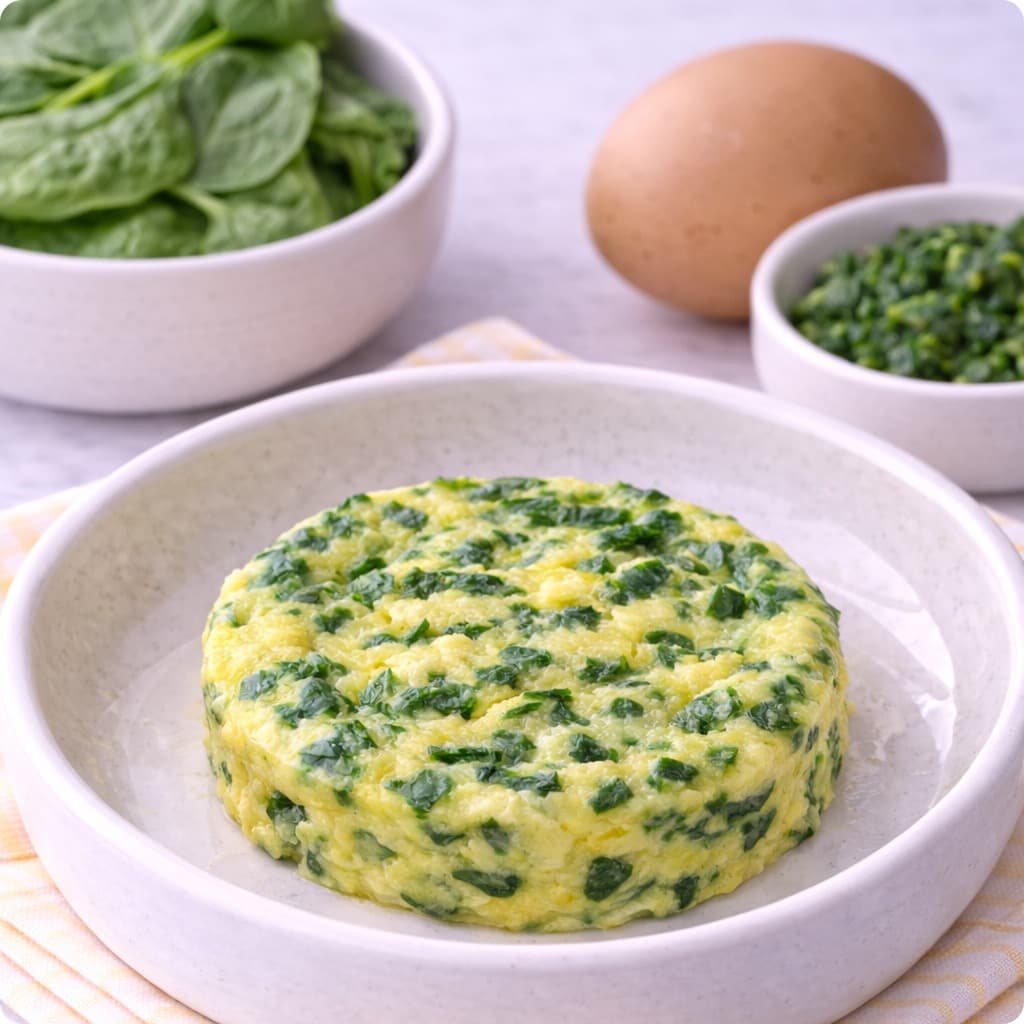
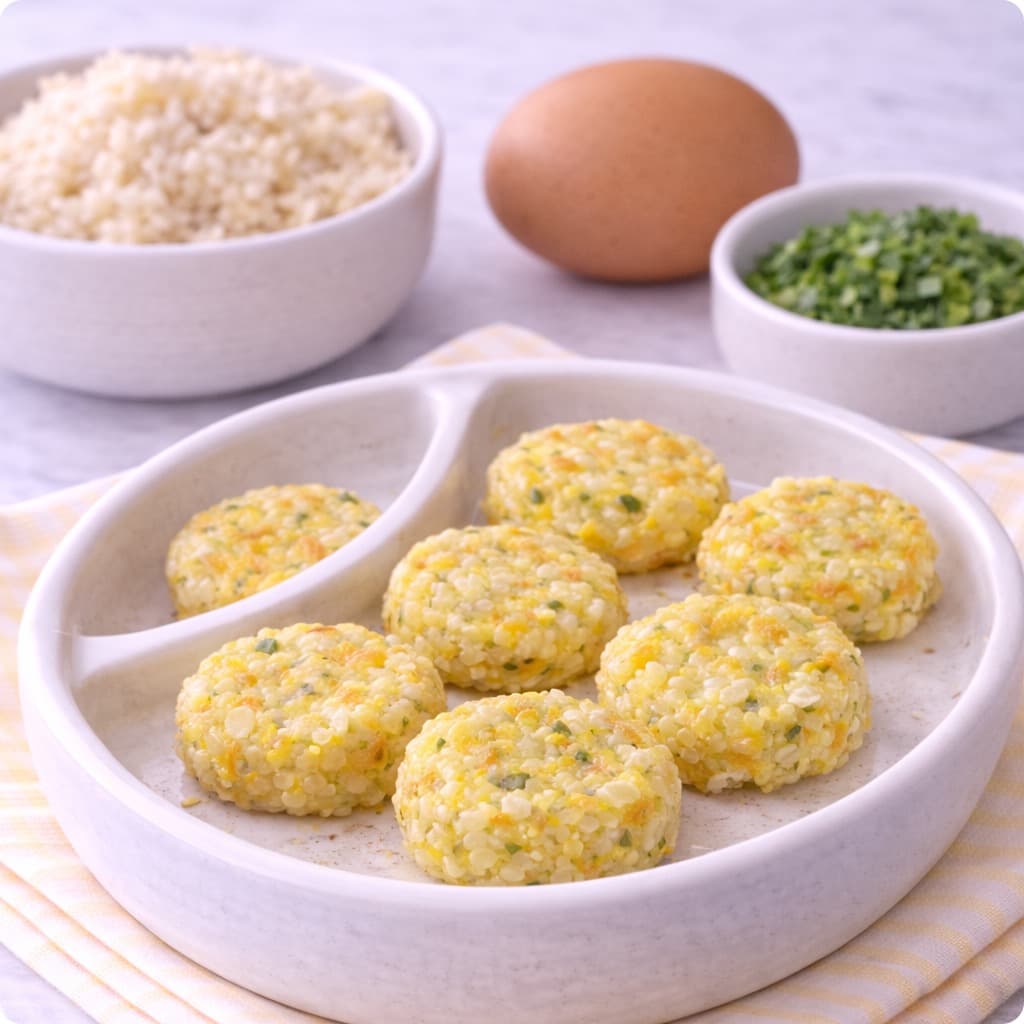
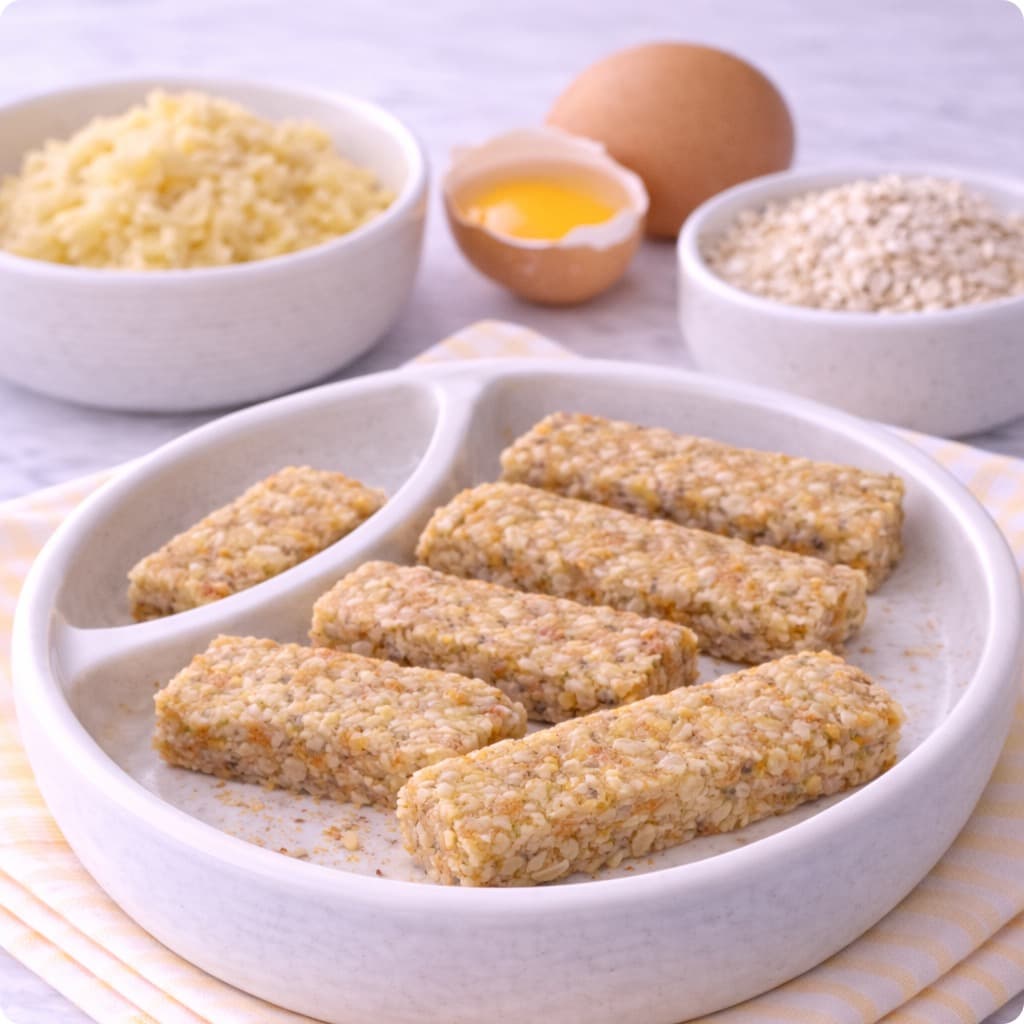
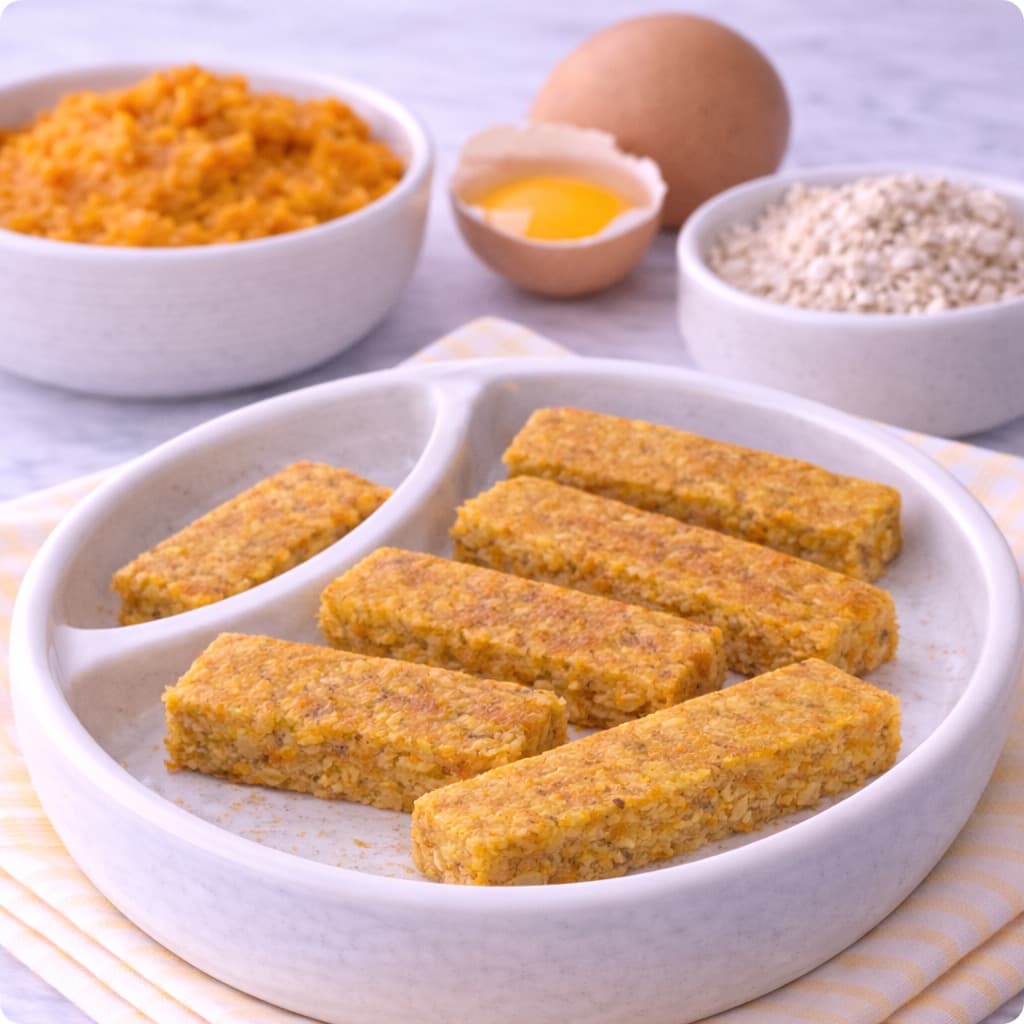
Egg recipes for babies
View all recipes

Related guides
Frequently asked questions
Can a six-month-old eat a whole egg, including the white?
Yes, a baby who is ready for solids can be introduced to both yolk and white. Begin with a small serving of properly prepared egg; a yolk-only phase has not been shown to prevent egg allergy.
Should I introduce egg before other allergens?
There is no universal required order for all infants. Introduce common allergens from around six months in small recognizable servings according to local guidance, ideally one new allergen at a time so symptoms are identifiable.
Do eggs need to be fully cooked for babies?
In U.S. FDA guidance, the yolk and white should be firm. The UK NHS allows lightly cooked British Lion stamped hen eggs for most babies, with exceptions for other eggs and some medical conditions. Follow the rules relevant to the eggs you actually have and where you live.
What does an egg allergy reaction look like?
Possible symptoms include hives, swelling, vomiting or respiratory changes. A localized rash cannot be reliably diagnosed from its position. Stop offering suspected trigger food and seek advice; breathing problems or rapidly severe symptoms require emergency services.
Can a baby with egg allergy eat egg baked into a muffin?
Do not try this on your own. Some people with egg allergy tolerate extensively baked egg, but it is not guaranteed, and an allergy specialist should decide whether and how to assess baked-egg tolerance.
How much egg should a baby eat at first?
Start with a small amount rather than a prescribed fraction of an egg. The appropriate portion varies with appetite, prior allergies and clinician advice; no single quantity makes an introduction allergy-proof.
Can I keep serving egg after the first introduction?
If egg has been tolerated, keep offering it as one of the foods in the regular diet, alongside other iron-containing foods. There is no need to present egg as the only or compulsory protein source every day.
Sources & References
This guide is informed by current guidelines from leading health organizations:
- ●NHS - Feeding your baby from around 6 months NHS
- ●NHS - Foods to Avoid Giving Babies NHS
- ●NHS - Food Allergies in Babies NHS
- ●FDA - Dairy and eggs food safety FDA
- ●CDC - When, What, and How to Introduce Solid Foods CDC
