Baby Gas and Digestion: Causes, Foods, and Relief Tips
Last updated May 2026
Understand why your baby gets gassy and how to reduce discomfort with simple feeding and food choices.
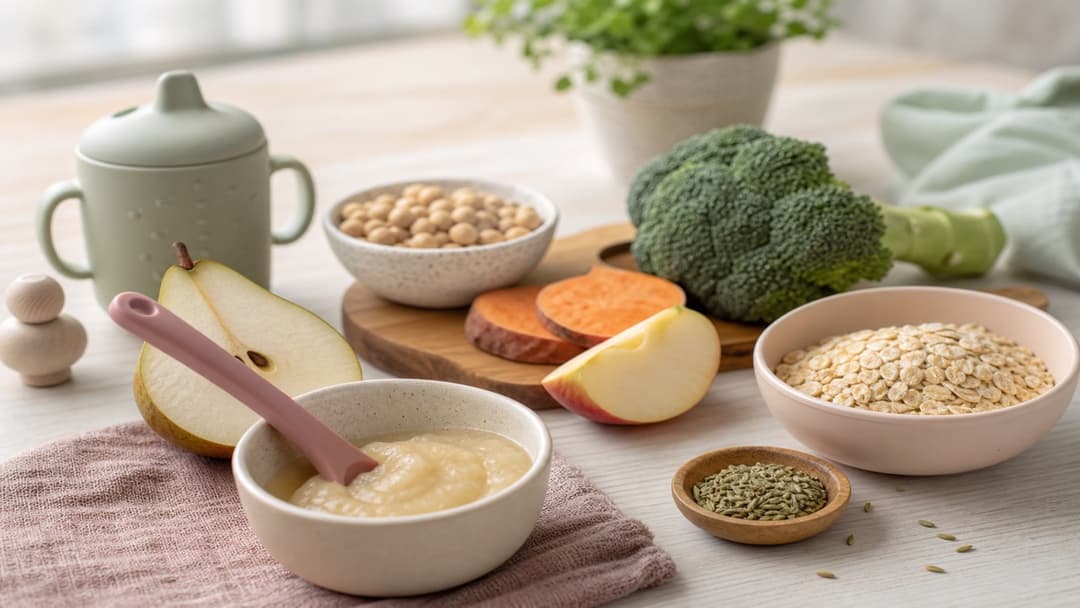
If your baby seems fussy, pulls their legs up, or cries after meals, gas may be the culprit. Baby gas after eating solids is very common, especially when new foods are introduced and the digestive system is still maturing. While it can look uncomfortable, most gas is harmless and improves with time and small feeding adjustments.
Starting solids between 6–12 months introduces new fibers, sugars, and textures that can temporarily increase gas. According to the NHS and AAP, babies’ digestive systems are still developing during this stage, which means certain foods and feeding habits can lead to extra air or fermentation in the gut.
The good news is that there are simple, practical ways to reduce gas and support digestion. From choosing gentler foods to adjusting feeding positions, small changes can make a big difference in your baby’s comfort.
Key takeaways
- Baby gas after eating solids is common and usually harmless.
- New foods and immature digestion are the main causes.
- Introduce gas-producing foods slowly in small portions.
- Gentle foods like sweet potato and rice are easier to digest.
- Burping and upright positioning help reduce discomfort.
- Watch for persistent symptoms that may need medical advice.
- Most babies outgrow gas as digestion matures.
Why Babies Get Gas
Gas forms naturally in the digestive system as food is broken down. In babies, this process is still immature, especially during the first year of life. When solids are introduced, gut bacteria begin fermenting new carbohydrates and fibers, producing gas as a byproduct. This is a normal and expected part of digestive development.
Babies also swallow air while feeding, particularly if they are eating quickly, crying, or not well latched during breastfeeding or bottle feeding. This trapped air can build up and cause discomfort, leading to fussiness, back arching, or pulling legs toward the tummy after meals.
Certain foods are more likely to produce gas because they contain complex carbohydrates that are harder to digest. This does not mean these foods are unhealthy-many are highly nutritious-but they may need to be introduced gradually in age-appropriate portions.
Over time, your baby’s digestive enzymes and gut bacteria mature, making gas less frequent. Most babies experience peak gassiness between 6–9 months when solids are increasing and then improve steadily.
Common Trigger Foods
Some foods are more likely to cause gas in babies, especially when first introduced. These foods often contain fermentable fibers or natural sugars that can produce gas as they are digested. This is not harmful, but it can lead to temporary discomfort in sensitive babies.
Vegetables like broccoli, cauliflower, cabbage, and Brussels sprouts are common culprits. These are part of the cruciferous family and contain compounds that can increase gas production. Similarly, beans and lentils, while rich in iron and protein, may cause bloating if introduced in large amounts too quickly.
Fruits such as pears, apples, and prunes contain sorbitol and fiber, which can loosen stools and create gas. Dairy products may also contribute to gas in some babies, especially if there is sensitivity to lactose or milk proteins.
Instead of avoiding these foods completely, offer small portions (1–2 tablespoons) and observe your baby’s response. Gradual exposure helps the digestive system adapt.
- Broccoli, cauliflower, cabbage
- Beans, lentils, chickpeas
- Apples, pears, prunes
- Onions and garlic
- Dairy products (in sensitive babies)
Normal vs Problematic Gas
Most gas in babies is normal and does not require treatment. Occasional fussiness, passing gas, and mild bloating-especially after meals-are expected during the transition to solids. If your baby is otherwise feeding well, growing, and settling between episodes, gas is usually not a concern.
However, some signs may suggest a feeding issue or sensitivity rather than simple gas. Persistent crying after every meal, poor weight gain, frequent vomiting, or blood or mucus in stools should be discussed with a healthcare provider.
According to the NHS and AAP, conditions such as cow’s milk protein allergy or reflux can sometimes mimic gas symptoms. These require proper evaluation rather than dietary guesswork.
Trust patterns over single episodes. A one-off gassy day is normal, but consistent discomfort linked to specific foods or feeding routines is worth exploring.
How to Reduce Gas Through Feeding
Feeding habits play a big role in how much air your baby swallows. Slowing down feeds, offering smaller portions, and ensuring your baby is calm before eating can reduce gas buildup. Avoid feeding when your baby is crying, as this increases air intake.
For bottle-fed babies, check that the teat flow is appropriate-too fast or too slow can both increase air swallowing. For breastfeeding, ensuring a deep latch can help reduce air intake during feeds.
Introduce new foods one at a time, ideally every 2–3 days. This helps you identify any triggers and allows your baby’s digestive system to adapt gradually. Start with small portions (1–2 tablespoons) and increase slowly.
Spacing meals and avoiding overfeeding also helps. Babies aged 6–9 months typically do well with 2–3 meals per day alongside milk feeds, as recommended by WHO guidance.
Best Foods for Sensitive Tummies
If your baby seems prone to gas, choosing gentle, easy-to-digest foods can make a big difference. These foods are typically lower in fermentable fibers and easier on an immature digestive system.
Well-cooked vegetables like carrots, zucchini, sweet potato, and pumpkin are excellent starting points. They are soft, mild, and less likely to cause gas compared to cruciferous vegetables.
Simple grains such as rice, oats, and baby-friendly pasta are also gentle options. Pairing these with small amounts of protein like chicken or lentils (well-cooked and mashed) can provide balanced nutrition without overwhelming digestion.
Fruits like banana and ripe avocado are usually well tolerated. Always serve foods in age-appropriate textures to support safe swallowing and digestion.
- Sweet potato, pumpkin, carrots
- Zucchini, peeled and cooked
- Rice, oats, soft pasta
- Banana and avocado
- Well-cooked chicken or tofu
Burping and Positioning Tips
Burping helps release trapped air from the stomach, reducing pressure and discomfort. Younger babies may need burping during and after feeds, while older babies on solids still benefit from a short burp after meals.
Hold your baby upright against your chest or seated on your lap, supporting their head and neck. Gentle pats or circular rubs on the back can help release gas. Even if no burp comes, the upright position itself can help gas move more comfortably.
Keeping your baby upright for 10–15 minutes after meals can also reduce gas and reflux. Avoid laying your baby flat immediately after eating, especially if they are prone to discomfort.
Gentle movement, such as supervised tummy time or bicycle leg motions, can also help move gas through the intestines.
When to Seek Help
While gas is usually harmless, there are times when it is important to seek medical advice. If your baby’s discomfort is severe, persistent, or affecting feeding and growth, a healthcare provider can help rule out underlying issues.
Red flags include poor weight gain, frequent vomiting, diarrhea, constipation lasting several days, or blood in the stool. These symptoms may indicate allergies, intolerances, or other digestive conditions that need evaluation.
If you suspect a specific food is causing repeated problems, discuss it with your paediatrician before eliminating major food groups. Unnecessary restriction can impact nutrient intake during a critical growth period.
Always trust your instincts-if something feels off or your baby seems unusually distressed, it is appropriate to seek guidance.
Digestive Development Timeline
Between 6–9 months, your baby’s digestive system is adjusting to solids, and gas is often more noticeable. Enzyme production is still developing, and gut bacteria are rapidly changing in response to new foods.
By 9–12 months, most babies tolerate a wider range of foods with less gas. Their digestive system becomes more efficient, and feeding skills improve, reducing air swallowing.
After 12 months, gas typically decreases significantly as the gut matures. A varied diet and regular meal patterns support a healthy microbiome and smoother digestion.
Every baby develops at their own pace, but gradual improvement is expected. Temporary gas during food transitions is normal and usually resolves without intervention.
Frequently Asked Questions
Why is my baby gassy after starting solids?
New foods and developing gut bacteria can increase gas. This is normal as your baby’s digestive system adjusts.
What foods cause gas in babies?
Common triggers include broccoli, beans, apples, pears, and dairy. Introduce them gradually in small portions.
How can I relieve my baby’s gas quickly?
Try burping, holding your baby upright, or gentle leg cycling. These help move trapped gas through the system.
Is gas painful for babies?
Gas can cause temporary discomfort, but it is usually not harmful. Persistent distress should be checked by a doctor.
Should I stop feeding foods that cause gas?
Not usually. Offer smaller amounts and reintroduce gradually so your baby can adapt.
How long does baby gas last after eating?
Gas typically settles within a few hours. Regular patterns should improve as digestion matures.
Can baby-led weaning cause more gas?
It can initially, as babies explore new textures and may swallow more air, but this improves with practice.
When should I worry about baby gas?
Seek help if there is poor weight gain, vomiting, blood in stool, or ongoing severe distress.
Do probiotics help with baby gas?
Some may help, but evidence varies. Speak to your paediatrician before using supplements.
Is gas worse at certain ages?
Gas is often most noticeable between 6–9 months when solids are first introduced.
verifiedSources & References
This guide is informed by current guidelines from leading health organizations:
Get personalised meal plans to support your baby’s digestion
Use the Nibli app to track foods, spot gas triggers, and discover gentle, balanced recipes tailored to your baby’s age and digestion needs.