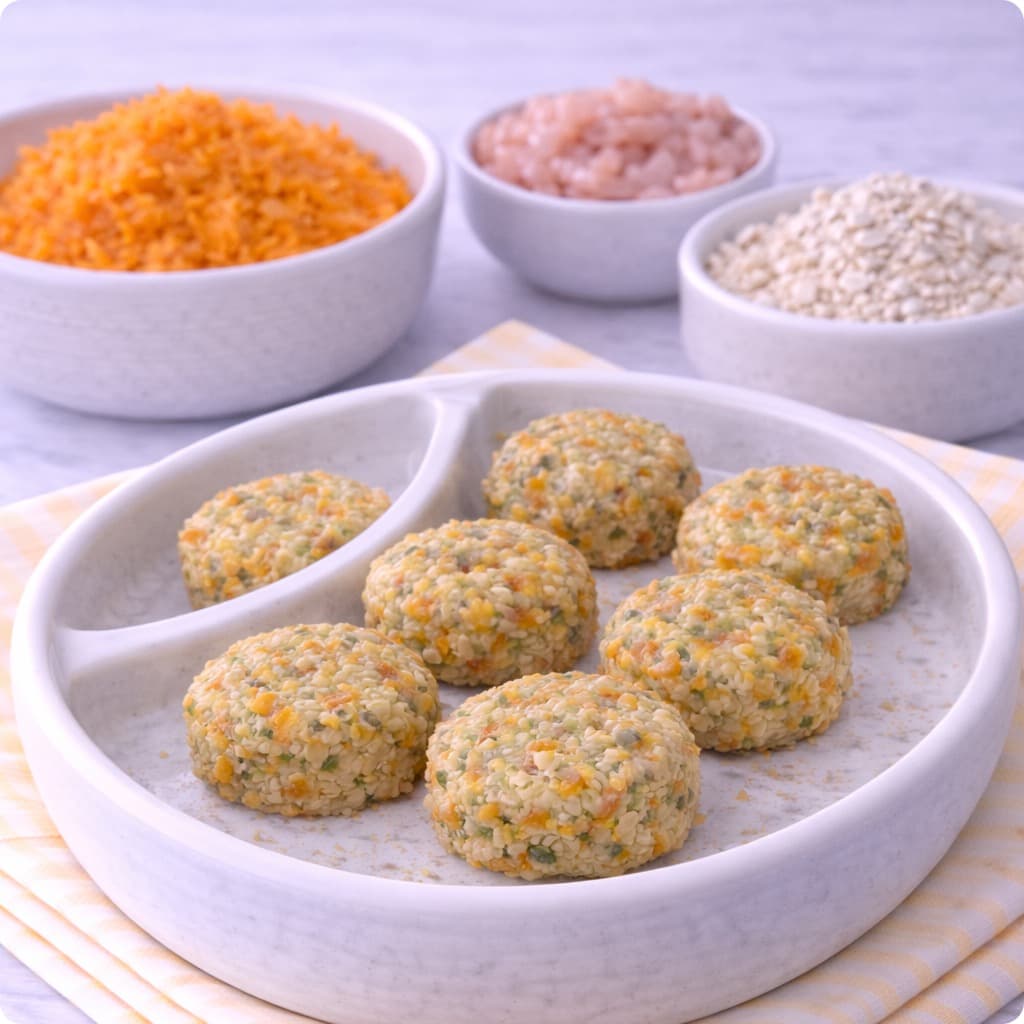
What 8-month-olds can do at meals
Self-feeding skills vary. Round blueberries, whole peas and similar foods are not automatically manageable when a baby begins to pinch food between fingers; flatten or mash them and check softness.
Offer soft mashed, lumpy or finely shredded foods as chewing skills develop. Teeth are not the deciding factor: moist tender meat, squashable vegetables and the baby's response guide texture progression.
Sample meal combos at 8 months
- Fully cooked meatball crumbles + tender pasta + unsalted tomato mash
- Black bean stew with thoroughly mashed beans + well-cooked moist rice
- Moist shredded beef + fork-soft mashed carrots
- Thin hummus spread (sesame allergen) + soft toast + flattened blueberries
- Fully cooked salmon checked for bones + soft moist couscous (wheat) + fork-soft zucchini
Top foods for 8-month-olds

Soft beef strips or mince
Excellent iron source. Cook beef safely until fork-tender, then finely shred it across tough fibres or offer moist, fully cooked mince without chewy chunks.

Small soft chicken pieces
Cook chicken thoroughly, remove bones and gristle, and offer very soft short moist shreds or finely minced pieces. A pincer grasp is not a requirement for trying suitably adapted chicken.
Black beans, kidney beans, chickpeas
Plant-based iron and fiber. Cook until thoroughly soft, then mash or flatten round beans and chickpeas; mix into a moist meal.
Mini meatballs
Family-style protein adapted for baby. Cook meatballs fully, then break them into soft, moist crumbles rather than serving intact round balls.
Soft pasta with vegetable sauce
Energy plus vegetables in one bowl. Choose larger shapes (penne, fusilli) for grasping, with an unsalted vegetable or lentil sauce.

Fork-soft cooked vegetables
Cook carrots, courgette, squash or potato until easily crushed; offer mash or tender manageable pieces instead of relying on pea-sized cubes.
Flattened or mashed blueberries
Wash and flatten or mash ripe blueberries until the round slippery shape is removed. Halving alone does not guarantee a manageable texture.
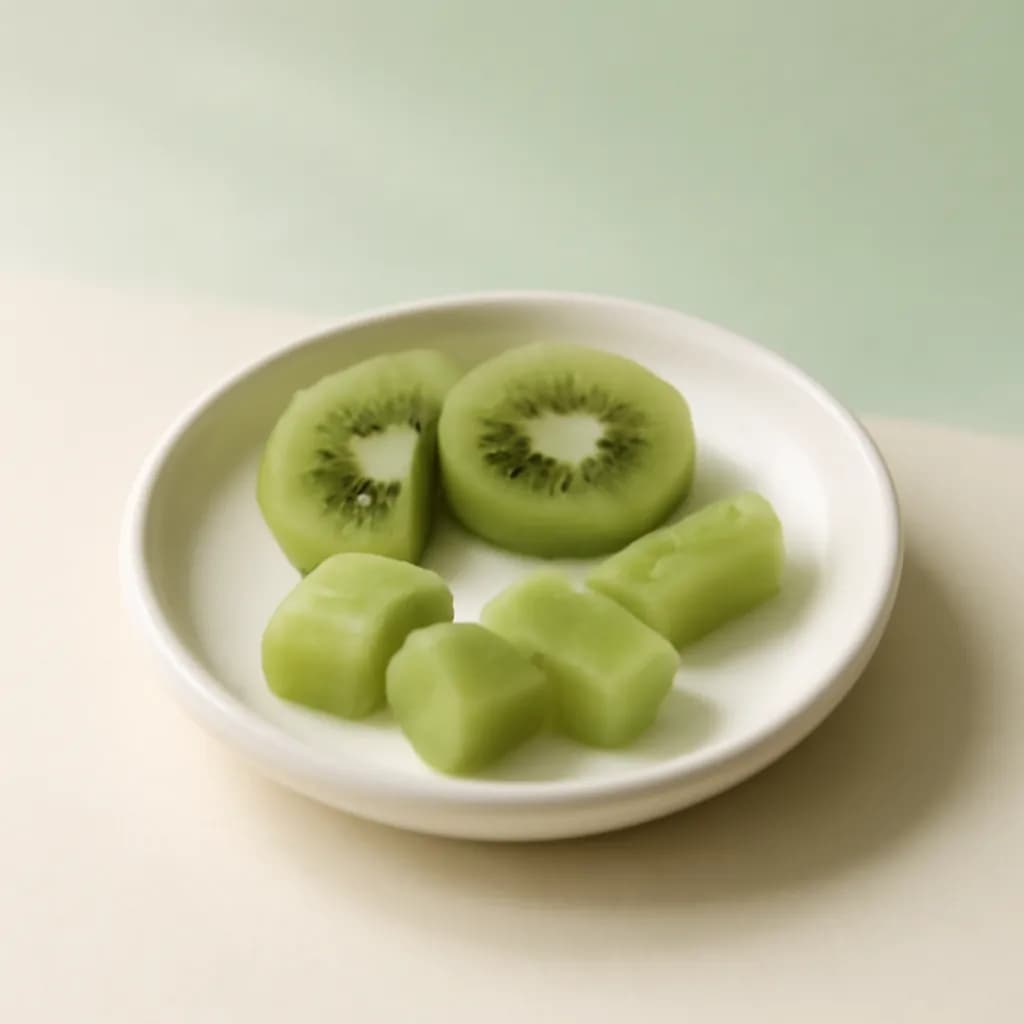
Soft ripe fruit prepared for chewing skills
Choose ripe soft fruit, remove any stones or hard skin and mash or flatten slippery pieces. Cook firmer fruit until tender.
Small bread or toast strips
Choose bread that stays tender without becoming a gummy sticky ball. Spread mashed avocado or smooth hummus thinly, and thin nut butter before using; check wheat, peanut and sesame allergens.
Whole grains: barley, brown rice, oats
Cook completely tender, then mash or combine into moist porridge with vegetables or iron-rich foods. Avoid loose hard or chewy whole grain kernels; barley contains gluten.
Safety tips for 8-month-olds
- There is no guaranteed safe pea-sized cut. Adapt soft pieces to actual eating skills and flatten or mash round slippery foods.
- Never serve whole grapes or cherry tomatoes. Quarter small round grapes and tomatoes lengthways and further soften for a beginning eater; mash or flatten round berries.
- Avoid hard, crunchy snacks (raw carrot sticks, popcorn, hard pretzels, whole nuts).
- Cook all meat through; shred or chop into soft, small pieces.
- Continue tolerated allergens as part of a varied usual diet; seek individualized advice when there is a known allergy or a high-risk introduction.