Kiwi for Baby
Last updated October 2026
Ripe, soft kiwi can be offered after a baby starts solids, usually around six months. Peel away the fuzzy skin, check for a firm core, and serve a mash or manageable soft piece rather than a firm round slice.
Quick answer
Once a baby can sit upright with appropriate head control and move food toward the mouth, soft peeled kiwi can be among their fruits. A little mashed pulp is an easy first preparation.
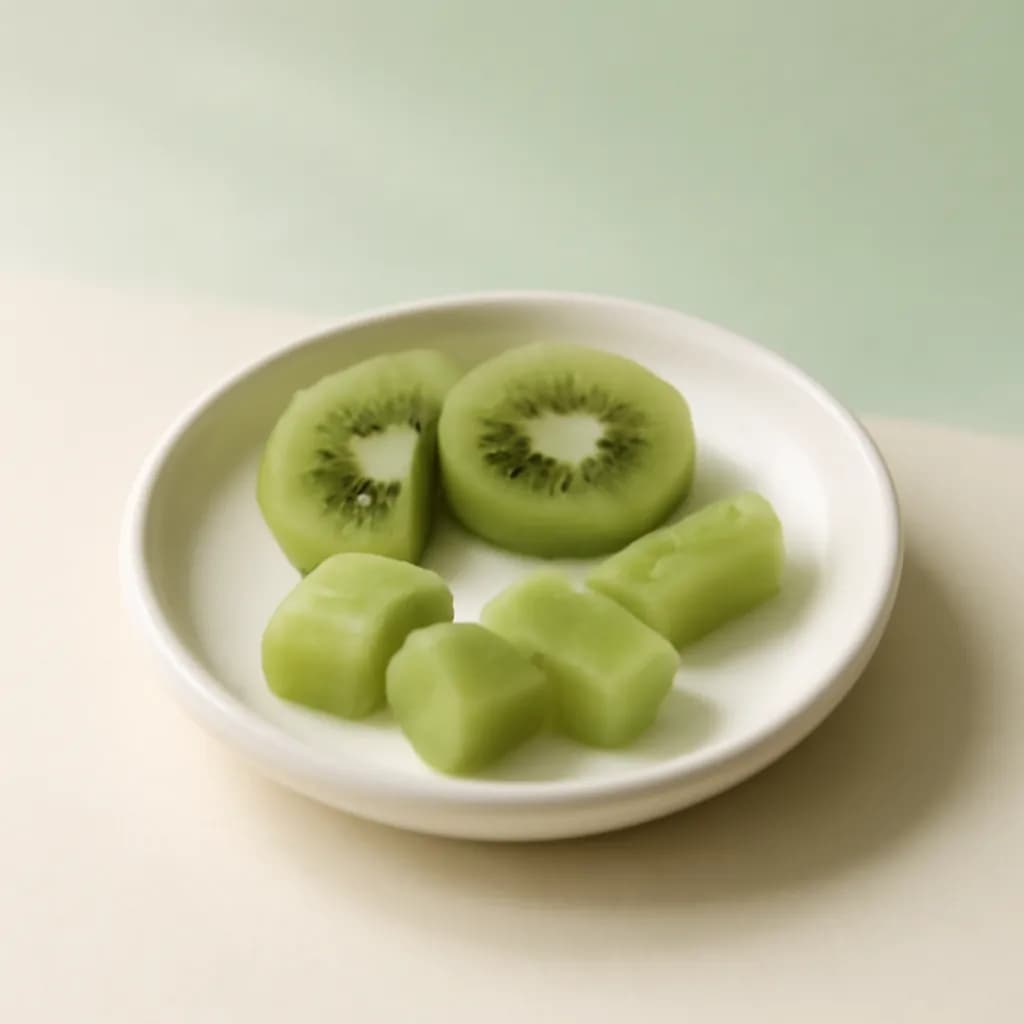
Preparing kiwi for a baby's skills
Wash the kiwi under running water before peeling it, then check the flesh for ripeness and inspect the middle for a tough fibrous core. If it does not squash readily with a fork, choose a riper fruit rather than relying on a fixed size cut. Remove the fuzzy peel and any firm core before making a manageable mash.
Mash peeled flesh thoroughly and offer on a spoon or preloaded spoon, alone or in an already tolerated soft oatmeal.
For a self-feeding child who can manage it, use soft peeled pieces suited to their actual hand and mouth skills. There is no universally safe spear length or mandated transition to pea-size cubes at nine months.
Avoid unripe firm kiwi, hard dried fruit, juice drinks and whole large slippery rounds. Keep the baby seated upright while eating.
When can babies try kiwi?
Check ripeness: the fruit should yield slightly and mash with a fork. Cut away tough skin and a firm core; do not give large hard pieces just because the baby can hold them.
A history of known kiwi, latex or related food allergy warrants individualized advice. Seek medical help for repeated hives, vomiting or swelling and emergency care for breathing difficulty or collapse.
Kiwi contains vitamin C and can add a tart flavor to a meal. Its flesh can be slippery, and under-ripe kiwi may be difficult for a beginning eater to chew.
Kiwi can trigger a genuine allergy in some people. Redness where fruit touches the skin may also be irritation, but its appearance alone cannot establish the cause. Do not automatically reoffer kiwi after a concerning reaction.
See our first foods for baby guide for more ideas.
Ripeness, choking and possible allergy
Choose fully ripe, soft kiwi, remove fuzzy skin and check the hard core.
Adapt portions to actual chewing and grasping skills; avoid firm round pieces and unsupported exact-size rules.
A red patch at the lips may be irritation, but cannot rule out a kiwi allergy; consult a clinician for concerning or repeat reactions.
If breathing difficulty, collapse or severe swelling follows kiwi, seek emergency help.
Kiwi can cross-react with other allergens in some people; follow an allergy specialist's plan where applicable.
Keep the baby upright, alert and continuously supervised.
Kiwi recipes for babies
View all recipes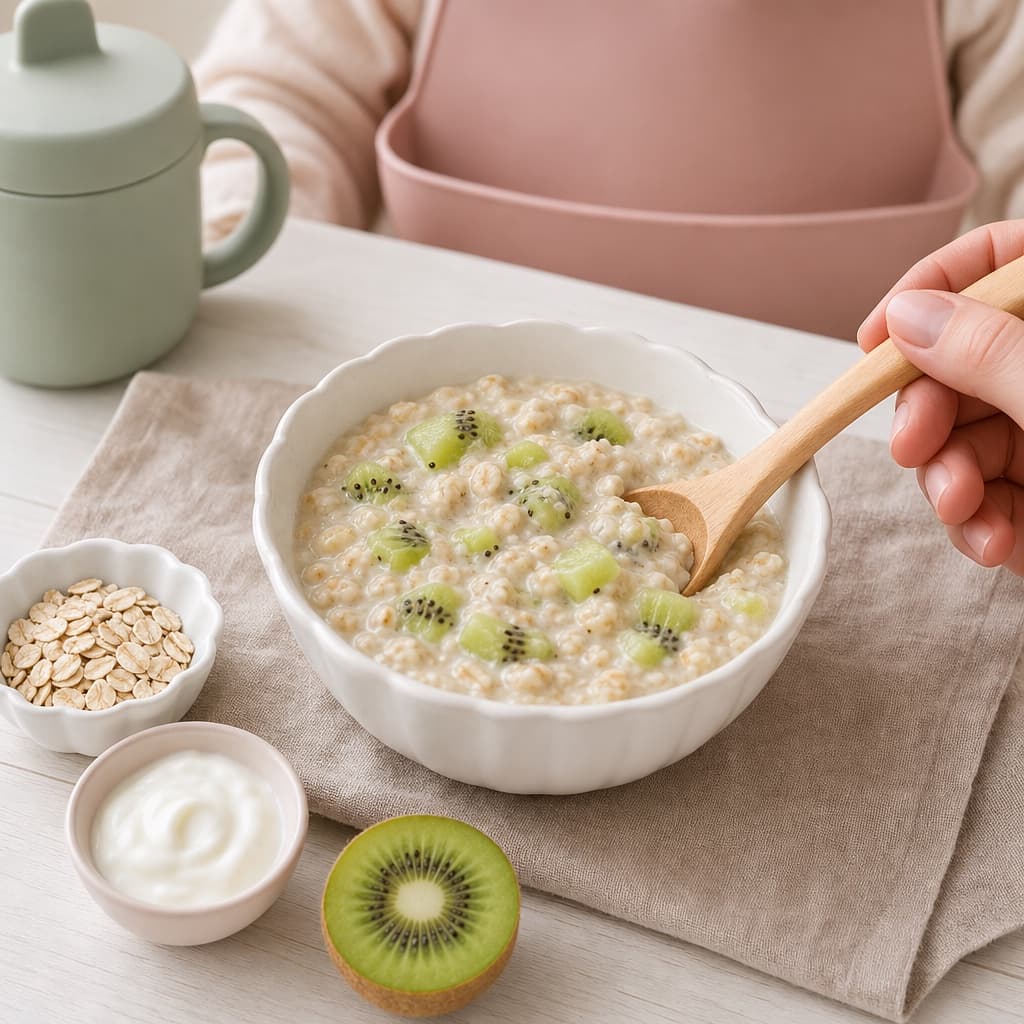
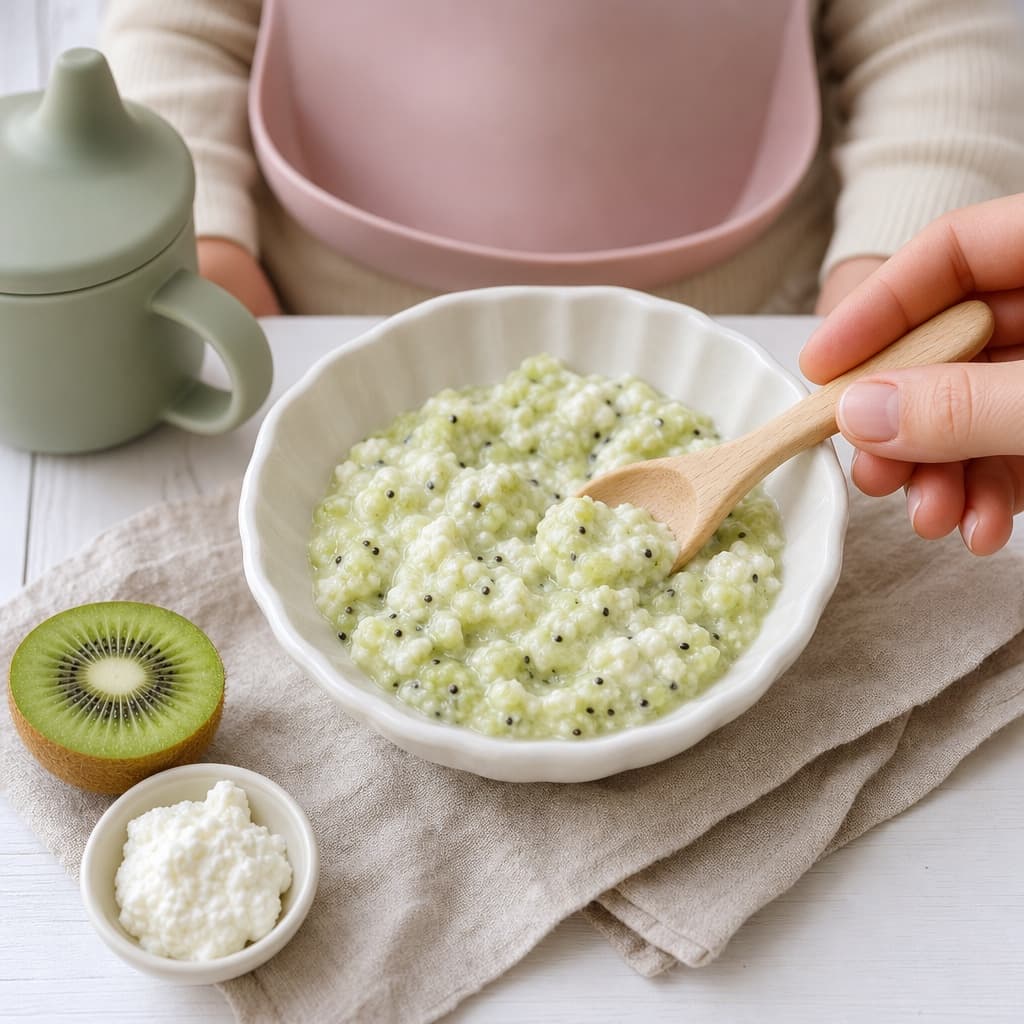
See all kiwi recipes for babies. Explore baby breakfast recipes, baby-led weaning recipes and first foods for baby for more ideas.
Related Guides
Frequently Asked Questions
Is a red patch around the mouth after kiwi always an allergy?
No single skin pattern diagnoses the cause. Juice touching the skin may irritate it, but hives, swelling, vomiting or a recurrent reaction need clinical assessment; breathing difficulty or collapse requires emergency help. Do not assume a repeat exposure is safe based only on the location of redness.
Sources & References
This guide is informed by current guidelines from leading health organizations:
- ●CDC - When, What, and How to Introduce Solid Foods CDC
- ●NHS - Your Baby's First Solid Foods NHS
- ●WHO - Complementary Feeding WHO
- ●NHS - Preparing Food Safely for Babies NHS
- ●CDC — Choking Hazards (reviewed March 2026) CDC
- ●NHS Best Start in Life - Introducing foods that could trigger an allergic reaction NHS
