When can babies eat chia seeds?
Hydrated chia seeds can be offered from around 6 months, when your baby can sit upright with support, holds their head steady, and shows interest in food. This lines up with guidance from the AAP and the WHO to start solids at about 6 months. The key rule with chia is hydration: soak the seeds in liquid for at least 15 minutes so they form their soft gel, or mix them into naturally wet foods like oatmeal, full-fat yogurt, applesauce, or vegetable purees. Once hydrated, the seeds are tiny and slippery, so they are not a choking hazard on their own.
Chia seeds are a nutrient booster, not a meal on their own. Babies under 12 months still need breast milk or infant formula as their main source of nutrition, so think of chia as a small addition sprinkled into meals rather than a staple. Because the fiber in chia is potent, start with about 1 teaspoon per day and increase gradually as your baby's digestion adjusts. There is no need to add salt or sugar; the seeds have a mild, nutty flavor that blends into almost anything.
How to serve chia seeds safely
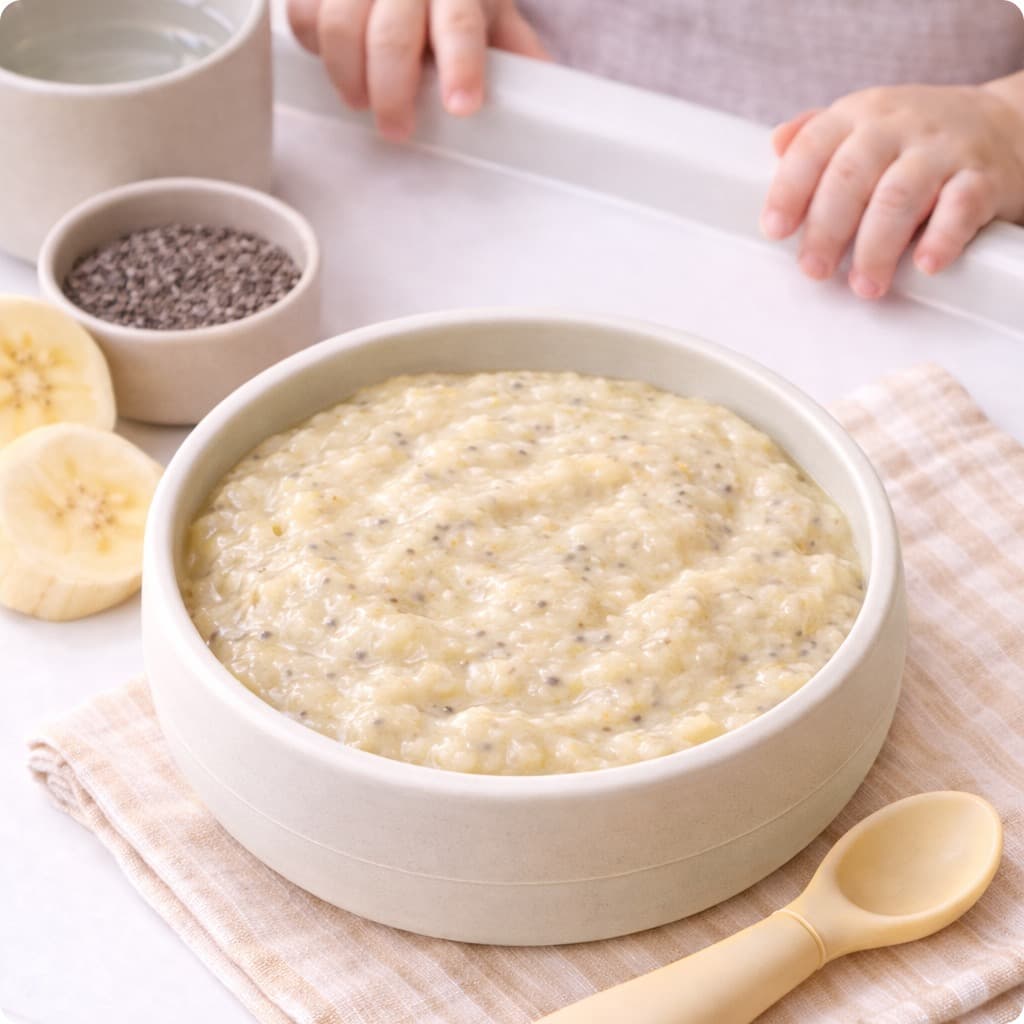
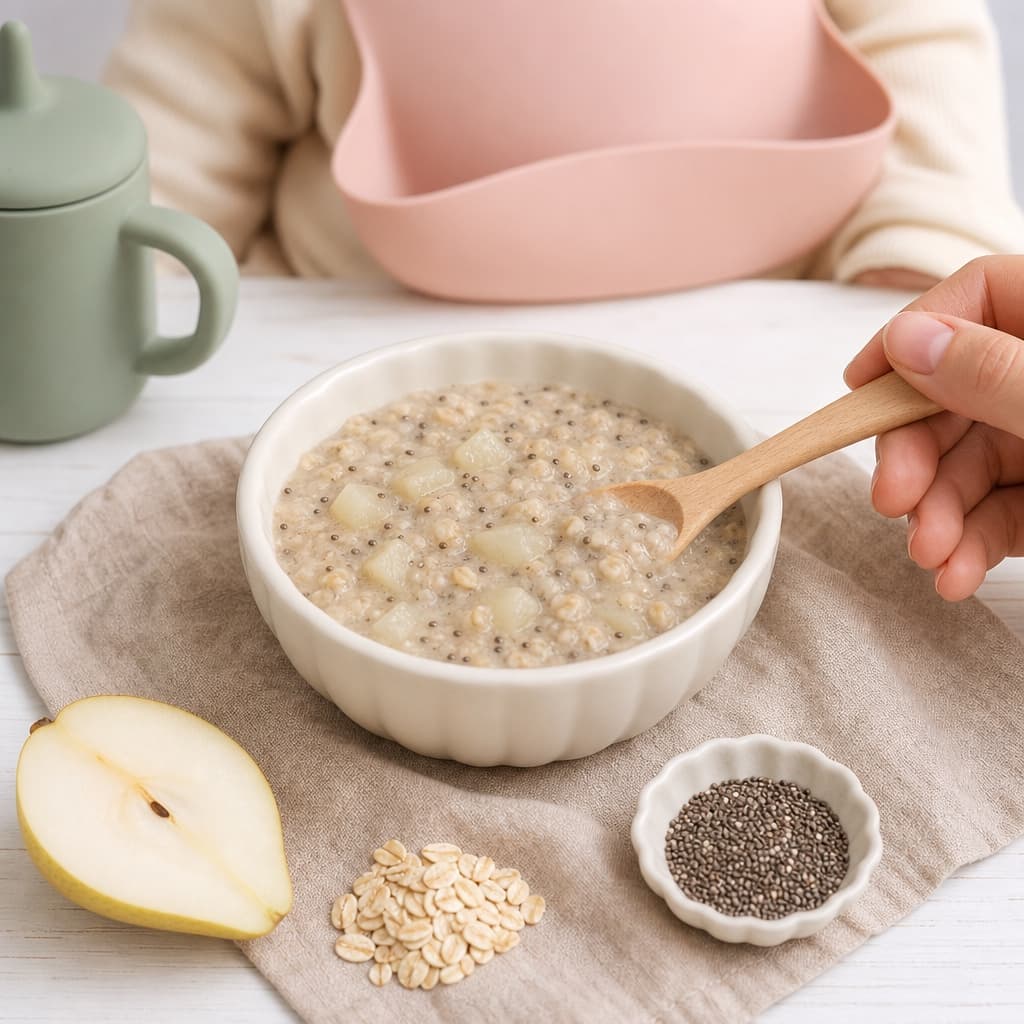
From 6 to 9 months, stir 1 teaspoon of chia seeds into wet foods and let them sit for at least 15 minutes before serving. Good bases include warm oatmeal, plain full-fat yogurt, mashed banana, applesauce, and smooth vegetable purees. You can also make a simple chia pudding by soaking 1 teaspoon of seeds in a few tablespoons of breast milk, formula, or water until the mixture turns thick and gel-like. The soaked seeds soften completely, so there is nothing hard for your baby to manage.
From 9 to 12 months and beyond, chia works well mixed into pancake or muffin batter, blended into smoothies, or stirred through mashed avocado and soft grain dishes. Baking hydrates the seeds during cooking, so chia in baked goods is fine as long as the recipe includes enough liquid. Whatever the age, the rule stays the same: never hand your baby dry chia seeds by the spoonful, and do not sprinkle a thick dry layer on top of food right before serving. Add the seeds early, stir well, and give them time to absorb liquid.
Nutritional benefits for babies
- 💚One of the richest plant sources of ALA omega-3 fatty acids, which support brain and eye development
- 💚High in fiber, which helps keep your baby's stools soft and regular
- 💚Provides plant protein to support growth
- 💚A good source of calcium for developing bones and teeth
- 💚Supplies iron and zinc, two minerals babies need more of from 6 months
- 💚Contains magnesium and phosphorus, which work alongside calcium for bone health
Safety considerations
- ✓Always hydrate chia seeds before serving. Soak them in liquid for at least 15 minutes or stir them into wet foods; the seeds absorb around 10 times their weight in liquid and can expand and clump in the throat if eaten dry by the spoonful.
- ✓Start small, with about 1 teaspoon per day. Chia is very high in fiber, and too much at once can cause gas, bloating, or tummy upset in babies.
- ✓Offer extra sips of water with meals (from 6 months) or rely on usual breast milk or formula feeds, since the fiber in chia works best with enough fluid.
- ✓Chia seed allergy is rare, but as with any new food, introduce it on its own over a few days and watch for reactions such as hives, swelling, vomiting, or trouble breathing. People with sesame or mustard seed allergies may be more likely to react, so talk to your doctor first if that applies.
- ✓Always supervise your baby while eating, keep them seated upright, and follow the usual rules: no honey before 12 months and minimal added salt and sugar before age 2, as the AAP and the NHS advise.
Recipes with chia seeds for babies
Frequently asked questions
Are chia seeds safe for babies under 1 year?
Yes, hydrated chia seeds are generally safe from around 6 months, once your baby is ready for solids. The important rule is to soak them for at least 15 minutes or stir them into wet foods like oatmeal or yogurt first. Never serve dry chia by the spoonful, and keep portions to about 1 teaspoon at first.
Why do chia seeds need to be soaked for babies?
Dry chia seeds absorb around 10 times their weight in liquid and swell into a gel. If a baby swallows a spoonful of dry seeds, they can expand and clump in the throat or esophagus. Soaking them for at least 15 minutes, or mixing them into wet foods, lets them expand safely before your baby eats them.
How much chia seed can I give my baby?
Start with about 1 teaspoon of hydrated chia seeds per day and increase slowly as your baby's digestion adjusts. Chia is very high in fiber, and too much at once can cause gas or tummy upset. A teaspoon or two mixed into meals is plenty for babies under 12 months.
Are chia seeds a choking hazard for babies?
Hydrated chia seeds are not a choking hazard because they are tiny, soft, and gel-coated once soaked. The risk comes from dry seeds eaten in quantity, since they can swell and clump after swallowing. Always soak chia or stir it into wet foods, and never offer dry spoonfuls.
Can chia seeds help with baby constipation?
Often, yes. Chia seeds are high in fiber and hold a lot of water, which can help soften stools and keep your baby regular. Introduce them gradually alongside plenty of fluids, and talk to your pediatrician if constipation does not improve or your baby seems uncomfortable.
Can babies be allergic to chia seeds?
Chia seed allergy is rare but possible. As with any new food, offer chia on its own over a few days and watch for hives, swelling, vomiting, or trouble breathing. Babies with sesame or mustard seed allergies may have a higher chance of reacting, so check with your doctor before introducing chia if that applies.
Do chia seeds need to be ground for babies?
No. Unlike flaxseed, whole chia seeds are easy to digest and their nutrients are well absorbed without grinding, as long as they are hydrated first. Grinding is optional and can make the texture smoother in purees, but soaking whole seeds works just as well for babies.
Get recipes + a feeding plan for your baby
Save this food to your baby's list, get age-appropriate recipes and follow a personalized feeding schedule - 350+ baby-safe meals in the app.
verifiedSources & References
This guide is informed by current guidelines from leading health organizations: