Can babies eat oatmeal?
Last updated October 2026
Yes.
When a baby is ready for solid food, usually around six months, they can try fully cooked, soft oatmeal. Choose a moist spoonable consistency rather than dry grains or sticky lumps. Ordinary oats are not necessarily iron-fortified; if you want an infant cereal that contributes additional iron, check the packet. Oats are not wheat, but cross-contact with gluten-containing grains can matter for a child with medically diagnosed coeliac disease. Keep toppings soft and introduce new allergenic ingredients separately when practical.
When can babies try oatmeal?
Around six months, when your child shows head control, upright sitting and other feeding readiness signs, cooked oatmeal can be among the first grain foods.
Oatmeal made from plain rolled oats and iron-fortified infant cereal can differ substantially in iron. Check the product label and offer other iron-rich foods across meals rather than assuming all porridge is an iron source.
Oats are not a major allergen for most children, but an individual reaction is possible and some oat products are processed near wheat, barley or rye. Milk, nuts, sesame and other add-ins also need their own allergen consideration.
Preparing a soft oatmeal first food
Cook oats following the package directions until the whole mixture is soft and moist. If there are coarse pieces, mash or blend until your baby can manage the texture.
Offer a small amount on a spoon or preloaded spoon, allowing the baby to control pace and appetite. Cool thoroughly and stir to remove hot pockets.
As chewing skills develop, offer slightly thicker porridge and familiar soft fruit. Overnight-soaked oats still require a texture and safe-storage check; soaking alone does not always make coarse oats soft enough.
Mix thinned smooth nut or seed butter fully into porridge, rather than offering a sticky spoonful. Avoid whole nuts, raisins, dry crunchy toppings, added sugar and honey before twelve months.
Oatmeal safety and label checks
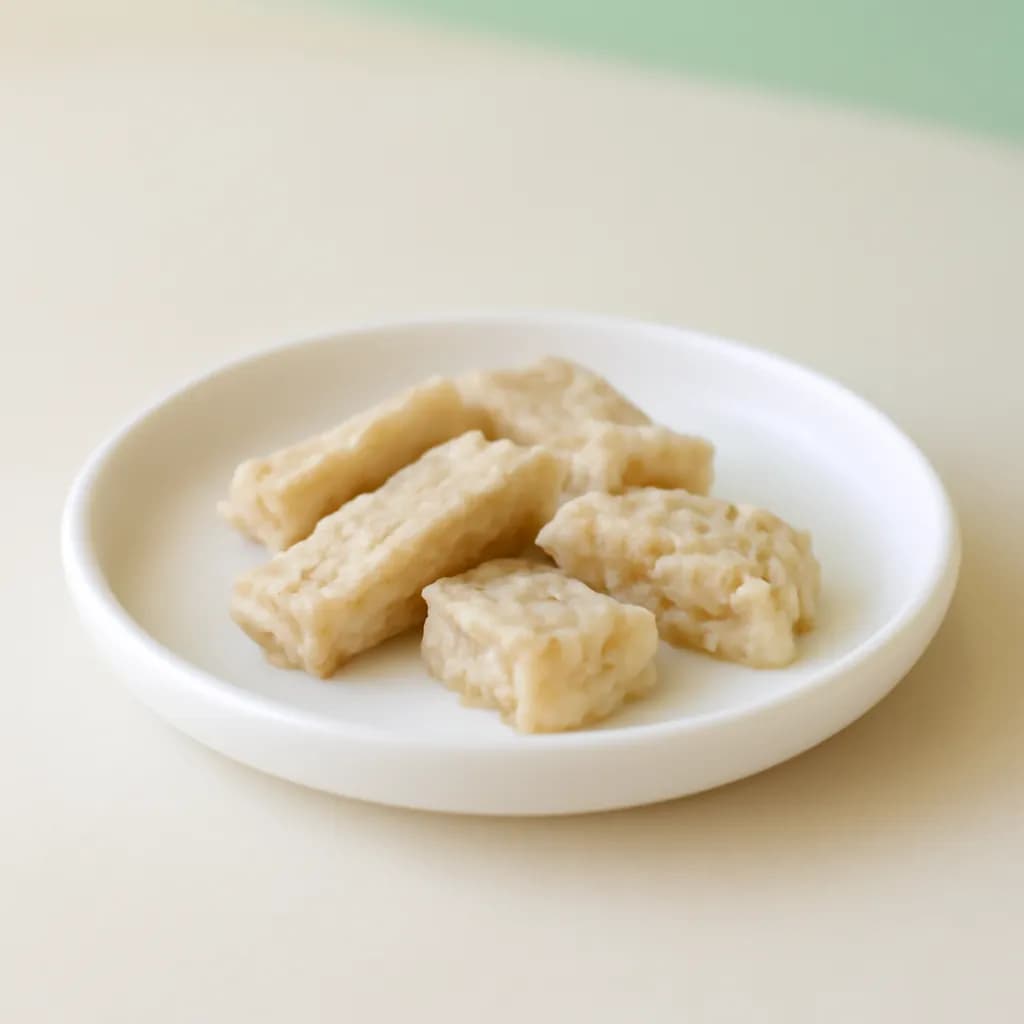
Cook until fully soft; firm dry flakes, large hard lumps and dense sticky oat bars need adjustment.
Check iron fortification on the actual package.
Use suitably certified gluten-free oats where coeliac disease or medical gluten avoidance requires them.
Dairy, wheat, nuts and sesame in oatmeal toppings can be allergens; introduce according to your child's plan.
Cool, stir and test porridge before serving; avoid honey under one year.
Supervise eating upright and respond to your baby's hunger and fullness cues.
What oatmeal contributes
Plain oatmeal supplies carbohydrate energy and some plant protein.
Oats contain soluble fibre, including beta-glucan.
Iron-fortified infant oat cereal can contribute iron; ordinary unfortified oats should not be assumed to do so.
Specific vitamins and minerals vary among commercial products.
Oatmeal can accompany iron-rich foods and previously introduced fruit or dairy.
Related guides
Frequently asked questions
Can a six-month-old eat oatmeal?
Yes, once developmentally ready for solids. Cook oats thoroughly and offer a small amount in a soft spoonable texture.
Is baby oat cereal more nutritious than regular oatmeal?
It depends on the label. Iron-fortified infant oat cereal may have extra iron, while ordinary oats are not automatically fortified. Both can be foods, but they should not be treated as nutritionally identical.
Is oatmeal an allergen?
An individual oat reaction is possible, although oats are not a major commonly listed allergen. Check mixed products and toppings for milk, wheat, nuts, sesame and other ingredients.
Do babies need gluten-free oatmeal?
Not automatically. Some oats have cross-contact with gluten-containing grains during processing. For medically diagnosed coeliac disease or other gluten restriction, choose appropriately certified products and follow clinical advice.
Can I give overnight oats to my baby?
Only if stored safely and made genuinely soft. Soaking coarse oats overnight does not guarantee they have a suitable texture for every beginning eater; cook or mash if necessary.
What toppings work with oatmeal?
Familiar mashed fruit or a well-mixed small amount of thinned nut or seed butter can work. Avoid new-allergen combinations, whole nuts, hard chunks and thick sticky nut butter.
How much oatmeal should I feed a baby?
Begin with a small offering and respond to appetite rather than imposing a fixed daily dose. Keep breast milk or formula as the main milk feed during the first year.
Sources & References
This guide is informed by current guidelines from leading health organizations:
- ●CDC - When, What, and How to Introduce Solid Foods CDC
- ●NHS - Your Baby's First Solid Foods NHS
- ●NHS - Food Allergies in Babies NHS
- ●AAP - Iron Needs for Babies and Toddlers AAP
