When can babies eat chicken?
Chicken can be one of your baby's very first foods, usually starting around 6 months when they show readiness signs such as sitting upright with little or no support, holding their head steady, and reaching for or showing interest in food. Major pediatric guidance from groups like the AAP, NHS, and WHO encourages offering a wide variety of textures and protein-rich foods early, and chicken fits well into that mix. There is no need to wait or delay it.
Because chicken is not one of the common food allergens, you do not need to treat it differently from other early foods for allergy reasons. Still, when you introduce any new food, it helps to offer it by itself for two to three days before adding the next new ingredient. That way, if your baby reacts to something, it is easier to figure out which food was responsible.
How to serve chicken safely
From about 6 to 9 months, serve chicken soft and easy to grasp. You can offer a thick, moist shred mixed into a puree or mash, or a large strip the size of an adult finger that your baby can hold and gnaw on. Cook it until very tender, keep it moist with a little breast milk, formula, broth, or a fruit or vegetable puree, and make sure it is fully cooked through with no pink meat. Avoid dry, crumbly pieces that are hard to manage.
From around 9 to 12 months and beyond, as your baby develops a pincer grasp, you can move to smaller, soft, bite-size pieces of chicken. Keep them roughly pea-size and soft enough to squash easily between your fingers. Continue to avoid round, firm chunks, large bites, and tough or rubbery pieces, since these are choking hazards. Shredding or finely chopping moist chicken remains a safe, easy option at this stage too.
Nutritional benefits for babies
- 💚High-quality protein to support growth and development
- 💚Iron, an important nutrient for babies once milk stores begin to drop around 6 months
- 💚Zinc, which supports the immune system and healthy growth
- 💚Vitamin B12 and other B vitamins that help convert food into energy
- 💚Selenium, a mineral that supports immune function
- 💚A soft, versatile texture that pairs easily with iron-rich and vitamin C-rich foods
Safety considerations
- ✓Chicken is not a common allergen, so there is no reason to delay it, but introduce it on its own for a few days like any new food.
- ✓Always cook chicken fully until there is no pink meat, and keep it moist so it is easy to swallow.
- ✓Match the shape to your baby's stage: large soft strips or shreds for 6 to 9 months, small soft pieces once the pincer grasp develops.
- ✓Avoid round, firm, or rubbery chunks and large bites, which are choking hazards.
- ✓Always stay within arm's reach and watch your baby closely while they eat, and make sure they are sitting upright.
Recipes with chicken for babies
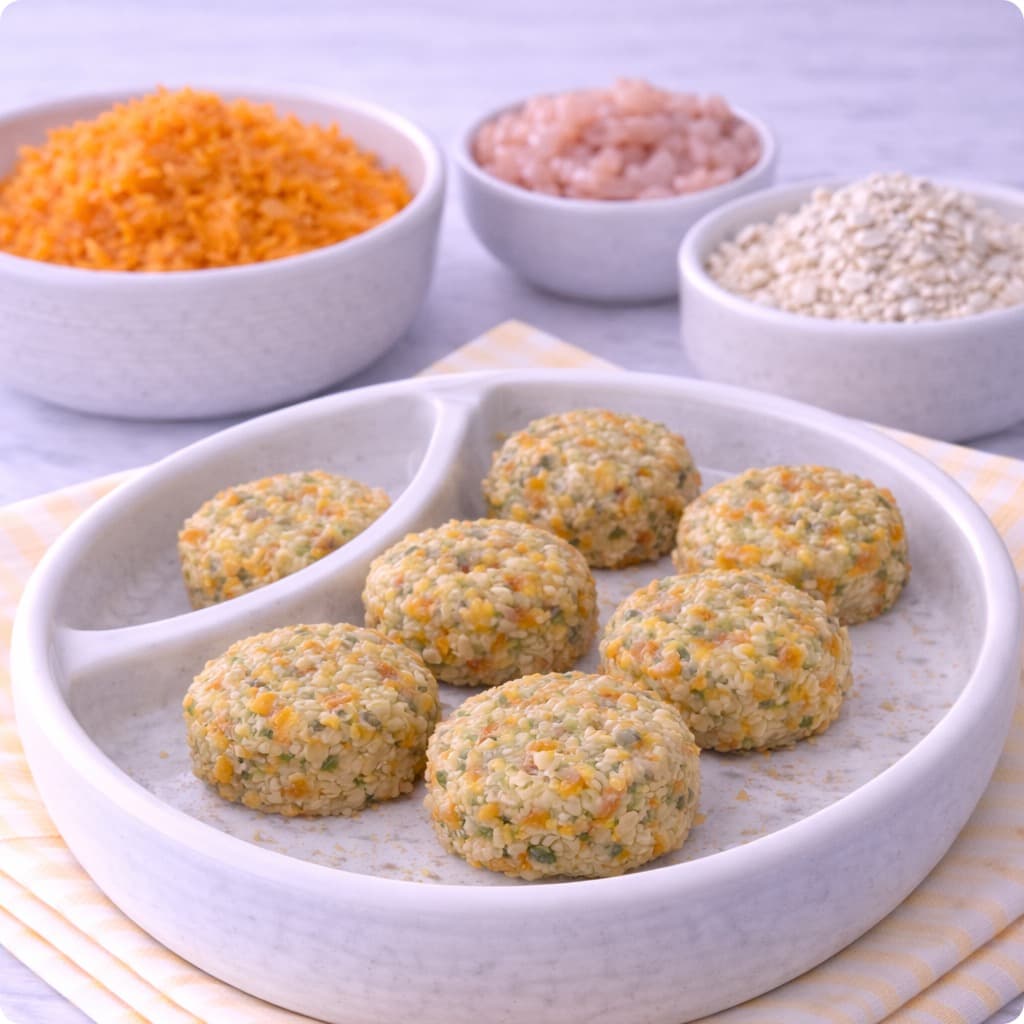
Chicken Veggie Nuggets
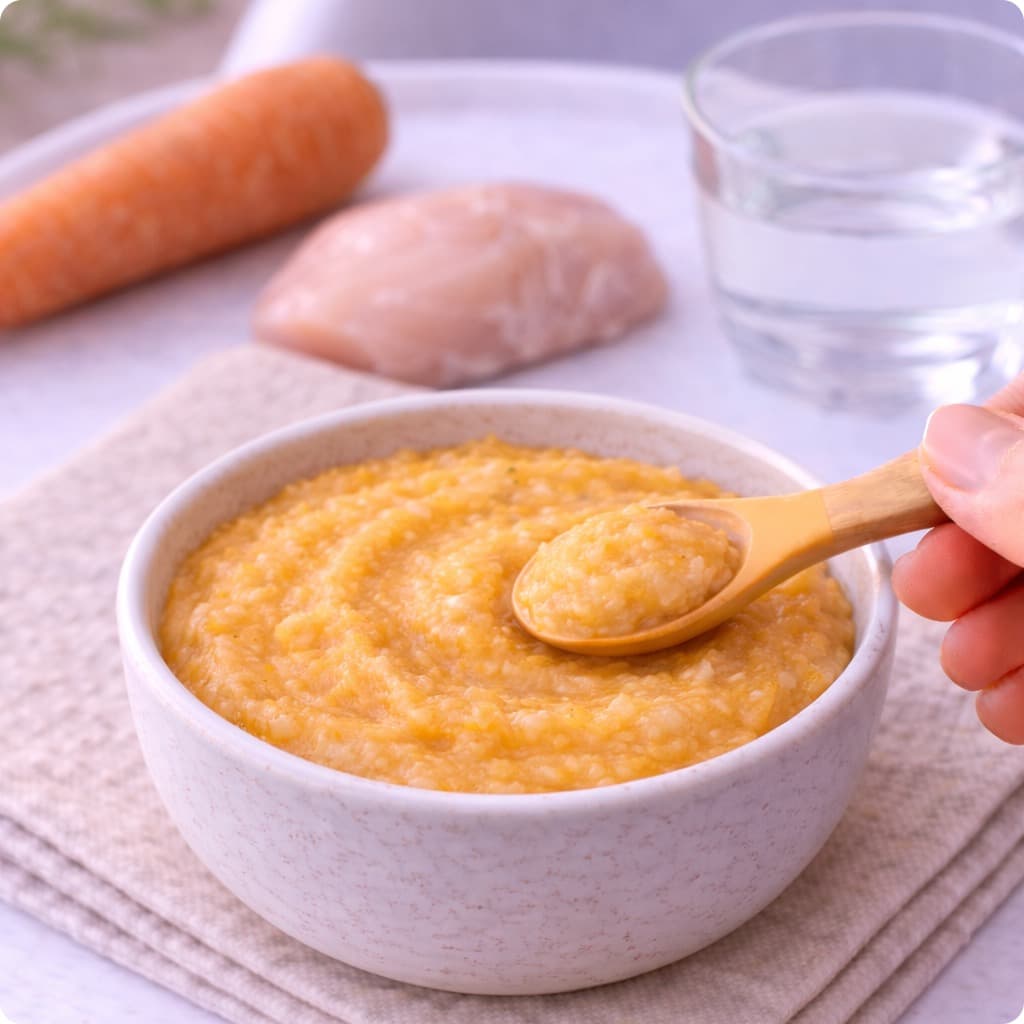
Chicken & Carrot Purée
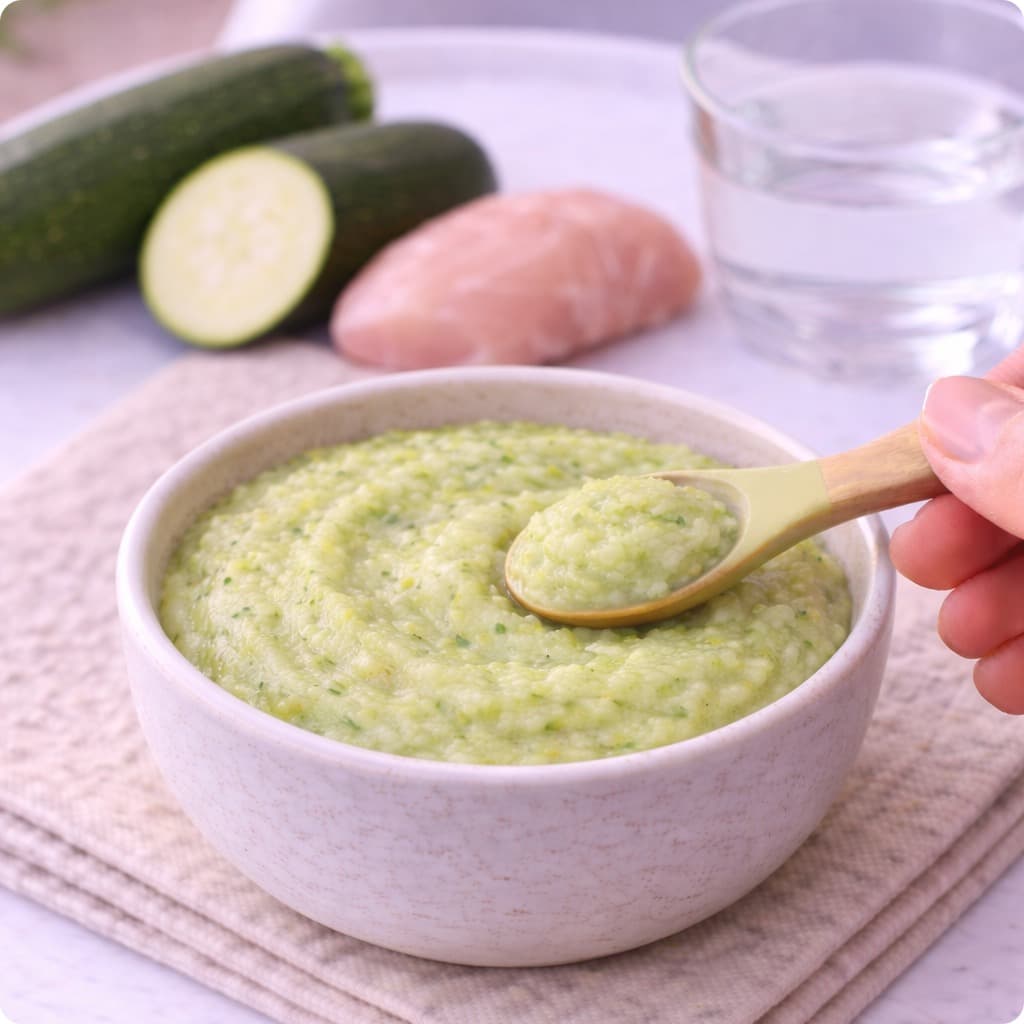
Chicken & Zucchini Purée
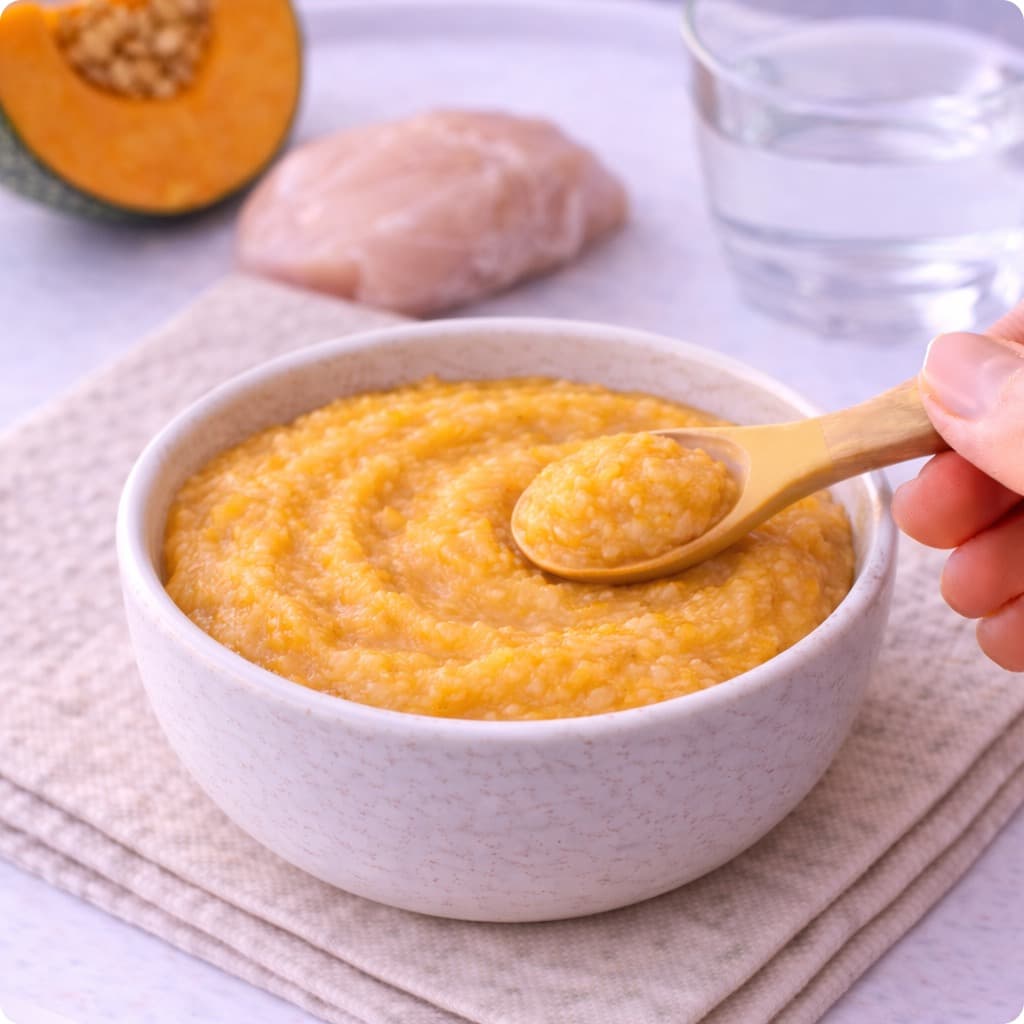
Chicken & Pumpkin Purée
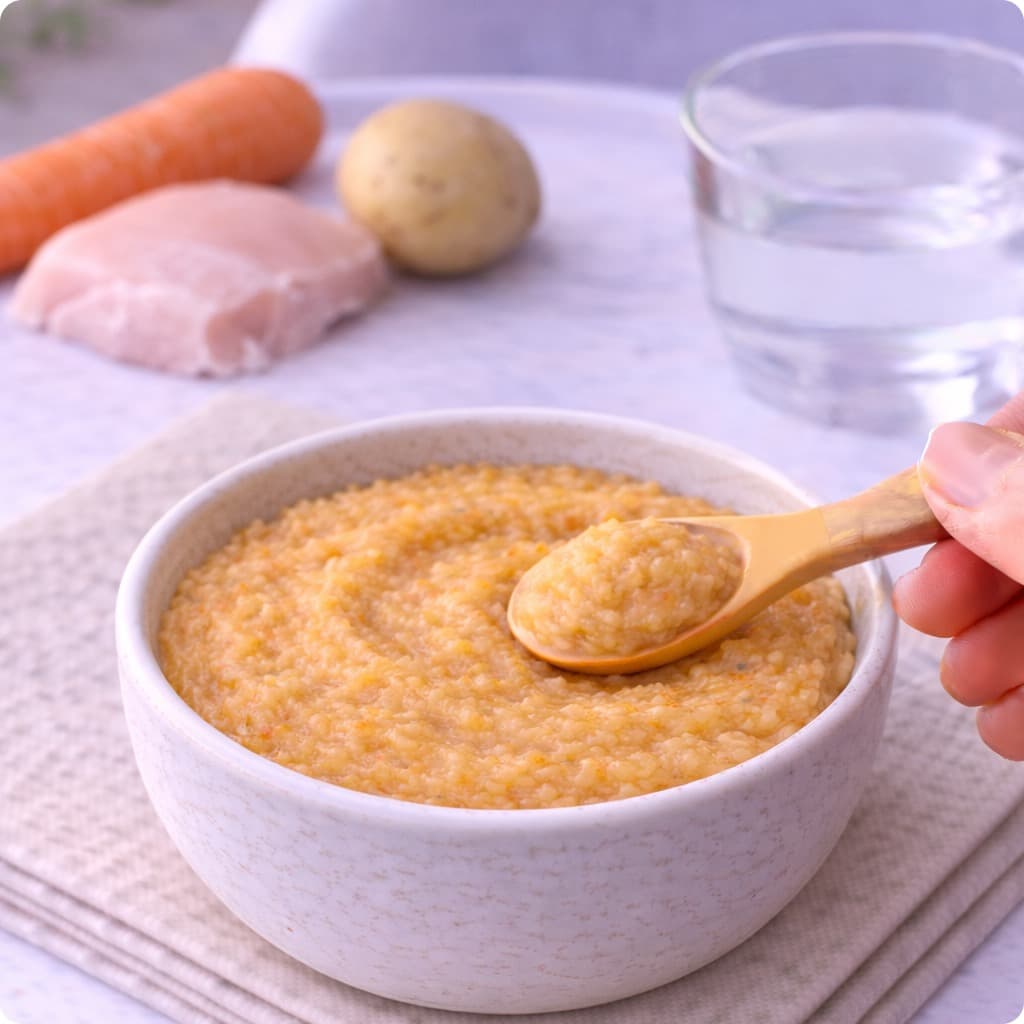
Chicken, Carrot & Potato Mash
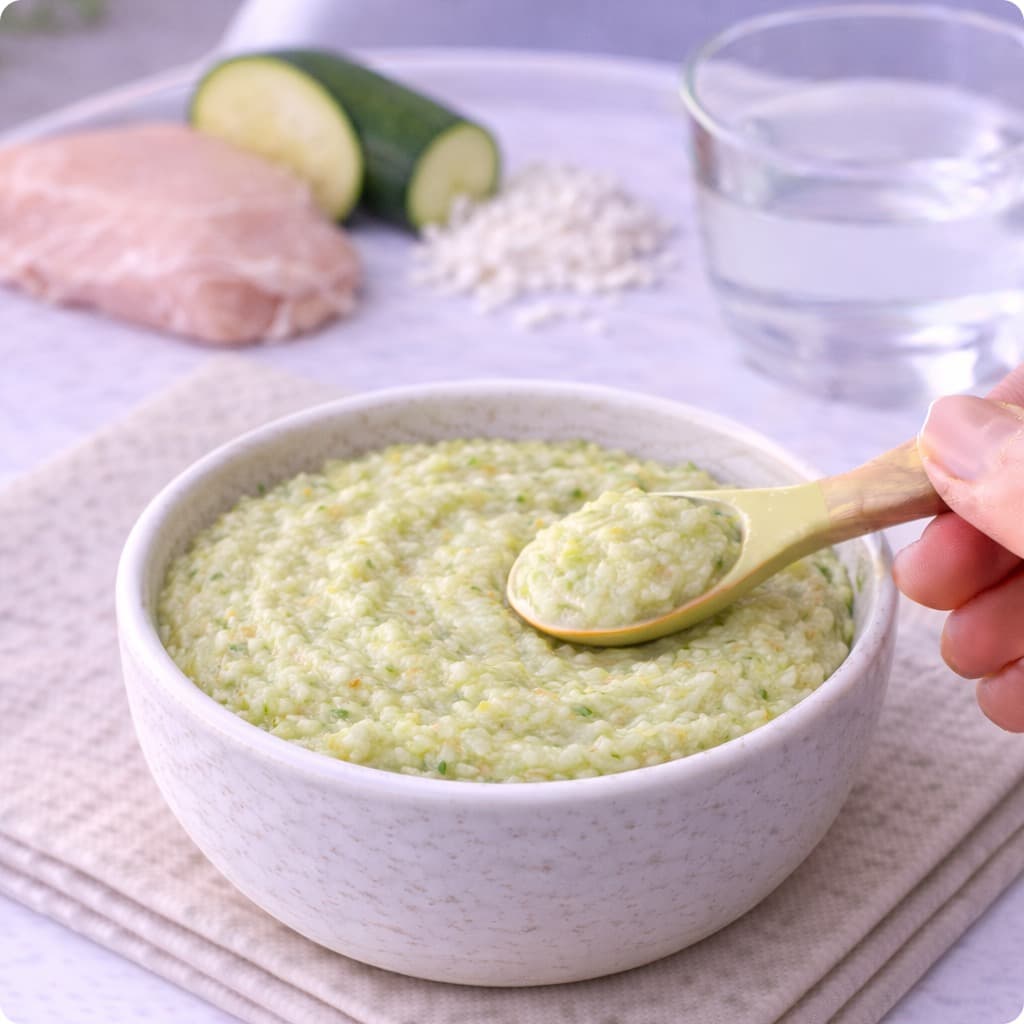
Chicken, Zucchini & Rice Mash
Frequently asked questions
Can I give my 6 month old chicken?
Yes, chicken can be one of the first foods you offer around 6 months, as long as your baby is showing readiness signs. Serve it soft and moist, either as a large finger-size strip or shredded into a puree or mash so it is easy to manage.
Is chicken a choking hazard for babies?
Chicken can be a choking hazard if it is served in firm chunks, large bites, or dry, rubbery pieces. Keep it moist and soft, offer age-appropriate shapes, and always supervise your baby closely while they eat.
What is the best way to cook chicken for a baby?
Gentle, moist cooking methods like poaching, braising, baking, or slow cooking work best because they keep chicken tender and easy to chew. Cook it fully until no pink remains, then shred, mash, or cut it to suit your baby's stage.
Can babies be allergic to chicken?
Chicken allergy is uncommon, and chicken is not one of the major food allergens. As with any new food, offer it on its own for a few days and watch for any signs of a reaction so you can pinpoint the cause if one occurs.
How much chicken should a baby eat?
There is no fixed amount, since appetites vary a lot from baby to baby and day to day. Offer a small portion and let your baby decide how much to eat, following their hunger and fullness cues rather than pushing a set quantity.
Can babies eat chicken every day?
Babies can eat chicken regularly as part of a varied diet. It is a great source of protein, iron, and zinc, but it is still a good idea to rotate in other proteins like fish, beans, lentils, eggs, and meat so your baby gets a range of nutrients and textures.
Can I give my baby chicken broth or soup?
Chicken broth can add flavor and moisture to purees and mashes, which is helpful for babies. Use a low-sodium or unsalted broth, since babies should have very little added salt, and watch for any firm pieces of chicken or vegetables that need to be softened or cut down first.
Get recipes + a feeding plan for your baby
Save this food to your baby's list, get age-appropriate recipes and follow a personalized feeding schedule - 350+ baby-safe meals in the app.
verifiedSources & References
This guide is informed by current guidelines from leading health organizations: