When can babies eat cottage cheese?
Cottage cheese is a great food to introduce around 6 months, when your baby shows readiness signs for solids: sitting up with little support, good head and neck control, losing the tongue-thrust reflex, and showing interest in food. It is naturally soft and scoopable, so it suits both spoon-feeding and self-feeding from the very start of your baby's solid-food journey.
Cottage cheese is made from cow's milk, which is one of the most common food allergens. There is no need to delay common allergens; in fact, current guidance encourages introducing them early and regularly once solids have begun. Offer a small taste for the first time on a day when you can watch your baby closely, and wait to introduce other new foods at the same time so you can spot any reaction. Note that whole cow's milk as a main drink is not recommended until 12 months, but cottage cheese and other dairy foods are fine as part of meals before then.
How to serve cottage cheese safely
From 6 to 9 months, serve cottage cheese soft and smooth. You can offer it preloaded on a spoon for your baby to grab, or stir it into mashed fruit, vegetables, or infant cereal for a creamy, scoopable meal. The small curds are soft enough that they pose little choking risk on their own, but always break up any larger lumps and avoid mixing in hard or chunky add-ins. Choose full-fat, plain cottage cheese, since babies need the extra fat for energy and growth, and avoid added salt or sugar.
From 9 to 12 months and beyond, as your baby develops a pincer grasp, you can let them scoop cottage cheese themselves with a spoon or their fingers and explore the texture. You can spread it on soft toast strips or fold it into well-cooked pasta or soft pancakes. If you add fruit, keep choking-safe shapes in mind: mash or finely chop soft fruits, quarter grapes and cherry tomatoes lengthwise, and never add whole grapes, whole cherries (always remove the pit), whole olives, or firm chunks. Dates should be pitted, finely chopped, and stirred in, never served as sticky whole pieces.
Nutritional benefits for babies
- 💚Good source of high-quality protein to support growth and muscle development
- 💚Provides calcium for building strong bones and teeth
- 💚Contains phosphorus, which works with calcium for bone health
- 💚Offers vitamin B12, important for healthy nerves and red blood cells
- 💚Full-fat versions supply fat and calories babies need for energy and brain development
- 💚Soft, easy-to-eat texture makes it a convenient way to add dairy nutrition to meals
Safety considerations
- ✓Cottage cheese is made from cow's milk, a common allergen; offer a small amount first and watch for signs of a reaction such as hives, vomiting, swelling, or trouble breathing.
- ✓Introduce it on its own, not alongside other new foods, so you can identify the cause if a reaction occurs.
- ✓Break up any large curds or lumps and keep the texture soft and smooth for younger babies to prevent choking.
- ✓Avoid mixing in choking hazards: keep dates pitted and finely chopped, remove pits from cherries, quarter grapes and cherry tomatoes, and skip whole firm chunks of any food.
- ✓Always supervise your baby during meals, keep them seated upright, and never leave them alone while eating.
Recipes with cottage cheese for babies
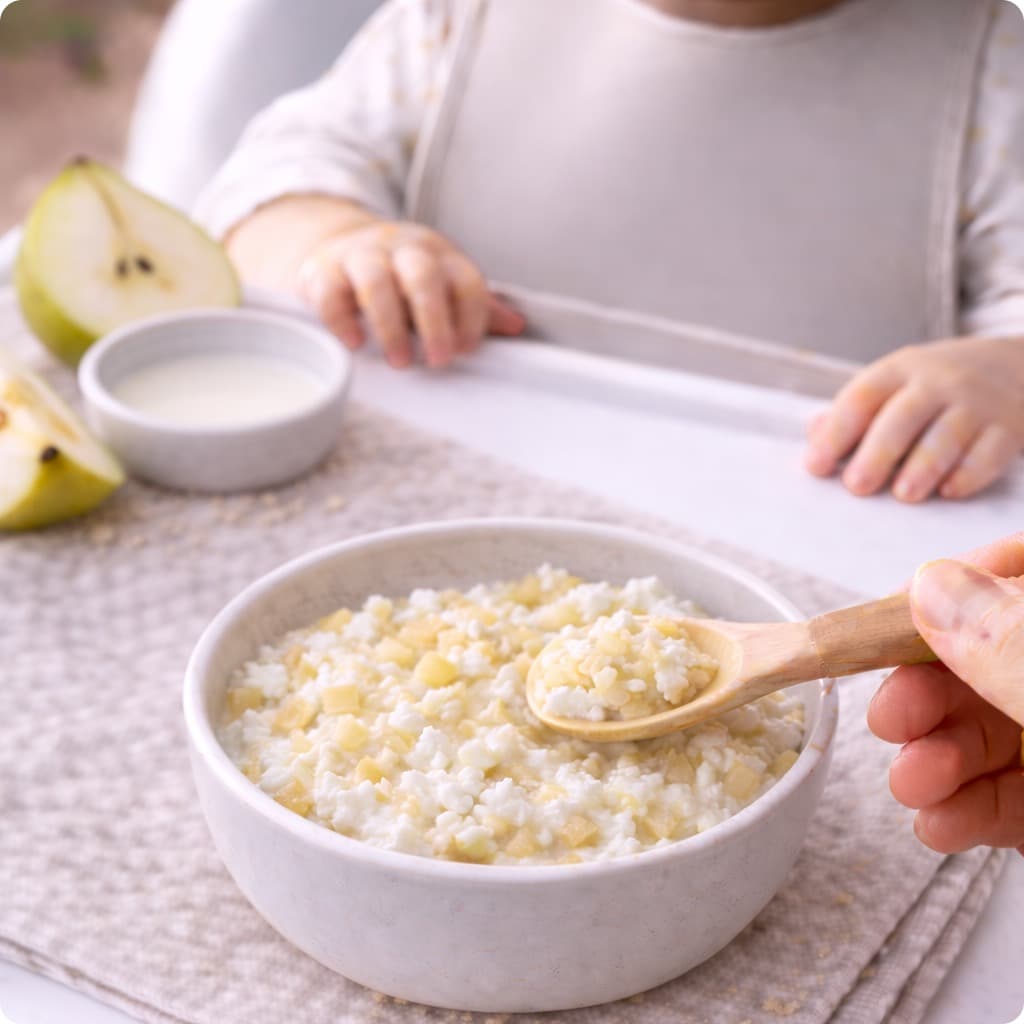
Cottage Cheese & Pear Mash

Cottage Cheese & Peach
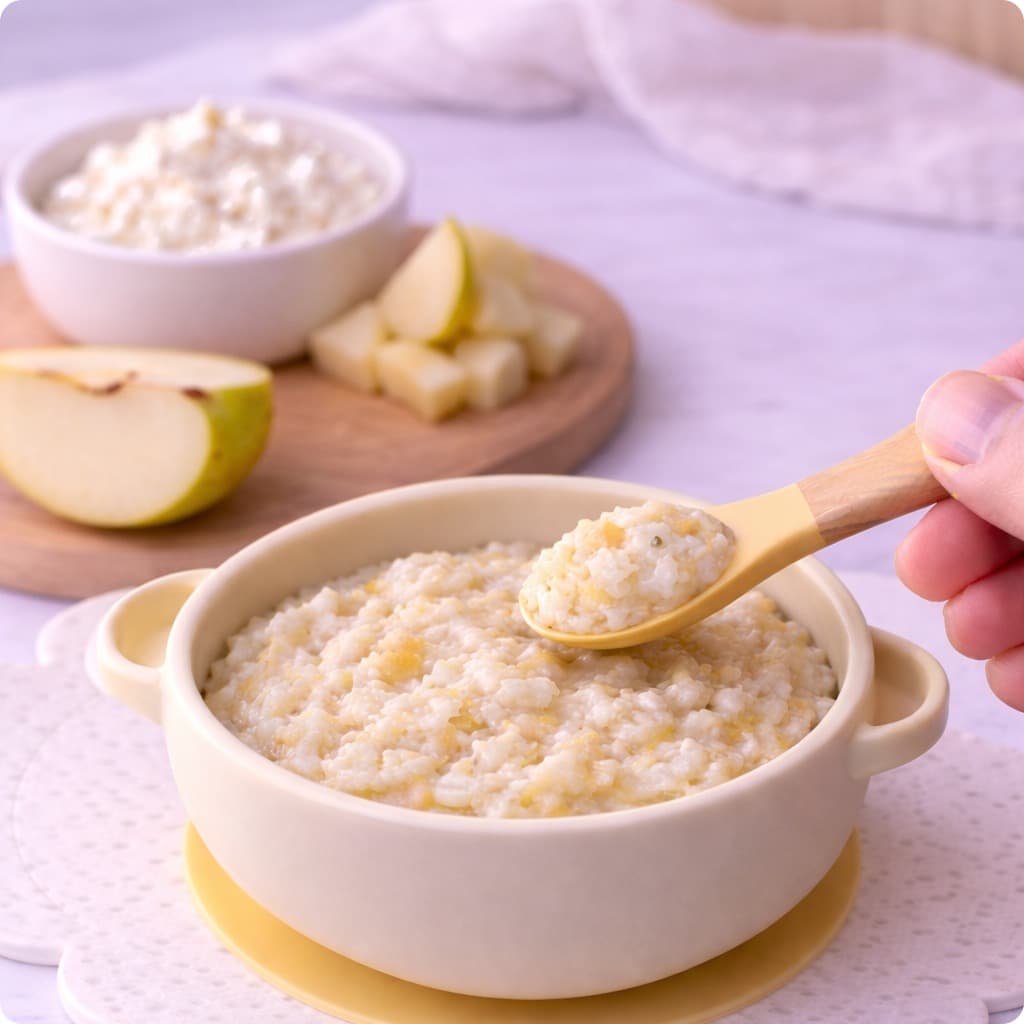
Cottage Cheese + Pear Mash
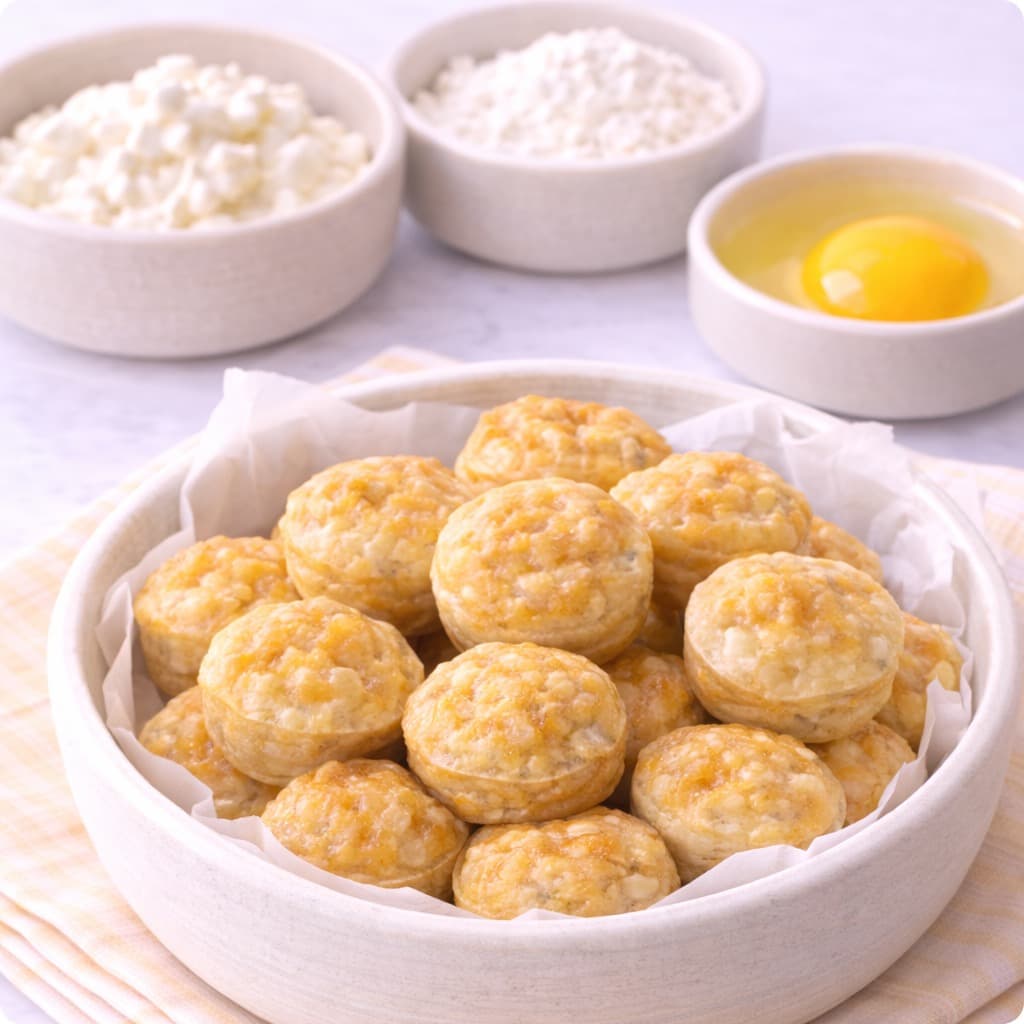
Cottage Cheese Soft Muffins
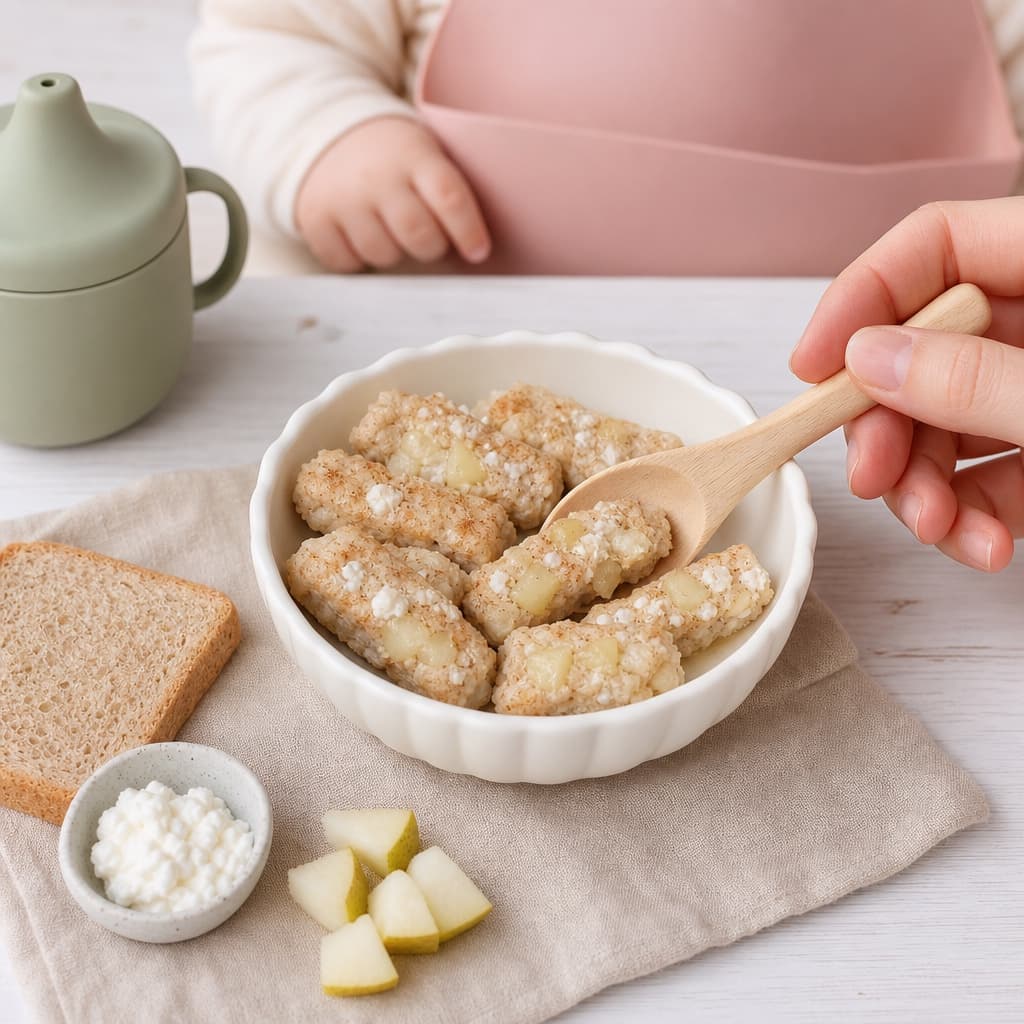
Pear Cottage Toast Bites
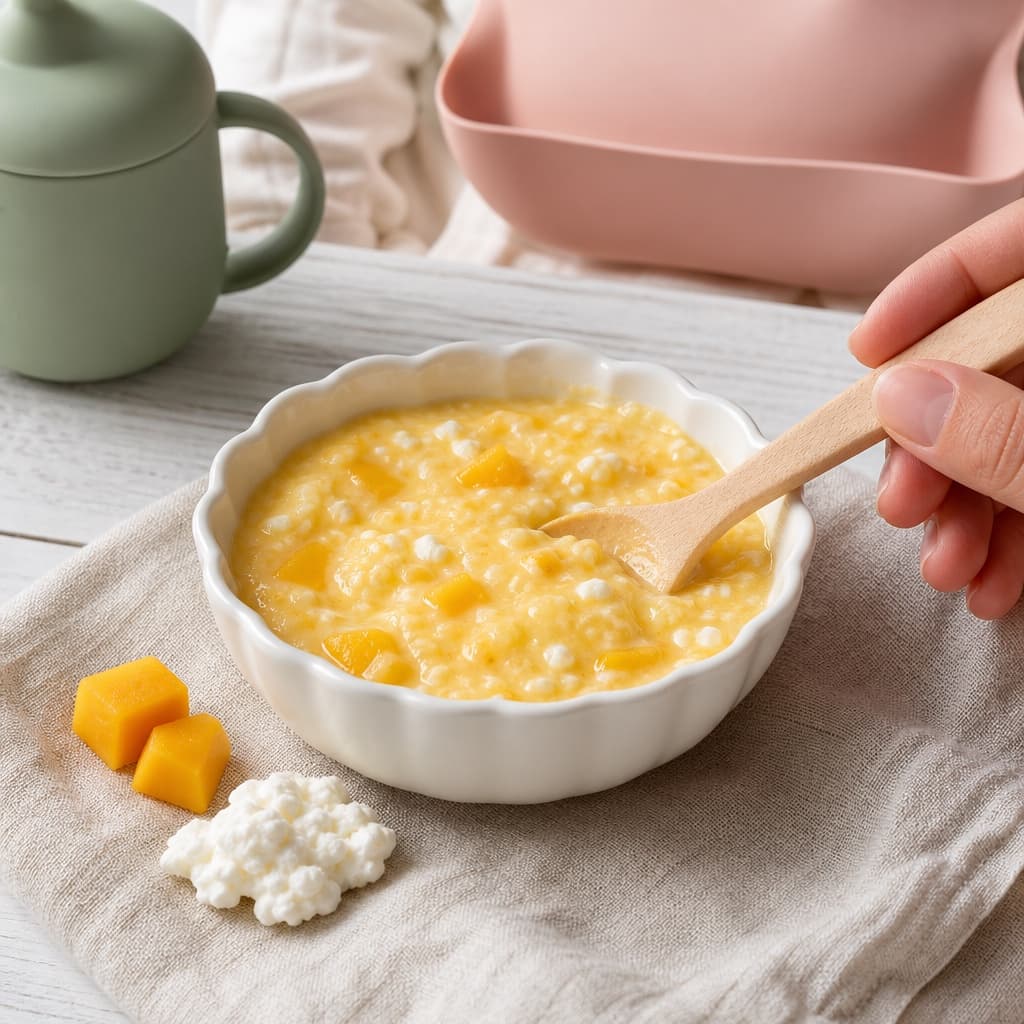
Mango Cottage Cheese Bowl
Frequently asked questions
Is cottage cheese safe for a 6-month-old?
Yes, cottage cheese is safe for most babies from around 6 months, once they show signs of readiness for solids. Choose plain, full-fat cottage cheese and offer a small amount on its own at first to watch for any allergic reaction.
Can cottage cheese cause an allergic reaction?
Yes, because cottage cheese is made from cow's milk, which is a common allergen. Introduce it early and watch for symptoms like hives, rash, vomiting, or swelling, and contact your doctor if you notice signs of a reaction.
Is cottage cheese a choking hazard for babies?
Plain, soft cottage cheese is low risk because the curds are small and easy to swallow. Just break up any large lumps for younger babies, and be careful with mix-ins like whole grapes, cherries, or firm chunks, which should be prepared in choking-safe shapes.
How much cottage cheese can a baby eat?
Start with a small taste, about a spoonful, and increase the amount gradually as your baby gets used to it. Cottage cheese is one part of a varied diet, so offer it alongside other foods rather than as a full meal on its own.
Should I give my baby full-fat or low-fat cottage cheese?
Choose full-fat cottage cheese for babies under 2 years. Babies need the extra fat and calories for energy, growth, and brain development, so reduced-fat versions are not recommended at this age.
Can I mix cottage cheese with fruit for my baby?
Yes, stirring cottage cheese into mashed or finely chopped soft fruit is a tasty way to serve it. Just keep choking-safe prep in mind: mash soft fruit, quarter grapes, remove cherry pits, and avoid adding firm chunks or whole pieces.
Is salted cottage cheese okay for babies?
It is best to choose plain cottage cheese with no added salt, since babies' kidneys cannot handle much sodium. Always check the label and pick a low-salt, unsweetened option when possible.
Get recipes + a feeding plan for your baby
Save this food to your baby's list, get age-appropriate recipes and follow a personalized feeding schedule - 350+ baby-safe meals in the app.
verifiedSources & References
This guide is informed by current guidelines from leading health organizations: