When can babies have fish?
From around 6 months, babies can have fish as part of complementary feeding. WHO encourages animal foods for iron and zinc, and the NHS says babies can eat fish from 6 months as long as it is cooked and bones are removed.
Start with small tastes on a healthy day and introduce fish by itself at first. Offer low mercury varieties and avoid shark, swordfish, and marlin. The AAP supports early introduction of common allergens, including fish, rather than delaying.
How to serve fish safely
6 to 9 months: Cook fish until opaque and flaking. Serve mashed with breast milk, formula, yogurt, or oil, or offer very soft flakes your baby can scoop with hands. For baby led weaning, form tender fish cakes and cut into finger-size pieces about 4 to 5 cm long and 1 to 2 cm wide so baby can grasp. Always remove skin and check carefully for pin bones.
9 to 12 months: As the pincer grasp develops, switch to pea-size flakes. Mix into soft foods like mashed potato, avocado, or scrambled egg. 12 months and up: Continue pea-size bites and teach slow bites and chewing. Keep fish moist, avoid crispy hard coatings and salty smoked or cured fish, and keep checking for bones.
Why fish is good for babies
- 💚Provides DHA and EPA, omega 3 fats that support brain and eye development
- 💚High quality protein for growth and tissue repair
- 💚Source of iron and zinc for immunity and healthy development
- 💚Vitamin D and vitamin B12 to support bones and nerve function
- 💚Iodine and selenium for thyroid health and antioxidant defense
Safety tips and risks
- ✓Pick low mercury fish like salmon, pollock, cod, haddock, trout, or tilapia. Avoid shark, swordfish, marlin, and king mackerel. Limit tuna to light/skipjack and keep portions small.
- ✓Check for pin bones by pressing along the fillet and pulling any you feel with clean tweezers. Remove skin. Avoid dried or hard fish pieces that do not pass the squish test.
- ✓Cut by age to reduce choking: 6 to 9 months, offer soft flakes or fish cakes in finger-size pieces about 4 to 5 cm long. After a reliable pincer grasp, serve pea-size flakes. Food should squish easily between fingers.
- ✓Allergy: Fish is a common allergen. Introduce a small amount first, then watch for 2 hours. The AAP no longer recommends delaying introduction of common allergens. If your baby has severe eczema or known food allergy, speak with your clinician first.
- ✓Cook fish thoroughly to 63 C until opaque and flaking. Avoid raw fish and raw shellfish. Choose no salt added options, rinse canned fish, refrigerate leftovers within 2 hours, and use within 24 hours. Reheat once only until steaming.
Baby-friendly fish recipes
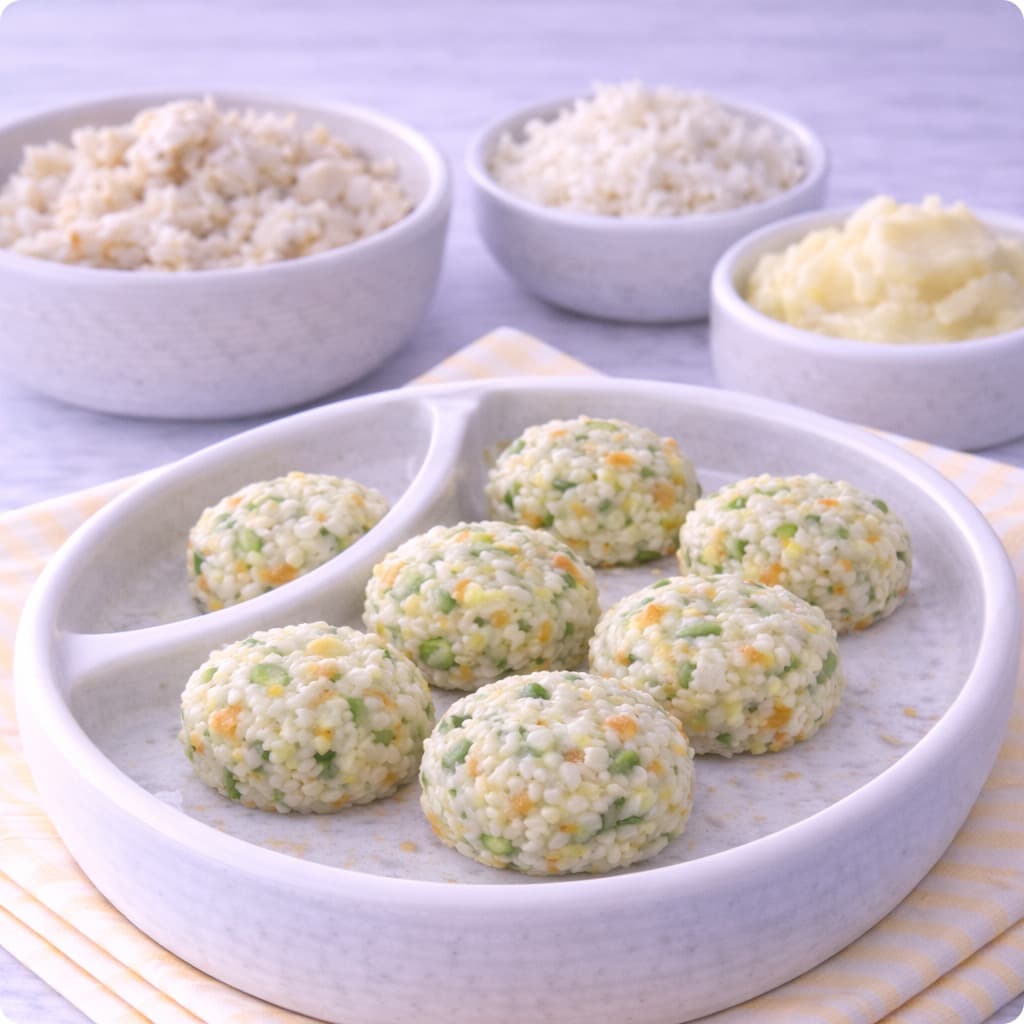
Soft Fish Rice Cakes
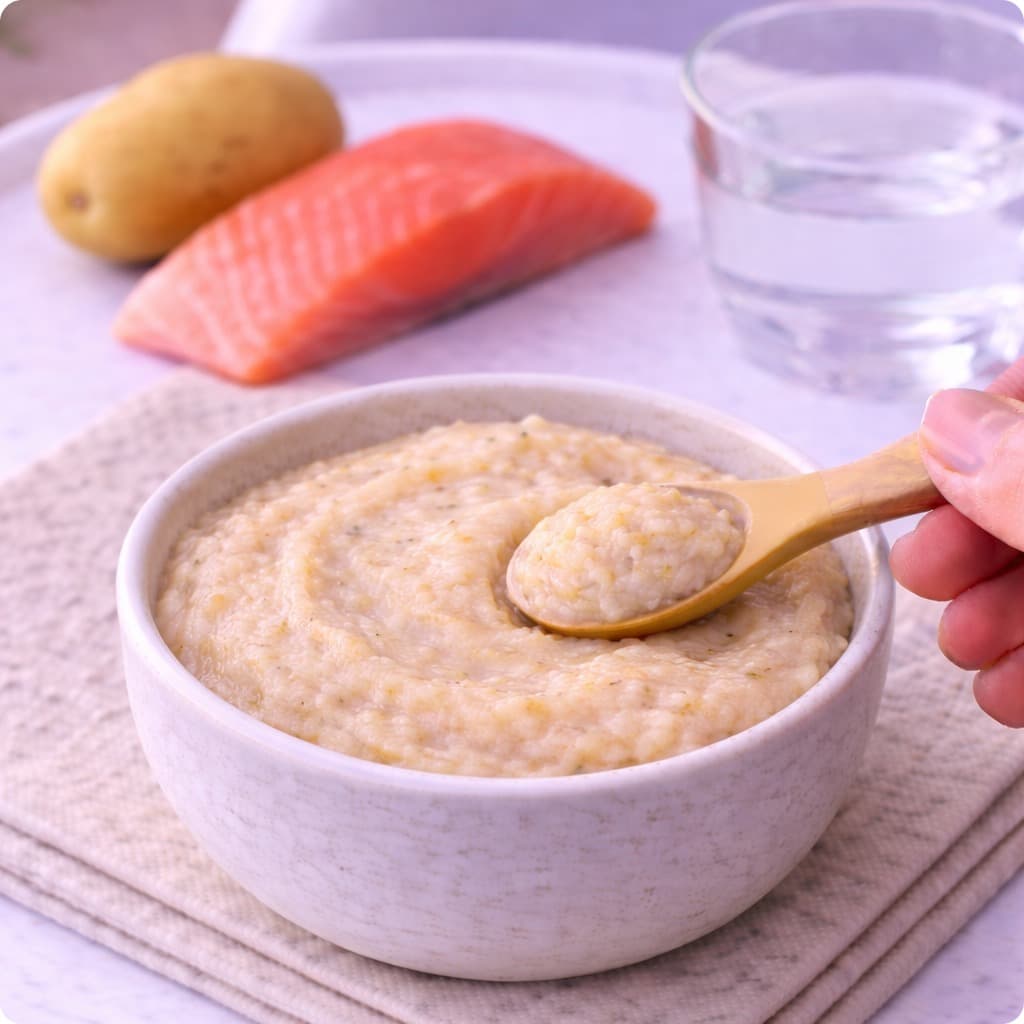
Salmon & Potato Purée
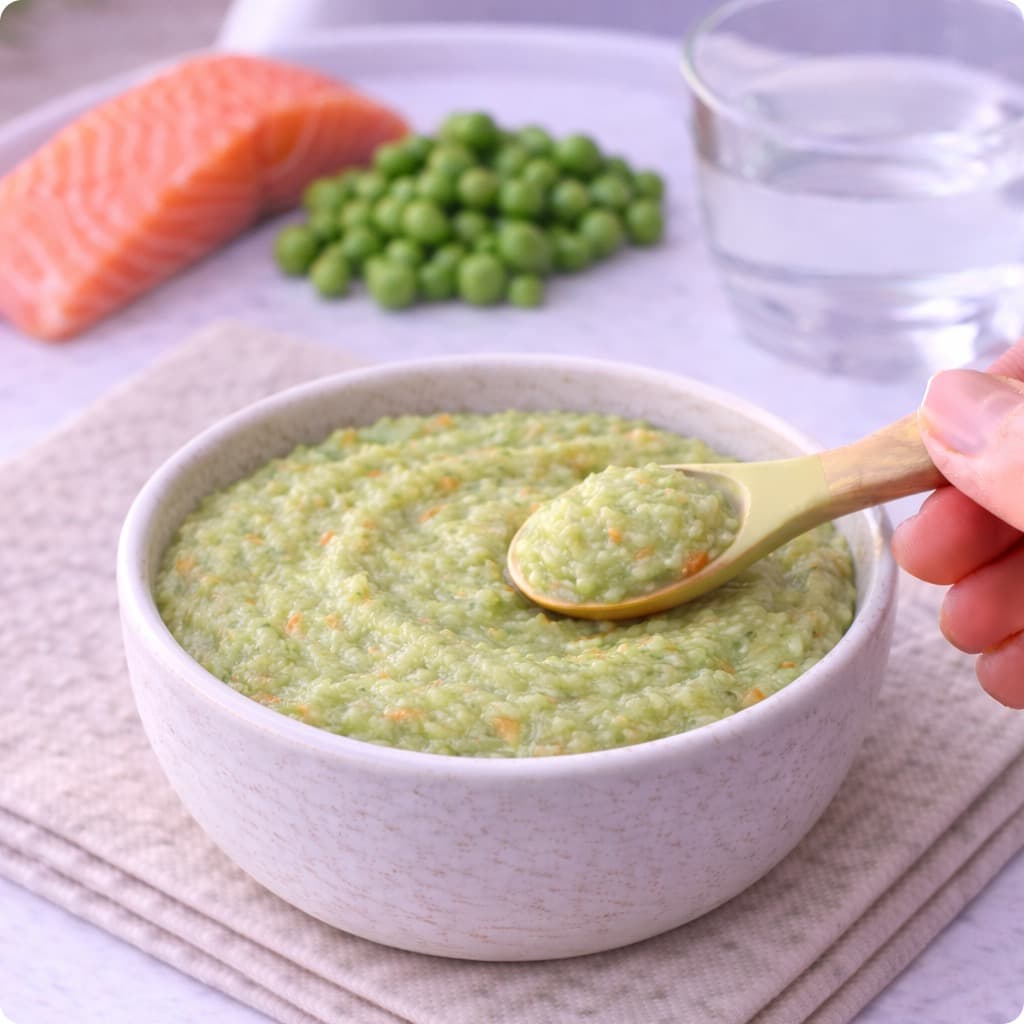
Salmon & Pea Mash
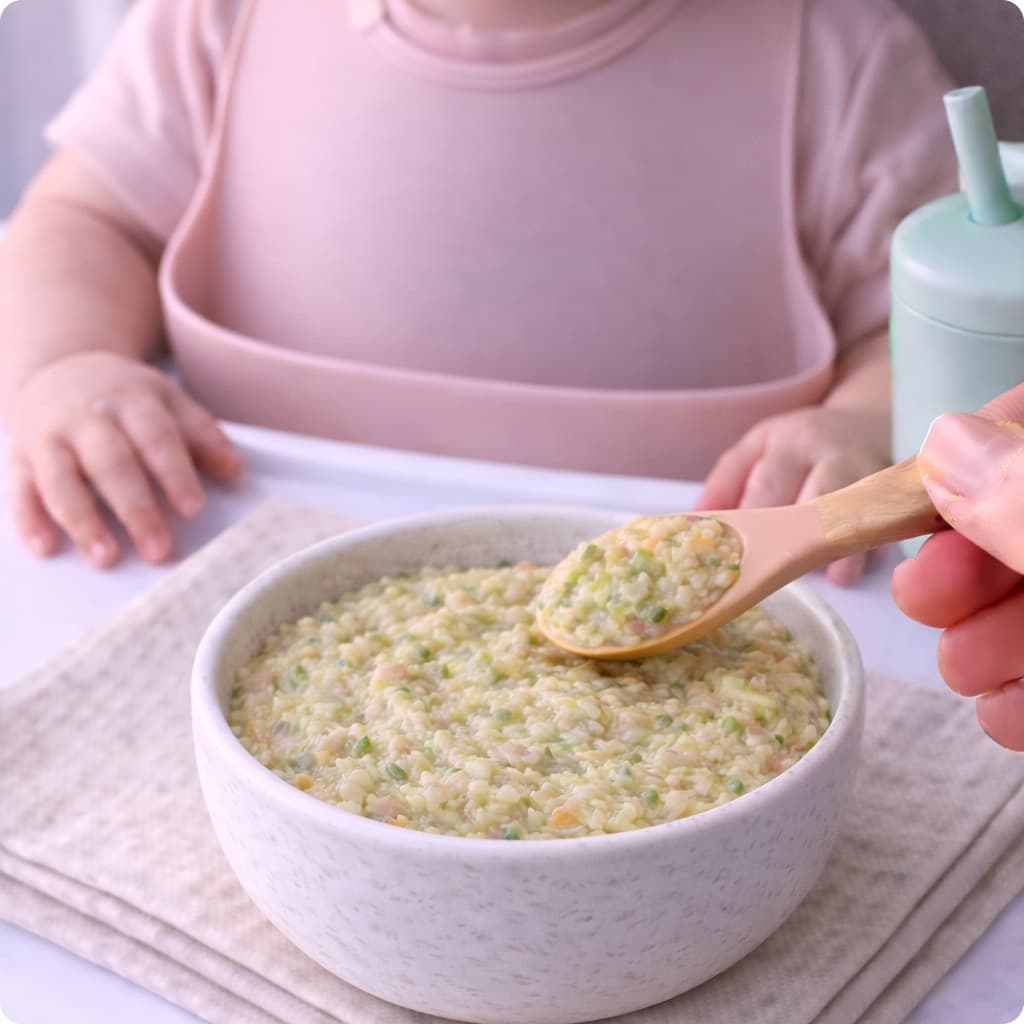
Salmon, Potato & Peas
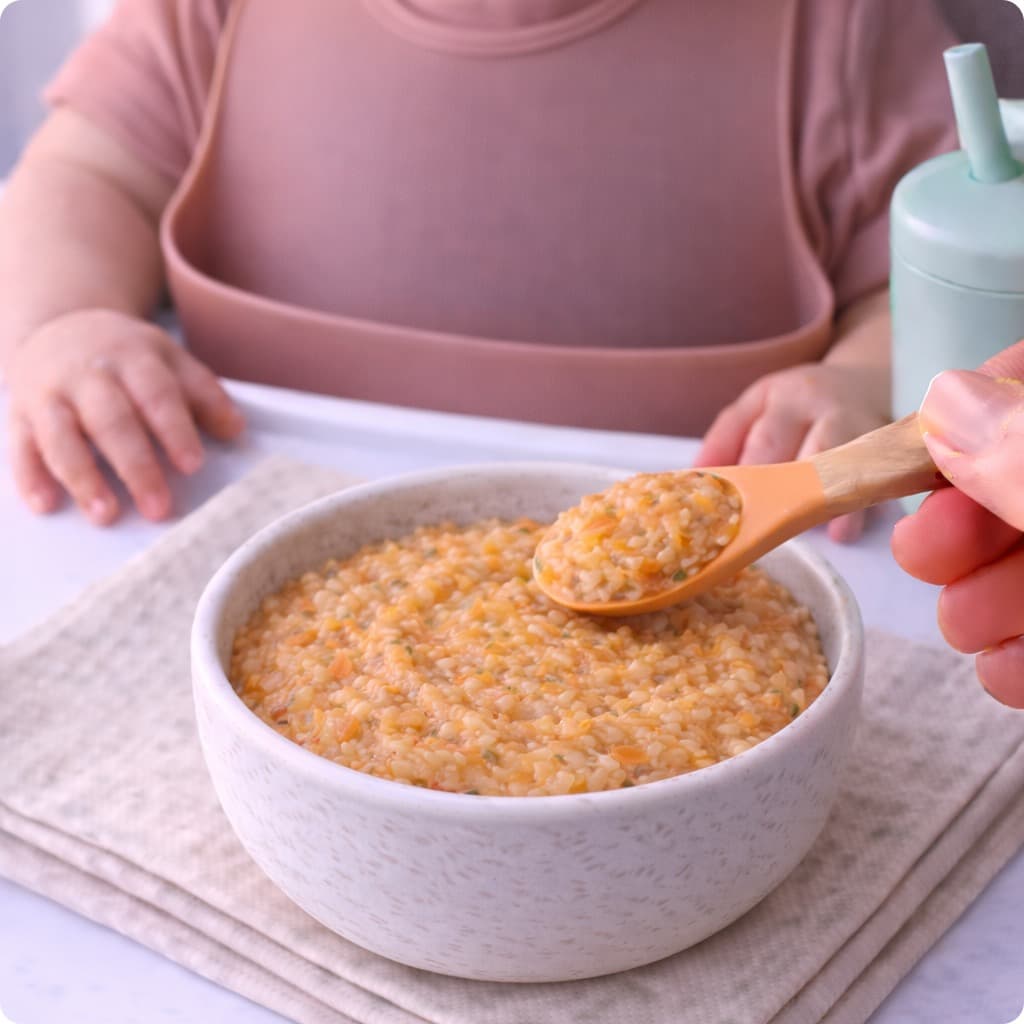
Salmon, Carrot & Rice
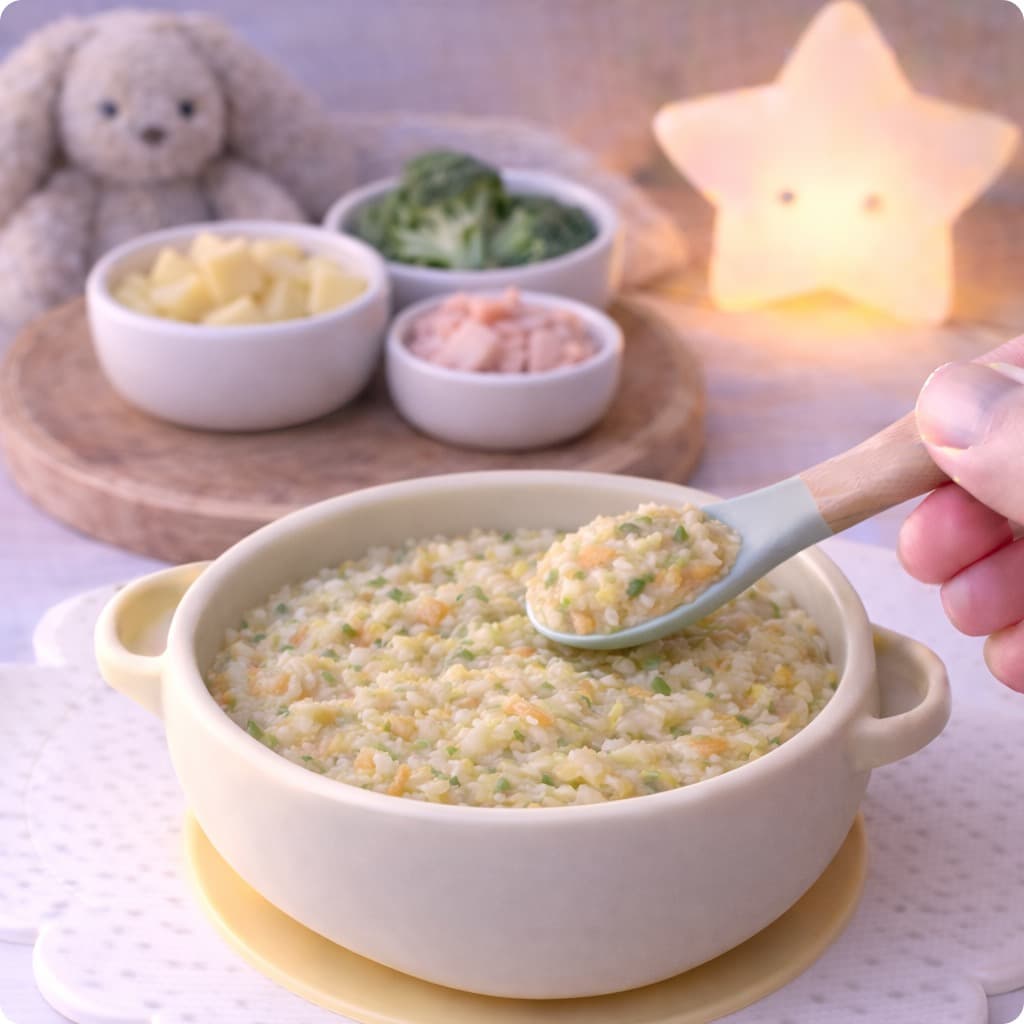
Salmon, Broccoli & Potato Bowl
Fish for babies: common questions
Which fish are best to start with?
Choose low mercury, mild tasting fish that cook moist and flaky, such as salmon, cod, pollock, haddock, trout, or tilapia. Bake, steam, or poach until opaque and flaking, then mash or flake for baby.
How much fish can my baby have each week?
Offer 1 to 2 small servings per week of low mercury fish. A baby serving is about 1 ounce cooked. Vary the types you offer.
Can babies eat canned tuna or salmon?
Yes. Choose no salt added or rinse before serving. Pick light or skipjack tuna and limit to about once per week. Canned salmon is generally low mercury and a great option for fish cakes or mash.
How do I make sure there are no bones?
After cooking, let the fish cool slightly and run clean fingers along the fillet to feel for pin bones. Use tweezers to pull any you find. Break the fish into small flakes and check again before serving.
Is raw fish or sushi safe for babies?
Serve fish fully cooked for babies to lower the risk of germs and parasites. The NHS advises avoiding raw shellfish for children. Offer cooked fish or sushi made with cooked fillings instead.
What allergy signs should I watch for?
Hives, vomiting, coughing, wheezing, facial or lip swelling, or sudden lethargy can signal an allergic reaction. Call emergency services for breathing trouble or swelling of the tongue or throat. For mild symptoms, stop feeding and contact your clinician.
Can babies have shellfish too?
Yes, shellfish can be introduced from about 6 months when well cooked, but it is also a common allergen. Introduce a small amount first and avoid raw shellfish. Follow the same cut size and squish test rules.
Get recipes + a feeding plan for your baby
Save this food to your baby's list, get age-appropriate recipes and follow a personalized feeding schedule - 350+ baby-safe meals in the app.
verifiedSources & References
This guide is informed by current guidelines from leading health organizations: