Can Babies Eat Lamb?
Last updated October 2026
Yes.
A baby who is ready for solids, generally around six months, can try lamb cooked to the appropriate temperature and prepared in a moist, manageable texture. USDA guidance differs for whole cuts and ground lamb; use a thermometer, then remove bones, tough gristle and hard fat and check that the cooked meat is tender enough to eat.
When can a baby try lamb?
Meat, including lamb, can be offered when your baby is developmentally ready for solids, typically around six months. It can contribute haem iron to a mixed complementary diet; it does not need to be delayed until teeth appear.
A cooked internal temperature does not by itself make meat easy to chew. Lamb may stay chewy or dry unless it is simmered or braised until fork-tender, then shredded finely or minced into a moist food your baby can manage.
Lamb is not among the nine U.S. major labelled food allergens, but this does not mean allergy is impossible. If symptoms occur after any food, stop offering it and seek appropriate medical advice.
Cook lamb safely, then make the texture manageable
USDA FSIS guidance for intact lamb chops, steaks and roasts is at least 63°C/145°F internally, measured with a food thermometer, followed by a three-minute rest. Ground lamb and lamb patties must reach at least 71°C/160°F; these are different safety requirements, not visual doneness guesses.
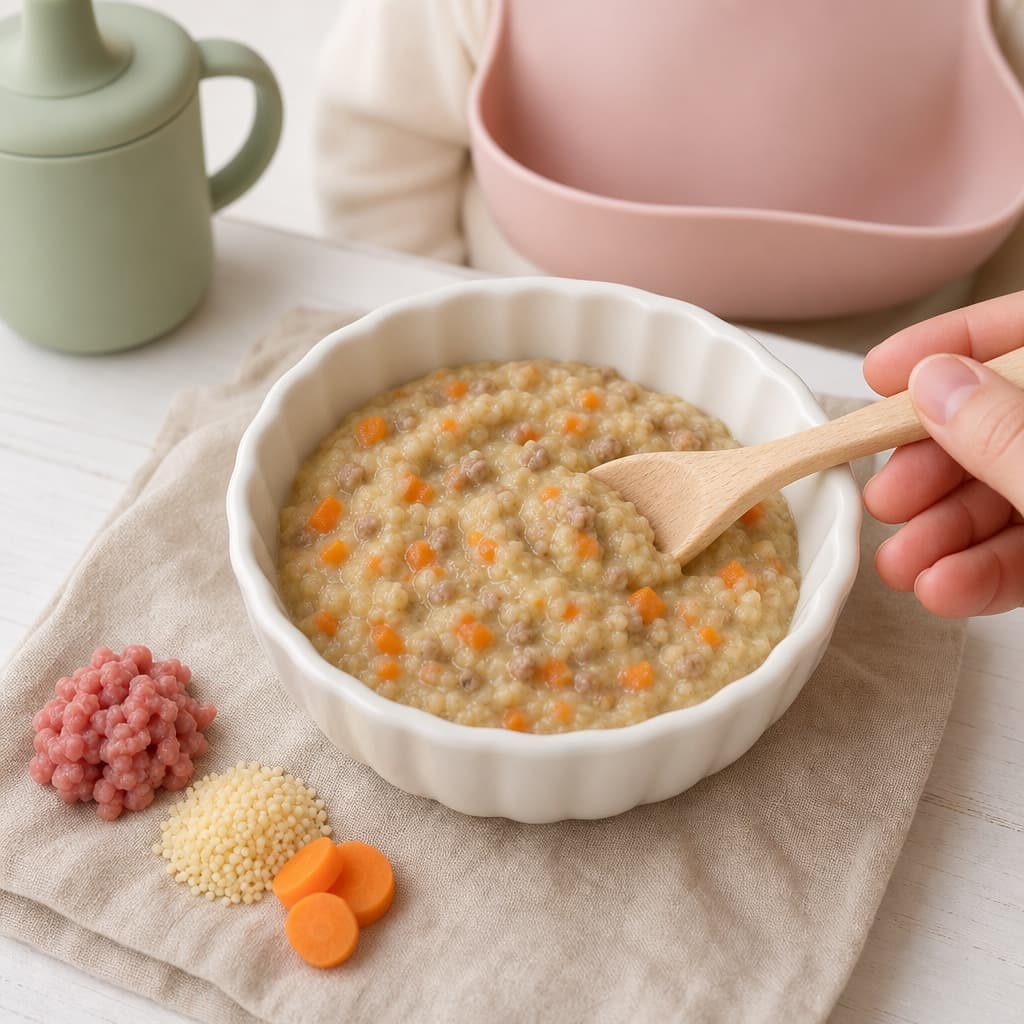
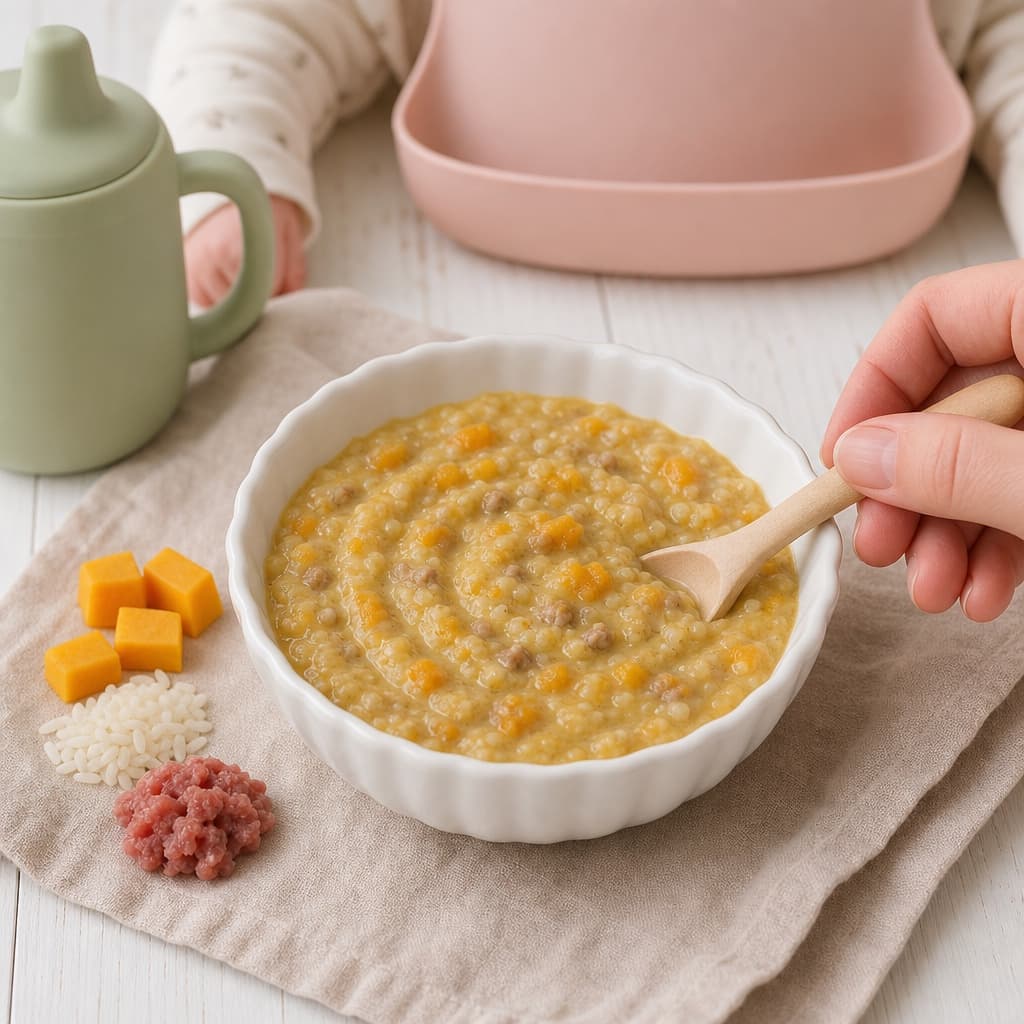
Choose a boneless cut that can be slow-cooked to a soft texture, or thoroughly cook ground lamb. Remove any bones, hard gristle, chewy membranes and tough fat; moisten very fine shreds or crumbles with a low-salt vegetable mash. Check that the portion breaks down easily before serving.
Beginning eaters may manage minced meat mixed into mash or very soft shreds. Older babies can try tender, small pieces as their grasp and chewing skills develop; do not prescribe a particular finger-size chunk as a choking-proof option.
Cool hot meat before serving, keep the baby upright, and supervise every bite. Avoid processed, salty lamb sausages or heavily salted stocks and marinades.
Lamb safety checks
Use a thermometer: whole cuts at least 63°C/145°F plus a three-minute rest; ground lamb at least 71°C/160°F under U.S. USDA guidance.
Do not use brown colour or the absence of pink as proof that lamb is safely cooked.
After reaching the correct temperature, ensure the meat is also fork-tender, moist and appropriate to the child's chewing skills.
Remove bones, gristle, tough membranes and hard fat; avoid dry meat cubes and chewy strips.
Do not suggest sucking meat juices provides a measured iron serving without eating meat.
Avoid salty processed lamb products and stock cubes in infant meals.
Seat your baby upright and stay with them while eating; adjust texture whenever they struggle.
What lamb contributes nutritionally
Lamb contributes haem iron, which is generally absorbed more readily than plant non-haem iron.
It also provides protein, zinc and vitamin B12; the amount consumed depends on cut, cooking and portion.
Include lamb alongside other suitable iron-containing foods and soft vegetables rather than treating any one food as a complete diet or a remedy for anaemia.
Recipes with lamb for babies
Related guides
Frequently asked questions
What temperature should lamb reach for a baby?
USDA guidance specifies at least 63°C/145°F with a three-minute rest for whole lamb chops, steaks and roasts, versus 71°C/160°F for ground lamb. Use a food thermometer.
Is pink lamb automatically undercooked?
Colour is not a reliable way to confirm safe cooking. Use the correct thermometer measurement for the cut, and separately make sure the meat is tender enough for your baby.
What if lamb stays tough after cooking?
Braise or simmer longer until it shreds readily, then serve fine moist shreds or mince. Don't offer a chewy piece just because a thermometer showed the food-safety temperature.
Sources & References
This guide is informed by current guidelines from leading health organizations:
- ●USDA FSIS - Lamb From Farm to Table USDA
- ●NHS - Preparing Food Safely for Babies NHS
- ●NHS - Your Baby's First Solid Foods NHS
- ●CDC — Choking Hazards (reviewed March 2026) CDC
- ●AAP - Iron Needs for Babies and Toddlers AAP
