Can babies eat potato?
Last updated October 2026
Yes.
A baby who is ready for complementary foods, typically around 6 months, can eat fully cooked potato. Offer it mashed and loosened to a manageable texture or as a very soft piece the baby can handle. Avoid raw, firm, green or sprouted potatoes and salty crisps; supervise the baby seated upright while eating.
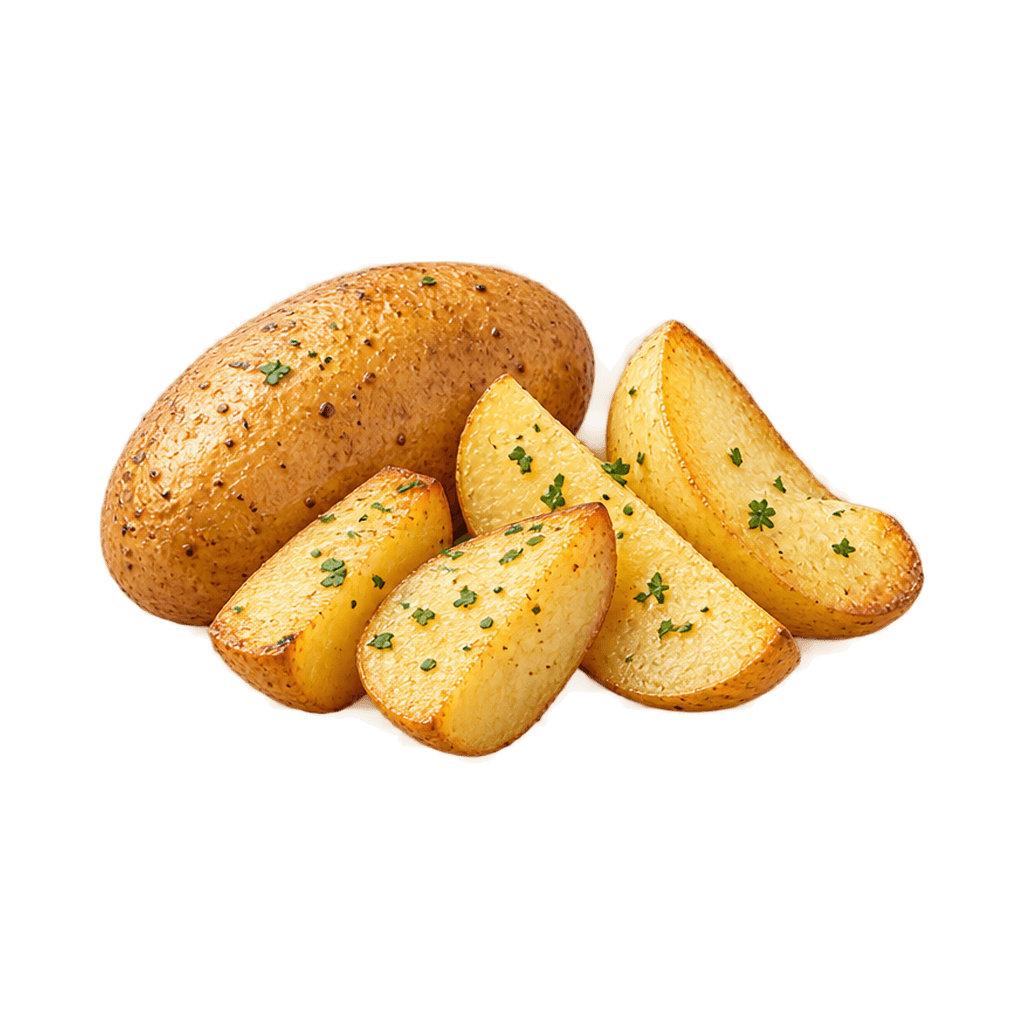
When can babies try potato?
Potato is included in the NHS list of starchy foods suitable from around 6 months once a baby is developmentally ready. There is no benefit to waiting for teeth or choosing a specific first-food order. Try it alongside vegetables and iron-rich foods rather than making plain potato the main part of every meal.
Soft potato can be part of puree feeding or baby-led feeding. Watch the individual child: head and trunk control, handling food in the mouth, and gradually developing grasp matter more than a fixed month-by-month cutting chart.
How to cook and serve potato
Wash, peel if the skin is tough, and cook potato by boiling, steaming or baking until the centre is uniformly very soft. Mash with water or the baby's usual milk if the mash is gluey or thick; avoid large sticky spoonfuls. For finger food, a soft piece that the baby can hold may work when grasp and chewing skills allow it. Check the texture after cooling.
Progress gradually to lumpy mash or smaller soft pieces when the baby demonstrates the relevant skills. Avoid crisp fries, crisps, firm cubes, raw potato and hard roasted surfaces. Do not use green or heavily sprouted potatoes; discard them rather than trying to trim every affected area. Do not add salt.
Texture and storage cautions
Cook potato thoroughly and check for a soft centre; crisp edges and firm chunks are difficult for a new eater to manage.
Thick, gluey mashed potato may be hard to move around the mouth. Loosen with liquid and offer manageable mouthfuls.
Avoid adding salt; commercial fries and crisps are often salty and have unsuitable textures.
Discard green or heavily sprouted potatoes because they may contain elevated natural glycoalkaloids.
Do not insist on waiting several days between each ordinary new food; assess specific allergens separately and keep watching for reactions.
What potato provides
Potato contributes starchy carbohydrate for energy.
It contains potassium and vitamin C, with amounts depending on cooking and storage.
Potato alone is not an iron-rich or complete complementary meal.
Combine it with suitably prepared fish, meat, pulses or vegetables to add nutrient variety.
Recipes with potato for babies
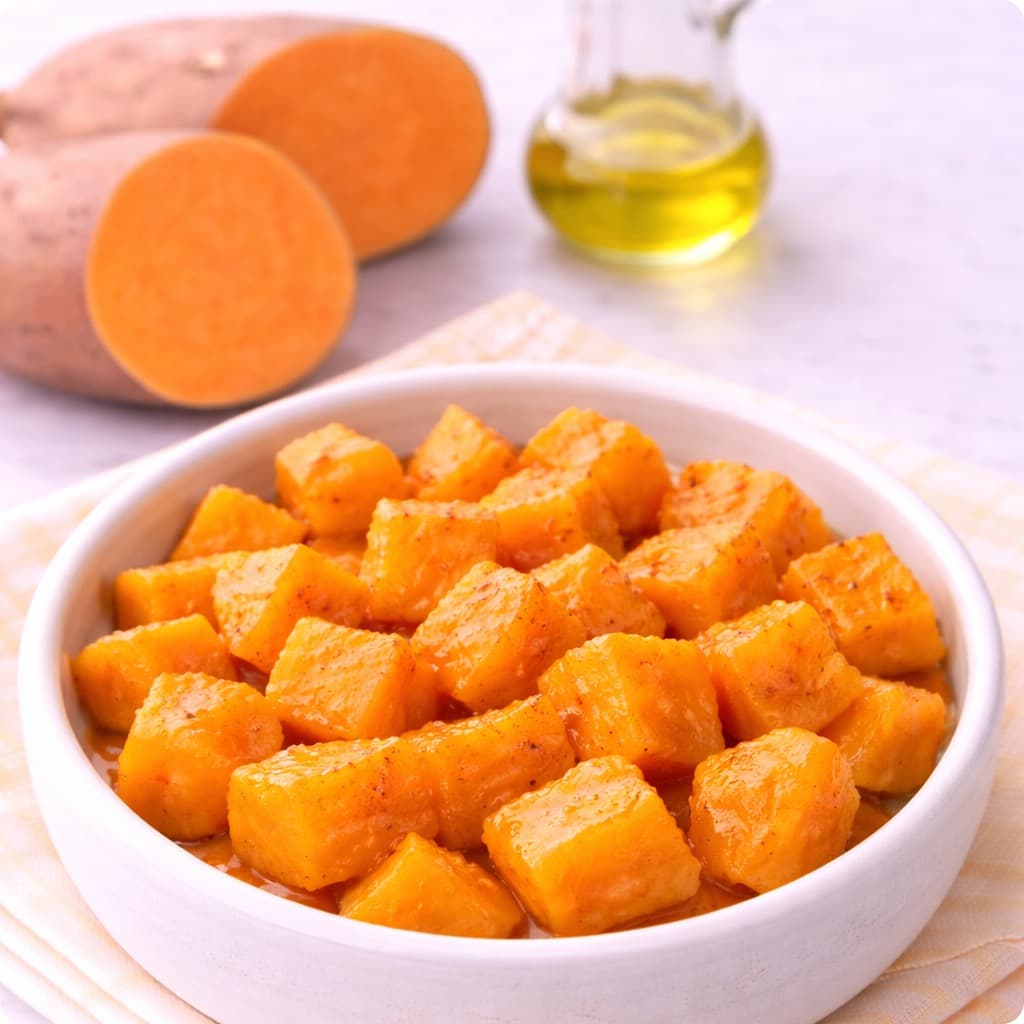
Soft Sweet Potato Cubes
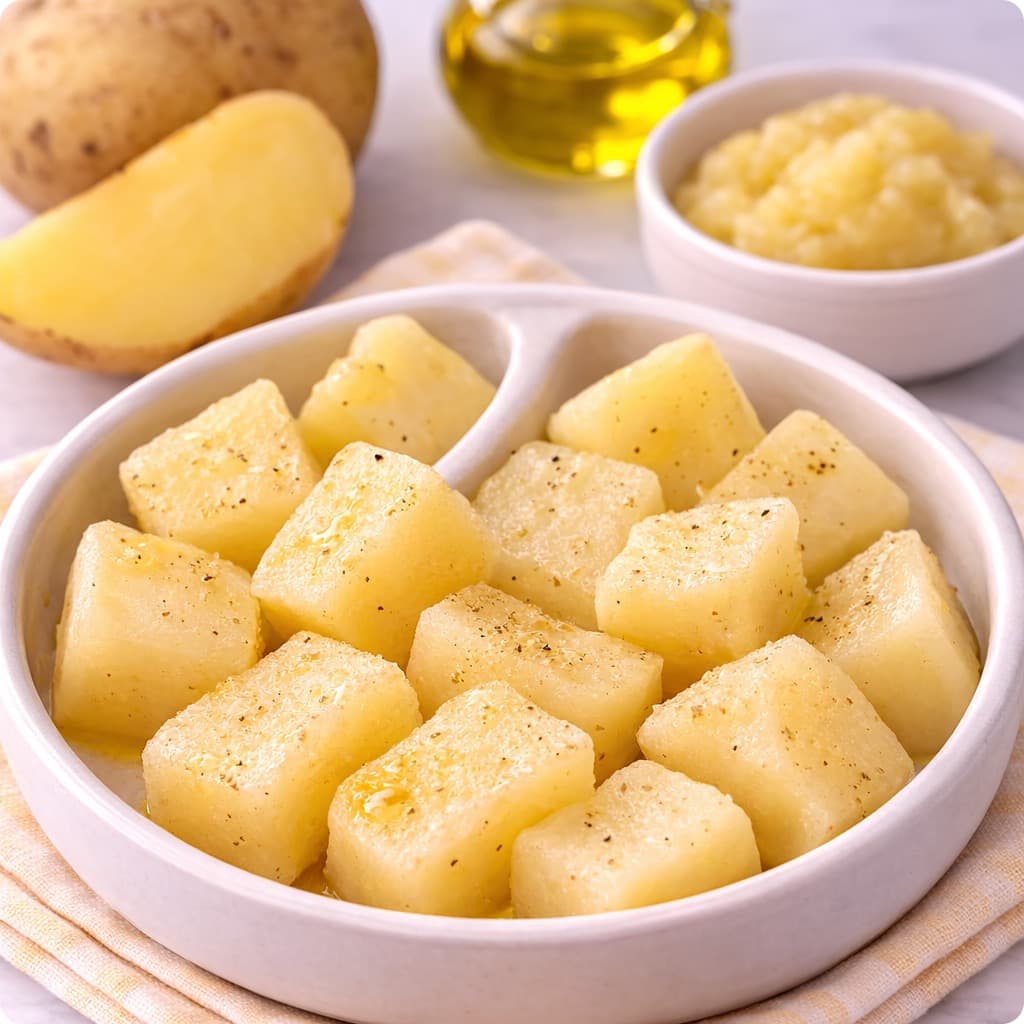
Soft Potato Cubes
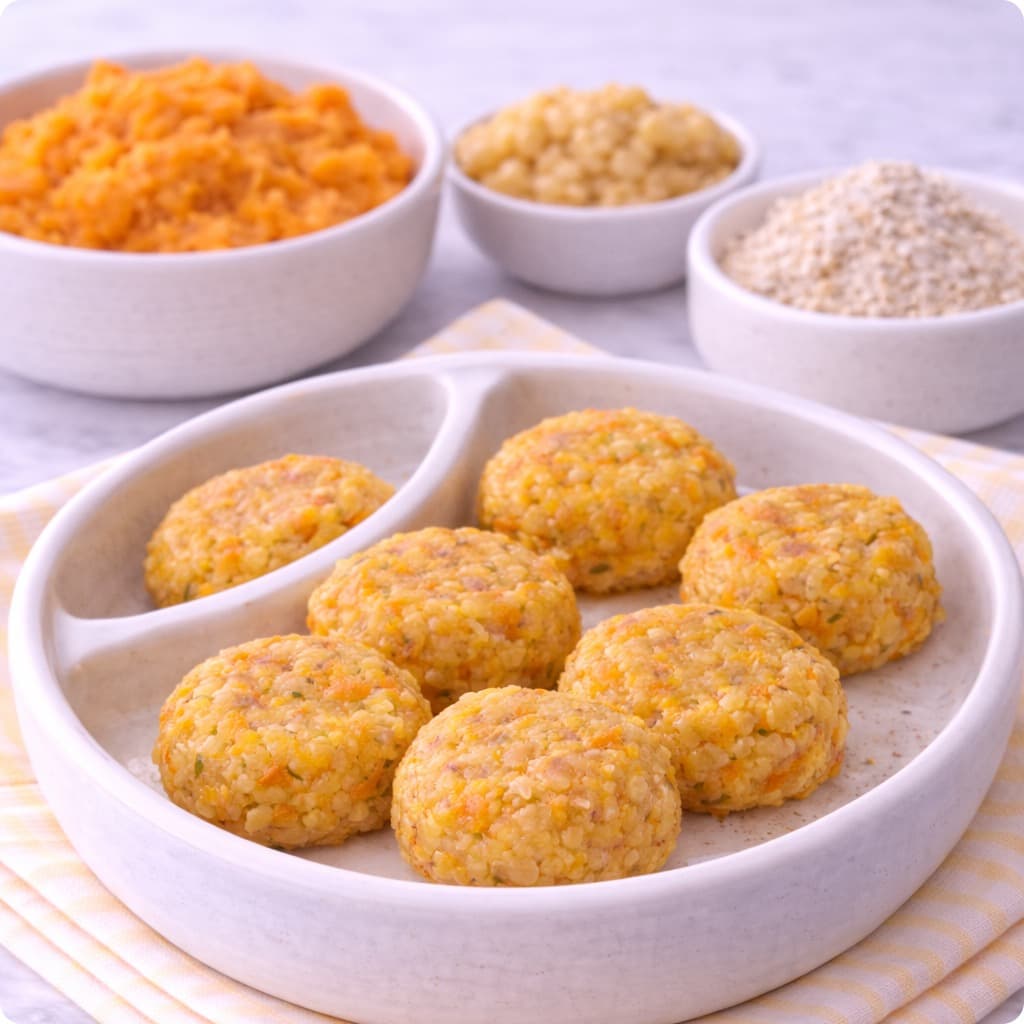
Sweet Potato Chickpea Patties
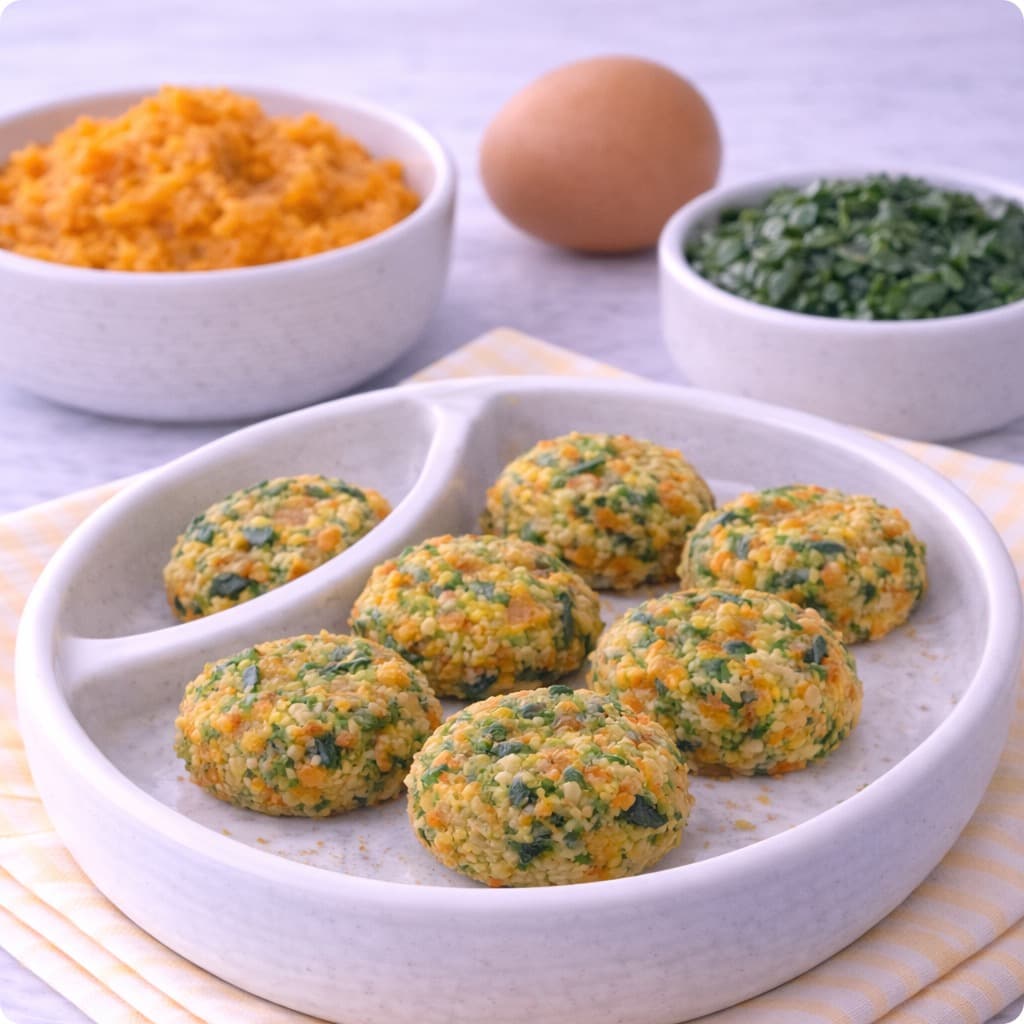
Sweet Potato Spinach Fritters
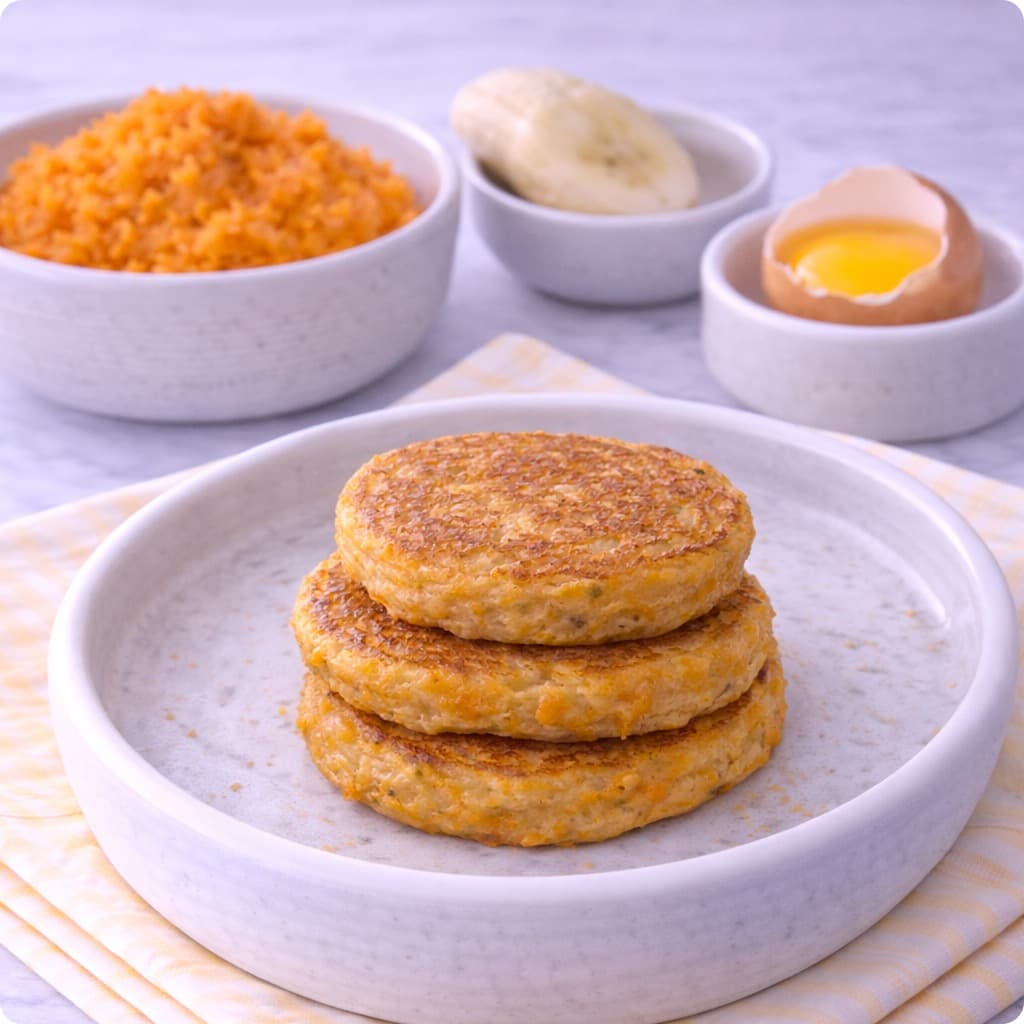
Sweet Potato Banana Pancakes
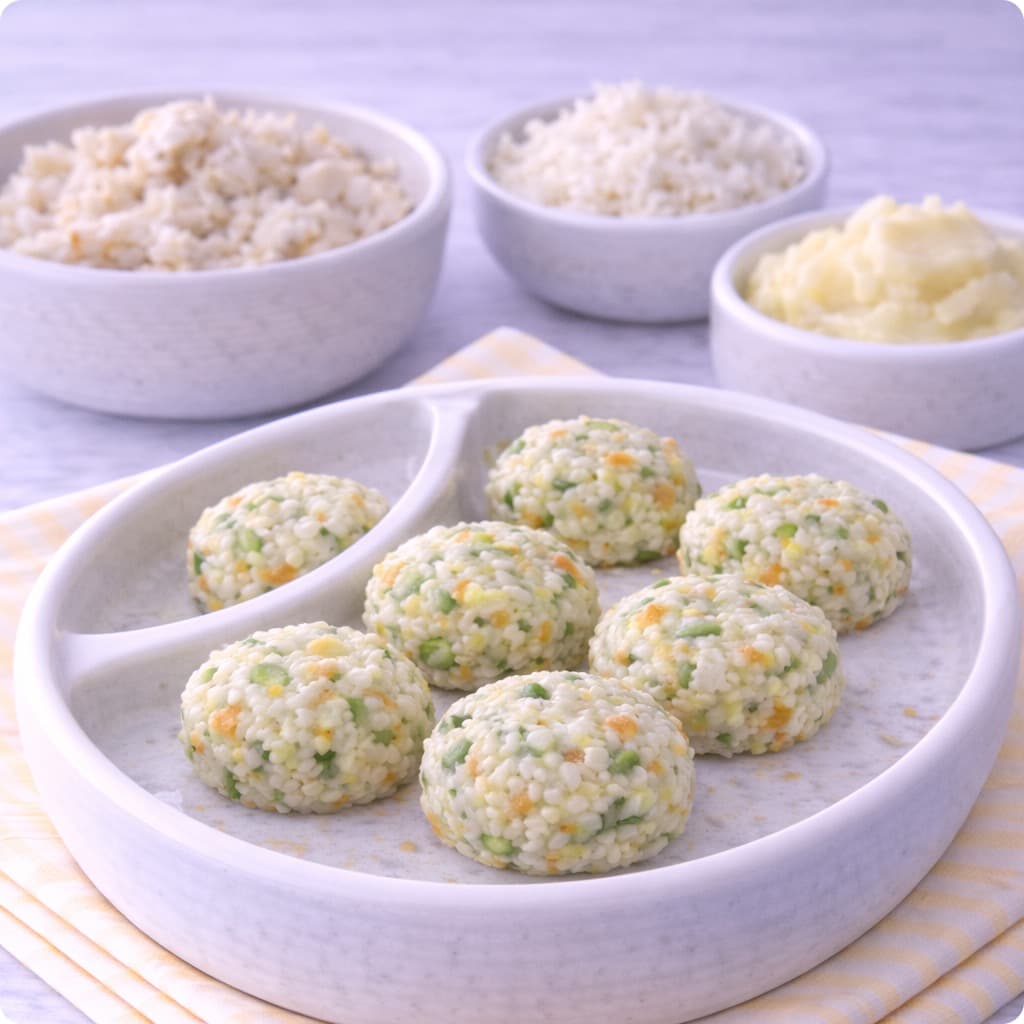
Soft Fish Rice Cakes
Related guides
Frequently asked questions
Can a six-month-old have mashed potato?
Yes, once ready for solids. Cook thoroughly and loosen thick mash with water or the baby's usual milk. Offer a manageable amount on a spoon and follow your baby's cues.
What texture should potato be for baby-led weaning?
It should be soft throughout, without a crust or firm centre. A graspable piece may be appropriate when your baby can handle it; no particular wedge size eliminates choking risk.
Can babies eat potato skin?
Peel skin that is tough or chewy for early eaters. Later, very soft skin may be manageable as skills improve, but inspect the finished texture.
Are homemade potato wedges suitable?
They can be if baked or steamed until very soft, without a firm crust or added salt, and adapted to the child's current eating ability. Crisp or restaurant fries are a different texture and often contain excess salt.
Is sweet potato more nutritious than white potato?
They offer different nutrients. Orange sweet potato contains more beta-carotene, while white potato also provides starch and other nutrients. Both can feature in a varied diet; neither should replace iron-rich foods.
How much potato should my baby eat?
There is no one-size-fits-all spoon count. Offer small amounts and follow signs of hunger and fullness while keeping milk feeds and a variety of other complementary foods in the routine.
Can I add butter, milk or herbs to potato?
Avoid added salt. Small amounts of unsalted fat or mild seasoning may be used if appropriate, but dairy is a potential allergen and should be introduced thoughtfully; cow's milk is not the main drink before age one.
Sources & References
This guide is informed by current guidelines from leading health organizations:
- ●NHS - Feeding your baby from around 6 months NHS
- ●NHS - Your Baby's First Solid Foods NHS
- ●CDC — Choking Hazards (reviewed March 2026) CDC
- ●NHS - Foods to Avoid Giving Babies NHS
- ●EFSA - Glycoalkaloids in potatoes: public health risks assessed European Food Safety Authority
