Quick answer
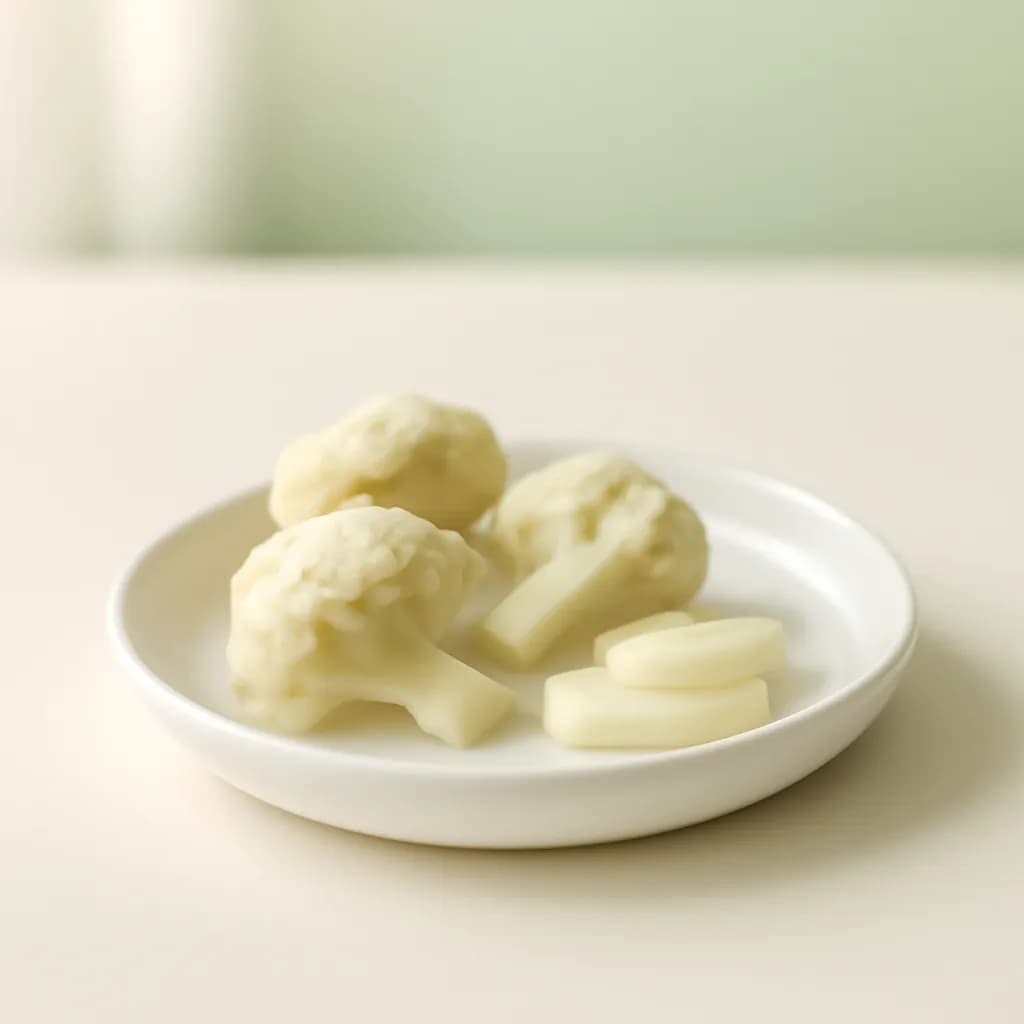
Babies can start eating cauliflower around 6 months, when they begin exploring solid foods.
While not a common allergen, cauliflower (like broccoli) can cause a little gas in some babies, so introducing it gradually helps your baby adjust comfortably.
Its gentle flavour makes it easy to combine with other vegetables, cheese, or potato to build balanced meals.
When can babies eat cauliflower?
Babies can start eating cauliflower around 6 months, when they begin exploring solid foods.
Introduce it steamed and very soft to make chewing and digestion easy.
Offer it regularly even if your baby is unsure at first - repeated exposure helps acceptance of cruciferous veg.
See our first foods for baby guide for more ideas.
Nutritional benefits for babies
- 💚Vitamin C - supports immune health and helps iron absorption.
- 💚Fibre - promotes healthy digestion.
- 💚Antioxidants - support overall development.
- 💚Vitamin K and folate - support bones and cell growth.
- 💚Choline - supports brain development.
- 💚Low in calories and naturally mild in flavour.
How to serve cauliflower for babies
6–9 months (BLW): Offer steamed cauliflower florets with a soft stem 'handle' your baby can hold and gum.
6–9 months: Mash or purée steamed cauliflower to a smooth consistency for spoon-feeding; blend with potato or cheese sauce to enrich it.
9–12 months: Smaller soft florets or chopped pieces as the pincer grasp develops; fold into fritters.
12+ months: Cauliflower in cheese bakes, soups, and roasted family sides (low-salt).
Cauliflower recipes for babies
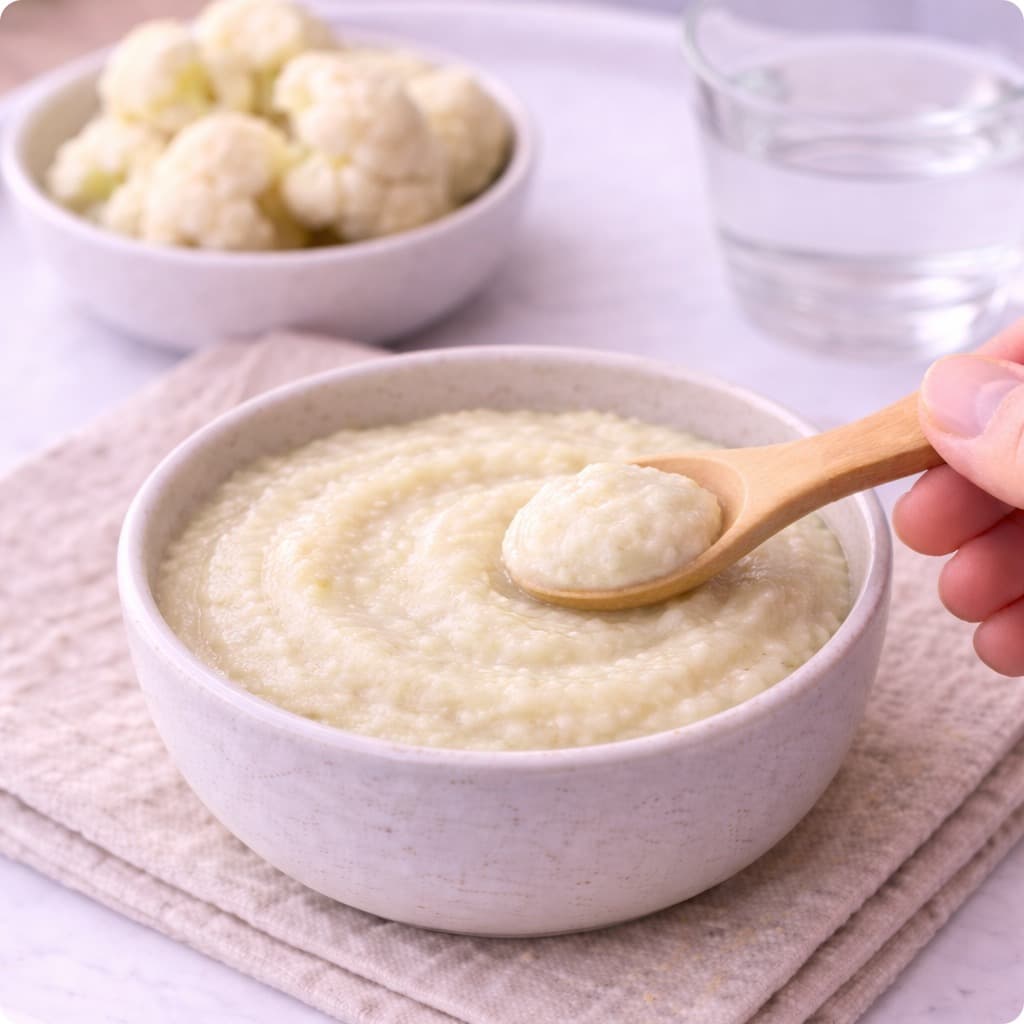
Cauliflower Purée
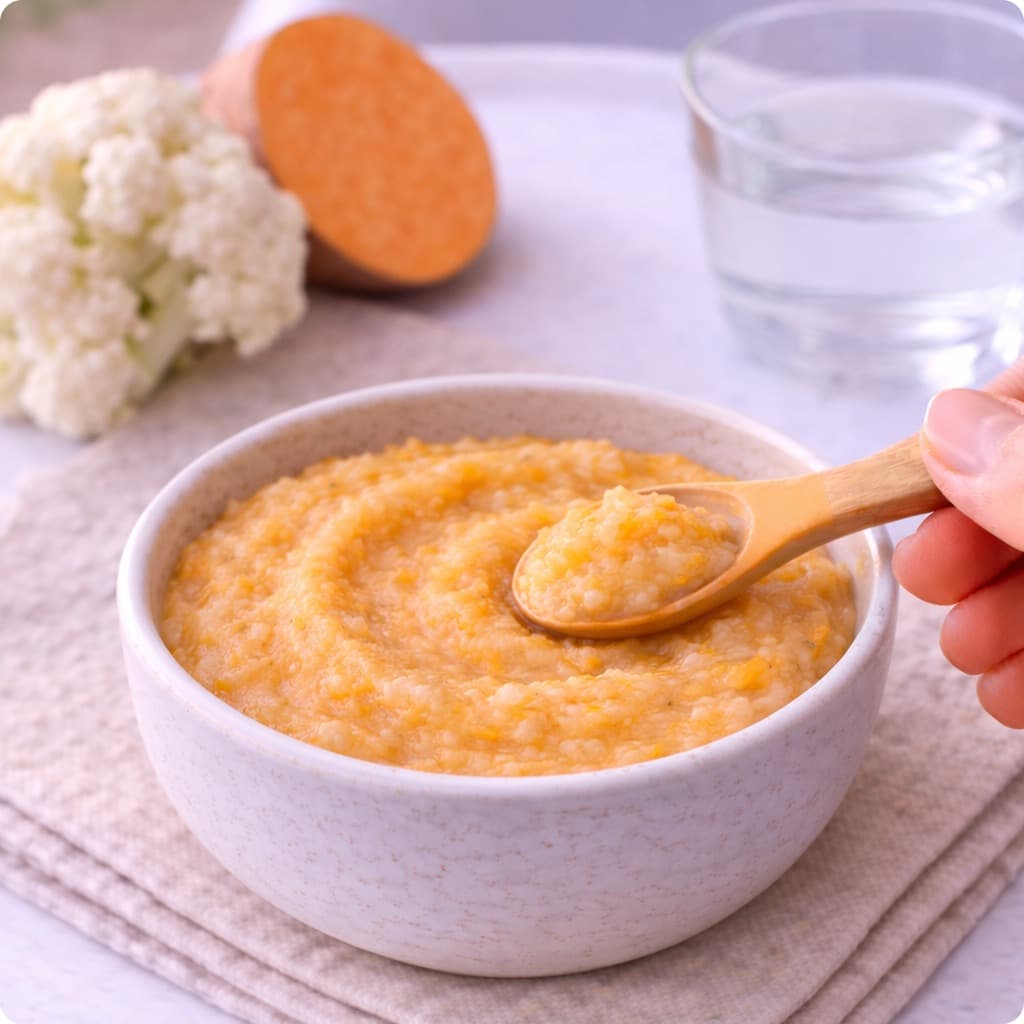
Cauliflower & Sweet Potato Mash
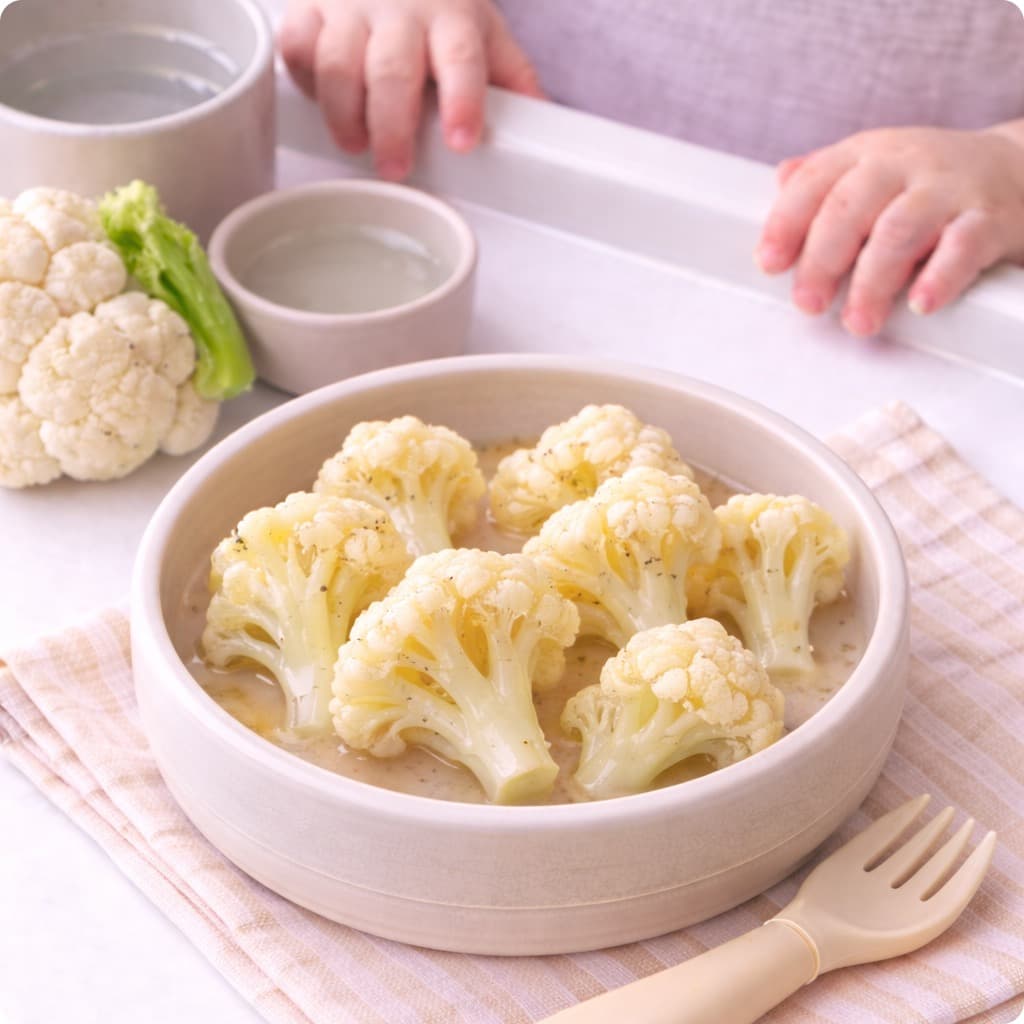
Soft Cauliflower BLW Pieces
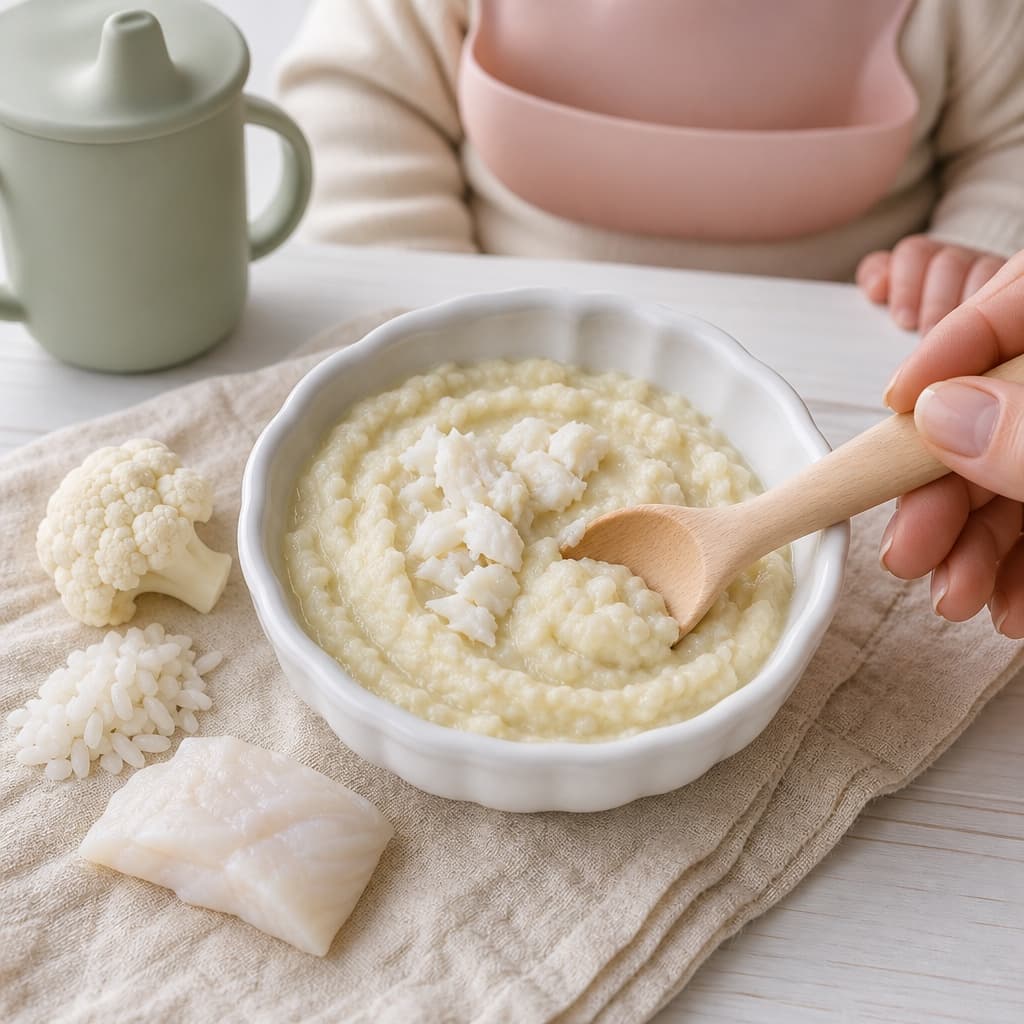
Cod Cauliflower Rice Mash
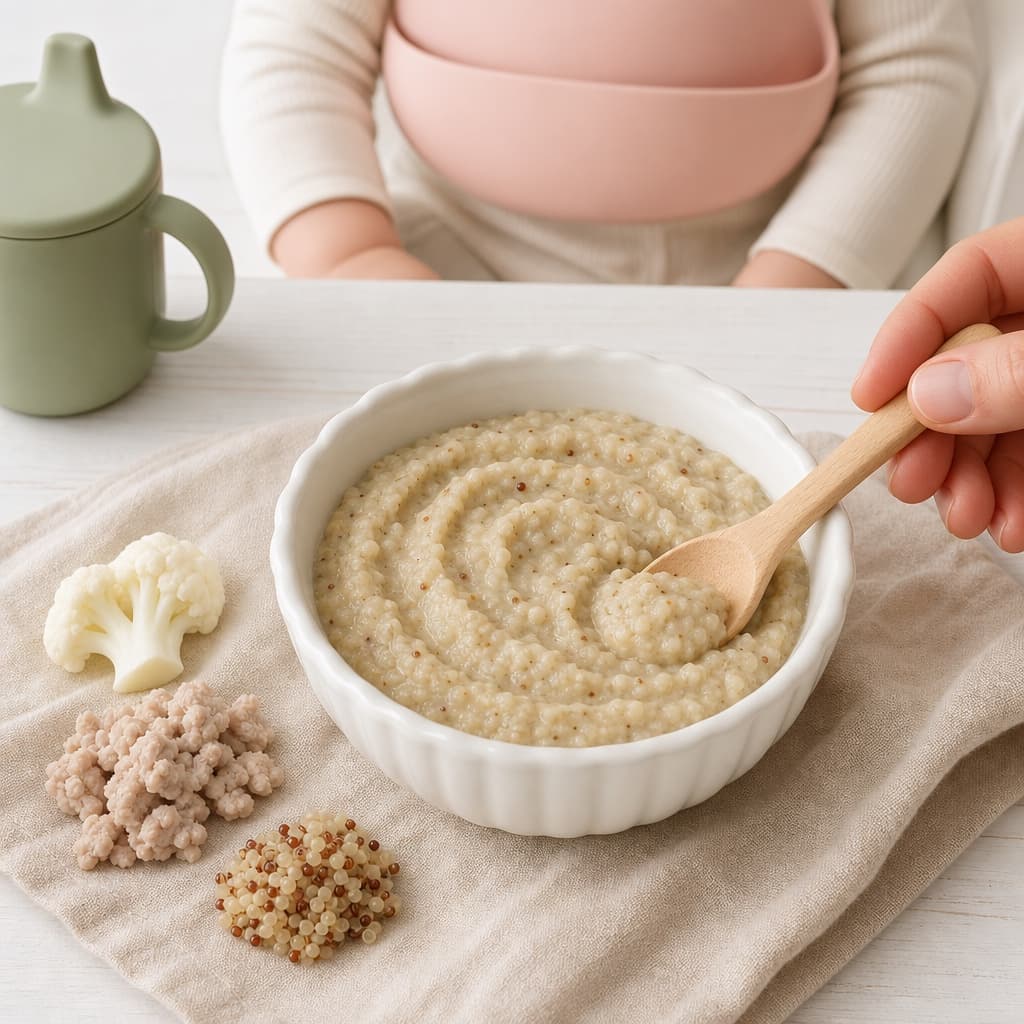
Turkey Cauliflower Quinoa Bowl
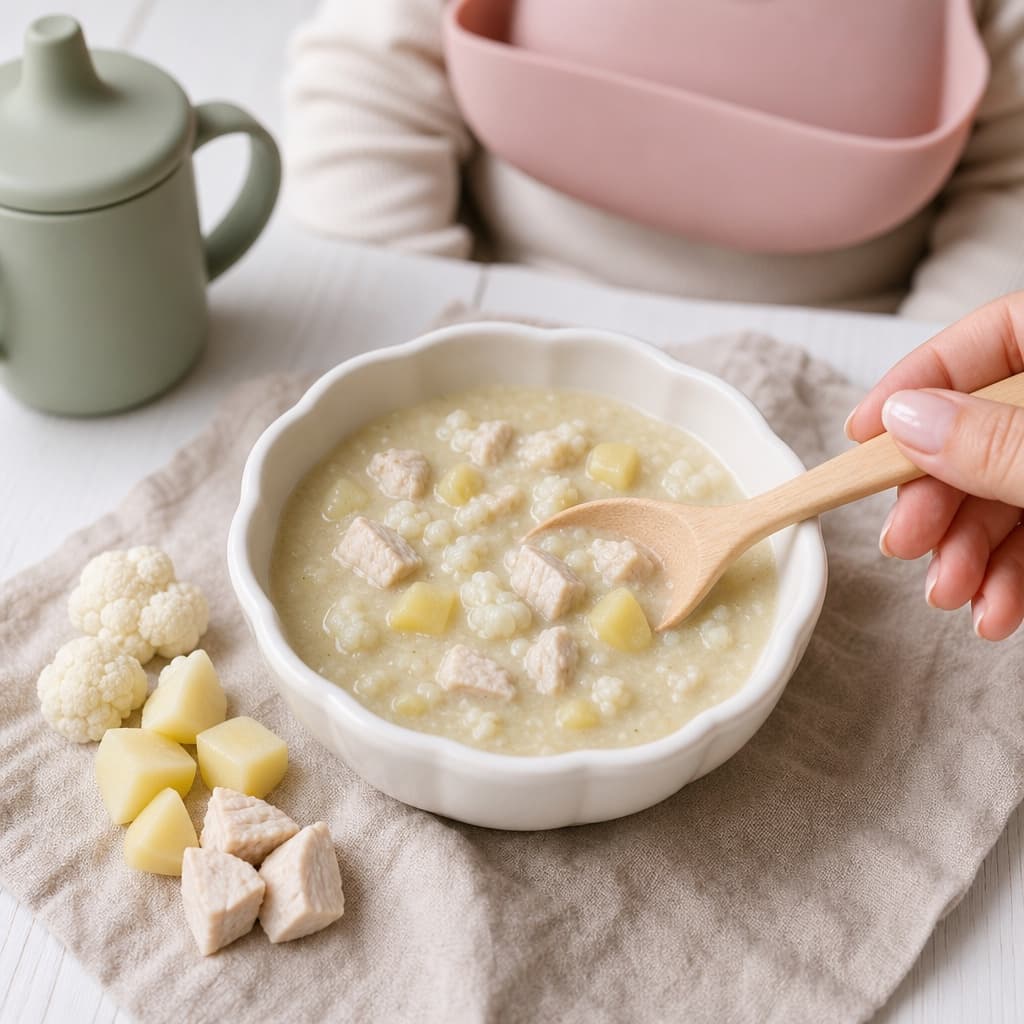
Chicken Cauliflower Potato Soup
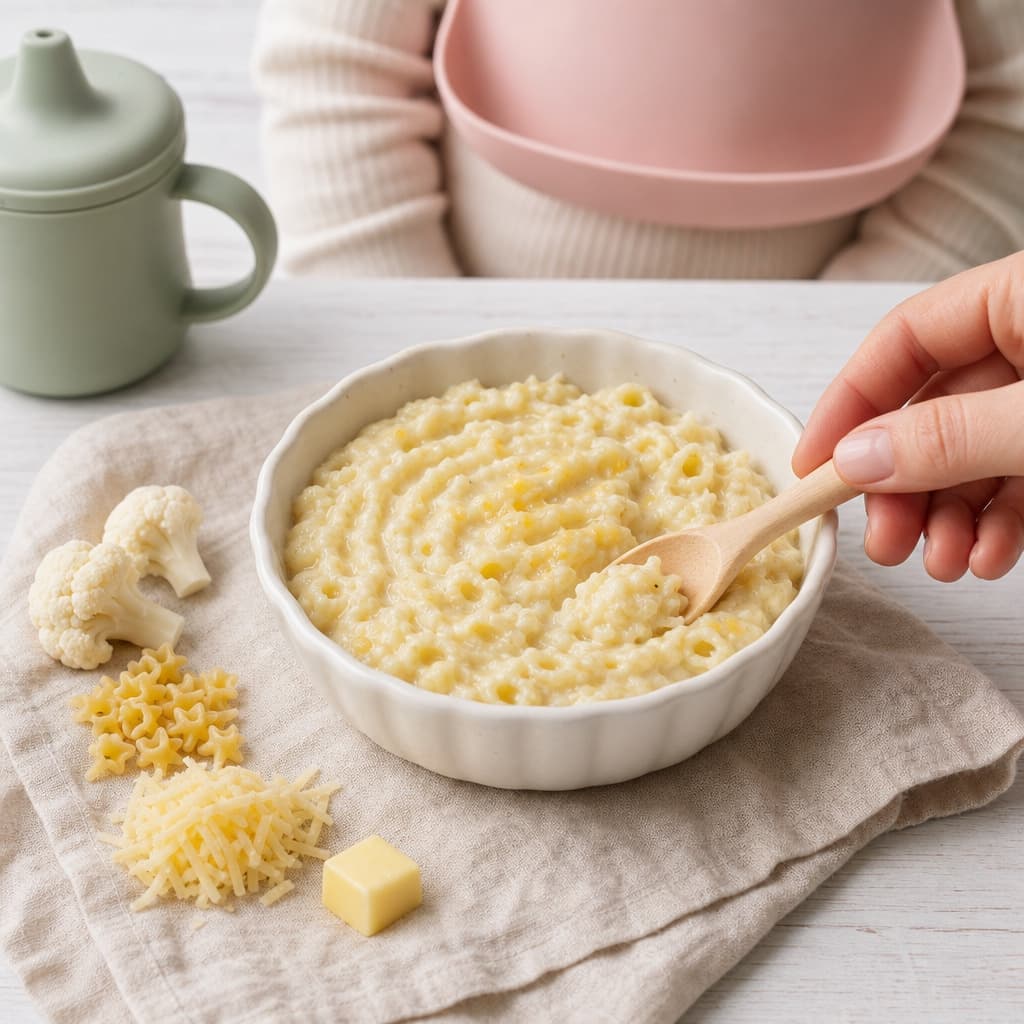
Cauliflower Cheese Baby Pasta
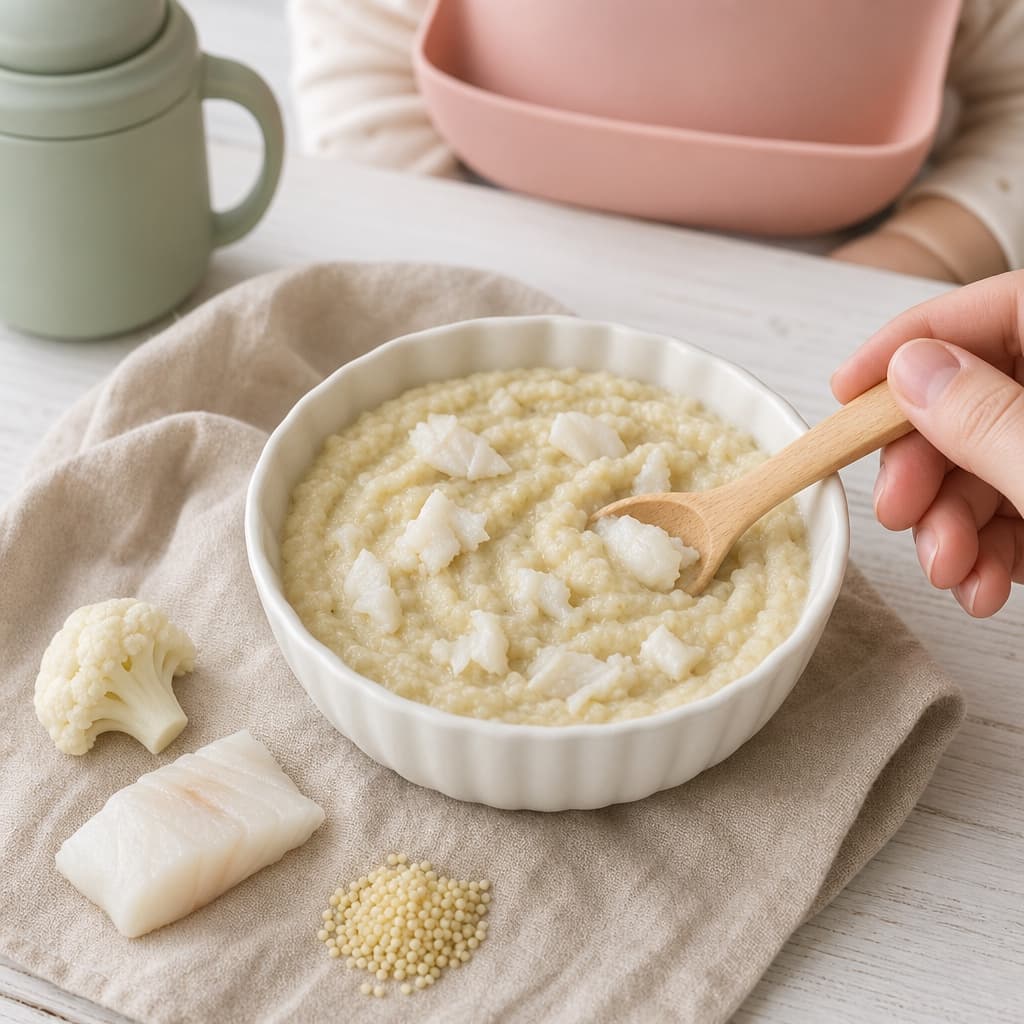
Fish Cauliflower Millet Bowl
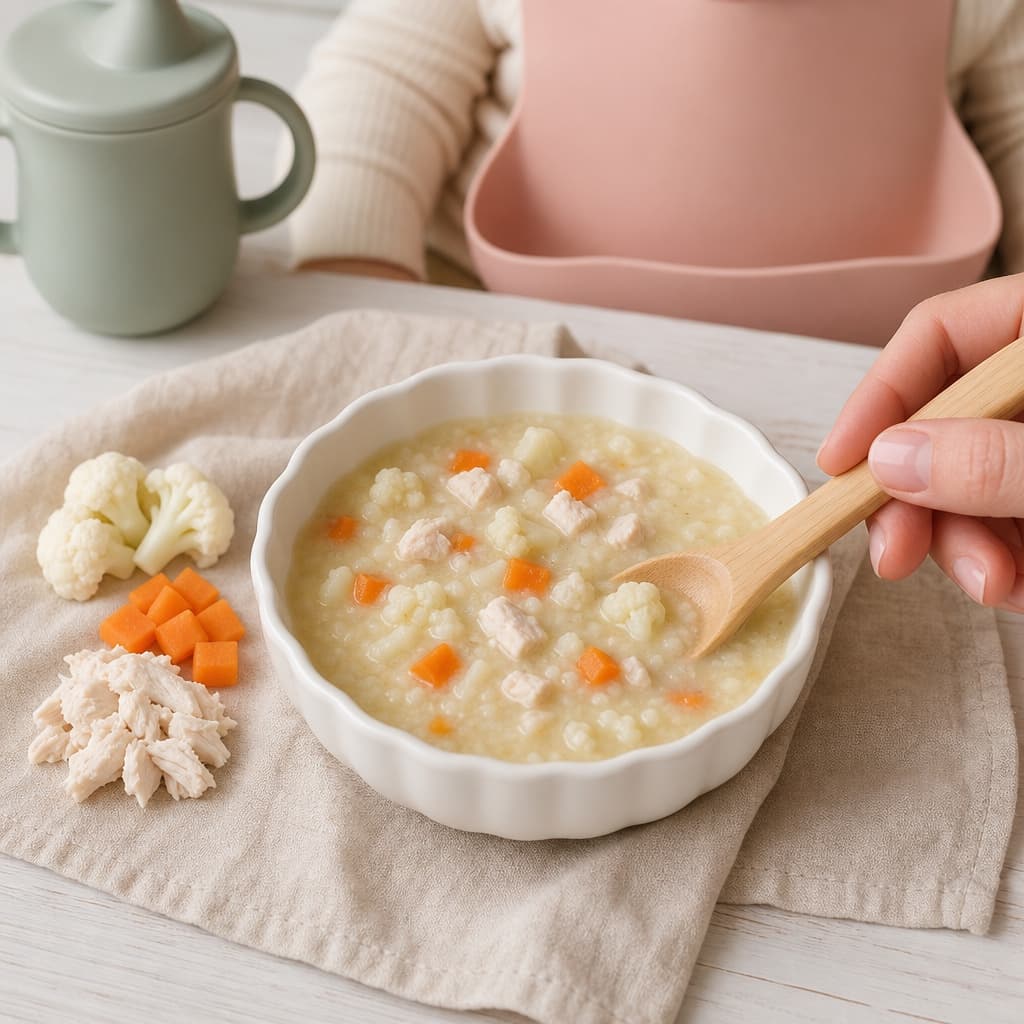
Turkey Cauliflower Rice Soup
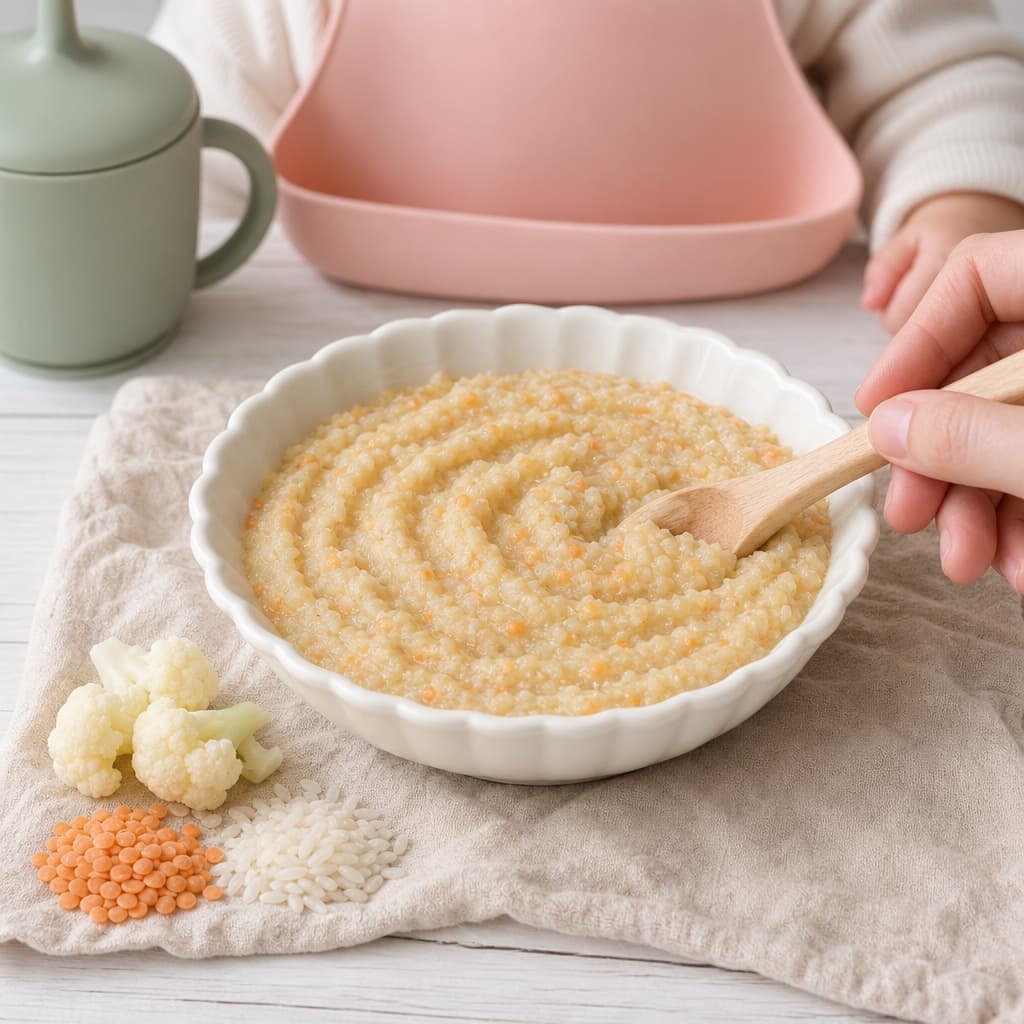
Lentil Cauliflower Rice Bowl
See all cauliflower recipes for babies. Explore baby breakfast recipes, baby-led weaning recipes and first foods for baby for more ideas.
Frequently Asked Questions
Can babies eat Cauliflower?
Yes. Babies can eat Cauliflower starting around 6 months when they begin solid foods. It should be served in a safe texture and size for babies.
When can babies eat Cauliflower?
Babies can eat Cauliflower from around 6 months when starting solids. Babies can start eating cauliflower around 6 months, when they begin exploring solid foods. Introduce it steamed and very soft to make chewing and digestion easy. Offer it regularly even if your baby is unsure at first - repeated exposure helps acceptance of cruciferous veg.
Is Cauliflower a choking hazard for babies?
Cauliflower can be a choking hazard if served in unsafe shapes. Always steam cauliflower until soft to reduce choking risk. Leave a stem on florets as a handle for younger babies, and cut large florets down. Introduce gradually to monitor for any digestive reactions like gas. Ensure pieces are an appropriate size and texture for your baby's stage. Avoid adding salt; flavour with herbs or mix with other vegetables. Supervise your baby closely while eating.
Is Cauliflower a common allergen?
Some babies may be allergic to Cauliflower. Introduce Cauliflower carefully when babies start solids and watch for reactions.
How should Cauliflower be served to babies?
6–9 months (BLW): Offer steamed cauliflower florets with a soft stem 'handle' your baby can hold and gum. 6–9 months: Mash or purée steamed cauliflower to a smooth consistency for spoon-feeding; blend with potato or cheese sauce to enrich it. 9–12 months: Smaller soft florets or chopped pieces as the pincer grasp develops; fold into fritters. 12+ months: Cauliflower in cheese bakes, soups, and roasted family sides (low-salt).
What nutrients does Cauliflower provide for babies?
Cauliflower provides nutrients like fibre, vitamin C, iron, folate that support babies' growth and development.
How long can I store Cauliflower for babies?
Cook Cauliflower to a safe temperature and store it in the refrigerator for up to 2 days, or freeze in single-serving portions for up to 1 month to preserve nutrients.
Should I buy organic Cauliflower for my baby?
Organic Cauliflower isn't strictly necessary for babies, but some families prefer to reduce pesticide exposure. Wash conventional produce thoroughly. Variety and freshness matter most.
How should I introduce Cauliflower for the first time?
Offer a small amount of Cauliflower in an age-appropriate texture when your baby is hungry but not starving, ideally early in the day so you can watch for any reactions over several hours.
Is Cauliflower a good finger food for babies?
Yes. Cauliflower can be an excellent finger food for babies when cut into strips or soft pieces they can grasp. Make sure the texture mashes easily between your fingers.
What foods pair well with Cauliflower for baby?
Cauliflower pairs well with grains like rice, oats, or pasta, soft proteins like chicken or lentils, and healthy fats like olive oil or avocado.
Should I cook Cauliflower before serving it to my baby?
Yes. Cook Cauliflower until tender and easily mashable before serving it to your baby. Steaming, boiling, or roasting softens it enough to be safe.
How much Cauliflower can a baby eat?
There's no fixed amount. Start with 1-2 tablespoons of Cauliflower from around 6 months and let your baby regulate intake. Breast milk or formula remains the main source of nutrition in the first year.
Should I peel or remove the pit from Cauliflower for my baby?
For Cauliflower, peeling or pitting is usually not required, but wash it well and serve in a size and texture safe for your baby.
Can I mix Cauliflower with baby cereal?
Yes. Mashing Cauliflower and stirring it into baby cereal (oat, rice, or multigrain) is a simple way to add flavor, fiber, and nutrients to your baby's meals.
How should I store Cauliflower fresh for my baby?
Store fresh Cauliflower in a cool, dry place or in the refrigerator crisper drawer, depending on the food. Wash just before preparing and use it when ripe and firm for the best quality for your baby.
Safety tips
- ✓Always steam cauliflower until soft to reduce choking risk.
- ✓Leave a stem on florets as a handle for younger babies, and cut large florets down.
- ✓Introduce gradually to monitor for any digestive reactions like gas.
- ✓Ensure pieces are an appropriate size and texture for your baby's stage.
- ✓Avoid adding salt; flavour with herbs or mix with other vegetables.
- ✓Supervise your baby closely while eating.
Get recipes + a feeding plan for your baby
Save this food to your baby's list, get age-appropriate recipes and follow a personalized feeding schedule - 350+ baby-safe meals in the app.
Try Nibli today to start planning your baby's meals.
verifiedSources & References
This guide is informed by current guidelines from leading health organizations: