When can babies eat cauliflower?
Cauliflower can be introduced around 6 months of age, when your baby shows signs of readiness for solids: sitting up with little or no support, good head and neck control, losing the tongue-thrust reflex, and showing interest in food. Following AAP, NHS, and WHO guidance, most babies are ready for first foods at about this age. Cauliflower is gentle in flavor and easy to cook until very soft, which makes it a friendly early vegetable for both purees and baby-led feeding.
There is no reason to delay cauliflower for allergy concerns, since it is not a common allergen. The key is texture rather than timing: raw or firm cauliflower is a choking hazard, so it must always be cooked until soft enough to mash easily between your fingers. As with any new food, offer cauliflower on its own for a few days at first so you can watch for any reaction before combining it with other ingredients.
How to serve cauliflower safely
From 6 to 9 months, steam, boil, or roast cauliflower until it is very soft and easily mashable. For early eaters, offer large, soft-cooked florets with a long stem that your baby can grip like a handle, which is easier to hold than small pieces. You can also serve a smooth cauliflower puree on a preloaded spoon, or mash it and mix it into other vegetable purees. Avoid raw cauliflower entirely, and skip small, firm chunks that could be a choking hazard.
From 9 to 12 months and beyond, as your baby develops the pincer grasp, you can offer smaller soft-cooked florets and bite-sized pieces of tender cauliflower that squish easily. Continue to make sure every piece is fully cooked and soft, never crunchy or rubbery. Always serve cauliflower with your baby seated upright and supervised, and never leave a baby alone while eating.
Nutritional benefits for babies
- 💚Provides vitamin C, which supports the immune system and helps the body absorb iron from other foods.
- 💚Contains vitamin K, important for healthy blood clotting and bone development.
- 💚Offers folate, a B vitamin that supports rapid growth and the formation of new cells.
- 💚Adds dietary fiber to support healthy digestion and regular bowel movements.
- 💚Has a high water content that contributes to your baby's overall hydration.
- 💚Naturally low in sodium and a gentle way to expand your baby's palate with new flavors.
Safety considerations
- ✓Cauliflower is not a common allergen, so there is no need to delay it, but introduce it on its own for a few days so you can watch for any reaction.
- ✓Raw and firm cauliflower is a choking hazard. Always cook it until soft enough to mash easily, and never offer it crunchy.
- ✓Match the shape to your baby's age: large graspable florets for 6 to 9 months, smaller soft pieces once the pincer grasp develops.
- ✓Always supervise your baby during meals, keep them seated upright, and never let them eat while crawling, walking, or reclining.
- ✓Introduce only one new food at a time, then wait a few days before adding another, so any reaction is easy to trace.
Recipes with cauliflower for babies
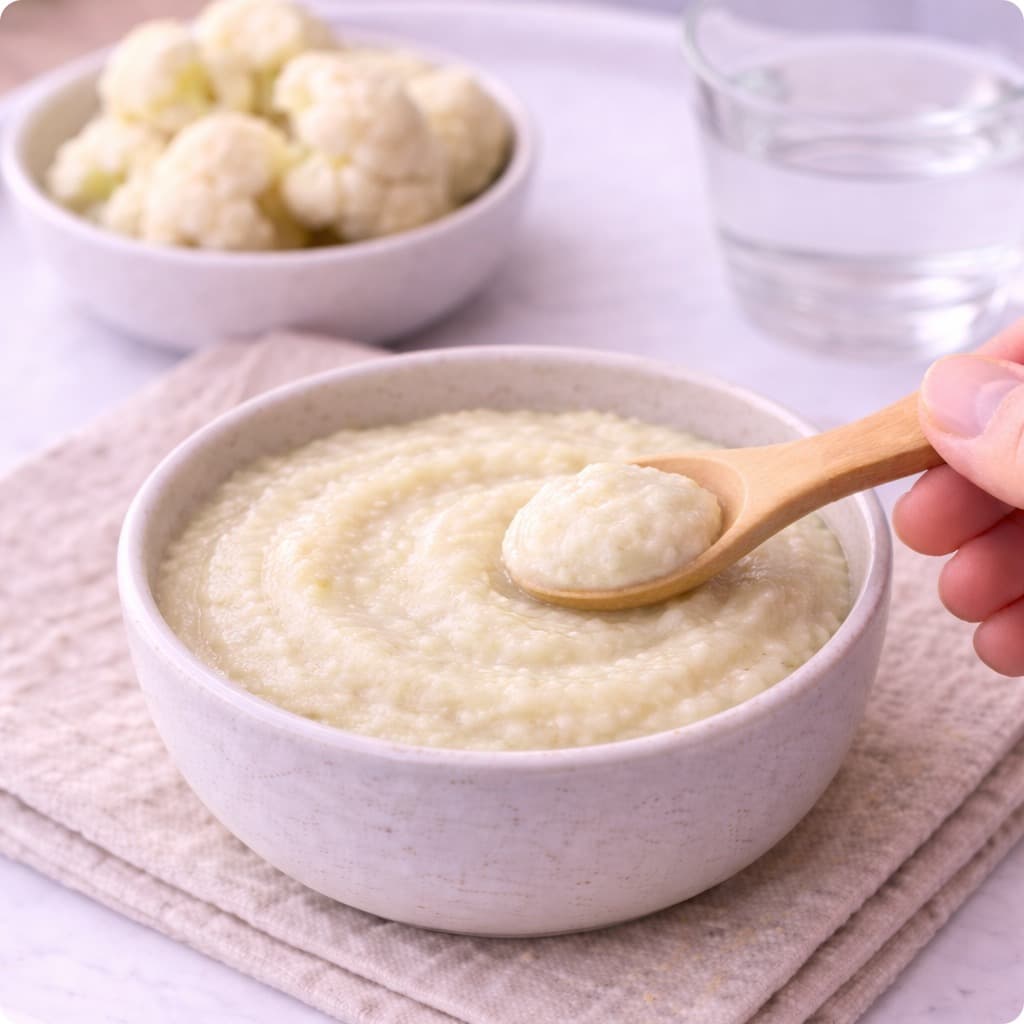
Cauliflower Purée
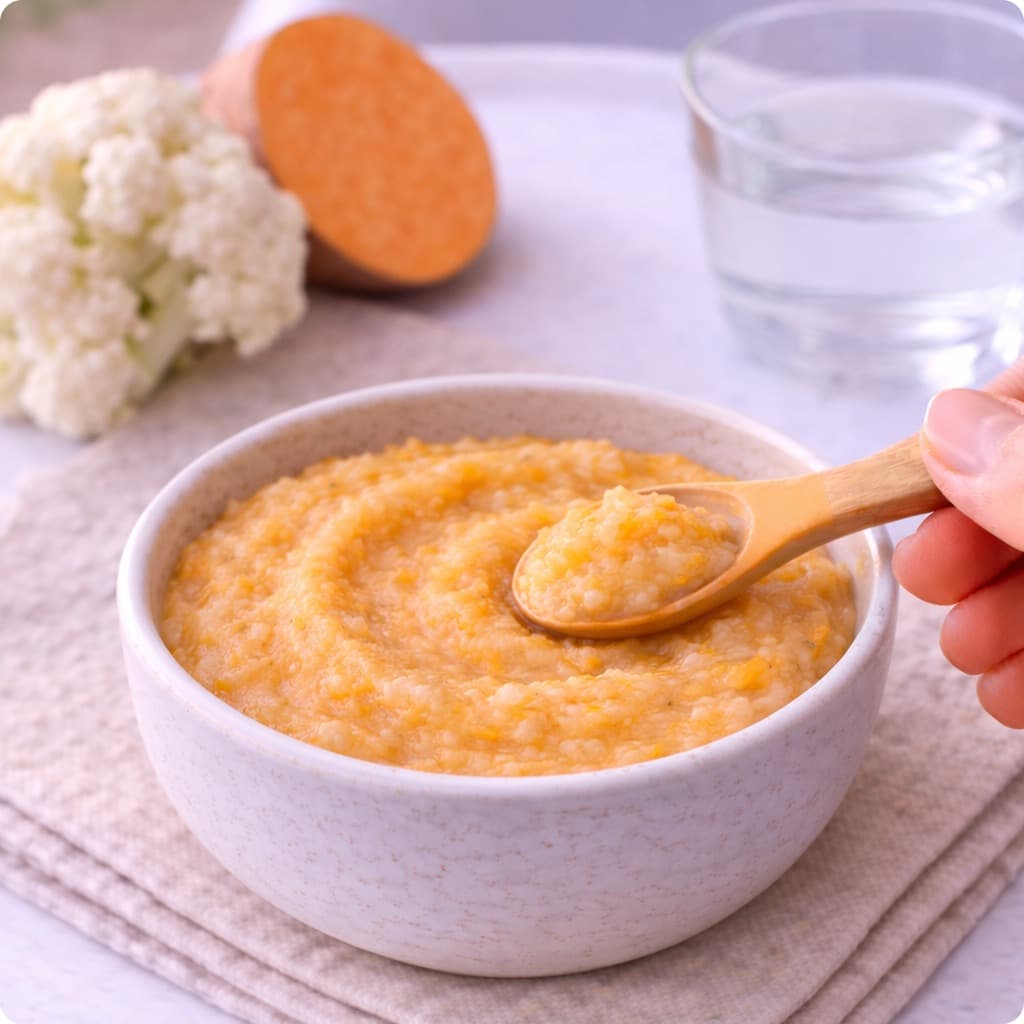
Cauliflower & Sweet Potato Mash
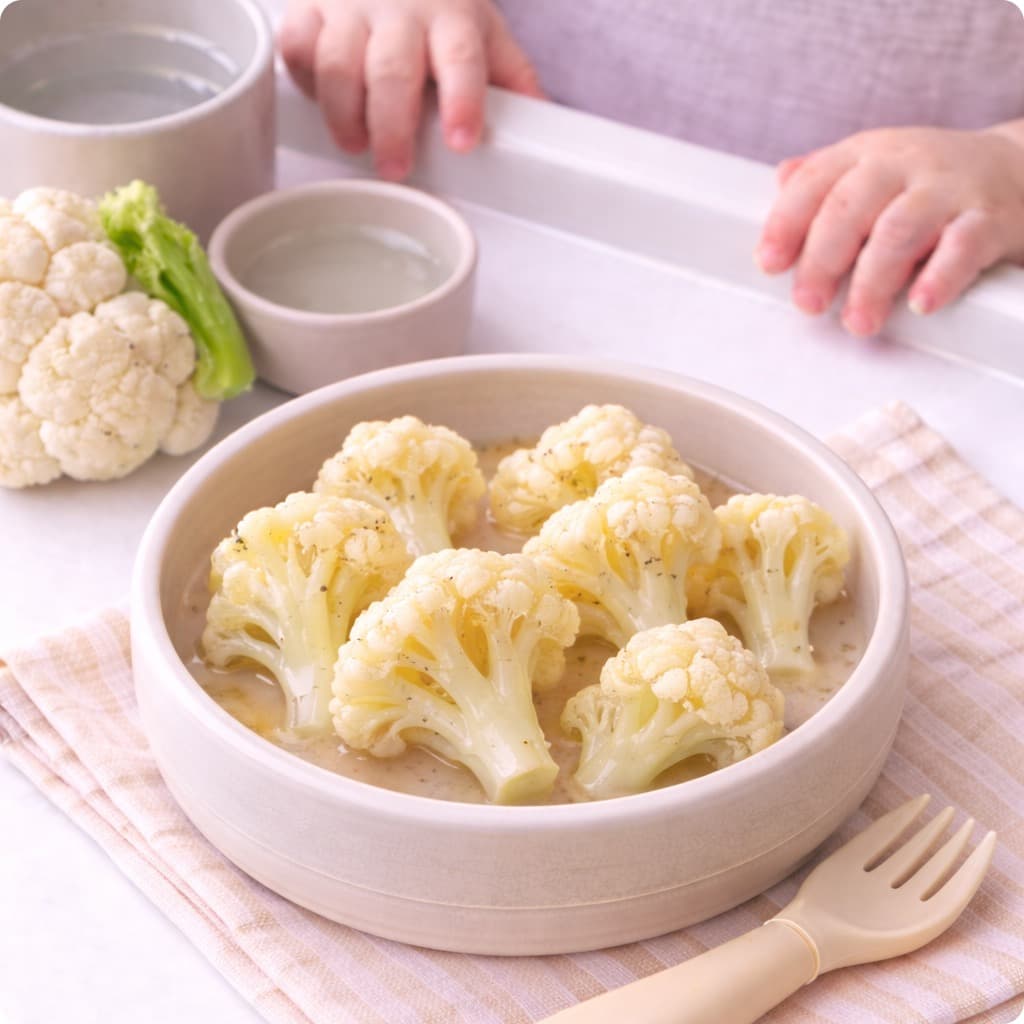
Soft Cauliflower BLW Pieces
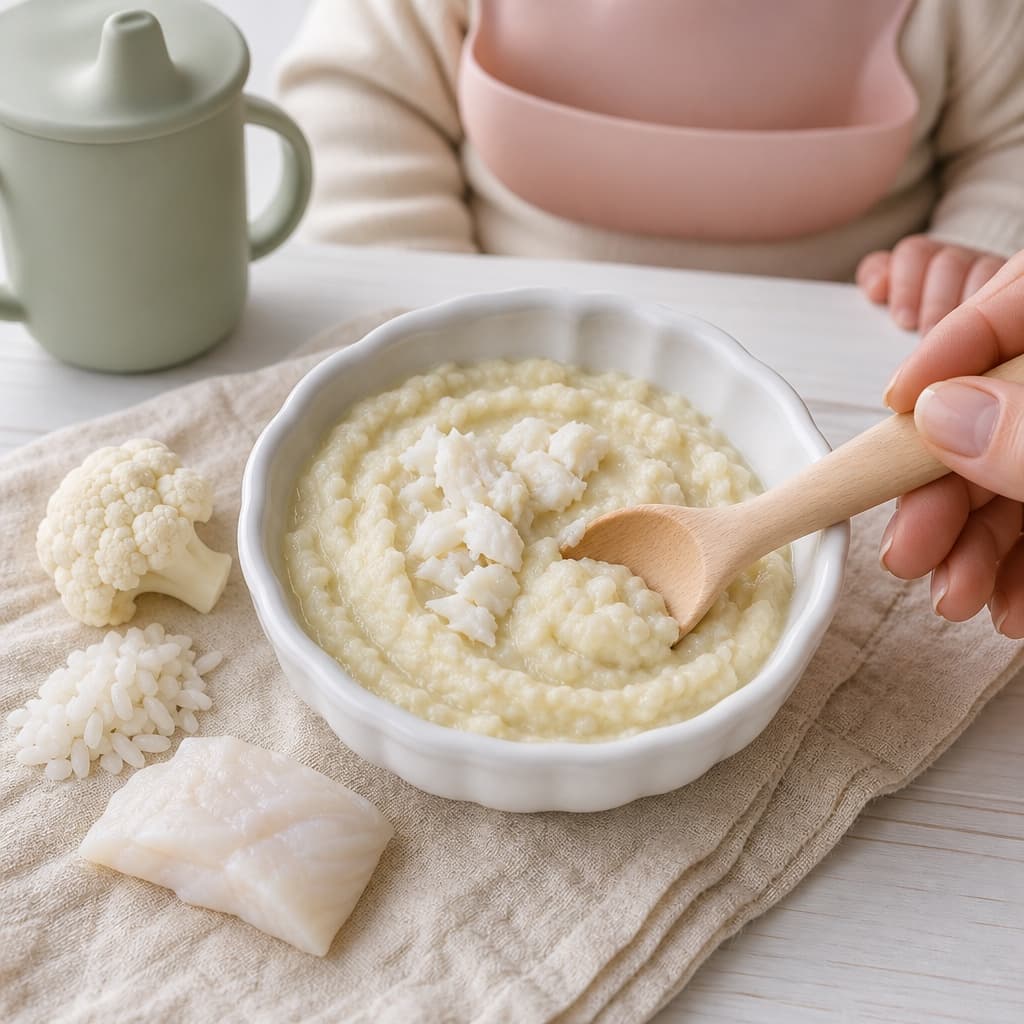
Cod Cauliflower Rice Mash
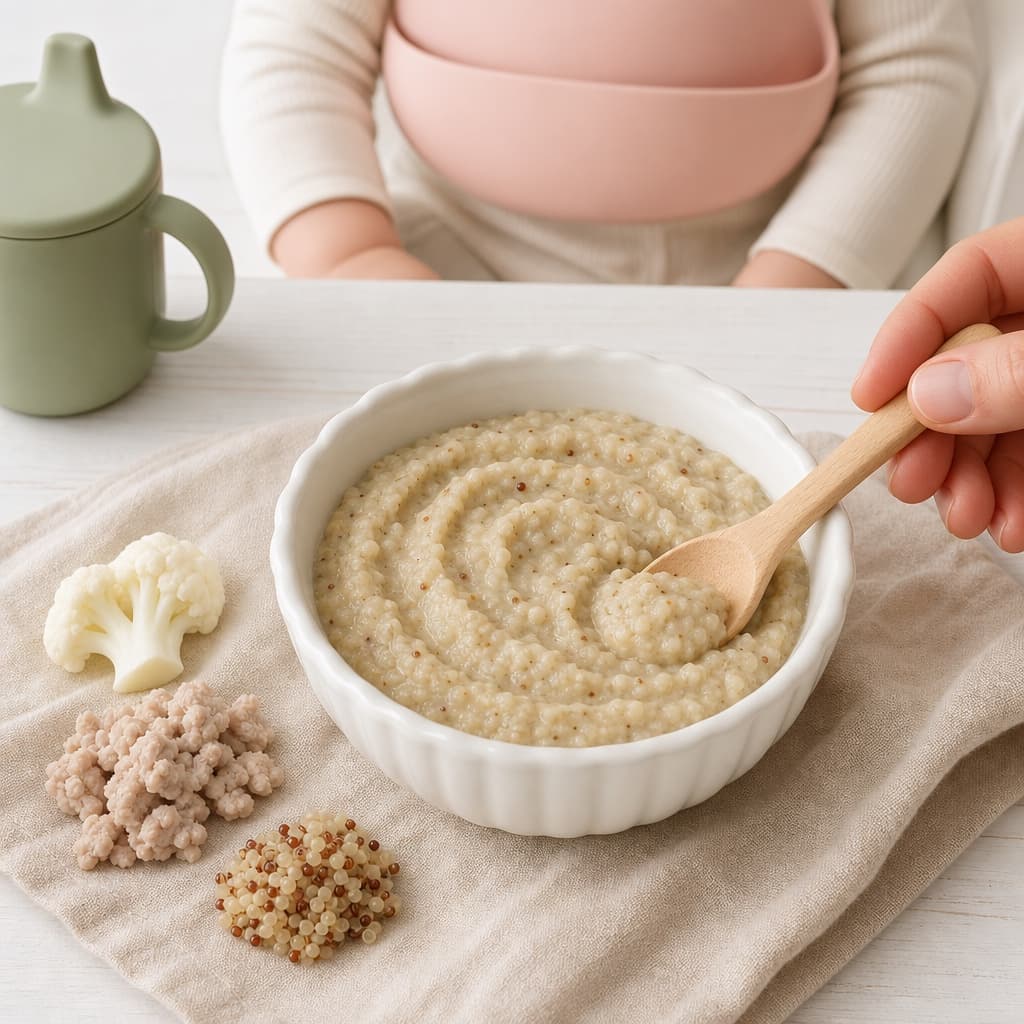
Turkey Cauliflower Quinoa Bowl
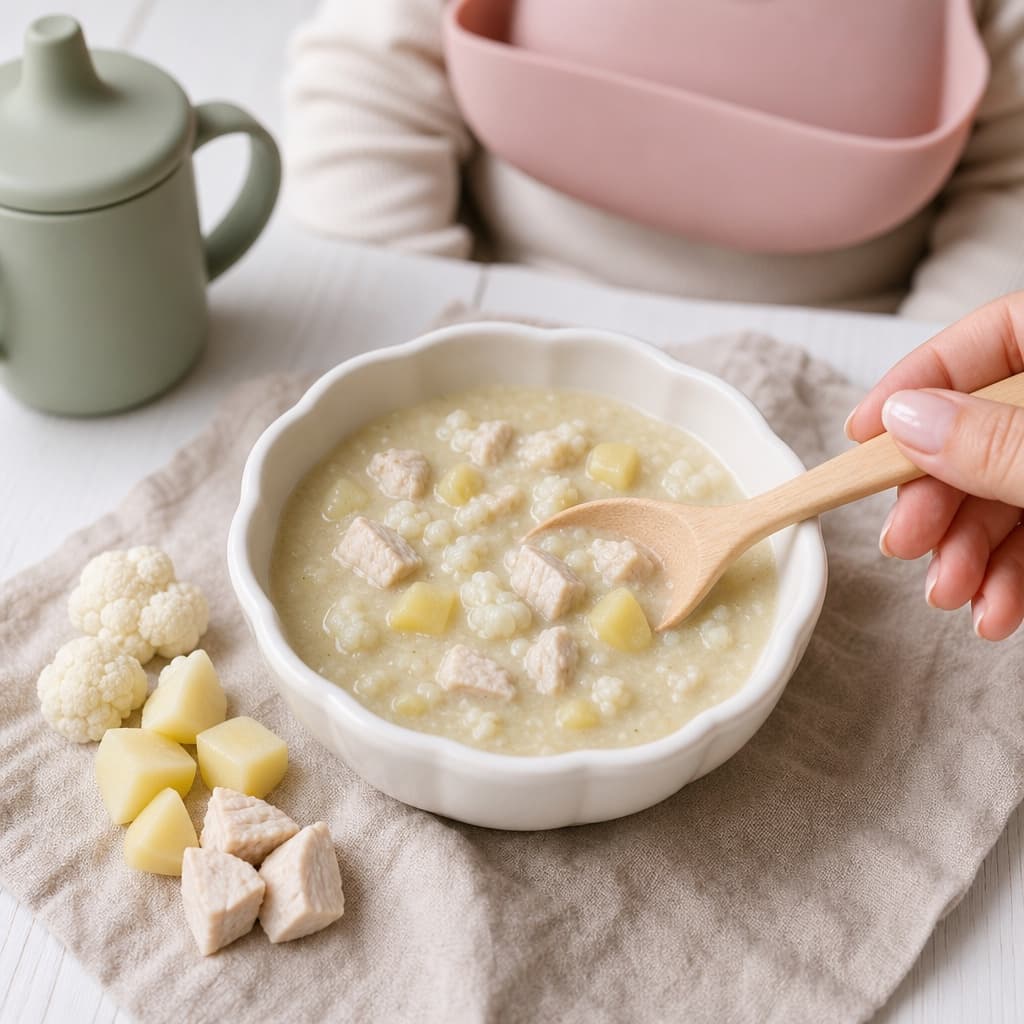
Chicken Cauliflower Potato Soup
Frequently asked questions
Can cauliflower cause gas in babies?
Cauliflower is a cruciferous vegetable, and like broccoli and cabbage it can sometimes contribute to gas as your baby's digestive system adjusts. This is normal and not harmful. If you notice your baby seems uncomfortable, you can start with small amounts and increase gradually.
Is raw cauliflower safe for babies?
No, raw cauliflower is not safe for babies because it is hard and firm, which makes it a choking hazard. Always cook cauliflower until it is soft enough to mash easily between your fingers. Save raw cauliflower for older children who can chew firm foods well.
Can babies eat cauliflower for baby-led weaning?
Yes, soft-cooked cauliflower is well suited to baby-led weaning from around 6 months. Offer large, very soft florets with a stem your baby can hold like a handle. Make sure each piece squishes easily so it is gentle and safe to gum.
How do I cook cauliflower for my baby?
Steam, boil, or roast cauliflower until it is very tender and easily mashable. Steaming and roasting help preserve more nutrients than boiling in a lot of water. Always test a piece by mashing it between your fingers before serving to be sure it is soft enough.
Can I give my baby frozen cauliflower?
Yes, frozen cauliflower is a convenient and nutritious option, since it is usually frozen soon after harvest. Cook it fully until soft, just as you would with fresh cauliflower, and let it cool before serving. Avoid pre-seasoned frozen blends that contain added salt.
Should I peel or remove the stem of the cauliflower?
You do not need to peel cauliflower, but the thick core and stems take longer to soften, so cook them until tender or trim them away. For young babies, the soft, cooked floret tops are easiest to manage. Always make sure any stem you serve is fully soft.
What can I mix cauliflower with for my baby?
Cauliflower has a mild flavor that pairs well with many foods, such as sweet potato, carrot, peas, or a little breast milk or formula in a puree. Once a food has been introduced safely on its own, you can combine cauliflower with iron-rich foods like lentils or meat. This adds variety and boosts the overall nutrition of the meal.
Get recipes + a feeding plan for your baby
Save this food to your baby's list, get age-appropriate recipes and follow a personalized feeding schedule - 350+ baby-safe meals in the app.
verifiedSources & References
This guide is informed by current guidelines from leading health organizations: