When can babies eat sweet potato?
Most babies are ready to start solids around 6 months of age, when they can sit up with little or no support, hold their head steady, bring objects to their mouth, and show interest in food. Sweet potato is one of the most popular first foods because it cooks down to a smooth, soft texture and has a naturally mild, slightly sweet flavor that many babies enjoy. There is no need to wait beyond 6 months to introduce it, and current pediatric guidance recommends not delaying the introduction of foods once your baby is showing these readiness signs.
Sweet potato is not one of the common food allergens, so it does not require the same careful, separate introduction that foods like peanut, egg, or dairy do. That said, it is still a good idea to offer any new single food on its own for a couple of days when you can, so you can watch how your baby responds before combining it with other ingredients. If your baby was born prematurely or has a medical condition, check with your pediatrician about the right time to begin solids.
How to serve sweet potato safely
From around 6 to 9 months, serve sweet potato fully cooked until very soft. For spoon-feeding, mash or puree it to a smooth, lump-free consistency, thinning with breast milk, formula, or water if needed. If you are doing baby-led weaning, offer cooked sweet potato cut into thick finger-length wedges or strips, roughly the size of an adult finger, so your baby can grip part of it while gnawing the rest. The piece should be soft enough to squish easily between your fingers but firm enough to hold its shape.
From around 9 to 12 months and beyond, as your baby develops a pincer grasp, you can offer smaller, soft bite-sized cubes of well-cooked sweet potato that they can pick up themselves. Keep textures soft and avoid hard, undercooked, or crunchy pieces. Skip added salt, sugar, butter, and honey, and steam, bake, or boil rather than frying. Always serve sweet potato at a safe, lukewarm temperature and stir well to remove any hot spots, especially after microwaving.
Nutritional benefits for babies
- 💚Rich in beta-carotene, which the body converts to vitamin A for healthy vision, growth, and immune function
- 💚Provides vitamin C to support the immune system and help the body absorb iron
- 💚A source of complex carbohydrates for steady energy
- 💚Contains dietary fiber to support healthy digestion
- 💚Supplies potassium, an important mineral for fluid balance and muscle and nerve function
- 💚Naturally soft texture and mild sweetness make it easy for babies to accept and digest
Safety considerations
- ✓Sweet potato is not a common allergen, but introduce it as a single food for a couple of days so you can watch for any reaction before mixing it with other ingredients
- ✓Always cook sweet potato until very soft and serve it in age-appropriate shapes, mashed or pureed for younger babies and soft finger pieces or cubes for older ones, to reduce the choking risk
- ✓Never leave your baby alone while eating, and make sure they are seated upright in a high chair rather than reclining or moving around
- ✓Avoid hard, raw, or undercooked sweet potato and large round chunks, which are harder for babies to manage safely
- ✓Do not add salt, sugar, honey, or other seasonings, and learn the difference between gagging, which is normal, and choking, which is silent and needs immediate help
Recipes with sweet potato for babies
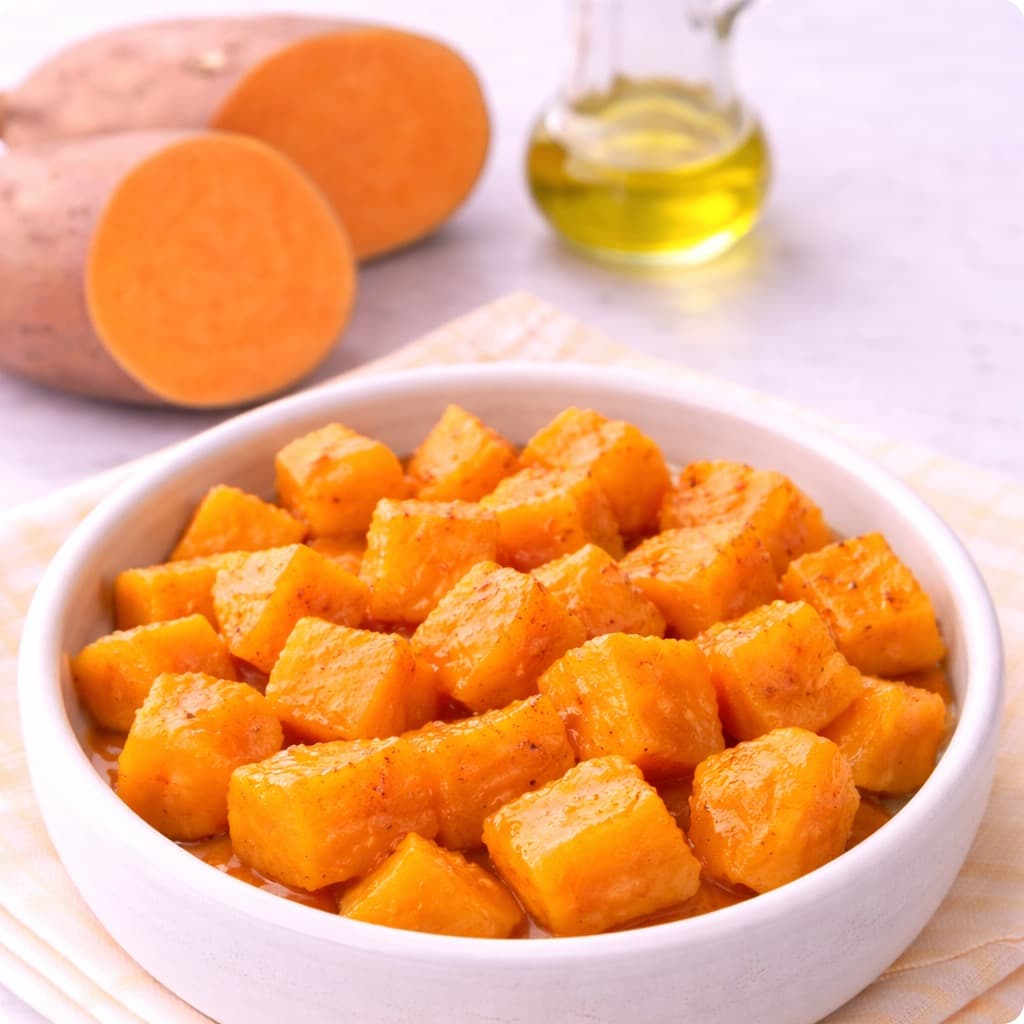
Soft Sweet Potato Cubes
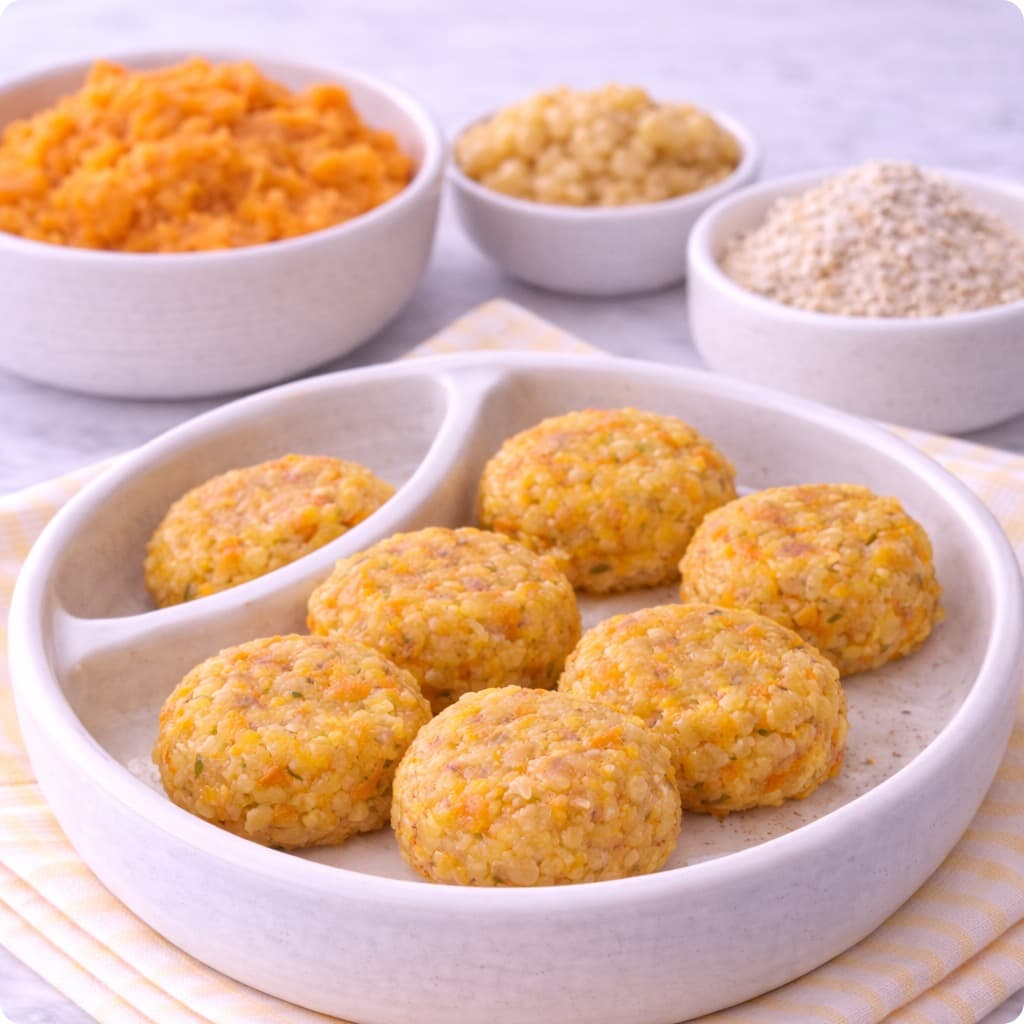
Sweet Potato Chickpea Patties
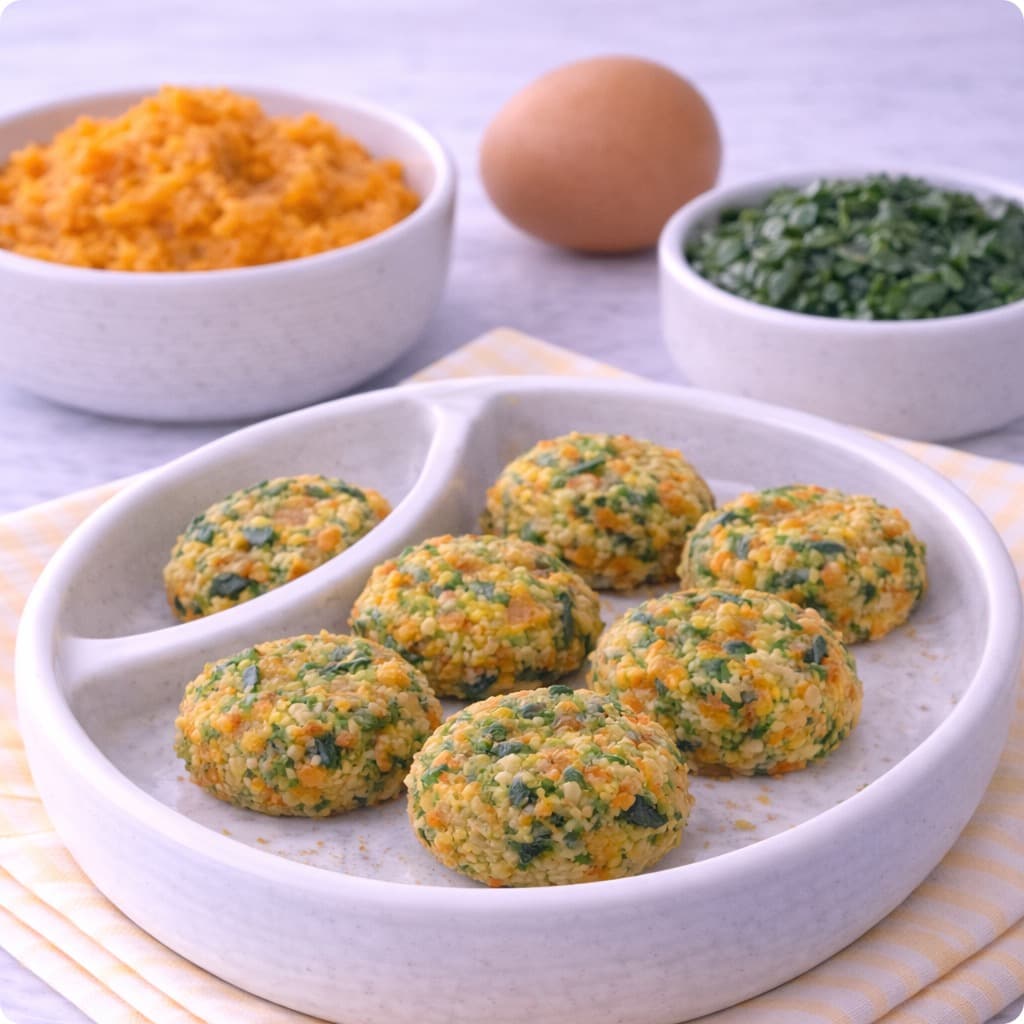
Sweet Potato Spinach Fritters
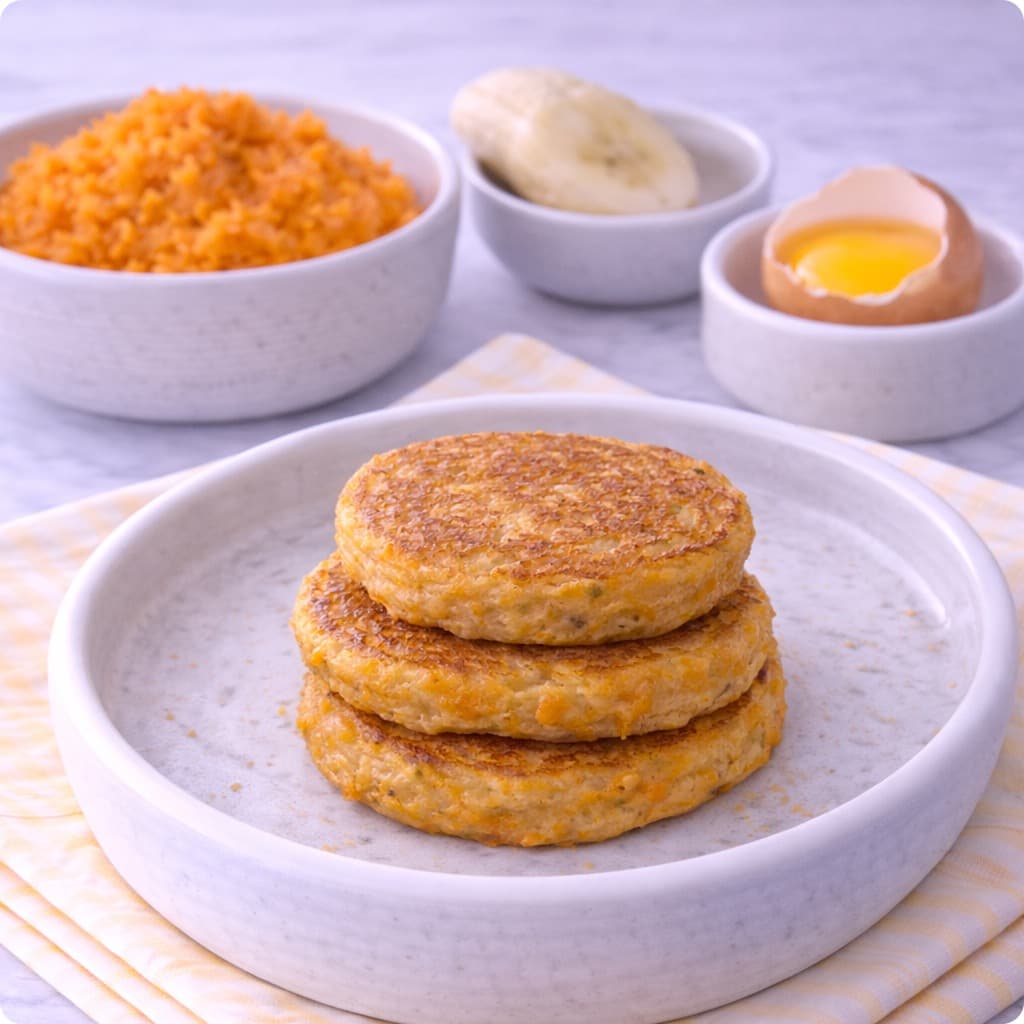
Sweet Potato Banana Pancakes
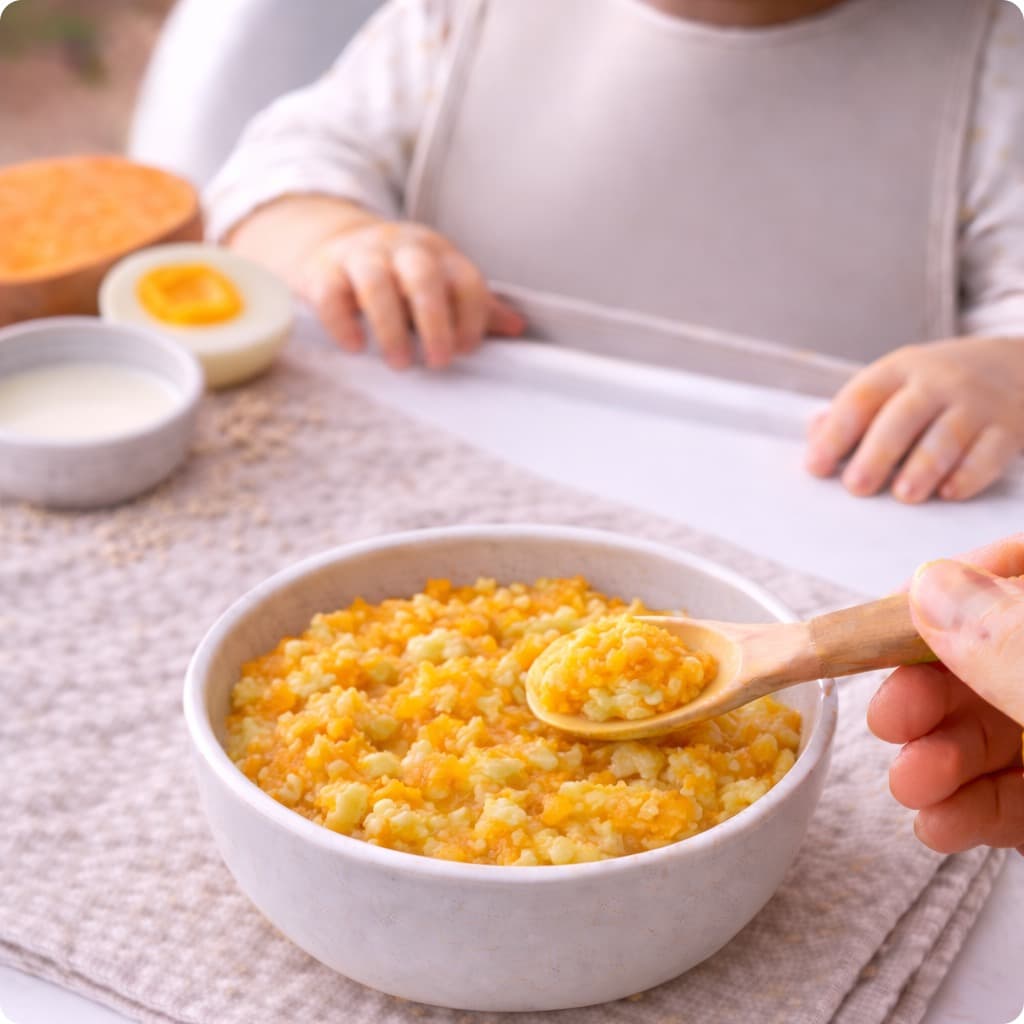
Egg & Sweet Potato Mash
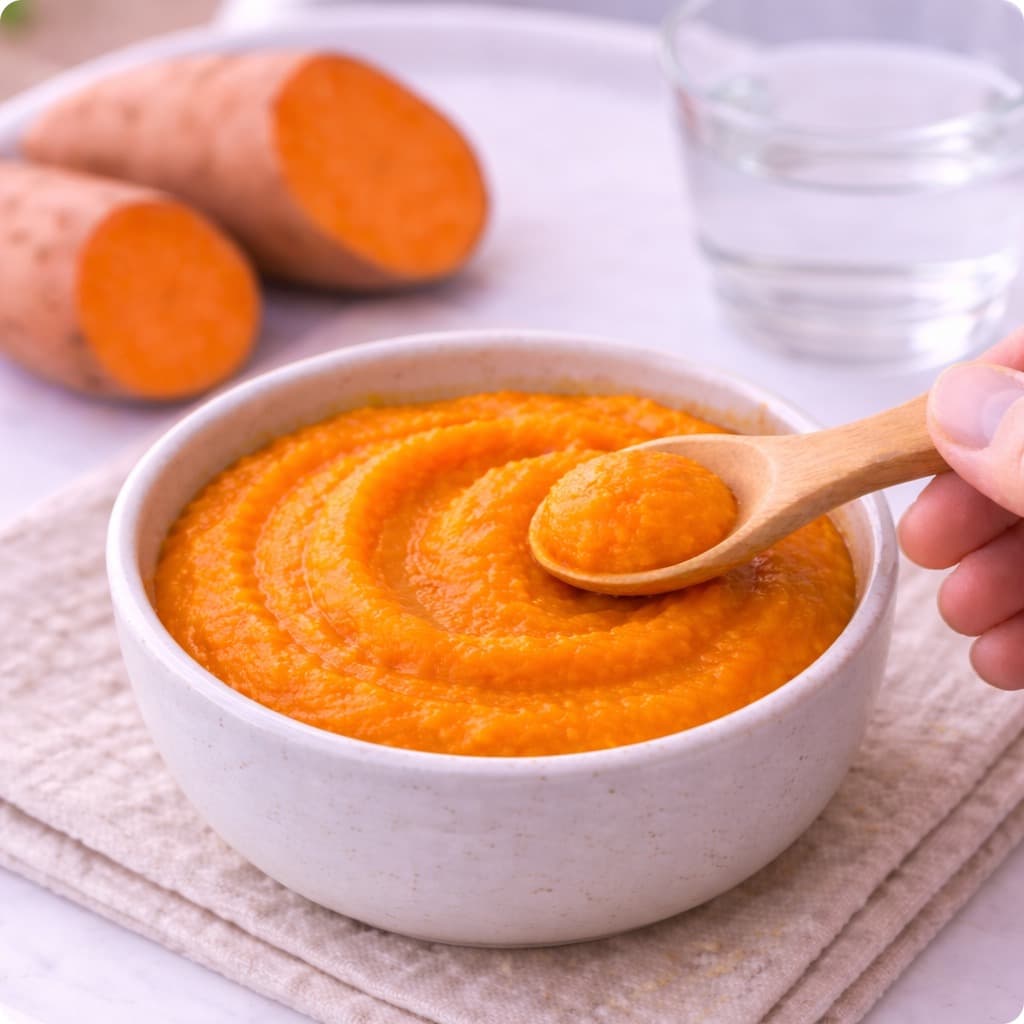
Sweet Potato Purée
Frequently asked questions
Is sweet potato a good first food for babies?
Yes, sweet potato is an excellent first food. It cooks to a soft, smooth texture, has a naturally mild flavor most babies enjoy, and is packed with vitamin A and other nutrients. It is also not a common allergen, which makes it a gentle choice for starting solids around 6 months.
Can sweet potato cause constipation in babies?
Sweet potato actually contains fiber, which generally supports healthy digestion and regular bowel movements. Some babies experience changes in their stool when starting any new solid food. If your baby seems uncomfortable or constipated, offer plenty of fluids and a variety of fruits and vegetables, and talk to your pediatrician if it continues.
Can sweet potato cause an allergic reaction in babies?
Sweet potato is not one of the common food allergens, so allergic reactions are uncommon. As with any new food, watch for signs like a rash, swelling, vomiting, or breathing difficulty when you first introduce it. If you notice any concerning symptoms, stop the food and contact your pediatrician.
How do I cook sweet potato for my baby?
Steaming, baking, or boiling are the best methods because they keep the texture soft and the nutrients intact. Cook the sweet potato until it is very tender and squishes easily, then mash, puree, or cut it into appropriate shapes for your baby's age. Avoid frying and do not add salt, sugar, or butter.
How much sweet potato can my baby eat?
There is no fixed amount, since babies regulate their own appetite. Start with small servings, such as a tablespoon or two of puree or a finger-sized piece, and let your baby's hunger and fullness cues guide how much they eat. Sweet potato can be one part of a varied diet rather than a meal on its own.
Can babies eat sweet potato skin?
It is best to remove the skin for younger babies, as it can be tougher and harder to chew and swallow. Peel the sweet potato before or after cooking and offer only the soft flesh. As your baby gets older and more skilled at chewing, very soft cooked skin may be fine, but the smooth flesh is the safest choice early on.
Is orange sweet potato better than white or purple for babies?
All varieties of sweet potato are nutritious and safe for babies once cooked soft. Orange sweet potatoes are especially high in beta-carotene, which the body turns into vitamin A, while purple varieties offer different antioxidants. Offering a range of colors is a nice way to expose your baby to variety.
Get recipes + a feeding plan for your baby
Save this food to your baby's list, get age-appropriate recipes and follow a personalized feeding schedule - 350+ baby-safe meals in the app.
verifiedSources & References
This guide is informed by current guidelines from leading health organizations: