How to Cut Kiwi for Baby
Last updated October 2026
Ripe kiwi can be offered after starting solids if its flesh is soft and prepared for the baby's skills. Its tart juice may irritate skin around the mouth, but irritation and allergy are not the same thing.
Do not rely on fixed wedge or cube dimensions. Assess the texture of each kiwi, remove tough skin for a beginning eater, and mash or soften firmer pieces. If a child has a known kiwi allergy, follow medical advice.
Quick answer
Babies who are developmentally ready for solids, generally around six months, may try ripe soft kiwi in an age-appropriate texture.
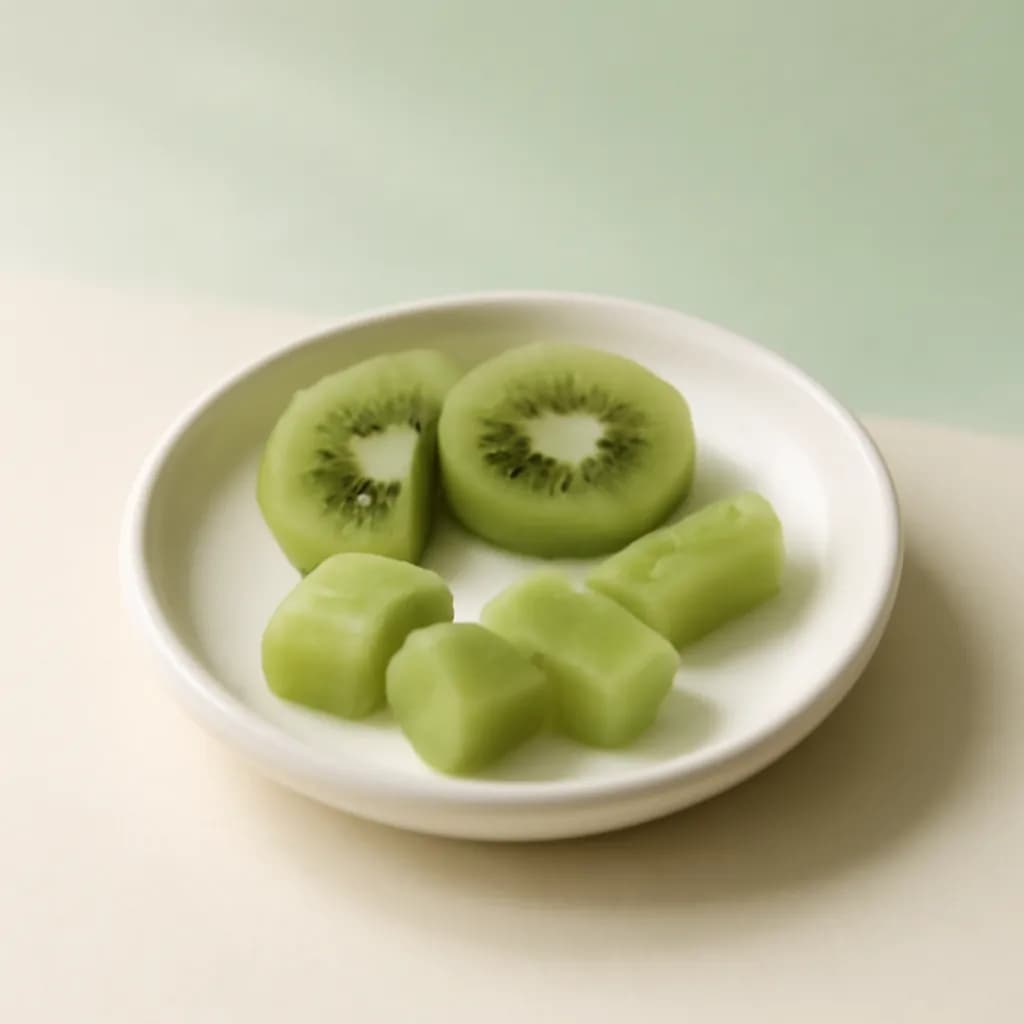
Select Baby's Age
6–8 months
First tastes: soft kiwi flesh
Wash and peel the kiwi, check that the flesh mashes readily, and offer mashed ripe flesh on a spoon or in another suitable soft food. Avoid firm cubes and chewy skin.
6 month baby feeding schedule for more tips.
9–11 months
Progressing textures: test softness
Offer peeled, thoroughly soft kiwi in a texture the child can manage. If the fruit is firm, mash it instead. Age alone does not validate a wedge or cube.
12+ months
Older eater: adapt to chewing skills
Choose soft ripe kiwi and cut or mash it according to observed abilities. Keep tough skin out if it is difficult to chew, regardless of birthday.
When can babies try kiwi?
Watch for potential allergic symptoms; urgent symptoms such as breathing difficulty require emergency medical attention. Do not diagnose an allergy from a red patch around the mouth alone.
See our first foods for baby guide for more ideas.
Kiwi recipe ideas for baby-led weaning
Use ripe soft peeled kiwi in a texture the child can manage. These are serving ideas, not tested recipes.
- Soft ripe kiwi mashed with banana.
- Peeled soft kiwi mashed with avocado.
- Soft kiwi flesh stirred into porridge.
- Mashed kiwi mixed with plain yogurt if dairy is tolerated.
Explore our baby-led weaning food list and first foods for baby for more inspiration.
More Cutting Guides
Related Guides
View all feeding guidesSources & References
This guide is informed by current guidelines from leading health organizations:
- ●NHS - Preparing Food Safely for Babies NHS
- ●NHS - Your Baby's First Solid Foods NHS
- ●AAP - Food Allergy Prevention AAP
- ●AAP - Choking Prevention AAP
