When can babies eat kiwi?
Kiwi can be introduced from around 6 months, when your baby shows signs of readiness for solids: sitting up with little or no support, good head and neck control, the ability to bring food to their mouth, and showing interest in what you are eating. Major pediatric bodies such as the AAP, NHS, and WHO recommend starting solids at about this age, alongside continued breast milk or formula. There is no need to delay kiwi or any other fruit beyond this point.
Some parents and clinicians notice that highly acidic fruits like kiwi can lead to a harmless rash around the mouth or a temporarily sore bottom in younger babies, simply from skin contact with the fruit acids. This is not an allergy and usually fades as your baby gets a little older. If your baby seems uncomfortable, you can wait a few weeks and try again, or pair kiwi with milder foods like banana or yogurt to soften the acidity.
How to serve kiwi safely
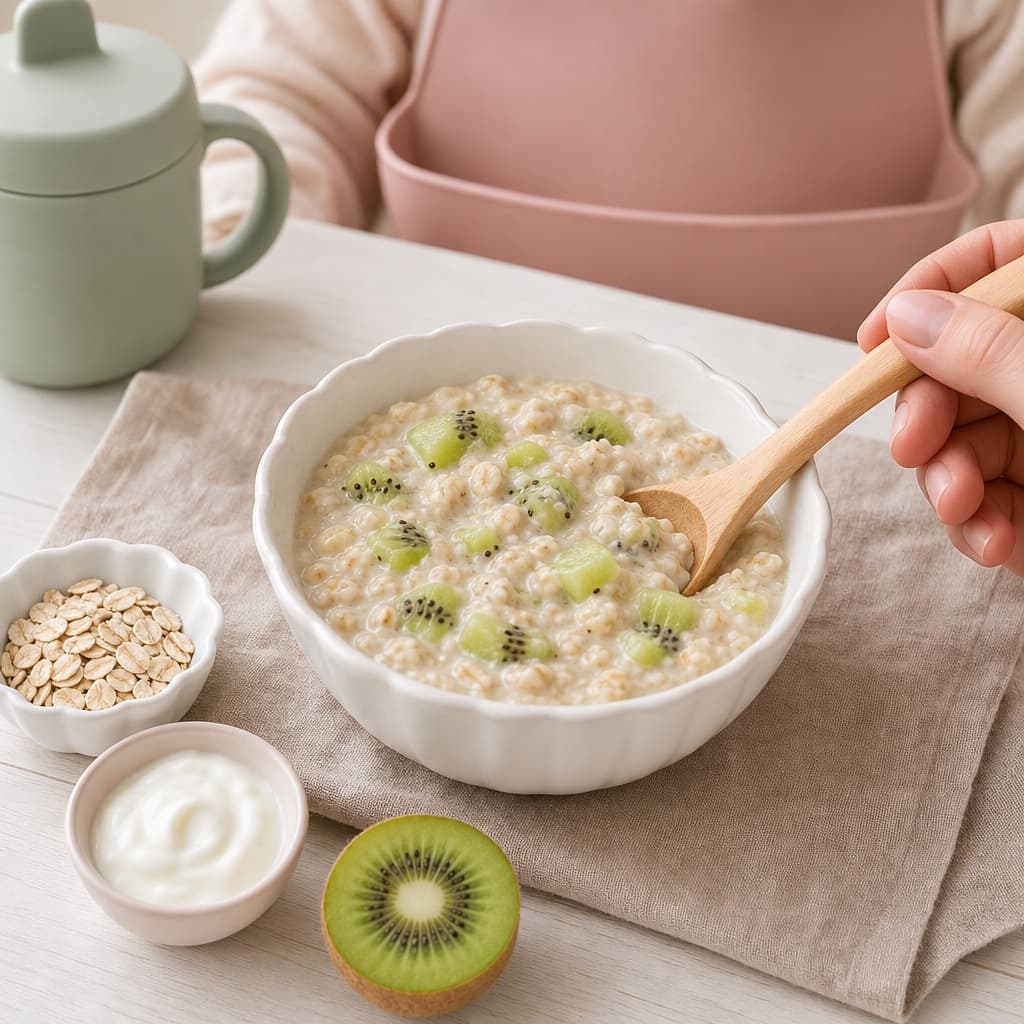
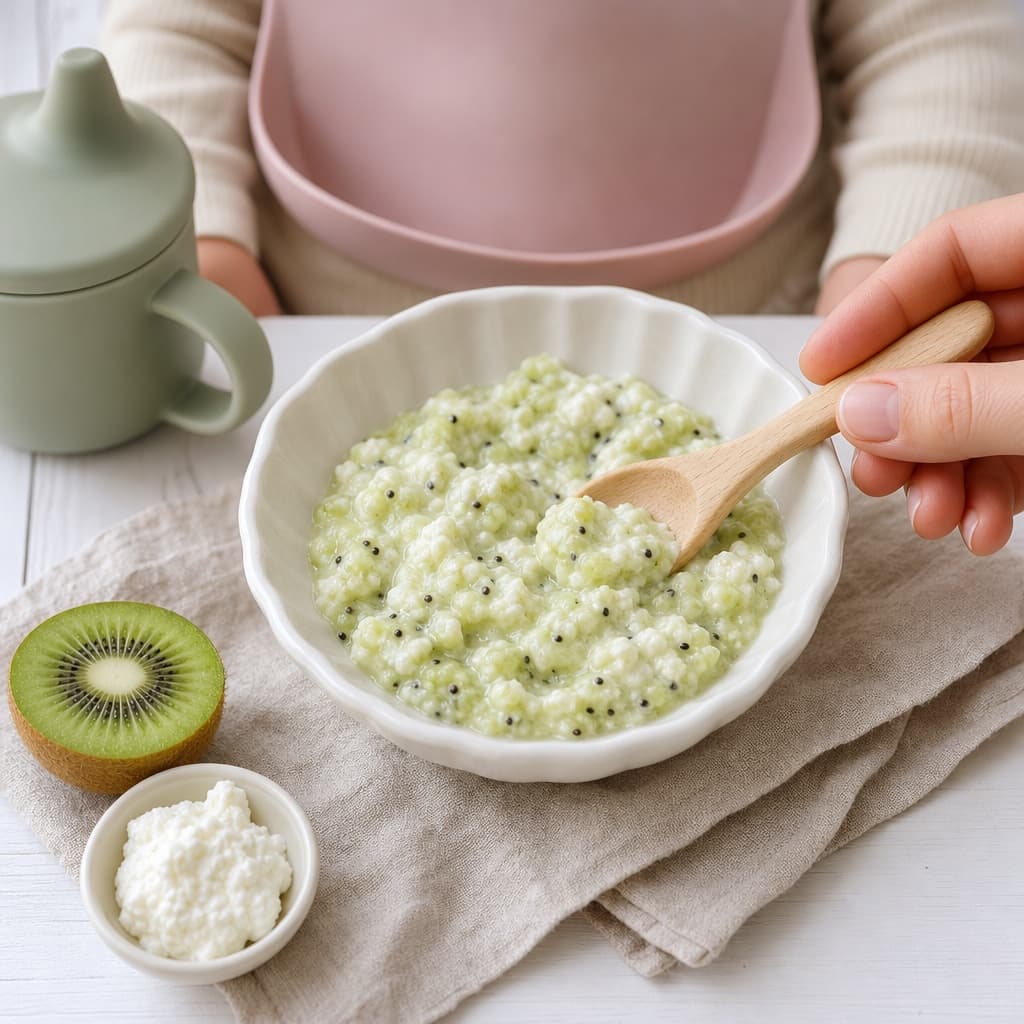
From 6 to 9 months, choose ripe, soft kiwi that gives slightly when pressed. Peel it, then offer a large piece your baby can hold, such as a half or thick quarter wedge with the skin removed, so they can gnaw and self-feed. You can also mash ripe kiwi well or stir it into thicker purees, oatmeal, or yogurt. Removing the small black seeds is not necessary for safety, but mashing helps make the fruit easy to manage.
From 9 to 12 months and up, as your baby develops a pincer grasp, you can offer smaller bite-size pieces of soft kiwi, roughly the size of your fingertip, cut into thin or quartered chunks rather than round coins. Always serve kiwi ripe and soft so it squishes easily, avoid firm or under-ripe fruit that is harder to chew, and keep pieces small and graspable to lower the choking risk.
Nutritional benefits for babies
- 💚Rich in vitamin C, which supports the immune system and helps the body absorb iron from other foods
- 💚Provides dietary fiber that supports healthy digestion and regular bowel movements
- 💚Contains vitamin K and folate, which play a role in healthy growth and development
- 💚Offers potassium, a mineral that supports normal fluid balance and muscle function
- 💚Naturally soft and easy to mash when ripe, making it a convenient early finger food or puree
- 💚Adds natural sweetness and variety, helping babies explore new flavors and textures
Safety considerations
- ✓Kiwi is not among the major common allergens, but allergic reactions are still possible; watch for hives, swelling, vomiting, or trouble breathing after eating
- ✓Always serve kiwi ripe and soft, and cut into age-appropriate shapes so it squishes easily and lowers choking risk
- ✓Stay within arm's reach and supervise your baby closely during every meal; never let them eat while crawling, walking, or reclining
- ✓Introduce kiwi on its own for a few days before mixing it with other new foods, so any reaction is easy to identify
- ✓Make sure your baby is seated upright in a high chair, and avoid firm or under-ripe kiwi, which is harder to chew and swallow safely
Recipes with kiwi for babies
Frequently asked questions
Is kiwi a common allergen for babies?
Kiwi is not one of the major common allergens, but allergic reactions to it are possible and have been reported. Introduce it on its own and watch for signs like hives, swelling, vomiting, or breathing trouble. If your baby has a known food allergy or eczema, talk with your pediatrician about how to introduce new foods.
Do I need to remove kiwi seeds before giving it to my baby?
No, kiwi seeds are very small and soft and do not need to be removed for safety. They are not a choking hazard the way larger seeds or pits can be. Simply peel the kiwi and serve it ripe and soft in an age-appropriate shape.
Why does my baby get a rash around the mouth after eating kiwi?
Kiwi is acidic, and that acidity can irritate a baby's sensitive skin, causing a harmless red rash around the mouth from direct contact. This is not the same as an allergy and usually fades on its own. If you are unsure or the rash spreads or comes with other symptoms, check with your pediatrician.
Can kiwi help with baby constipation?
Kiwi contains fiber and a high water content, which can help support regular, soft bowel movements in some babies. It is one of several fruits parents offer to gently encourage digestion. Always introduce it alongside plenty of fluids and a varied diet, and speak to your pediatrician if constipation persists.
Can I give my baby green and golden kiwi?
Yes, both green and golden (gold) kiwi are fine for babies once they are ready for solids. Golden kiwi tends to be a little sweeter and less acidic, which some babies prefer. Serve either type ripe, soft, and cut to the right size for your baby's age.
How much kiwi can my baby eat?
There is no strict amount; offer a small portion as part of a varied diet and let your baby's appetite guide how much they eat. A few small pieces or a couple of spoonfuls of mashed kiwi is plenty when starting out. Breast milk or formula should still be your baby's main source of nutrition through the first year.
Can babies eat kiwi skin?
It is best to peel kiwi for babies. The skin is fuzzy and tougher to chew, which makes it harder for a baby to manage safely. Removing it leaves the soft, easy-to-mash flesh that works well for both purees and finger foods.
Get recipes + a feeding plan for your baby
Save this food to your baby's list, get age-appropriate recipes and follow a personalized feeding schedule - 350+ baby-safe meals in the app.
verifiedSources & References
This guide is informed by current guidelines from leading health organizations: