Mango for Baby
Last updated October 2026
Ripe, soft mango can be offered from around 6 months when a baby is ready for solids. Peel it, cut all flesh away from the large hard stone and check whether the fruit is genuinely soft rather than fibrous or firm.
Quick answer
From around 6 months, once the baby is developmentally ready, offer ripe mango with soft flesh. A firm unripe mango or a very stringy variety may need further preparation or a different fruit.
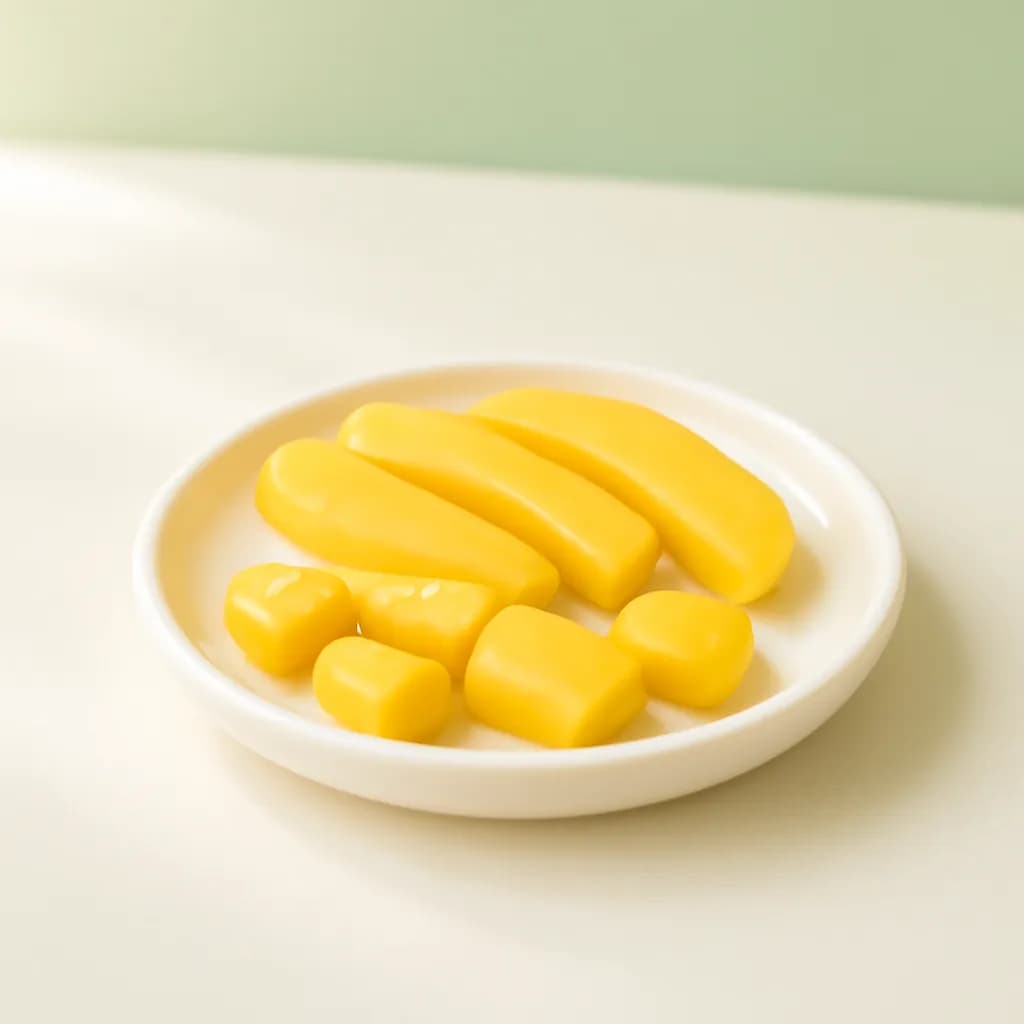
How to prepare mango for babies
Wash the mango, peel it fully and slice around the large flat stone. Discard the stone and any hard or stringy pieces. Press the flesh with a fork: it should mash readily.
For an early spoon-fed meal, mash or purée the soft flesh. It can be mixed with familiar foods such as porridge once any separate allergens in the meal have been introduced as appropriate.
For self-feeding, choose a tender piece the baby can grasp without large firm fibres. Mango is slippery: adjust the shape to the child's ability and closely observe how it is handled, rather than depending on an exact age or dimension.
As pincer grasp and chewing improve, offer smaller soft pieces or stir mango into a meal. Reassess every fruit because one ripe mango can be much softer than another.
The right shape and size depend on your baby's eating skills, not on age alone. Step-by-step preparation: How to cut mango for BLW
Also check how to cut food for baby-led weaning for general BLW cutting tips.
When can babies eat mango?
Wash before peeling and remove the skin and central stone completely. Check the fruit near the pit for firm fibres that do not mash easily.
Mango allergy is possible, even if it is not on the usual major-allergen list. New rash, swelling, vomiting or breathing symptoms deserve an assessment based on the actual reaction, not automatic reassurance.
Mango can be slippery. Mashed mango or a thick fruit purée may be simpler for an early eater; a tender graspable piece can be an option when the child can manage it. There is no universal finger-length cut that removes choking risk.
Mango contains vitamin C and carotenoids, but it is one fruit among many. Offer alongside iron-rich foods instead of presenting mango as a treatment for digestion or a substitute for a meal.
See our first foods for baby guide for more ideas.
Mango preparation and reaction checks
Remove all skin and the central hard pit before serving; do not let a baby gnaw the stone.
Discard or thoroughly mash fibrous parts that stay stringy, especially near the pit.
Use tender ripe flesh rather than hard unripe cubes or dried mango, which has a different chewy texture.
A fixed strip or cube size is not proof of safety; assess softness, shape and your child's eating ability.
Watch for individual reactions. Do not assume that mouth redness is definitely irritation rather than allergy.
Seat your child upright and supervise throughout every meal.
Mango recipes for babies
View all recipes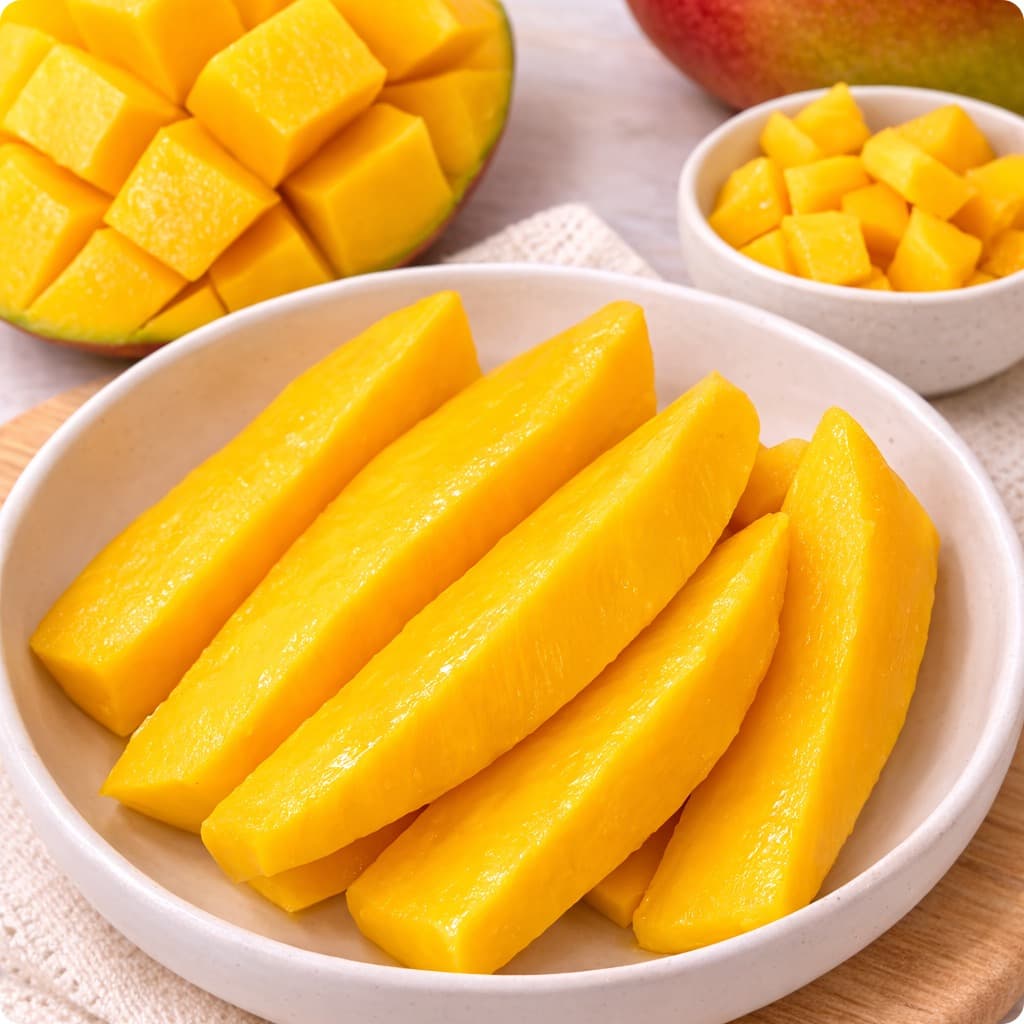
Mango Spears
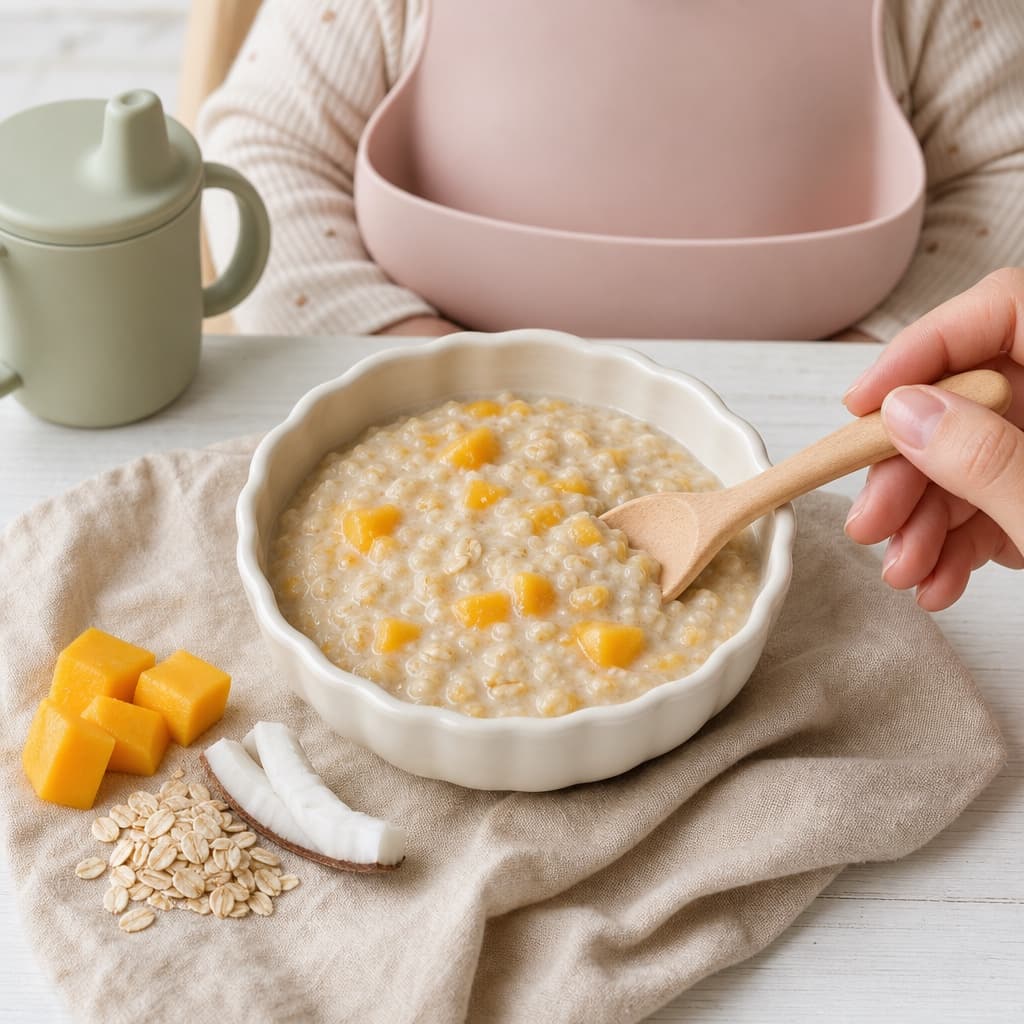
Mango Coconut Oatmeal
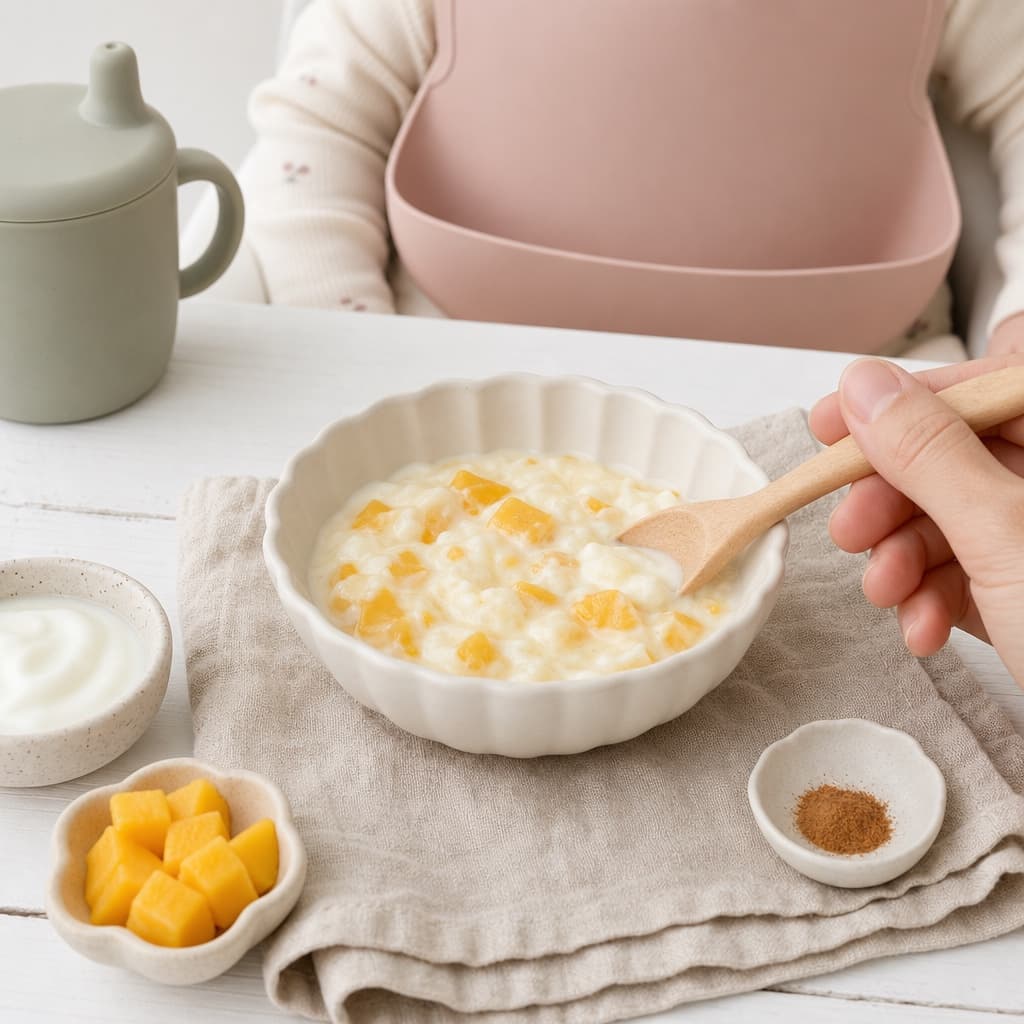
Mango Yogurt Bowl
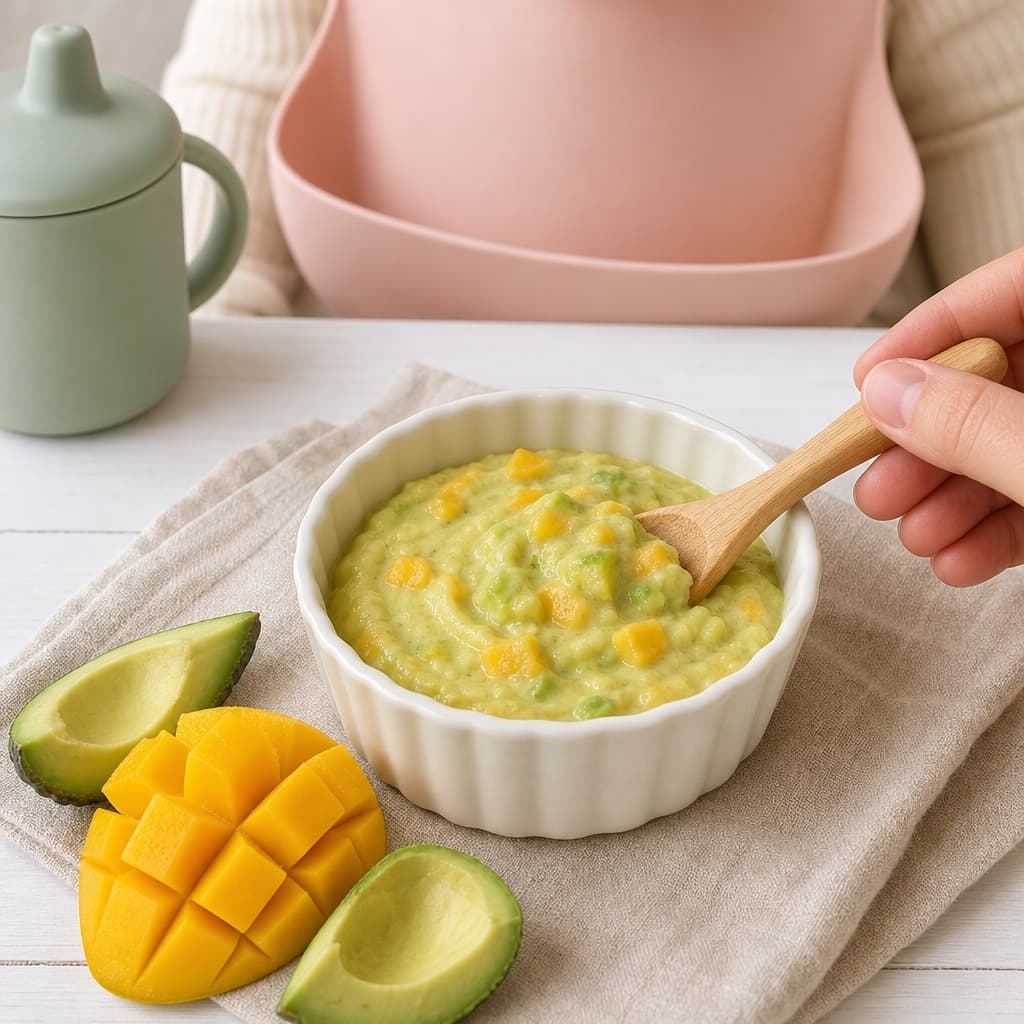
Avocado Mango Mash Cup
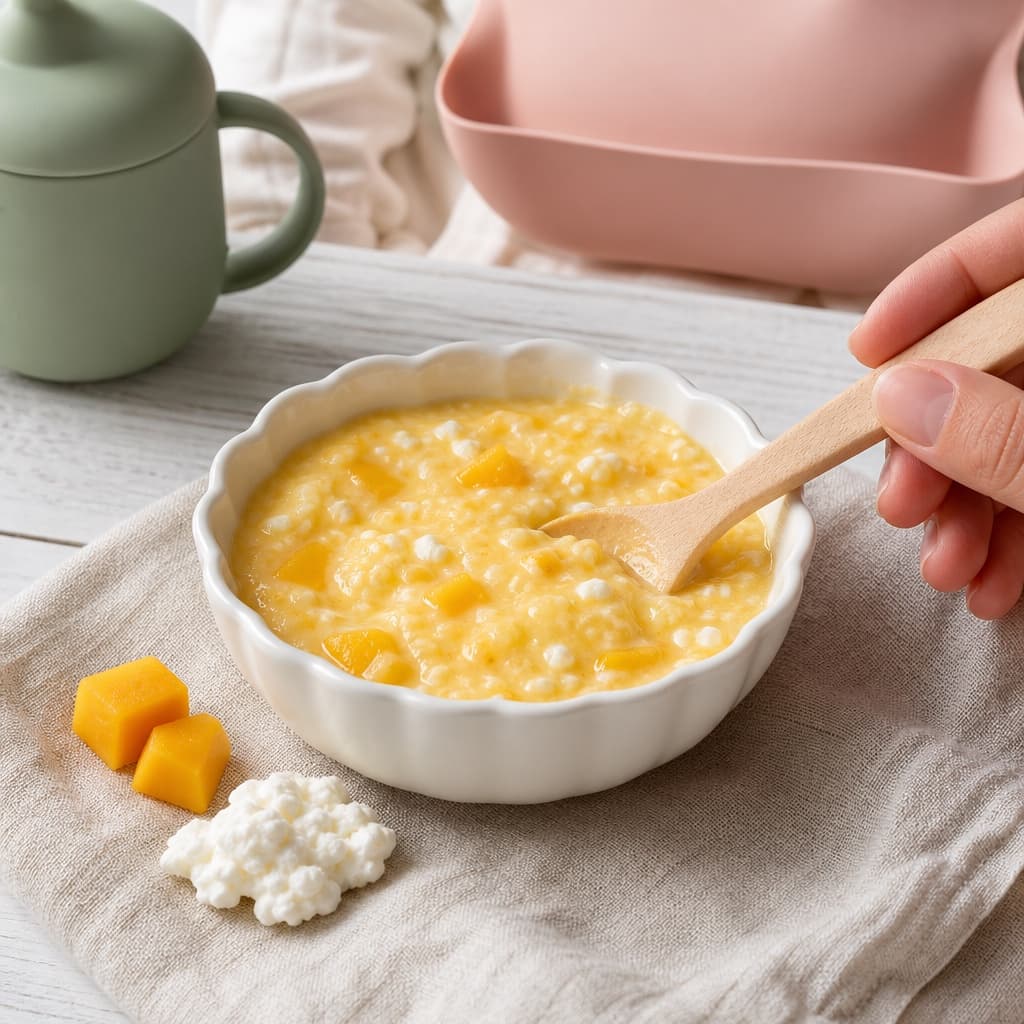
Mango Cottage Cheese Bowl
See all mango recipes for babies. Explore baby breakfast recipes, baby-led weaning recipes and first foods for baby for more ideas.
Related Guides
Frequently Asked Questions
Is Mango a common allergen?
Some babies may be allergic to Mango. Introduce Mango carefully when babies start solids and watch for reactions.
What nutrients does Mango provide for babies?
Mango provides nutrients like fibre, vitamin A, vitamin C, iron that support babies' growth and development.
Sources & References
This guide is informed by current guidelines from leading health organizations:
- ●CDC - When, What, and How to Introduce Solid Foods CDC
- ●NHS - Your Baby's First Solid Foods NHS
- ●NHS - Preparing Food Safely for Babies NHS
- ●CDC — Choking Hazards (reviewed March 2026) CDC
- ●NHS Best Start in Life - Introducing foods that could trigger an allergic reaction NHS