Strawberries for Baby
Last updated October 2026
Babies ready for solids, generally around six months, can try washed, ripe strawberries with the leaves and firm stem removed. Flatten, mash or cut into soft manageable pieces; whole uncut berries can be a choking hazard.
Quick answer
Babies who are developmentally ready for solids, generally around six months, may have washed, ripe strawberries in a soft, modified shape. The CDC identifies uncut berries among potential choking hazards for young children.

Practical strawberry serving options
First tastes: rinse strawberries, hull them and mash ripe flesh with a fork until soft and spoonable. Combine with an already tolerated food if preferred.
For babies exploring finger food, offer a ripe berry thoroughly flattened or cut lengthwise into soft manageable pieces; avoid small round uncut berries.
As finger skills develop, offer softer lengthwise pieces that the child can pick up. A nine-month birthday is not permission to switch automatically to whole berries.
For toddlers, continue to adjust firmness and shape to the child's chewing skills; add prepared pieces to porridge or plain yogurt once the dairy allergen is tolerated.
The right shape and size depend on your baby's eating skills, not on age alone. Step-by-step preparation: How to wash and cut strawberries for baby
Also check how to cut food for baby-led weaning for general BLW cutting tips.
When babies can have strawberries
Choose a berry that yields to gentle pressure and inspect the firm stem end. Remove damaged, mouldy or hard fruit rather than offering it whole.
Strawberries are not among the principal allergens routinely delayed or given special schedules, but an individual reaction is possible. Perioral redness may be irritation, while hives, swelling or wheezing should be evaluated appropriately.
Check each berry for firmness rather than assuming a large one is safe to gnaw. Strawberries add vitamin C and flavour, not a complete meal.
Mild redness where acidic fruit touches skin does not itself prove allergy. Hives, swelling, repeated vomiting or breathing difficulty need appropriate medical assessment.
See our first foods for baby guide for more ideas.
Strawberry preparation and reaction checks
Wash strawberries thoroughly and remove leaves and any firm stalk or spoiled areas.
Do not offer whole uncut strawberries to young children, particularly small round or firm berries.
Mash, flatten or cut lengthwise and check each berry's softness before serving.
Skin irritation from acidic fruit is not always allergy, but hives, swelling or repeated vomiting need medical advice; breathing symptoms are urgent.
Do not add honey before 12 months or unnecessary added sugar.
Keep babies seated upright and supervise every bite.
Strawberry recipes for babies
View all recipes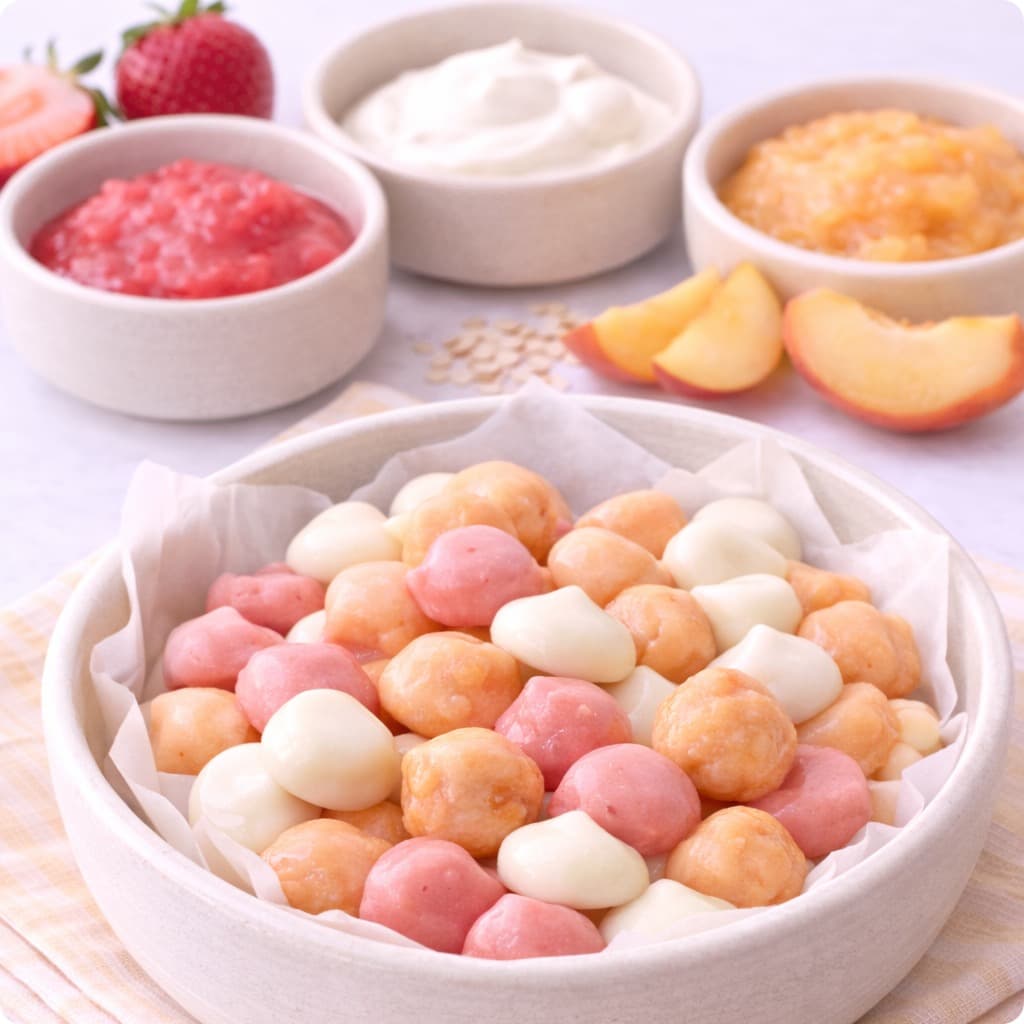
Chilled Yogurt & Fruit Spoon Snack
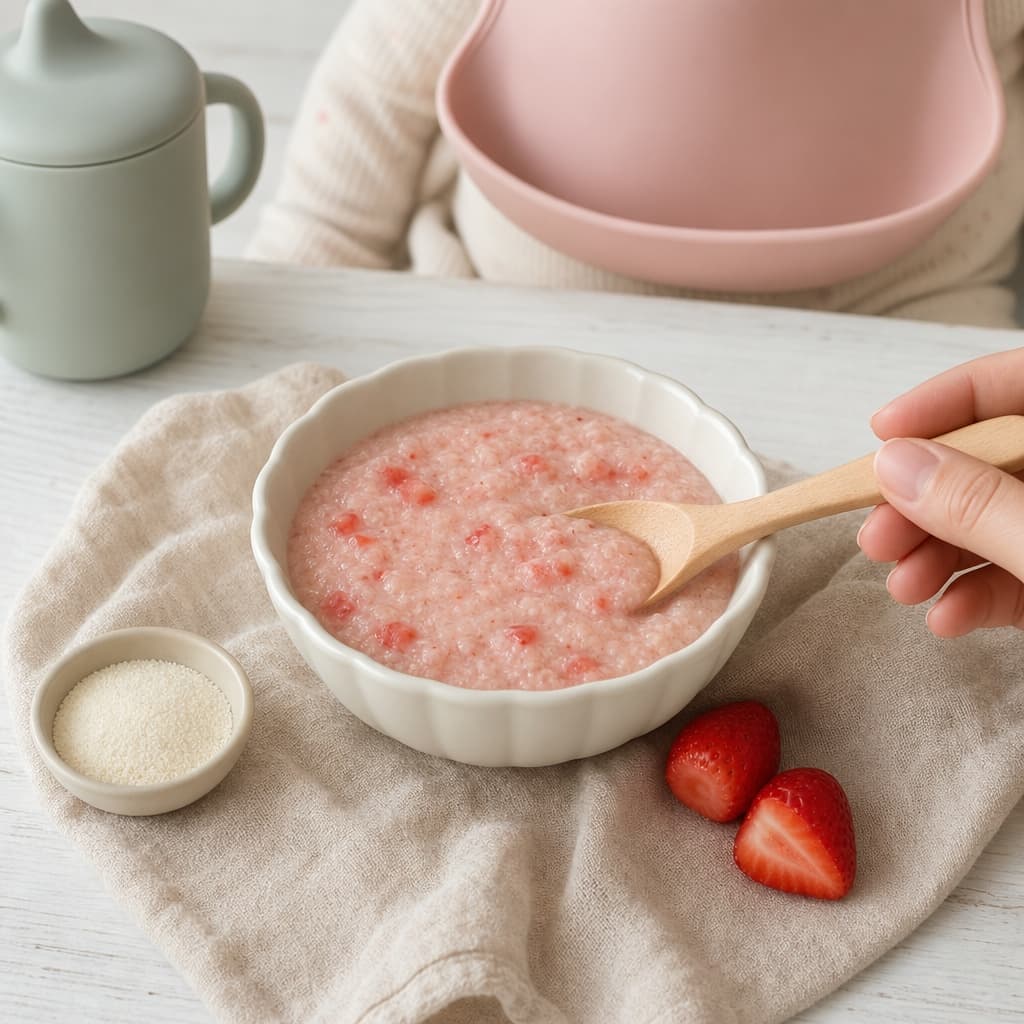
Strawberry Semolina Bowl

Strawberry Oat Soft Bars
See all strawberries recipes for babies. Explore baby breakfast recipes, baby-led weaning recipes and first foods for baby for more ideas.
Related Guides
Frequently Asked Questions
Is Strawberries a common allergen?
Some babies may be allergic to Strawberries. Introduce Strawberries carefully when babies start solids and watch for reactions.
What nutrients does Strawberries provide for babies?
Strawberries provides nutrients like fibre, vitamin C, iron that support babies' growth and development.
Sources & References
This guide is informed by current guidelines from leading health organizations:
- ●CDC — Choking Hazards (reviewed March 2026) CDC
- ●NHS - Preparing Food Safely for Babies NHS
- ●CDC - When, What, and How to Introduce Solid Foods CDC
- ●NHS - Your Baby's First Solid Foods NHS