Can Babies Eat Strawberries?
Last updated October 2026
Yes.
A baby who is developmentally ready for solids, usually around six months, can try soft, washed strawberries. Remove the leafy top and serve mashed or cut lengthways into suitable pieces; whole small berries are choking hazards. Redness where fruit touches the skin can be irritation, but a rash alone cannot confirm or exclude allergy.

When can babies try strawberries?
Strawberries can be introduced once a baby starts complementary foods, generally around six months. Use ripe fruit that yields to gentle pressure, wash thoroughly with running water and remove the green cap and any hard white core.
The NHS specifically advises quartering small round fruit, including strawberries, to reduce choking risk. A soft mash or properly prepared lengthwise pieces may suit a baby with different grasping skills; do not claim one measured shape prevents all choking.
Strawberry is not one of the nine major U.S. food allergens, but a reaction is still possible. Babies with known allergies or severe eczema may need an individualized introduction plan from their clinician.
Prepare soft strawberries for early eaters
Wash the berries in clean running water just before serving; discard damaged or spoiled fruit. Remove leaves and any firm core. For an early eater, mash soft strawberry for a preloaded spoon, or cut a larger soft berry lengthways into graspable quarters if the baby can manage it.
Small berries should not be offered whole or as round coin slices. As fine finger control develops, offer soft lengthwise pieces or mash according to chewing skills rather than automatically switching to a 'pea-sized' piece at nine months.
Thaw frozen strawberries thoroughly and mash or soften them before serving; frozen-hard chunks are not suitable finger foods. If a berry remains hard, firm or slippery, change its preparation rather than relying on the child's age.
Serve seated upright and supervise continuously. Avoid squeezing fruit over the baby's face or spreading food on the skin as a home allergy test.
Choking and possible skin-reaction precautions
Never give whole small round strawberries to a new eater; follow NHS advice to quarter small round fruit and adapt to skills.
Choose soft ripe berries, remove leafy tops and hard cores, and avoid firm round slices.
Localized redness at the area of contact can be irritation, especially with sensitive skin, but cannot be reliably diagnosed from appearance alone.
If rash, hives, vomiting, swelling or other concerning symptoms follow eating, stop that food and seek clinical advice before trying it again.
For difficulty breathing, tongue or throat swelling, collapse or an unusually floppy/unresponsive child, contact local emergency services immediately and follow any prescribed allergy plan.
Wash conventional and organic strawberries under running water; an 'organic' label is not a requirement for serving fruit.
Seat your baby upright and watch throughout the meal.
What strawberries contribute
Strawberries provide vitamin C, which helps the body absorb non-haem iron from suitable complementary foods.
They add fruit variety, water and some fibre to a mixed diet.
Natural fruit colour comes partly from polyphenols; no individual berry serving guarantees immune benefits or disease prevention.
Strawberries are not an iron-rich meal by themselves; include suitable iron-containing foods across meals.
Strawberry recipes for babies
View all recipes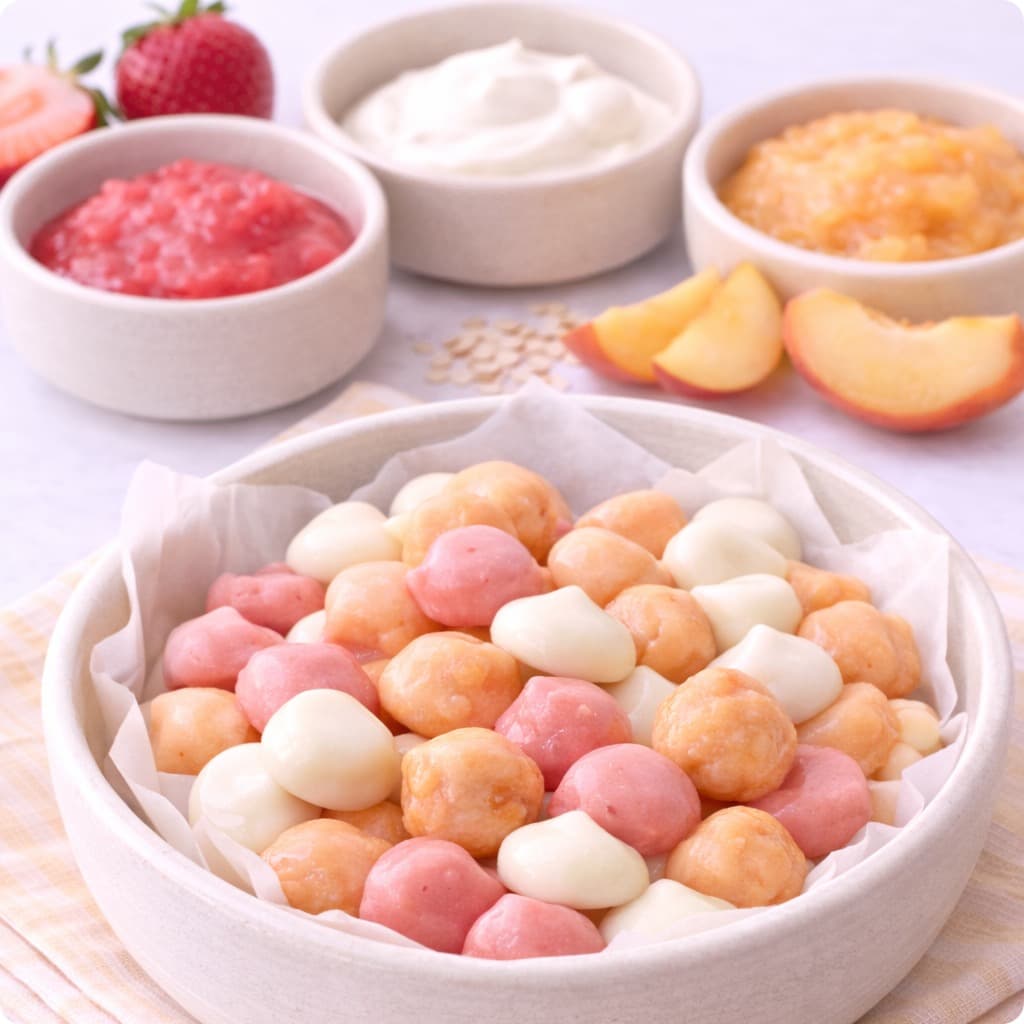

Related guides
Frequently asked questions
Can a six-month-old eat strawberries?
Yes, when ready for solids. Choose ripe soft fruit, wash and remove the leaves, then offer mashed or as manageable lengthwise pieces.
Are whole strawberries a choking hazard?
Small whole round berries can be. NHS guidance advises quartering small round fruits, including strawberries; adapt any larger soft piece to your child's current skills.
Does a red rash around the mouth always mean strawberry allergy?
No. Contact irritation is possible, especially on sensitive skin, but rash alone cannot establish a diagnosis. If a reaction is suspected, stop the food and ask a clinician before another trial.
What strawberry reaction needs emergency help?
Breathing difficulty, throat or tongue swelling, collapse, unusual floppiness or unresponsiveness require immediate local emergency help. Follow a prescribed allergy action plan if available.
Are frozen strawberries suitable?
Fully thaw and mash or soften them. Do not give frozen-hard chunks as finger food or teething objects.
Must I buy organic strawberries?
No. Both conventional and organic strawberries should be washed carefully; choose fresh, ripe and soft fruit, and discard any spoiled pieces.
Sources & References
This guide is informed by current guidelines from leading health organizations:
- ●NHS - Preparing Food Safely for Babies NHS
- ●CDC — Choking Hazards (reviewed March 2026) CDC
- ●NHS South West London - Contact Reactions to Foods in Babies NHS
- ●NHS - Food Allergies in Babies NHS
- ●NHS - Food Allergy: Emergency Symptoms NHS
- ●CDC - When, What, and How to Introduce Solid Foods CDC
