Quick answer
White beans can be introduced from around 6 months, once your baby is ready for solid foods.
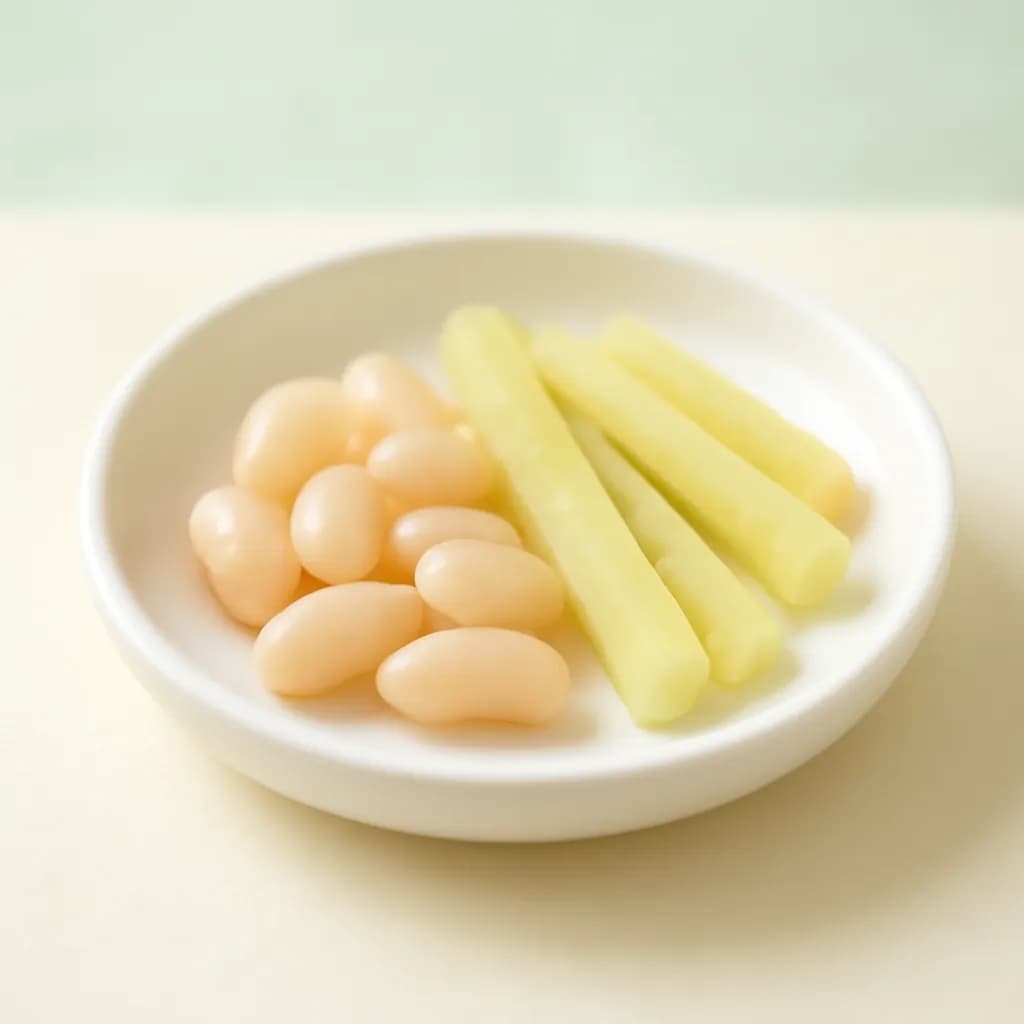
Cooked until very soft, white beans can be mashed for younger babies or served whole-but-squashable as self-feeding develops.
Introducing them gradually helps minimise any gas or digestive discomfort from the extra fibre.
When can babies eat white beans?
White beans can be introduced from around 6 months, once your baby is ready for solid foods.
Start with small amounts, ensuring the beans are well-cooked and soft to reduce choking risk and aid digestion.
Use plain cooked or tinned beans with no added salt (rinse tinned beans well).
See our first foods for baby guide for more ideas.
Nutritional benefits for babies
- 💚Plant-based iron - supports healthy blood and brain development (pair with vitamin C).
- 💚Protein - helps build and repair growing tissues.
- 💚Dietary fibre - supports healthy digestion.
- 💚Folate - supports cell growth and development.
- 💚Magnesium and potassium - support many body processes.
- 💚Budget-friendly and easy to mash, batch-cook, and freeze.
How to serve white beans for babies
6–9 months: Cook until very soft, then mash or purée; spread on toast fingers or stir into vegetable purées.
6–9 months: Blend into a smooth bean dip or fold into soft fritters for self-feeding.
9–12 months: Lightly squashed whole soft beans as the pincer grasp develops.
12+ months: White beans in stews, soups, and family one-pot meals (low-salt).
White beans recipes for babies
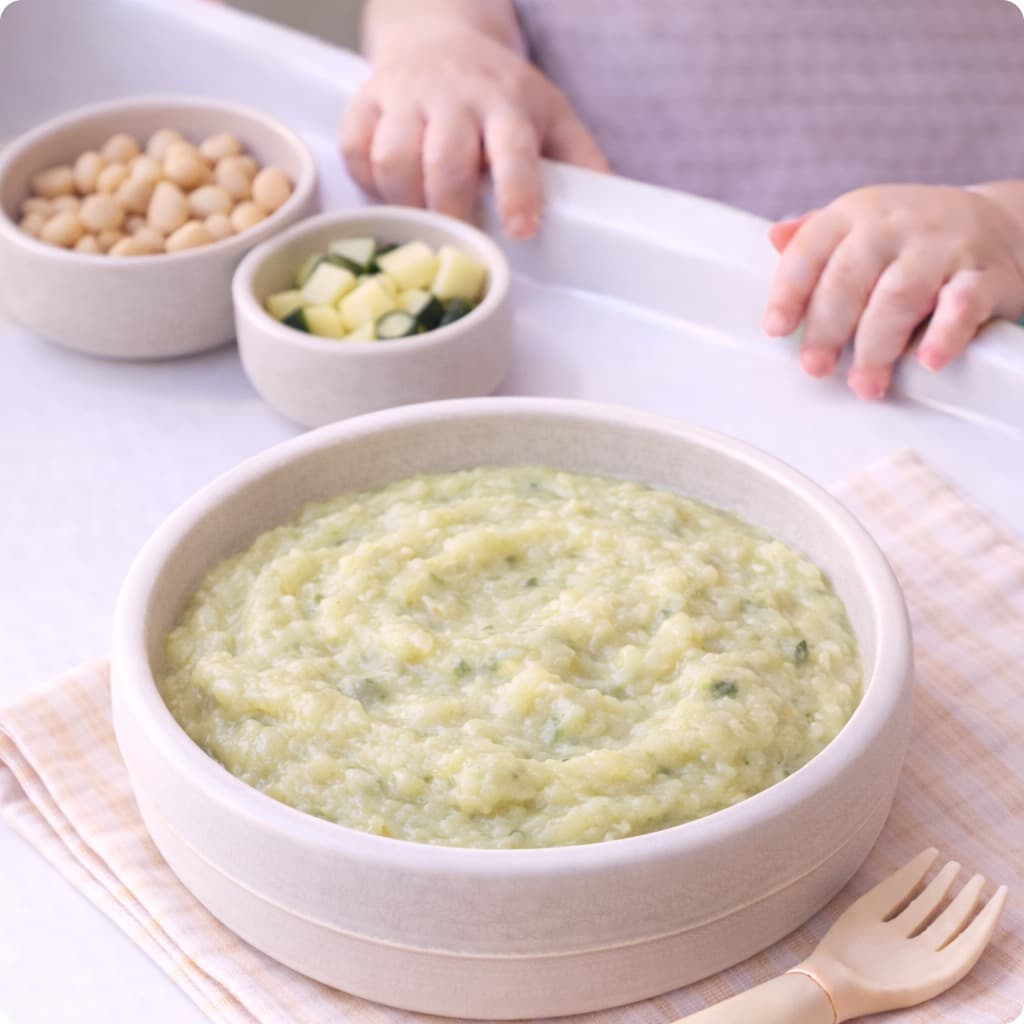
White Beans + Zucchini + Potato Puree
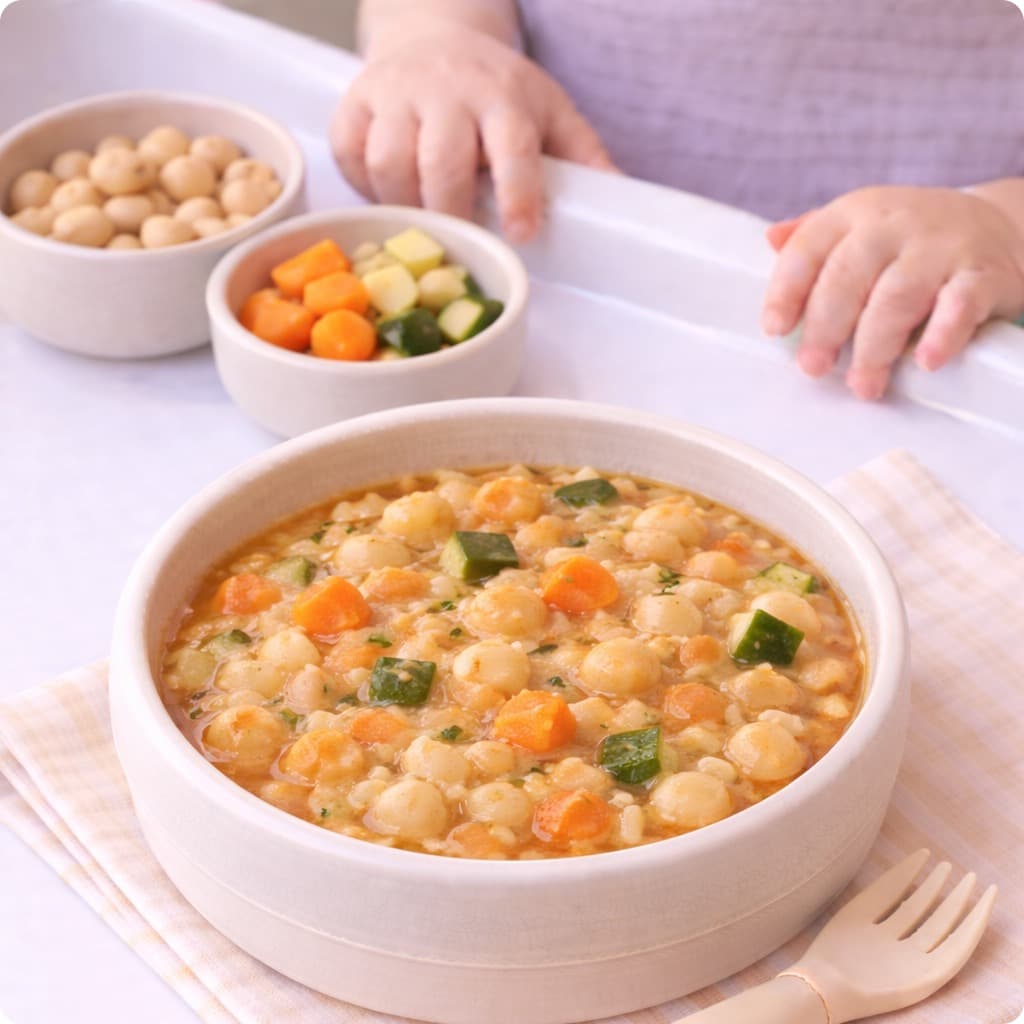
Soft Bean & Vegetable Stew (Baby Cassoulet)
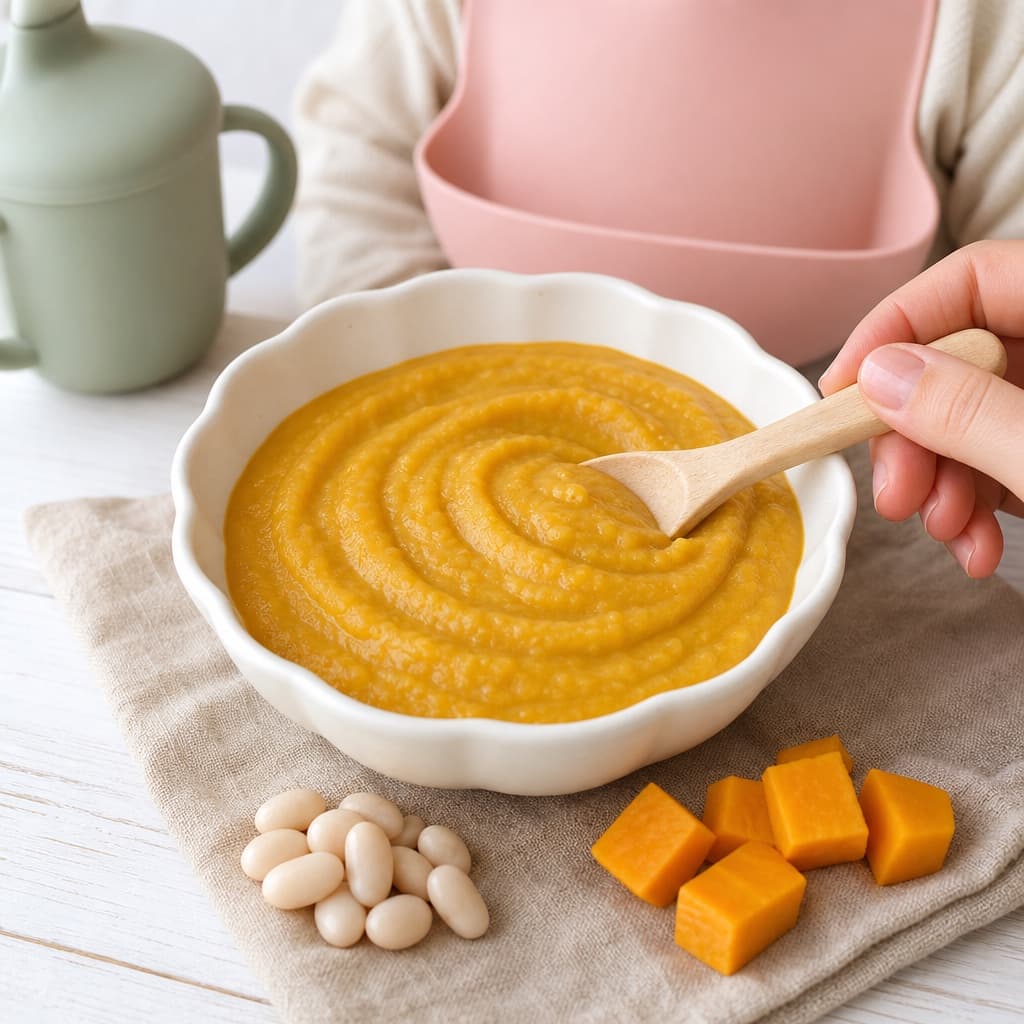
White Bean Pumpkin Cream
See all white beans recipes for babies. Explore baby breakfast recipes, baby-led weaning recipes and first foods for baby for more ideas.
Frequently Asked Questions
Can babies eat White beans?
Yes. Babies can eat White beans starting around 6 months when they begin solid foods. It should be served in a safe texture and size for babies.
When can babies eat White beans?
Babies can eat White beans from around 6 months when starting solids. White beans can be introduced from around 6 months, once your baby is ready for solid foods. Start with small amounts, ensuring the beans are well-cooked and soft to reduce choking risk and aid digestion. Use plain cooked or tinned beans with no added salt (rinse tinned beans well).
Is White beans a choking hazard for babies?
White beans can be a choking hazard if served in unsafe shapes. Ensure beans are cooked very soft to prevent choking; lightly squash whole beans. Introduce white beans gradually to monitor for gas or digestive reactions. Rinse tinned beans well and avoid added salt. White beans aren't a top allergen, but watch for any unusual reaction. Mash or purée for younger babies; offer whole soft beans only when ready. Always supervise your baby while eating.
Is White beans a common allergen?
White beans is not typically a common allergen for babies. Many babies can try it from around 6 months as part of a varied diet.
How should White beans be served to babies?
6–9 months: Cook until very soft, then mash or purée; spread on toast fingers or stir into vegetable purées. 6–9 months: Blend into a smooth bean dip or fold into soft fritters for self-feeding. 9–12 months: Lightly squashed whole soft beans as the pincer grasp develops. 12+ months: White beans in stews, soups, and family one-pot meals (low-salt).
What nutrients does White beans provide for babies?
White beans provides nutrients like potassium, fibre, vitamin C, iron that support babies' growth and development.
How long can I store White beans for babies?
Cook White beans to a safe temperature and store it in the refrigerator for up to 2 days, or freeze in single-serving portions for up to 1 month to preserve nutrients.
Should I buy organic White beans for my baby?
Organic White beans isn't strictly necessary for babies, but some families prefer to reduce pesticide exposure. Wash conventional produce thoroughly. Variety and freshness matter most.
How should I introduce White beans for the first time?
Offer a small amount of White beans in an age-appropriate texture when your baby is hungry but not starving, ideally early in the day so you can watch for any reactions over several hours.
Is White beans a good finger food for babies?
Yes. White beans can be an excellent finger food for babies when cut into strips or soft pieces they can grasp. Make sure the texture mashes easily between your fingers.
What foods pair well with White beans for baby?
White beans pairs well with cooked grains like rice or quinoa, soft vegetables like sweet potato and broccoli, and healthy fats to round out a balanced baby meal.
Should I cook White beans before serving it to my baby?
Yes. Cook White beans until tender and easily mashable before serving it to your baby. Steaming, boiling, or roasting softens it enough to be safe.
How much White beans can a baby eat?
There's no fixed amount. Start with 1-2 tablespoons of White beans from around 6 months and let your baby regulate intake. Breast milk or formula remains the main source of nutrition in the first year.
Should I peel or remove the pit from White beans for my baby?
For White beans, peeling or pitting is usually not required, but wash it well and serve in a size and texture safe for your baby.
How should I store White beans fresh for my baby?
Store fresh White beans in a cool, dry place or in the refrigerator crisper drawer, depending on the food. Wash just before preparing and use it when ripe and firm for the best quality for your baby.
Safety tips
- ✓Ensure beans are cooked very soft to prevent choking; lightly squash whole beans.
- ✓Introduce white beans gradually to monitor for gas or digestive reactions.
- ✓Rinse tinned beans well and avoid added salt.
- ✓White beans aren't a top allergen, but watch for any unusual reaction.
- ✓Mash or purée for younger babies; offer whole soft beans only when ready.
- ✓Always supervise your baby while eating.
Get recipes + a feeding plan for your baby
Save this food to your baby's list, get age-appropriate recipes and follow a personalized feeding schedule - 350+ baby-safe meals in the app.
Try Nibli today to start planning your baby's meals.
verifiedSources & References
This guide is informed by current guidelines from leading health organizations: