When can babies eat beef?
Beef can be introduced from around 6 months, at the same time you begin other solid foods. Look for signs that your baby is ready, such as sitting up with little support, holding their head steady, showing interest in food, and being able to move food to the back of the mouth and swallow rather than push it back out. Beef is a great early food because it is rich in iron and zinc, nutrients that babies need more of once the iron stores they were born with begin to run low around 6 months.
There is no need to delay beef or treat it as a food to introduce later. While beef is not one of the common food allergens, current guidance is to introduce all foods, including allergens, around the same time and not to hold them back. If your baby has a known food allergy, severe eczema, or another medical concern, talk with your pediatrician about the best way to introduce new foods.
How to serve beef safely
From 6 to 9 months, offer beef in forms that are easy to gum and swallow. A smooth puree of well-cooked beef thinned with breast milk, formula, or a little cooking liquid works well, as does very finely shredded or minced beef mixed into a soft mash. If your baby is doing baby-led weaning, a single thick strip of soft-cooked beef about the size of an adult finger gives them something to grip and gnaw, with most of it sticking out of the fist. Always cook beef thoroughly until it is no longer pink and any juices run clear.
From 9 to 12 months and beyond, as your baby develops the pincer grasp, you can offer small, soft pieces of finely chopped or shredded beef, or soft meatballs broken into pea-sized bits. Keep pieces small and tender, and avoid tough, chewy, or gristly cuts and round or coin-shaped chunks that can block the airway. Ground beef and slow-cooked, fall-apart cuts are easiest for this stage. Continue to mince or shred well into the toddler years.
Nutritional benefits for babies
- 💚Rich in heme iron, the most easily absorbed form of iron, which supports healthy brain development and helps prevent iron deficiency.
- 💚Excellent source of zinc, important for growth, a healthy immune system, and wound healing.
- 💚High-quality complete protein that supplies all the essential amino acids babies need to build muscle and tissue.
- 💚Provides vitamin B12, which supports the nervous system and the formation of red blood cells.
- 💚Contains other B vitamins such as niacin and B6 that help the body turn food into energy.
- 💚Offers a small amount of vitamin D and other minerals that round out a balanced diet.
Safety considerations
- ✓Beef is not a common allergen, but as with any new food, watch for reactions like rash, hives, vomiting, or swelling after the first few servings.
- ✓Always cook beef thoroughly until it is no longer pink and the juices run clear; never serve raw or undercooked beef to babies.
- ✓Prevent choking by serving age-appropriate textures: puree or shred for younger babies and offer small, soft, tender pieces for older babies, avoiding tough, gristly, or coin-shaped chunks.
- ✓Always supervise your baby while they eat, keep them seated upright, and never leave them alone with food.
- ✓Introduce beef on its own for a few days before combining it with other new foods, so you can spot any reaction and identify the cause.
Recipes with beef for babies
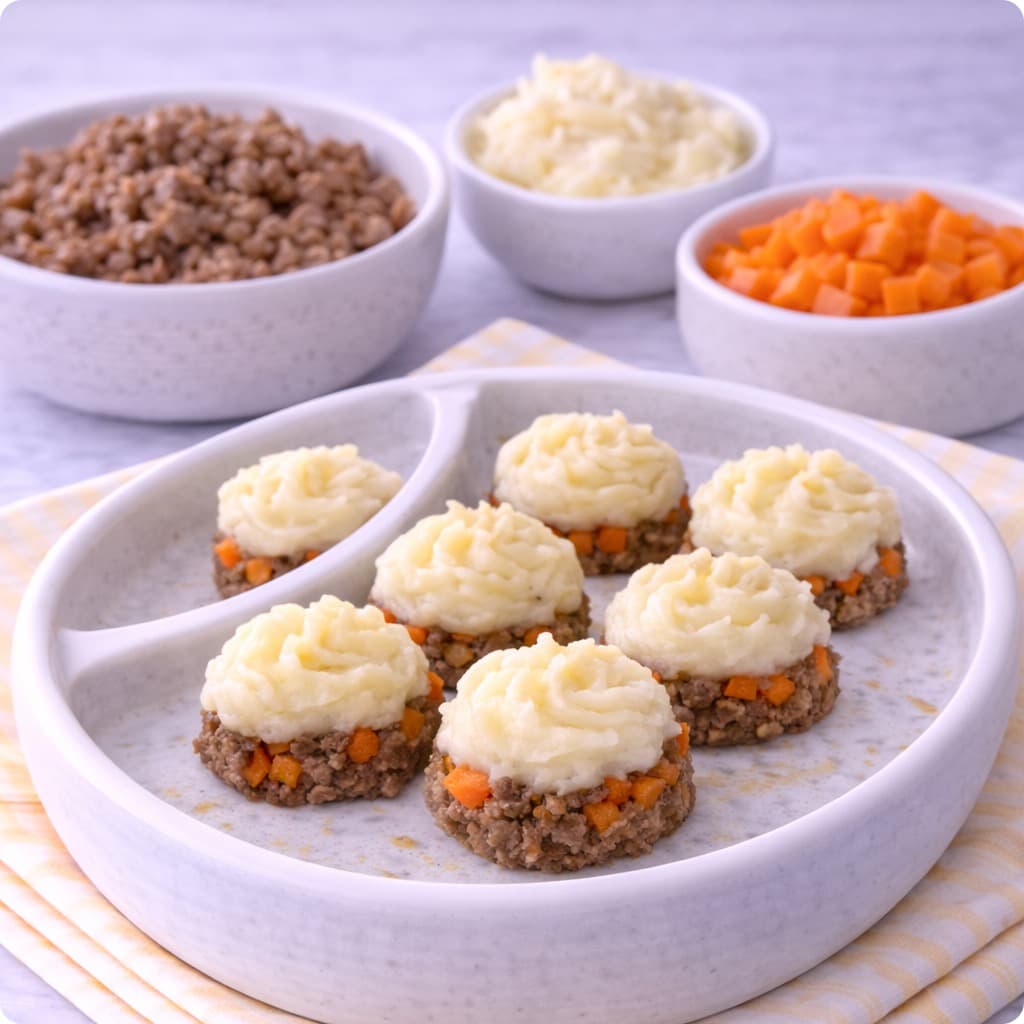
Mini Shepherd's Pie Bites
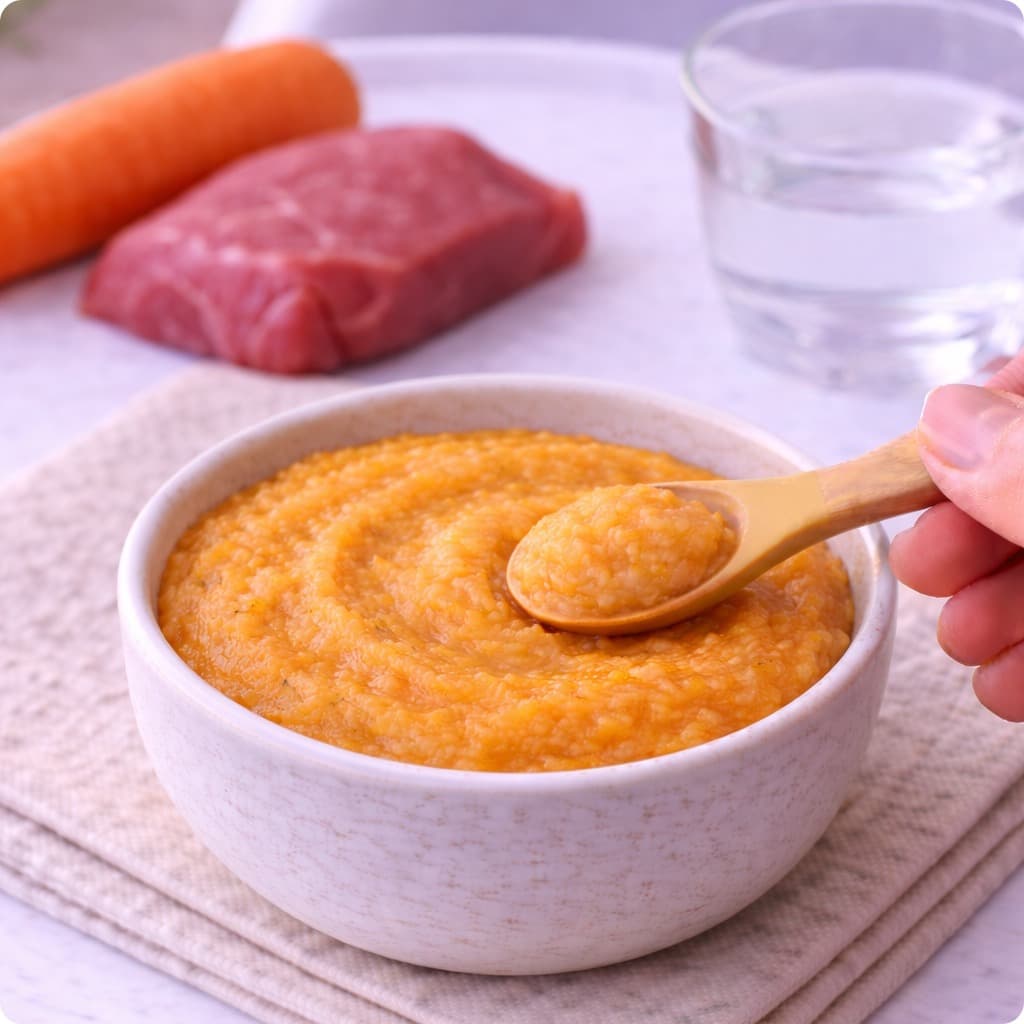
Beef & Carrot Purée
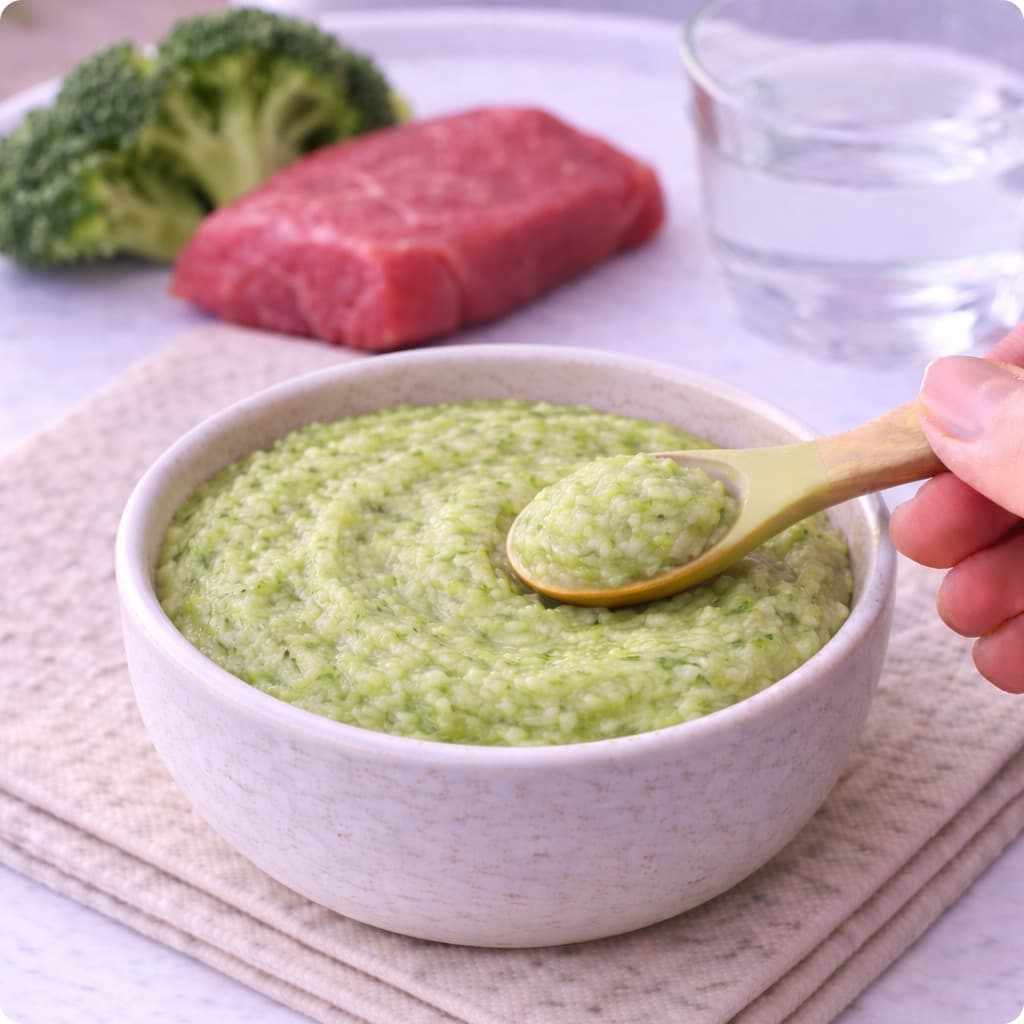
Beef & Broccoli Purée
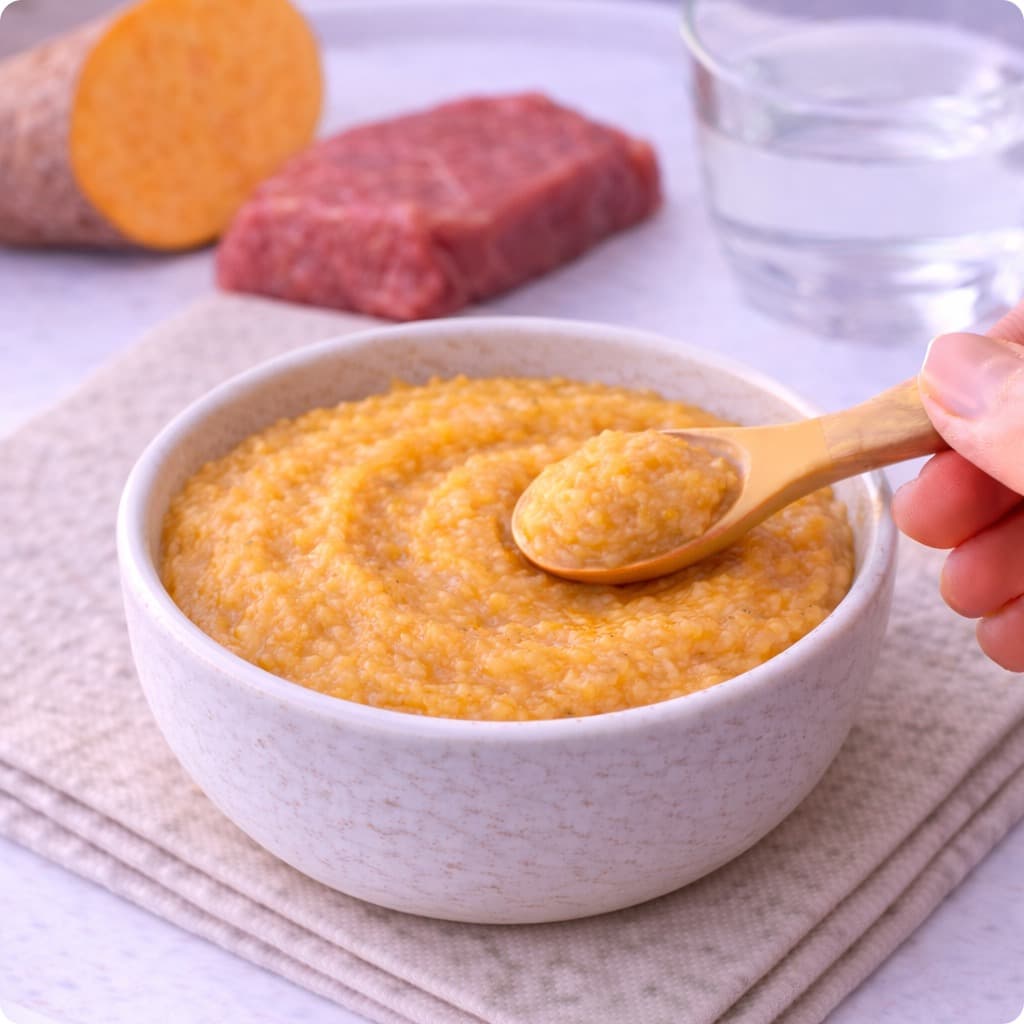
Beef & Sweet Potato Mash
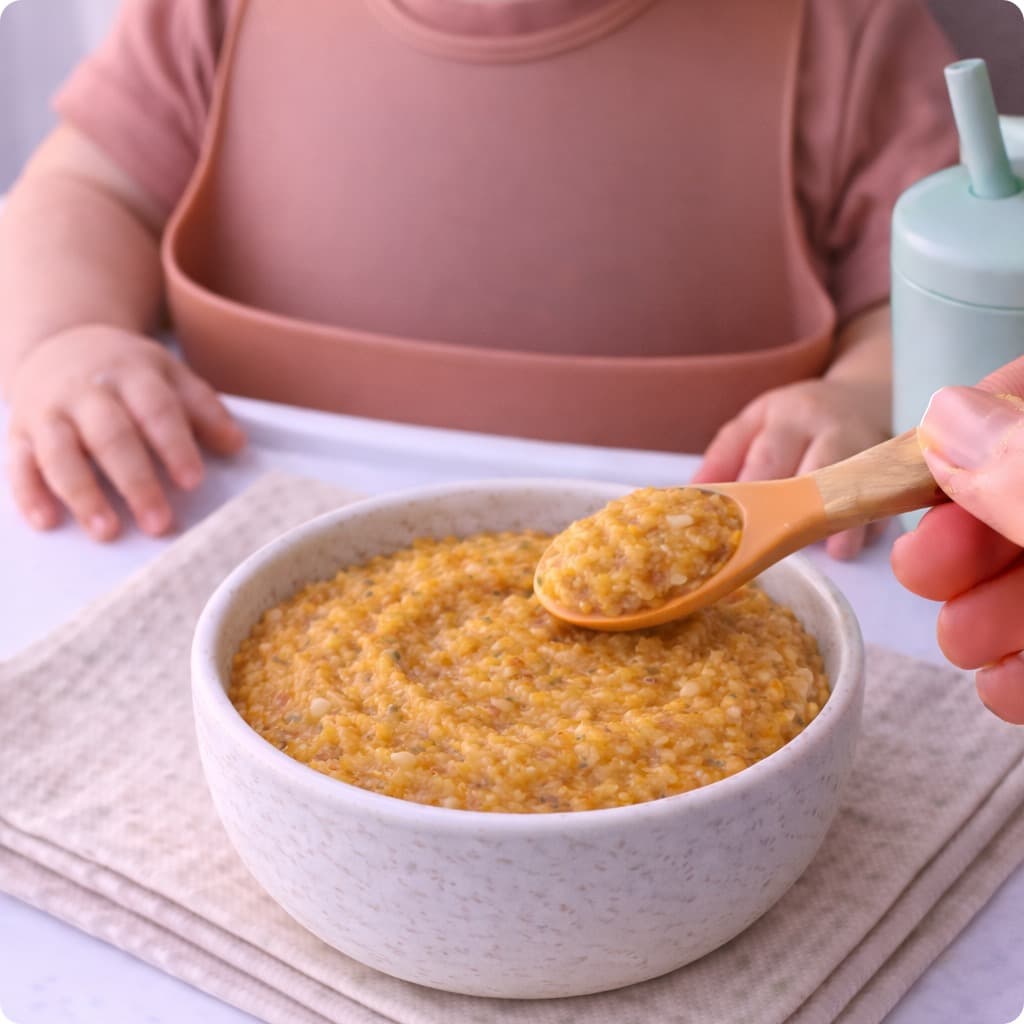
Beef, Pumpkin & Barley Mash
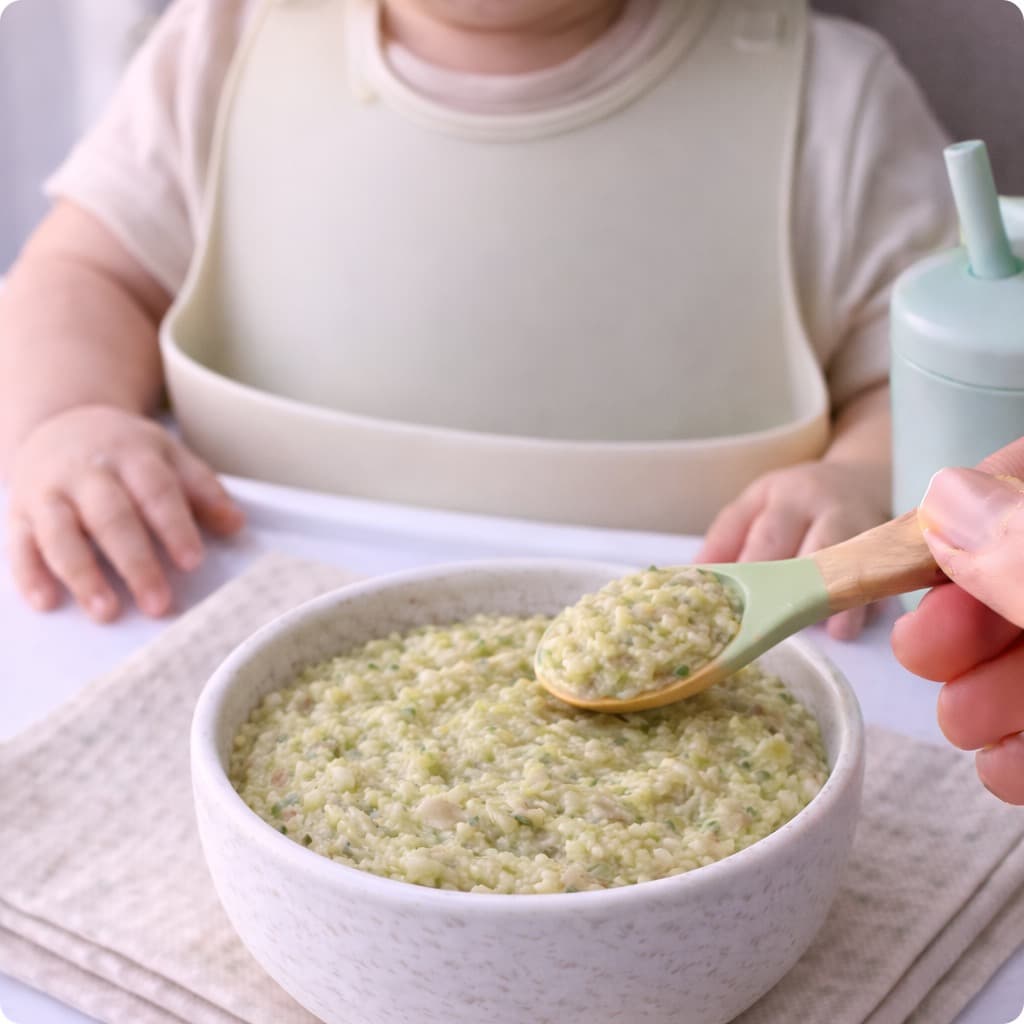
Beef, Broccoli & Potato Mash
Frequently asked questions
Can a 6-month-old eat beef?
Yes, beef is a great first food for a 6-month-old who is showing signs of readiness for solids. At this age it is best served as a smooth puree, finely shredded, or as a soft strip for gripping. Beef provides iron, which babies especially need from around 6 months.
Is beef a good first food for babies?
Beef is one of the best early foods because it is packed with iron, zinc, and protein that growing babies need. The key is the texture: keep it soft and moist, and serve it pureed, finely shredded, or as a graspable strip depending on your baby's stage.
How do I prepare ground beef for my baby?
Cook ground beef thoroughly until it is fully browned with no pink remaining, then drain excess fat. For younger babies, mash or puree it with a little liquid until smooth; for older babies, offer the cooked crumbles mixed into a soft mash or rolled into very soft mini meatballs broken into small pieces.
Can beef cause an allergic reaction in babies?
Beef allergy is uncommon, and beef is not one of the major allergens. As with any new food, introduce it on its own and watch for signs of a reaction such as a rash, hives, vomiting, or swelling. If you notice any concerning symptoms, stop serving it and contact your pediatrician.
Is steak safe for babies?
Whole pieces of steak can be tough and chewy, which makes them harder for babies to manage. You can offer a large, soft-cooked strip for an older baby to gnaw on and suck the flavor and juices from, or choose tender, slow-cooked or ground beef instead. Avoid small, firm chunks that pose a choking risk.
How often can babies eat beef?
Beef can be part of your baby's diet a few times a week as one of several iron-rich foods you rotate in. Offering a variety of proteins, vegetables, fruits, and grains helps your baby get a balanced range of nutrients. There is no need to serve beef every day.
What is the best cut of beef for babies?
Tender, easy-to-soften options are best, such as lean ground beef or slow-cooked cuts like chuck that fall apart and shred easily. These are simple to puree or mince and are gentle on little gums. Avoid tough, gristly, or very fatty cuts that are hard to chew.
Get recipes + a feeding plan for your baby
Save this food to your baby's list, get age-appropriate recipes and follow a personalized feeding schedule - 350+ baby-safe meals in the app.
verifiedSources & References
This guide is informed by current guidelines from leading health organizations: