When can babies eat beetroot?
Most babies can start beetroot at around 6 months, when they show signs of readiness for solids: sitting up with little support, good head and neck control, and reaching for food. Cooked, well-softened beetroot suits this stage as either a smooth puree or a soft finger food, depending on how you choose to introduce solids.
Beetroot is not one of the common food allergens, so there is no need to delay it. As with any new food, you can offer it as one of your baby's early vegetables. Keep in mind that beetroot naturally turns urine and stool pink or red for a day or two, which is harmless and not a cause for concern.
How to serve beetroot safely
From 6 to 9 months, cook beetroot until very soft, then serve it as a smooth puree or as large, soft pieces your baby can grip with their whole palm, such as a thick wedge or a finger-length strip. Cooked beetroot is slippery, so a light coating of baby cereal or a roll in a thin layer of breadcrumbs can make it easier to hold. Always cook beetroot first, since raw beetroot is hard and a choking hazard.
From 9 to 12 months and up, as your baby develops a pincer grasp, you can offer smaller, soft, bite-sized cubes of cooked beetroot or thin sticks. Continue to make sure every piece is soft enough to squash easily between your finger and thumb. Avoid whole, firm chunks, and skip raw or pickled beetroot, which can be too hard or too high in salt for babies.
Nutritional benefits for babies
- 💚Provides folate, which supports healthy growth and cell development.
- 💚Offers dietary fiber to help support regular, comfortable digestion.
- 💚Contains vitamin C, which helps the body absorb iron from other foods.
- 💚Supplies potassium, a mineral that supports normal fluid balance.
- 💚Naturally sweet and colorful, which can help introduce babies to new flavors and textures.
- 💚Delivers plant compounds and antioxidants found in deeply colored vegetables.
Safety considerations
- ✓Beetroot is not a common allergen, but introduce it on its own and watch for any reaction the first few times.
- ✓Always cook beetroot until soft; raw beetroot is firm and a choking hazard, and whole firm chunks should be avoided.
- ✓Cut cooked beetroot into age-appropriate shapes: large soft pieces for younger babies, small soft cubes once a pincer grasp develops.
- ✓Always supervise your baby while eating, and make sure they are seated upright and never eating while moving, lying down, or distracted.
- ✓Offer beetroot as a single new food and wait a few days before adding another, so you can spot how your baby responds.
Recipes with beetroot for babies
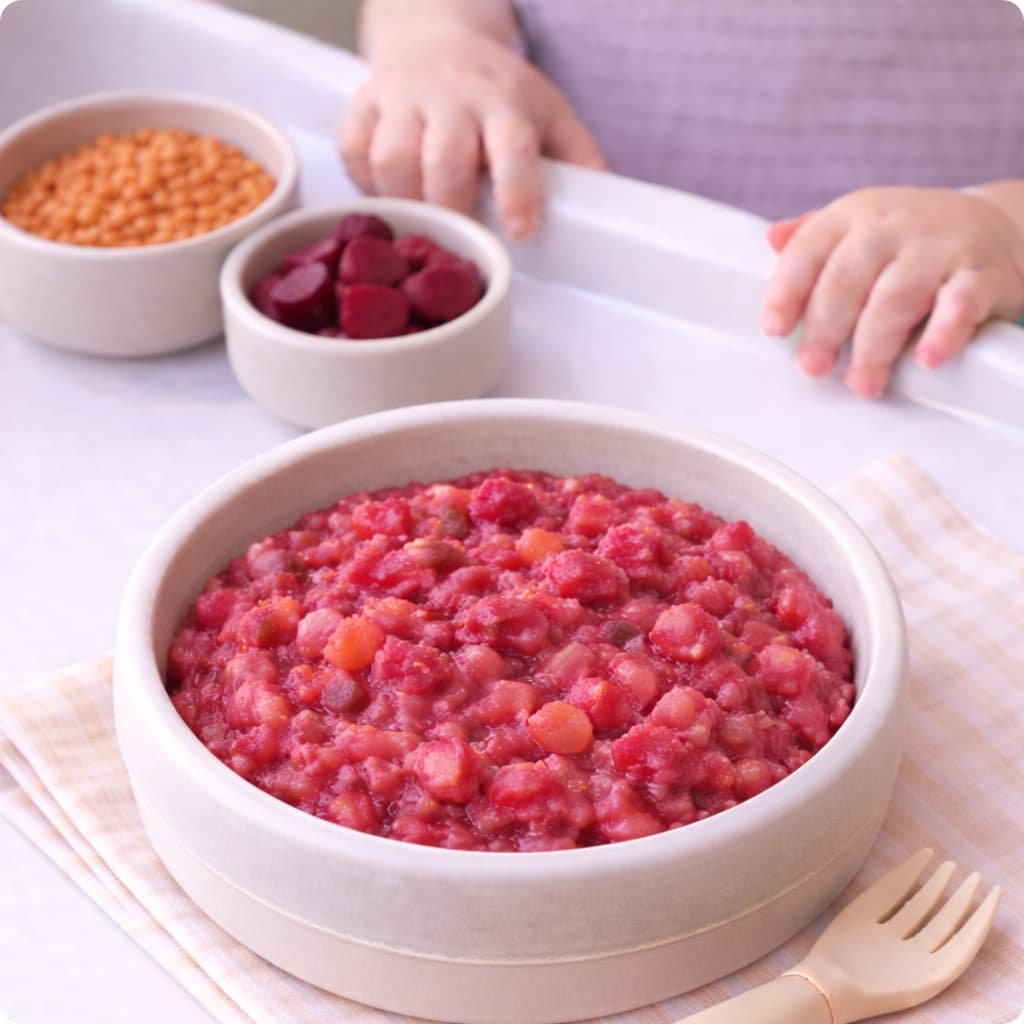
Lentils + Beetroot + Potato Mash
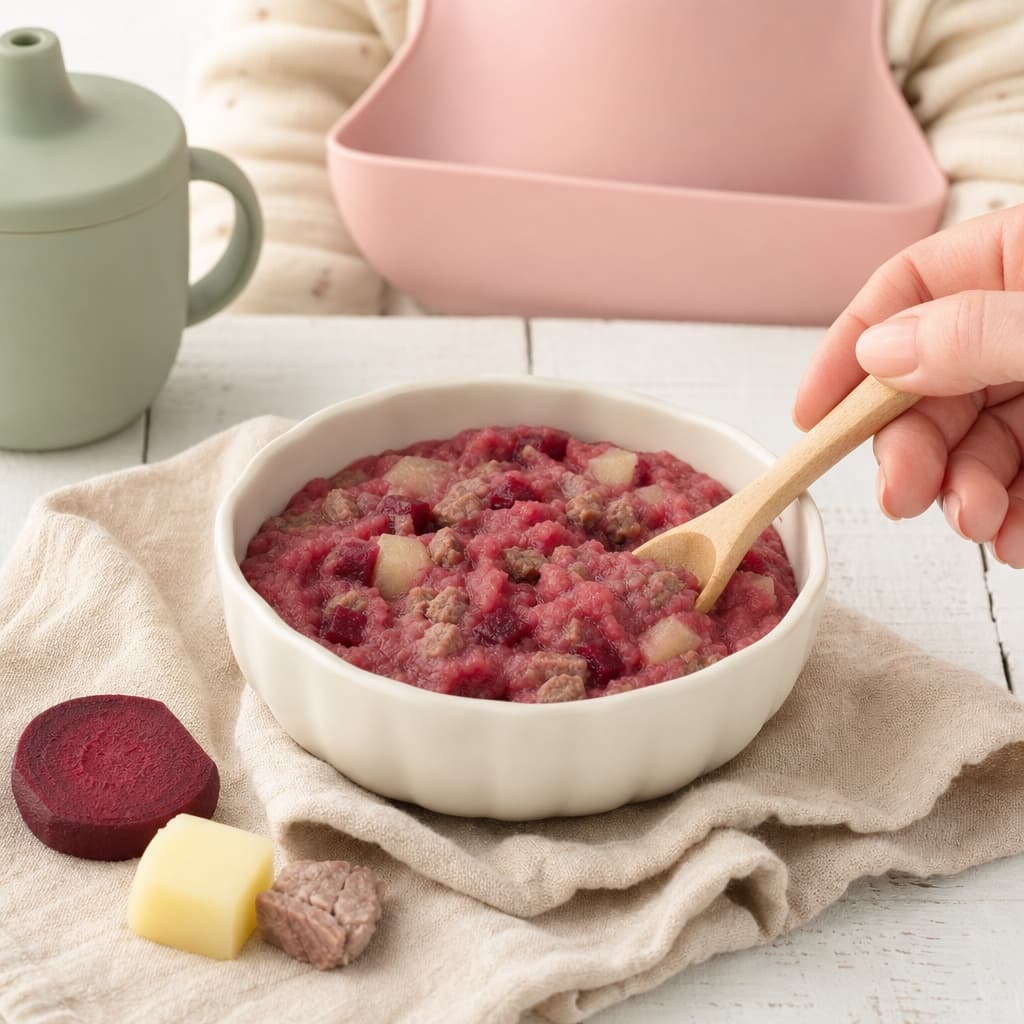
Beef Beetroot Potato Mash
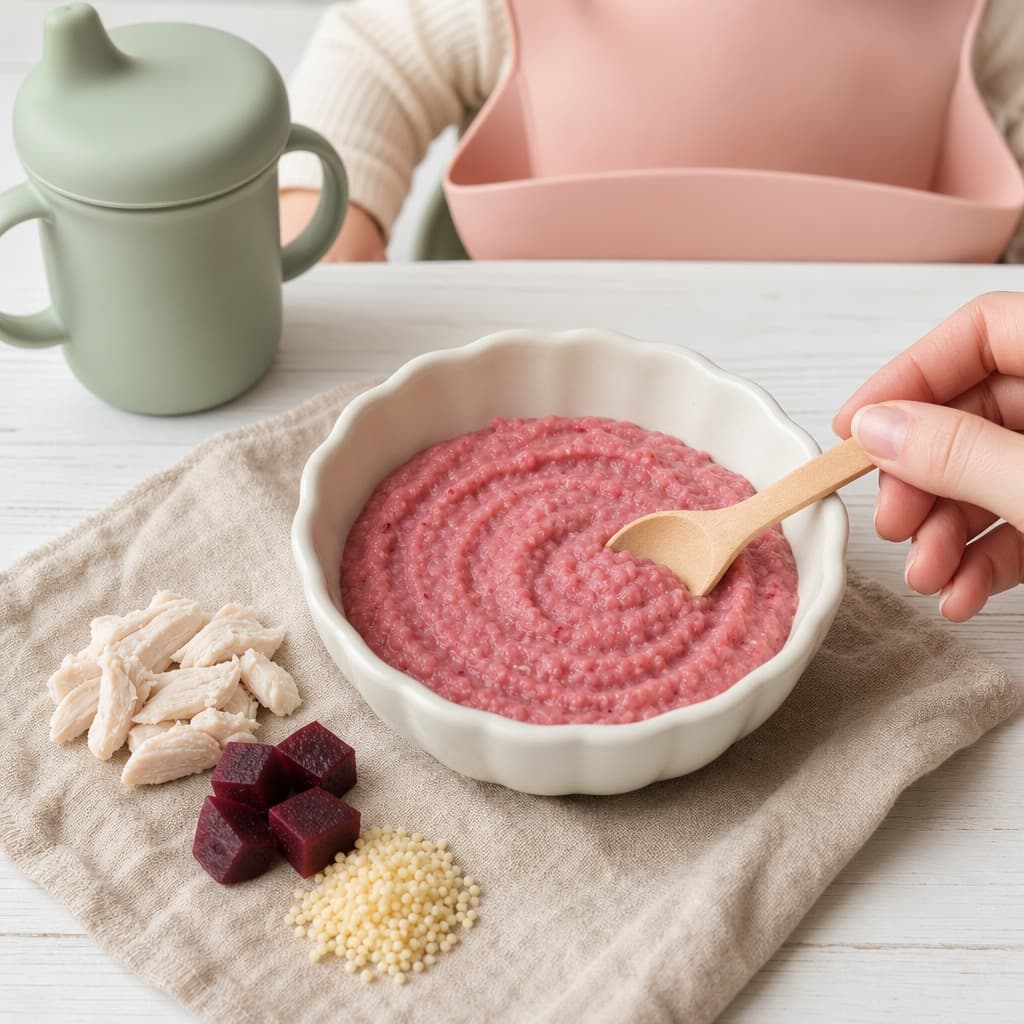
Chicken Beetroot Couscous Bowl
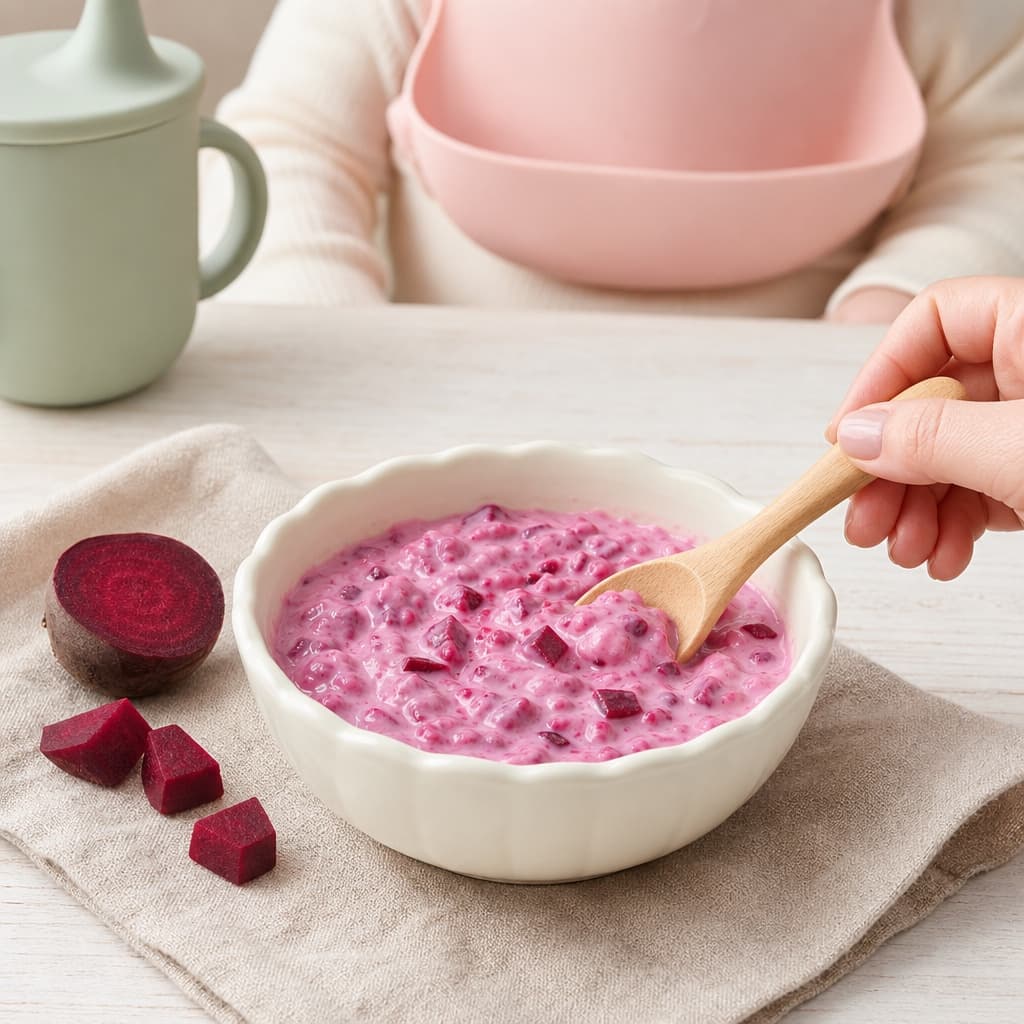
Beetroot Yogurt Dip
Frequently asked questions
Why is my baby's diaper pink or red after eating beetroot?
This is called beeturia and it is completely harmless. The natural red pigment in beetroot can pass through and tint urine and stool pink or red for a day or two. It is not blood and does not mean anything is wrong.
Can babies eat raw beetroot?
It is best to avoid raw beetroot for babies because it is hard and firm, which makes it a choking hazard. Always cook beetroot until it is soft enough to squash easily between your fingers. This makes it safe and easy for your baby to eat.
Can babies have pickled or canned beetroot?
Pickled beetroot is best avoided because it is usually high in salt and vinegar, which are not suitable for babies. If you use canned beetroot, choose one with no added salt and rinse it well. Plain cooked fresh beetroot is the better choice.
Is beetroot a choking hazard for babies?
Raw or firm beetroot can be a choking hazard, but cooked, well-softened beetroot served in age-appropriate shapes is much safer. Cook it until tender and cut it into large soft pieces for younger babies or small soft cubes for older ones. Always supervise your baby while they eat.
How do I keep beetroot from staining everything?
Beetroot's strong red pigment can stain hands, clothing, and high chairs, which is normal and harmless. A bib with sleeves and a quick wipe-down right after the meal help a lot. The color on skin fades on its own within a day or so.
Can I mix beetroot with other foods for my baby?
Yes, once your baby has tried beetroot on its own, you can blend it with other foods. It pairs well with apple, pear, sweet potato, or plain yogurt, and its natural sweetness makes it easy to combine. Keep textures appropriate for your baby's stage.
How often can my baby eat beetroot?
Beetroot can be part of a varied diet a few times a week as one of several vegetables you offer. Rotating different vegetables helps your baby experience a range of flavors and nutrients. There is no need to serve it every day.
Get recipes + a feeding plan for your baby
Save this food to your baby's list, get age-appropriate recipes and follow a personalized feeding schedule - 350+ baby-safe meals in the app.
verifiedSources & References
This guide is informed by current guidelines from leading health organizations: