When can babies eat cream cheese?
Plain cream cheese can be offered from around 6 months, when your baby can sit upright with support, holds their head steady, and shows interest in food. Like plain yogurt and pasteurized hard cheese, cream cheese made from pasteurized milk is considered a suitable early dairy food by the AAP and the NHS. Choose plain, full-fat cream cheese and skip flavored versions for now, since the salt and sugar content of strawberry, honey, or garlic and herb varieties varies widely and some contain onion or garlic powders alongside extra sodium.
Cream cheese is a food to add to meals, not a replacement for milk feeds. Babies under 12 months still need breast milk or infant formula as their main source of nutrition, so think of cream cheese as a creamy layer on toast or a mix-in for other foods rather than a meal on its own. Cow's milk as a main drink is generally introduced after 12 months, but small amounts of dairy foods like cream cheese, yogurt, and cheese are fine in meals from 6 months.
How to serve cream cheese safely
From 6 to 9 months, a thin smear of cream cheese on lightly toasted bread cut into finger-sized strips is a classic baby-led weaning serve. The key word is thin: spread a light, almost see-through layer rather than a thick one, because a large glob of any sticky spread can clump in the mouth and pose a choking risk. You can also stir a small spoonful into warm oatmeal, mashed sweet potato, or scrambled eggs to add creaminess and calories.
From 9 to 12 months and beyond, cream cheese works as a mild dip for soft-cooked vegetable sticks, a binder for mashed fruit and grains, or a filling rolled inside thin strips of soft bread. It pairs naturally with mashed banana, soft ripe pear, cooked apple, and oatmeal, which lets you add flavor without any added sugar. Keep the layer thin every time, and skip bagels for now, since dense, chewy bagel texture is harder for babies to manage than lightly toasted bread.
Nutritional benefits for babies
- 💚Provides fat to support growth, energy, and brain development
- 💚Contains protein to complement other foods in the meal
- 💚Supplies vitamin A for vision and immune function
- 💚Offers some calcium and phosphorus, though less than hard cheese or yogurt
- 💚Contains vitamin B12 and riboflavin (B2) from the dairy base
- 💚Its smooth, spreadable texture makes it an easy carrier for iron-rich foods and new flavors
Safety considerations
- ✓Cream cheese is a dairy product, and cow's milk is one of the common food allergens. Introduce it early, offer it on a day you can watch your baby, and look for reactions such as hives, swelling, vomiting, or trouble breathing.
- ✓Always spread cream cheese in a thin layer. A thick glob is sticky and can clump in a baby's mouth, making it a choking risk like any thick spread, including nut butters.
- ✓Choose cream cheese made from pasteurized milk, which covers standard US brands per FDA requirements, and avoid raw-milk or homemade unpasteurized versions. Keep it refrigerated and check the use-by date.
- ✓Skip flavored varieties such as strawberry, honey, or garlic and herb for babies. Their added sugar and salt vary widely, some contain onion or garlic powders with extra sodium, and the WHO and the AAP advise no added sugar before age 2.
- ✓Cream cheese contains a moderate amount of salt, so keep portions small, aim for minimal salt overall before age 2, and always supervise your baby seated upright while eating.
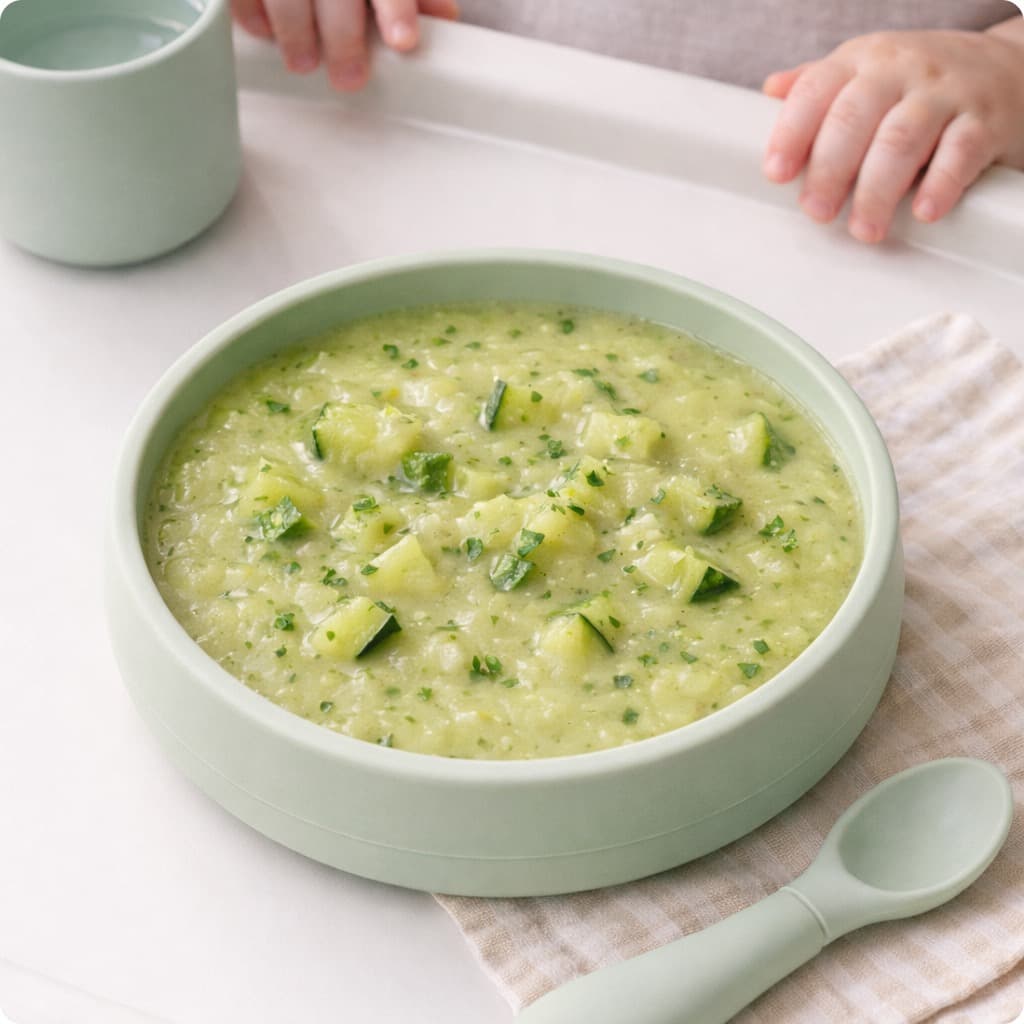
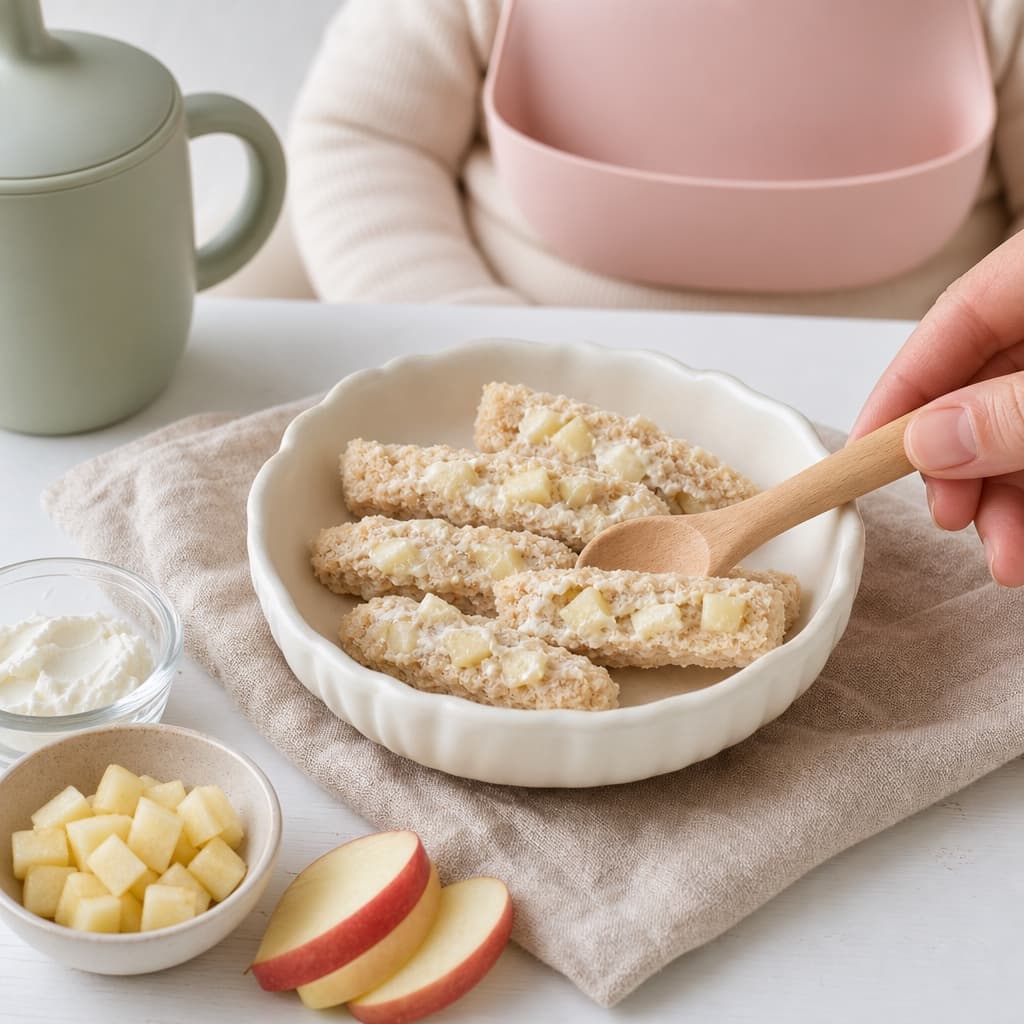
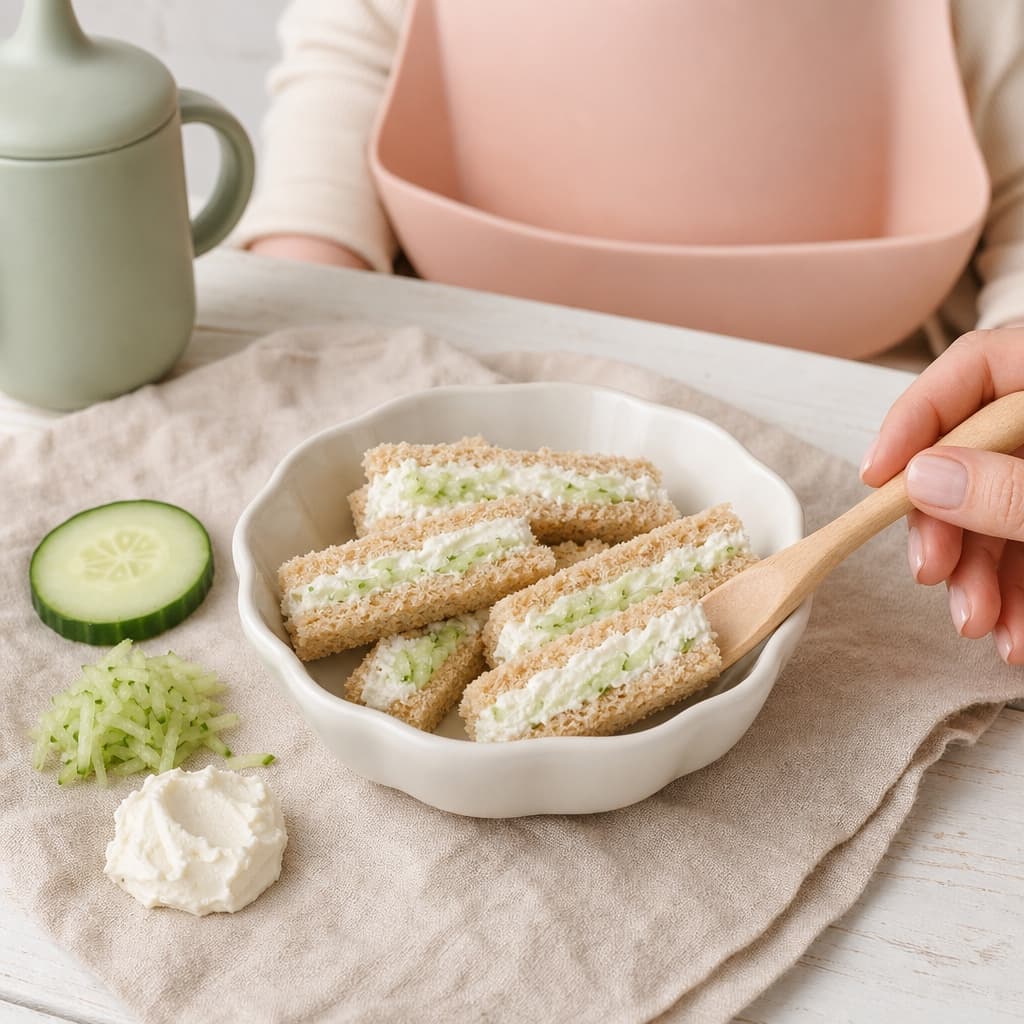
Recipes with cream cheese for babies
Frequently asked questions
Is cream cheese safe for babies under 1 year?
Yes, plain, full-fat, pasteurized cream cheese is generally safe from around 6 months, once your baby is ready for solids. Spread it thin on toast strips or stir it into soft foods, and keep it as one part of a varied diet alongside breast milk or formula.
Can babies have cream cheese on toast?
Yes, a thin smear of cream cheese on lightly toasted bread cut into finger-sized strips is one of the most popular baby-led weaning serves from around 6 months. Toast the bread lightly so it holds together without being hard, and keep the cream cheese layer thin.
Is cream cheese a choking hazard for babies?
A thin layer of cream cheese is not a choking hazard, but a thick glob can be, because sticky spreads can clump in a baby's mouth. Always spread it thin rather than serving spoonfuls, the same rule that applies to nut butters and other thick spreads.
Can cream cheese cause an allergic reaction in babies?
Yes. Cream cheese is made from cow's milk, and dairy is one of the common food allergens. Offer it on a day you can watch your baby and look for signs like hives, swelling, vomiting, or trouble breathing, and contact your doctor if you have concerns.
What kind of cream cheese is best for babies?
Choose plain, full-fat cream cheese made from pasteurized milk. Babies need the fat for growth and brain development, so skip reduced-fat versions, and avoid flavored varieties, which often add sugar, salt, or seasoning powders. Standard US supermarket cream cheese is pasteurized.
Is cream cheese too salty for babies?
Cream cheese contains a moderate amount of salt, less than many hard cheeses but more than plain yogurt. A thin smear a few times a week fits comfortably within a baby's low-salt diet. Keep overall salt minimal before age 2 and balance cream cheese with lower-sodium foods.
Can babies eat flavored cream cheese like strawberry or garlic and herb?
It is best to skip flavored cream cheese for babies. Sweet versions add sugar, which the WHO and the AAP advise avoiding before age 2, and savory versions often add extra salt and onion or garlic powders. Choose plain cream cheese and add flavor with mashed fruit or soft herbs yourself.
Get recipes + a feeding plan for your baby
Save this food to your baby's list, get age-appropriate recipes and follow a personalized feeding schedule - 350+ baby-safe meals in the app.
verifiedSources & References
This guide is informed by current guidelines from leading health organizations: