When can babies eat semolina?
Semolina can be offered from around 6 months, when your baby can sit upright with support, holds their head steady, and shows interest in food. It is a coarse flour milled from durum wheat, and when simmered with liquid it turns into a soft, spoonable porridge that is easy for new eaters to manage. Generations of European babies have started solids with semolina porridge, and guidance from the AAP, the WHO, and the NHS supports introducing grains like wheat around this age rather than delaying them.
Because semolina is wheat, it contains gluten, and wheat is one of the common food allergens. Current advice from the AAP and the NHS is to introduce common allergens early, around 6 months, rather than waiting, since delaying does not prevent allergies and may increase risk. Offer semolina for the first time on a day when you can watch your baby afterward, and keep it as a food alongside breast milk or formula, which should stay the main source of nutrition until 12 months.
How to serve semolina safely
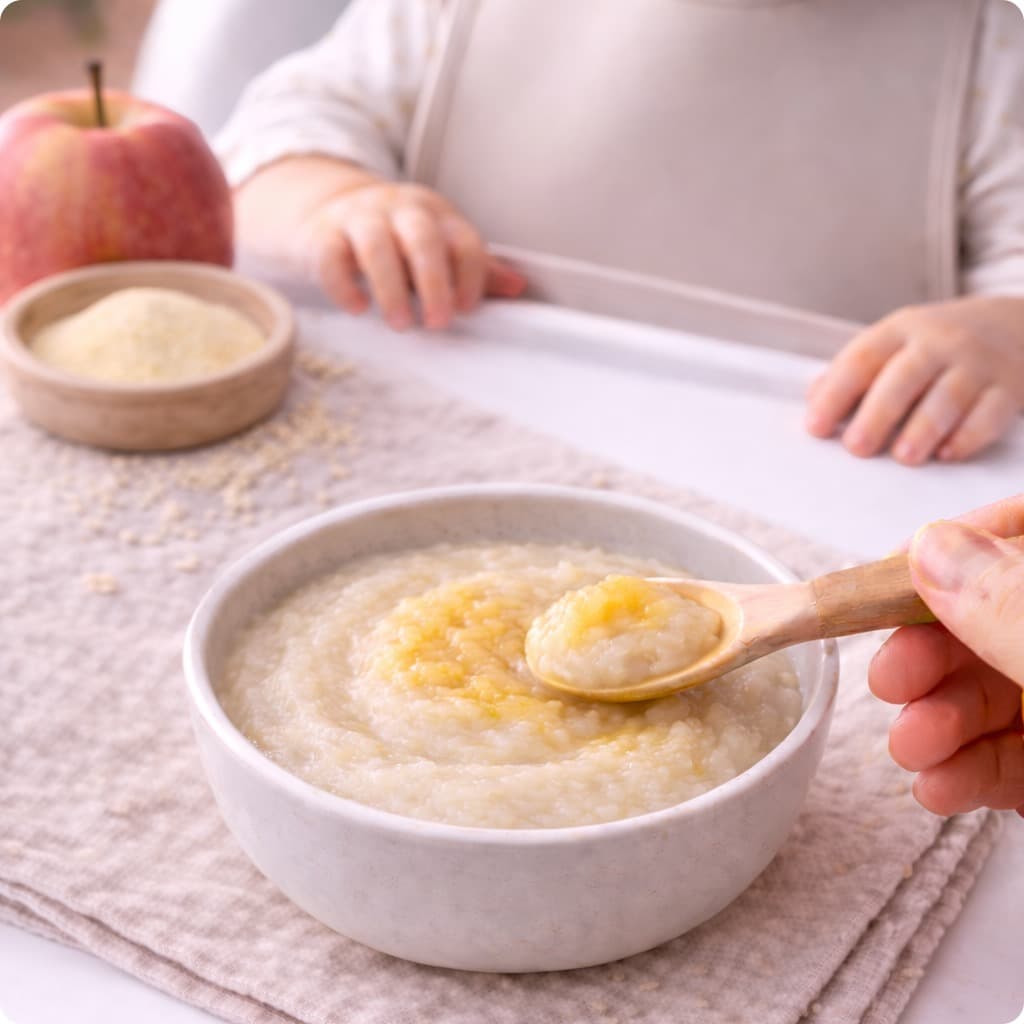
From 6 to 9 months, cook semolina into a soft porridge by simmering it with water, then stir in breast milk or formula for a familiar taste and extra nutrition. Using whole cow's milk in the cooking amounts of porridge is also fine at this age; it is only as a main drink that cow's milk waits until 12 months. Aim for a smooth, lump-free texture that is thick enough to cling to a spoon, and let it cool before serving. You can spoon-feed, preload a spoon for self-feeding, or let a slightly thicker porridge be scooped up by hand.
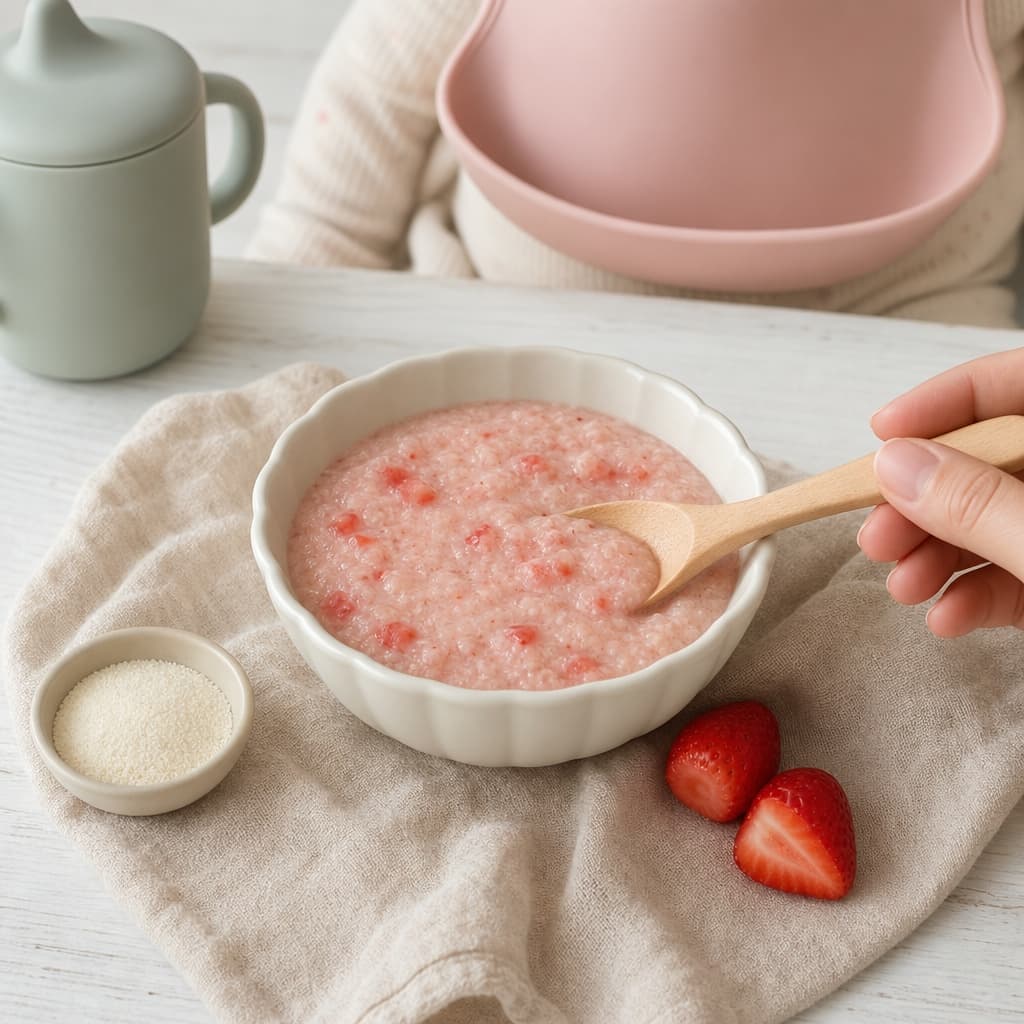
From 9 to 12 months and beyond, semolina porridge can be made a little thicker, and cooled semolina can be set and cut into soft strips for finger feeding. Stir in fruit purees like apple, pear, or banana for flavor instead of sugar, and pair it with iron-rich foods such as meat, beans, or egg, since semolina on its own is not a major iron source unless fortified. Choose plain semolina and skip sweetened instant porridge mixes, and never add honey before 12 months.
Nutritional benefits for babies
- 💚Provides carbohydrates for steady energy to fuel growth and play
- 💚Supplies plant protein from durum wheat to support development
- 💚Many semolina products are fortified with iron, an important nutrient for babies from 6 months
- 💚Contains B vitamins such as thiamine and folate, especially in fortified versions
- 💚Its smooth, soft texture makes it an easy vehicle for energy-dense add-ins like breast milk, formula, or fruit purees
- 💚Offers small amounts of minerals like magnesium and selenium
Safety considerations
- ✓Semolina is made from wheat, one of the common food allergens. Introduce it early, offer it on a day you can watch your baby, and look for reactions such as hives, swelling, vomiting, or trouble breathing.
- ✓Cook semolina thoroughly until soft and smooth; raw or undercooked semolina is grainy and hard to swallow. A well-cooked porridge texture is not a choking hazard.
- ✓Let cooked semolina cool before serving and stir it well, since porridge can hide hot spots, especially if reheated.
- ✓Choose plain semolina and skip sugared instant porridge mixes; babies under 24 months should have minimal added salt and sugar, and honey is not safe before 12 months.
- ✓Introduce semolina and any new mix-in one at a time, a few days apart, so you can pinpoint the cause of any reaction, and always supervise your baby while eating.
Recipes with semolina for babies
Frequently asked questions
Is semolina good for babies?
Yes, cooked semolina is a good early grain for babies from around 6 months. It provides energy, some plant protein, and B vitamins, and many products are fortified with iron. Pair it with iron-rich foods and fruit or vegetable purees for a more balanced meal.
Is semolina porridge (Griessbrei) a good first food for babies?
Yes. Semolina porridge, known as Griessbrei in German-speaking countries, has been a classic first food across Europe for generations. Cooked soft and smooth with water, breast milk, or formula, it is easy to swallow and simple to flavor with fruit puree. Choose plain semolina rather than sweetened instant versions.
Does semolina contain gluten?
Yes. Semolina is milled from durum wheat, so it contains gluten and counts as a wheat allergen. Guidance from the AAP and the NHS supports introducing wheat around 6 months while watching for reactions. If celiac disease or wheat allergy runs in your family, talk to your pediatrician first.
Can I make semolina porridge with cow's milk for my baby?
Yes, using whole cow's milk to cook porridge is fine from 6 months, since small amounts of milk in cooking are safe at this age. Cow's milk should not replace breast milk or formula as a main drink before 12 months. Many parents cook semolina with water and stir in breast milk or formula instead.
Can semolina cause an allergic reaction in babies?
Yes, it can, because semolina is wheat and wheat is one of the common food allergens. Offer it for the first time on a day you can watch your baby, and look for signs like hives, swelling, vomiting, or trouble breathing. Contact your doctor if you notice a reaction.
Is semolina a choking hazard for babies?
No, well-cooked semolina porridge is soft and smooth, so it is not a choking hazard. Make sure it is fully cooked, lump-free for young babies, and cooled before serving. Watch any mix-ins instead: mash fruit well and avoid hard, small, or round pieces.
How often can babies eat semolina?
Semolina can appear in your baby's meals a few times a week as one of several grains, alongside oats, rice, and barley. Variety helps your baby get a wider range of nutrients and flavors. Keep portions small at first and let breast milk or formula remain the main source of nutrition before 12 months.
Get recipes + a feeding plan for your baby
Save this food to your baby's list, get age-appropriate recipes and follow a personalized feeding schedule - 350+ baby-safe meals in the app.
verifiedSources & References
This guide is informed by current guidelines from leading health organizations: