When can babies eat plum?
Most babies are ready to start solids around 6 months, when they can sit up with support, hold their head steady, and show interest in food by reaching for it and bringing things to their mouth. Plum can be one of those early foods, since it is soft, naturally sweet, and easy to puree or mash. There is no need to delay it, and like other first foods it can be introduced alongside a variety of fruits, vegetables, grains, and proteins.
Plum is not considered a common allergen, so you do not need to treat it differently from other new foods in that regard. When you offer any new food, it is still a good idea to introduce it on its own for a couple of days so you can watch for any reaction. The bigger consideration with plum is texture: its skin can be tough and its flesh slippery, so how you prepare it matters more than when you start.
How to serve plum safely
From 6 to 9 months, remove the pit and the skin and serve plum very soft. You can steam or gently cook the flesh until it is tender, then mash it or puree it to a smooth consistency. Ripe raw plum can also be mashed if it is soft enough. For early self-feeding, offer a large, soft wedge that your baby can hold and gnaw on, making sure it is too big to fit entirely in the mouth. Cooking firmer plums first makes them easier and safer to manage.
From 9 to 12 months and beyond, as your baby develops a pincer grasp, you can offer smaller, bite-size pieces of soft, ripe, pitted plum cut into thin, flat slices rather than round chunks. Round, firm, or slippery pieces are a choking risk, so keep slices thin and make sure the fruit is ripe and soft. Always remove the pit completely, since it is hard, round, and a serious choking hazard. Toward the first birthday, plum can be mixed into yogurt, oatmeal, or other soft foods.
Nutritional benefits for babies
- 💚Provides dietary fiber, which supports healthy digestion and regular bowel movements
- 💚Contains vitamin C, which helps the body absorb iron from other foods
- 💚Offers vitamin A and other antioxidants that support growth and immune health
- 💚Supplies potassium, a mineral important for fluid balance and muscle function
- 💚Naturally sweet and water-rich, making it a gentle, hydrating first fruit
- 💚Contains sorbitol and other natural compounds that can help keep stools soft
Safety considerations
- ✓Plum is not a common allergen, but introduce it on its own at first and watch for any signs of a reaction.
- ✓Always remove the pit completely before serving, as it is hard and round and poses a serious choking hazard.
- ✓Prepare plum in age-appropriate shapes: soft mash or large soft wedges for younger babies, thin flat slices for older ones; avoid round, firm chunks.
- ✓Always supervise your baby closely while eating and keep them seated upright in a high chair.
- ✓Introduce one new food at a time so you can monitor how your baby tolerates it, and offer plum in moderation since it can have a laxative effect.
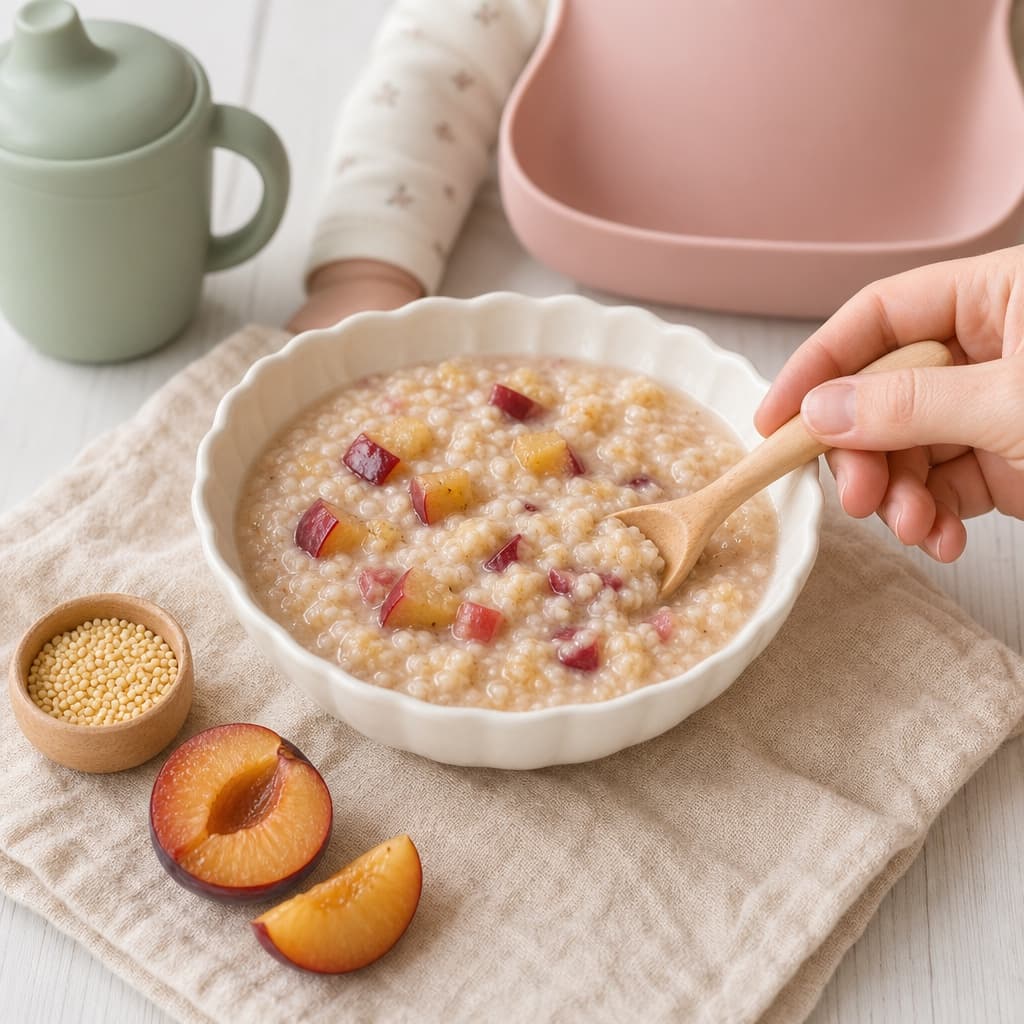
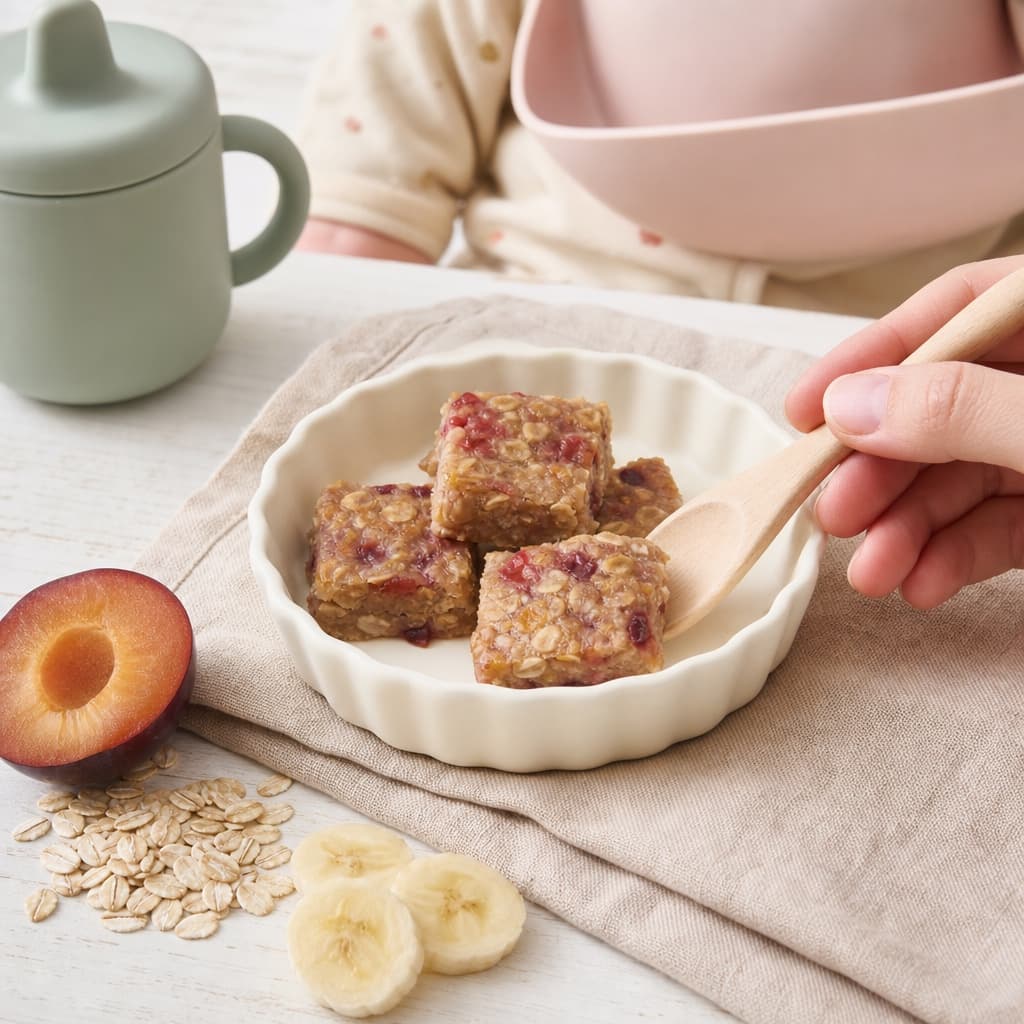
Recipes with plum for babies
Frequently asked questions
Can plum cause diarrhea or loose stools in babies?
Plum contains fiber and natural sorbitol, which can have a gentle laxative effect and soften stools. This can be helpful if your baby is constipated, but offering large amounts may lead to loose stools. Start with small servings and adjust based on how your baby responds.
Should I peel plum before giving it to my baby?
For younger babies starting solids, removing the skin is a good idea because it can be tough to chew and may be hard to manage. For older babies who are more skilled, you can leave the skin on a very ripe, soft plum if it is cut into thin slices. Always wash the fruit well first.
Can babies eat raw plum or does it need to be cooked?
Babies can eat raw plum as long as it is very ripe and soft. If a plum is firm, cooking or steaming it until tender makes it easier and safer to eat. The key is that the flesh should be soft enough to mash easily between your fingers.
Are dried plums (prunes) safe for babies?
Prunes are a popular and effective option for relieving constipation in babies and can be served as a smooth puree. Because whole dried plums are chewy and sticky, they are a choking risk, so puree or finely mash them rather than offering them whole. Introduce them in small amounts since they are concentrated and can loosen stools.
Is plum a common allergen for babies?
Plum is not one of the common allergens, so most babies tolerate it well. As with any new food, introduce it on its own for a couple of days and watch for signs such as a rash, swelling, or digestive upset. If you notice a reaction or have a family history of allergies, talk with your pediatrician.
How much plum can a baby eat in a day?
There is no strict rule, but it is best to offer plum in moderation alongside a varied diet. Because plum can soften stools, a small serving such as a couple of tablespoons of puree or a few thin slices is a sensible starting point. Watch how your baby responds and adjust the amount as needed.
Can I mix plum with other baby foods?
Yes, plum puree blends well with many other foods. Try combining it with oatmeal, plain yogurt, banana, apple, or pear for a balanced flavor and texture. Mixing plum with iron-rich foods can also help, since its vitamin C supports iron absorption.
Get recipes + a feeding plan for your baby
Save this food to your baby's list, get age-appropriate recipes and follow a personalized feeding schedule - 350+ baby-safe meals in the app.
verifiedSources & References
This guide is informed by current guidelines from leading health organizations: