Can babies eat quinoa?
Last updated October 2026
Yes.
Well-cooked quinoa can be introduced when a baby is ready for solids, usually around 6 months. Rinse if the packet directs, simmer until the grains are tender and serve them in a moist mash or porridge instead of a dry scatter of individual grains. Quinoa adds variety, but its iron content does not make it a replacement for other iron-rich first foods.

When can babies eat quinoa?
The NHS includes quinoa among starchy foods suitable from around 6 months. The key is developmental readiness and cooking grains to a soft texture suited to the baby.
Quinoa is botanically a seed used like a grain. Plain quinoa does not naturally contain gluten, but manufactured mixes or meals may contain wheat or cross-contact; check the label if avoiding gluten is medically important.
Introduce quinoa as one part of a varied diet alongside breast milk or formula and iron-rich foods. There is no need to present it as a uniquely complete substitute for meat, pulses or fortified cereals.
Cook and serve soft quinoa
Check the packet instructions and rinse quinoa when required to remove bitter surface saponins. Use clean water and simmer until the seeds are tender and hydrated.
For a first meal, make a moist quinoa porridge by stirring fully cooked quinoa into water, breast milk, prepared formula or an already-tolerated puree. Check that no hard grains remain.
As chewing skills progress, offer soft quinoa mixed into mashed vegetables, beans or another moist food. Avoid dry, loose clusters or firm clumps that are difficult to manage.
Cool the portion before serving. Refrigerate leftovers promptly and follow safe storage/reheating practices; offer small amounts at an upright, supervised meal.
Texture, labels and food hygiene
Rinse if indicated on the package and cook grains until tender; do not serve hard, undercooked kernels.
Use a moist mash or porridge texture appropriate for the child's current skills, not a dry spoonful of loose grains.
Quinoa is not a common regulated allergen, but individuals may react to any food; follow clinical guidance for previous reactions.
Do not promise gluten-free status for a mixed or cross-contact-containing packaged product without checking its label.
No added salt or sugar is necessary; never add honey for a child younger than 12 months.
Cool and store cooked quinoa hygienically and supervise all meals.
What quinoa contributes
Quinoa provides carbohydrate, some protein and fibre.
It contains iron, but the contribution varies with portion size, preparation and absorption.
Plain quinoa is naturally gluten-free, although packaged products can have ingredient or cross-contact considerations.
It is one starchy-food option among oats, rice, potatoes and other grains; variety matters more than any 'superfood' label.
Quinoa recipes for babies
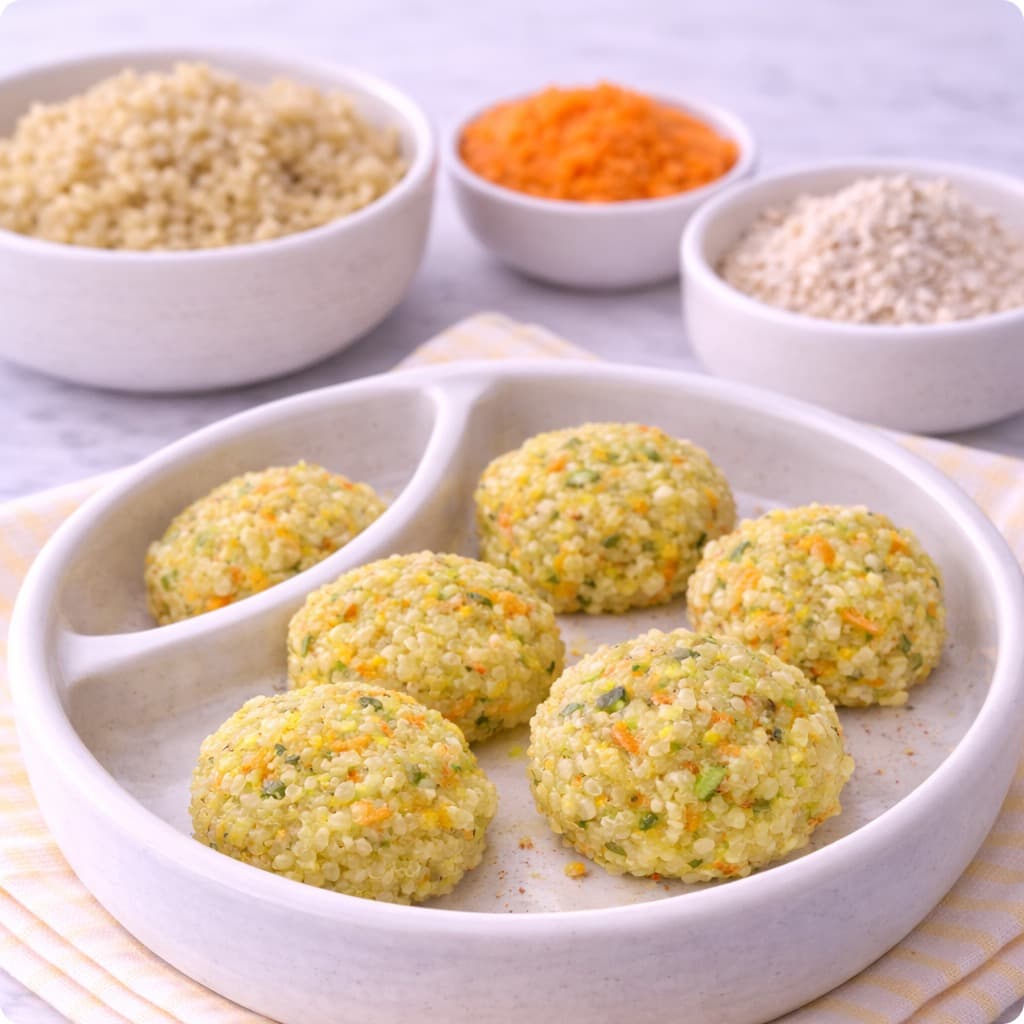
Quinoa Veggie Patties
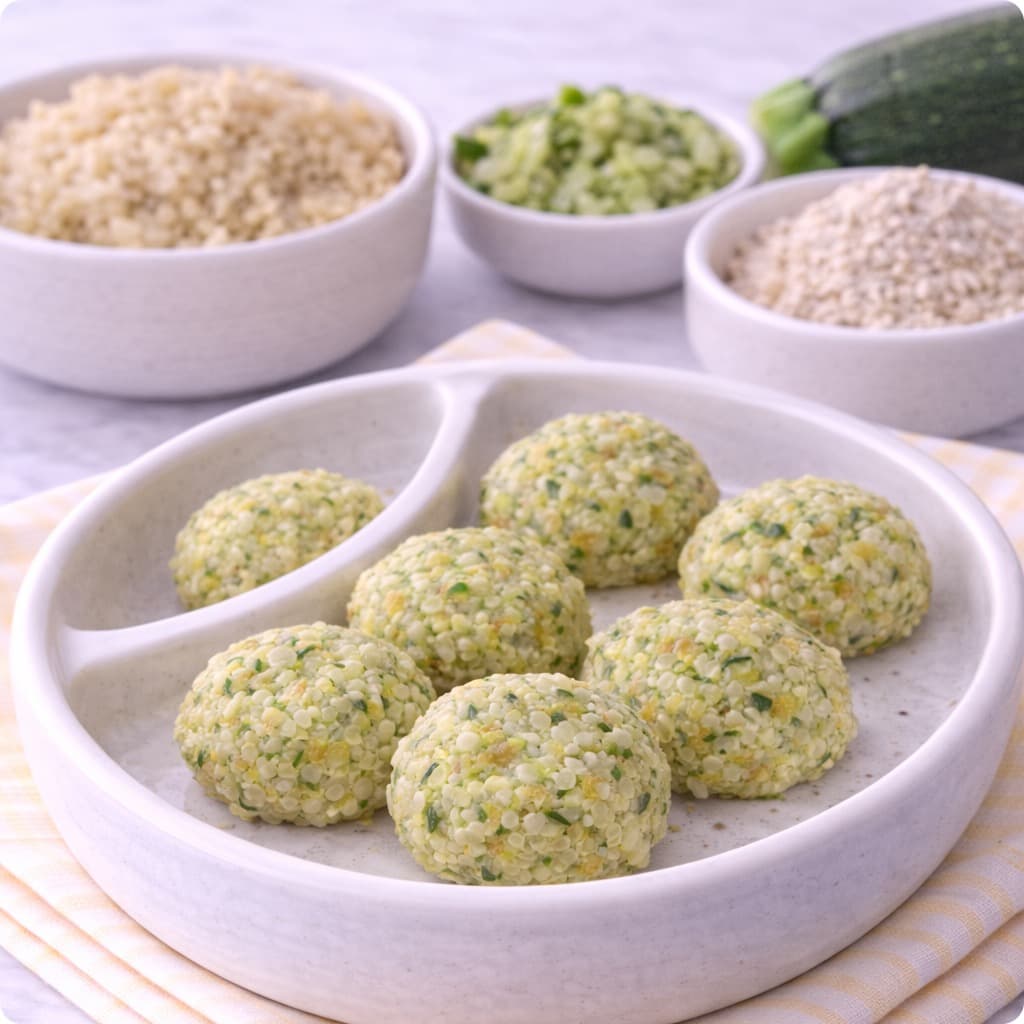
Zucchini Quinoa Balls
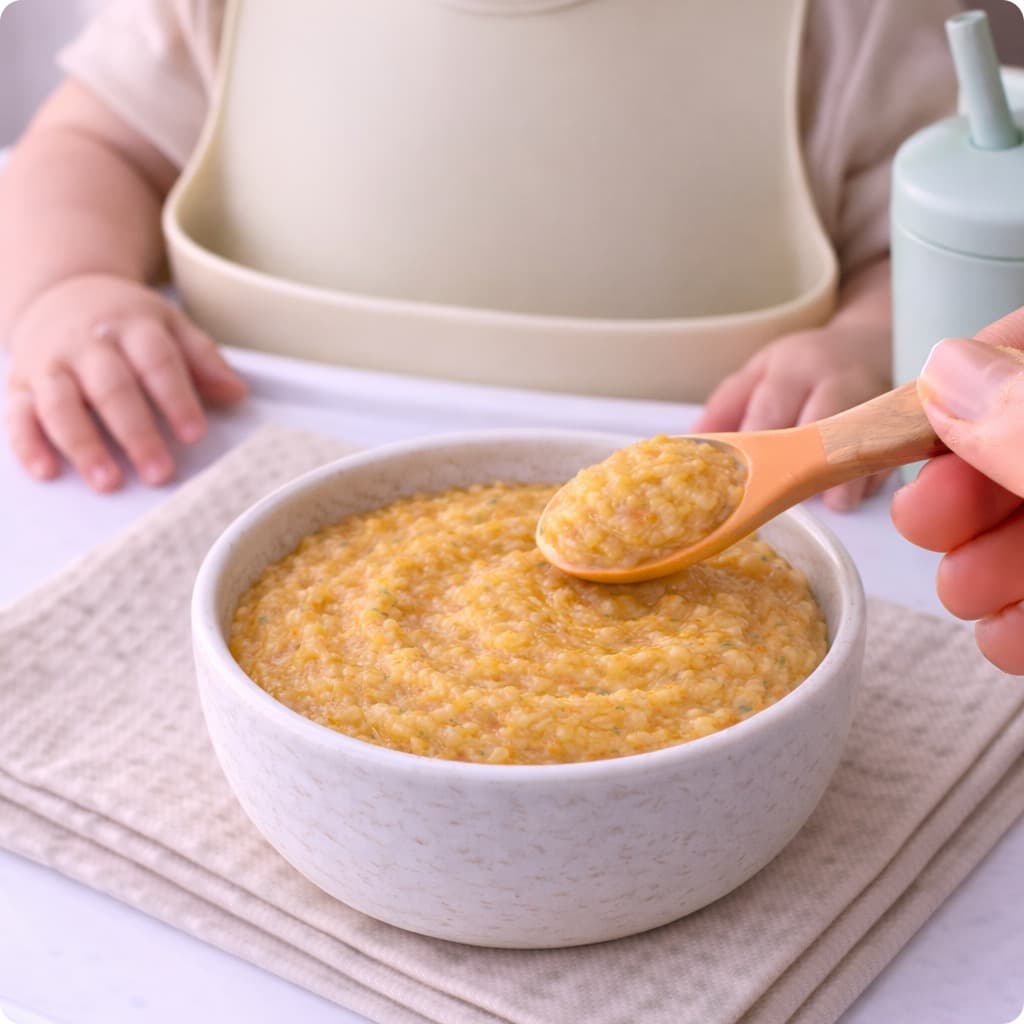
Chicken, Squash & Quinoa Bowl
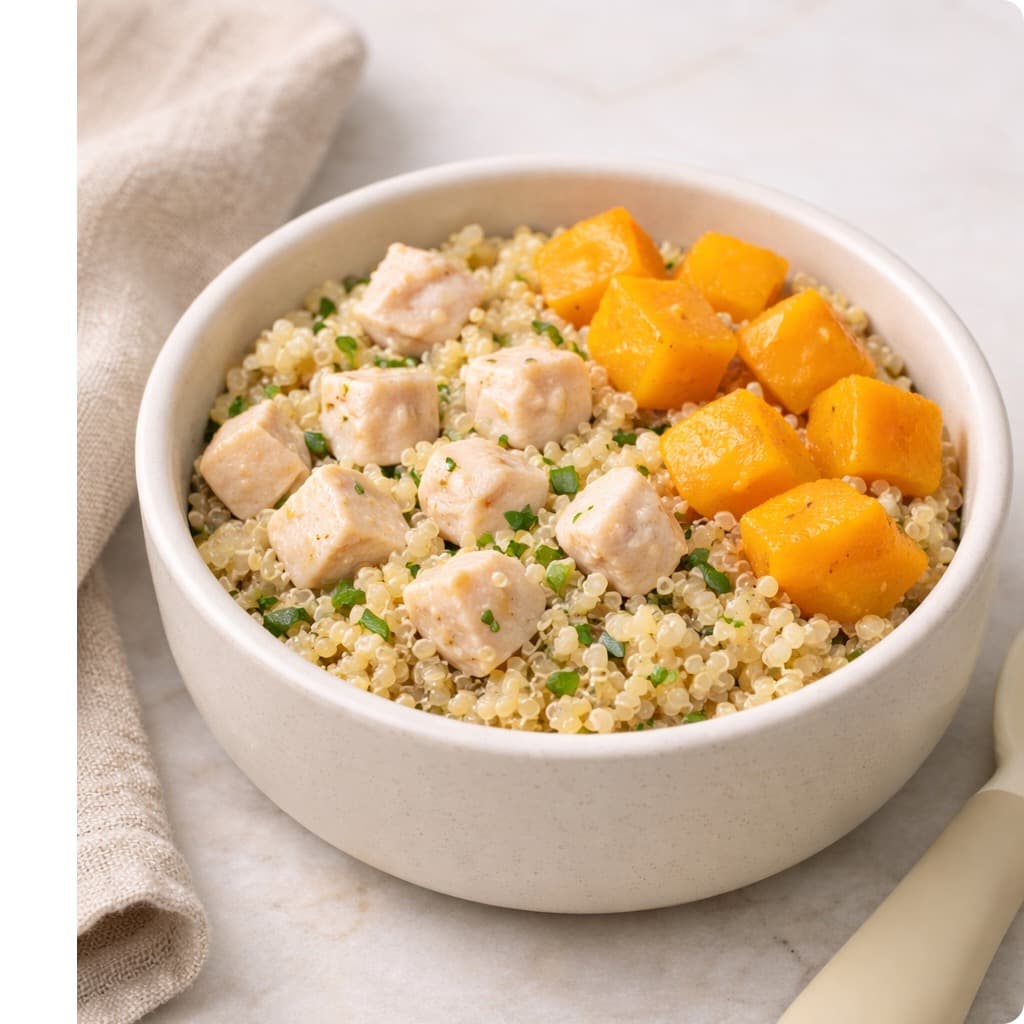
Turkey, Quinoa & Pumpkin Bowl

Sweet Potato + Quinoa + Olive Oil Bowl
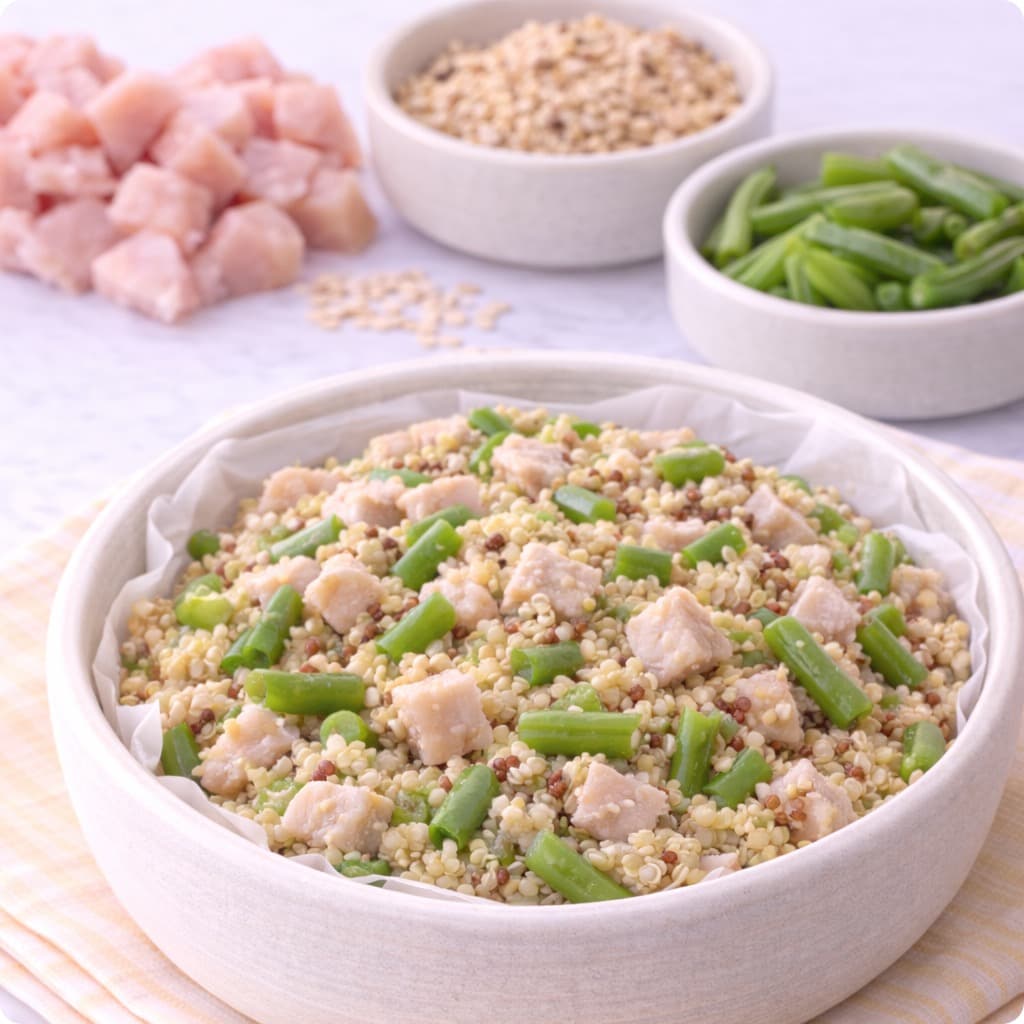
Turkey + Quinoa + Green Beans Soft Bowl
Related guides
Frequently asked questions
Can a 6-month-old eat quinoa?
Yes, once developmentally ready for solids. Offer fully cooked tender quinoa in a moist mash or porridge.
Should quinoa be rinsed before cooking?
Follow the product instructions. Rinsing helps remove bitter surface saponins on some products, but pre-rinsed quinoa may not need it.
Is quinoa a good source of iron for a baby?
It contains some iron, but amounts and absorption vary. Continue offering a range of iron-rich complementary foods.
Is quinoa gluten-free?
Plain quinoa is naturally gluten-free. Check manufactured products for wheat ingredients and possible cross-contact when gluten avoidance matters medically.
Can a baby eat dry, fluffy quinoa?
Prefer a moist texture for early eaters. Fully cooked grains mixed into puree or porridge are easier to offer and assess than dry, loose grains.
Can I mix quinoa with vegetables or yogurt?
Yes, if the other foods have already been introduced and are suitable. Keep the mixture soft and moist; yogurt is a milk allergen.
Does quinoa replace meat or iron-fortified cereal?
No. Quinoa can add variety, but it does not supply the same amounts or bioavailability of every nutrient as other iron-rich foods.
Sources & References
This guide is informed by current guidelines from leading health organizations:
- ●NHS - Feeding your baby from around 6 months NHS
- ●CDC - When, What, and How to Introduce Solid Foods CDC
- ●NHS - Your Baby's First Solid Foods NHS
- ●CDC — Choking Hazards (reviewed March 2026) CDC
