When can babies eat barley?
Most babies are ready to start solids around 6 months, once they can sit up with support, hold their head steady, and show interest in food. Barley is a great early grain to offer because it is easy to cook down into a soft, spoonable texture that suits new eaters.
Barley contains gluten, the same protein found in wheat, rye, and related grains. Like other common allergens, gluten should not be delayed once your baby has started solids. Introducing it early, alongside a variety of other foods, is part of standard guidance, so there is no reason to hold barley back as your baby explores new tastes.
How to serve barley safely
From 6 to 9 months, cook barley until it is very soft, then mash it or blend it into a smooth porridge. You can stir it into pureed fruit or vegetables, or thin it with breast milk, formula, or water to a texture your baby can manage. For babies doing finger foods, mix cooked barley into soft patties or thick mashes that hold together and are easy to pick up.
From 9 to 12 months and beyond, you can offer slightly thicker, lumpier textures as your baby builds chewing skills. Keep individual grains soft and avoid serving barley in a dry, sticky clump that could be hard to swallow. Always seat your baby upright and stay within arm's reach while they eat.
Nutritional benefits for babies
- 💚Provides dietary fiber, including beta-glucan, which supports healthy digestion
- 💚Delivers complex carbohydrates for steady, lasting energy
- 💚Contains plant-based protein to support growth
- 💚Offers minerals such as iron, magnesium, and zinc
- 💚Supplies B vitamins, including niacin and B6, that help the body use energy from food
- 💚Naturally low in fat and easy to combine with iron-rich foods
Safety considerations
- ✓Barley contains gluten, the same allergen found in wheat. Do not delay it once solids begin, but introduce it on its own and watch for any reaction.
- ✓If you mix barley into recipes, be aware of other common allergens you add, such as dairy, sesame, or tree nuts. Introduce each new allergen one at a time so you can spot the source of any reaction.
- ✓Cook barley until very soft and mash or puree it to a texture your baby can swallow easily. Avoid serving dry, sticky clumps of grain.
- ✓If you stir in nut or seed butters, use thin layers blended into the porridge rather than thick spoonfuls, which can be a choking hazard.
- ✓Always supervise your baby while eating and keep them seated upright, never leaning back or moving around.
Recipes with barley for babies

Pear Barley Porridge
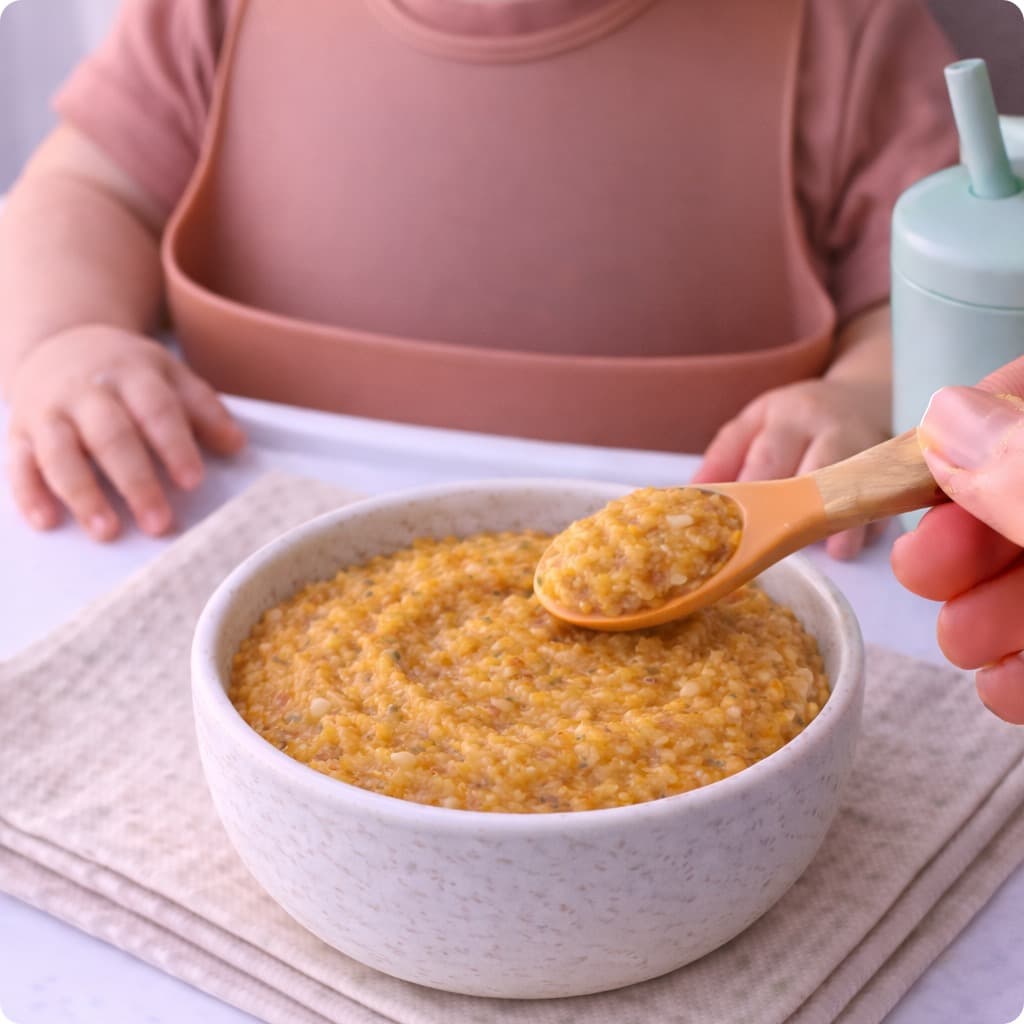
Beef, Pumpkin & Barley Mash
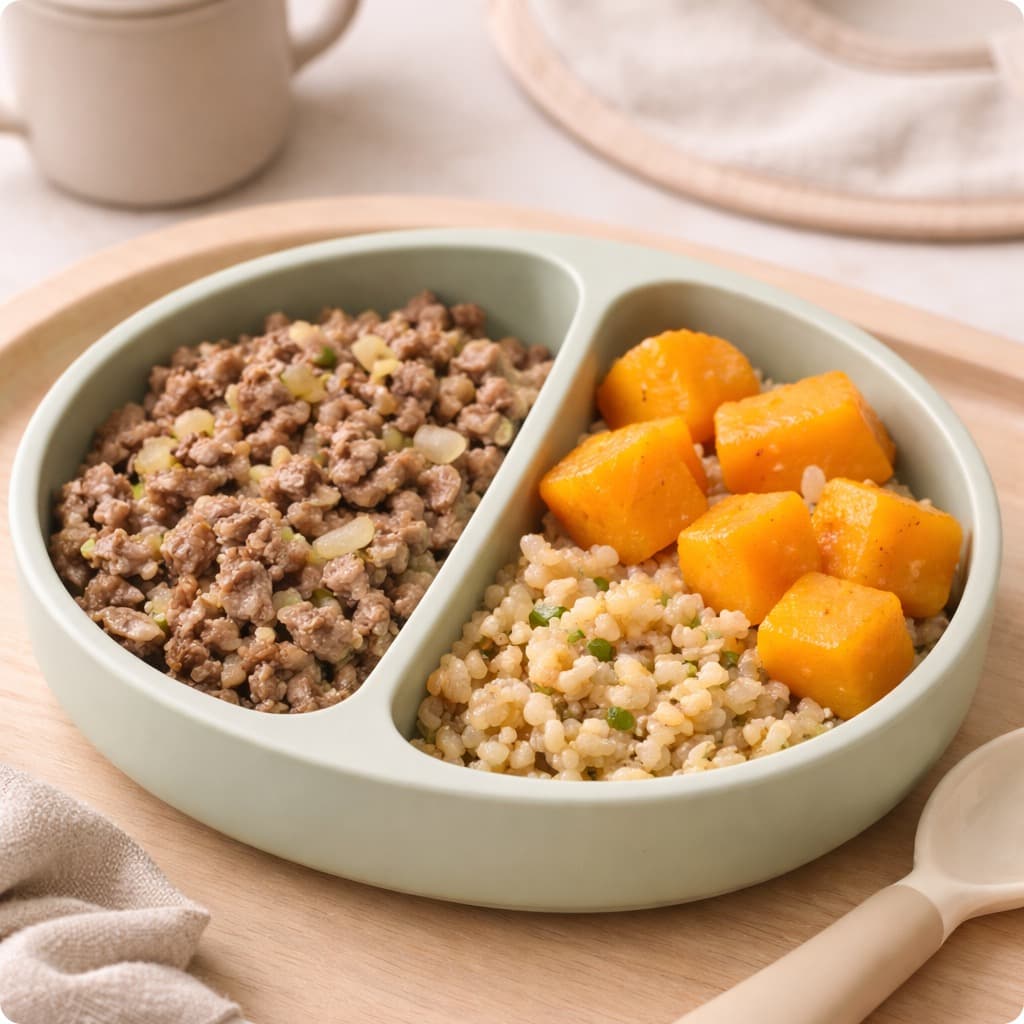
Beef, Pumpkin & Barley Bowl
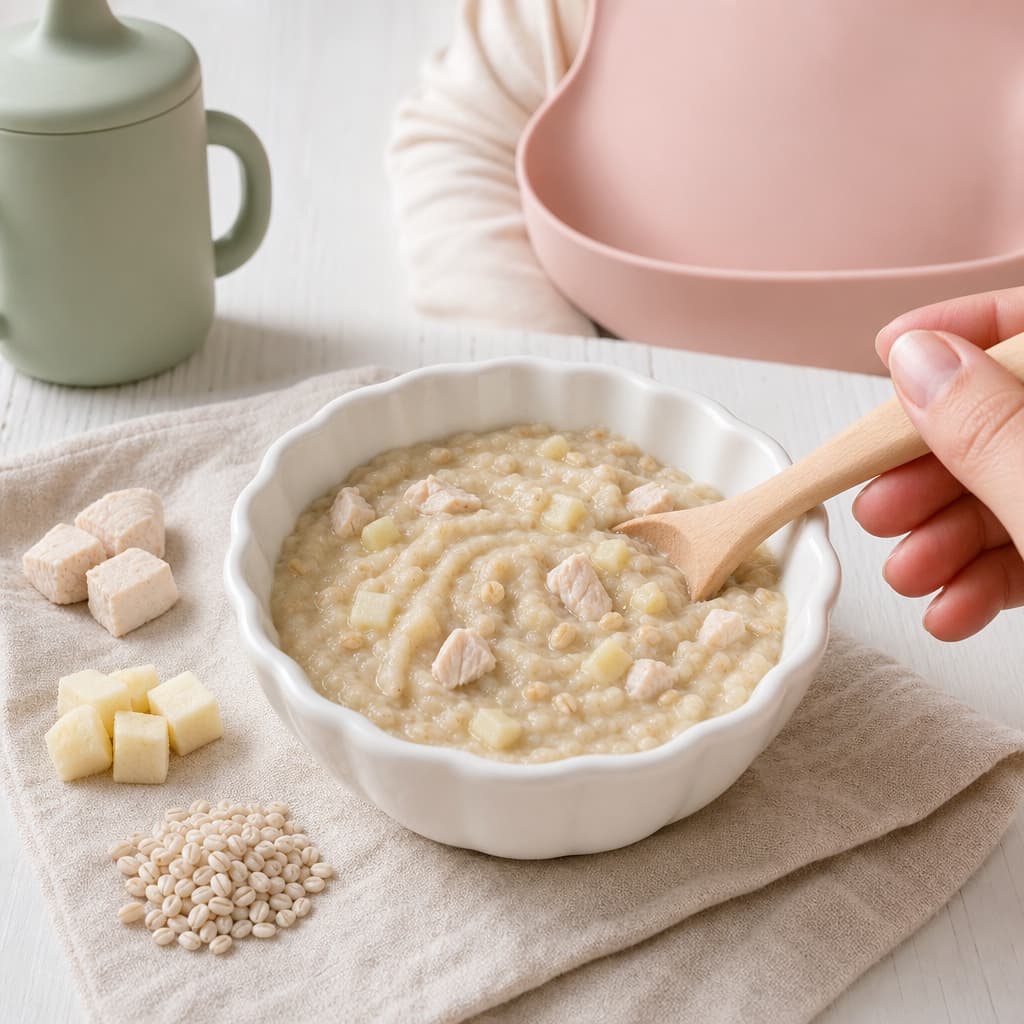
Chicken Parsnip Barley Bowl
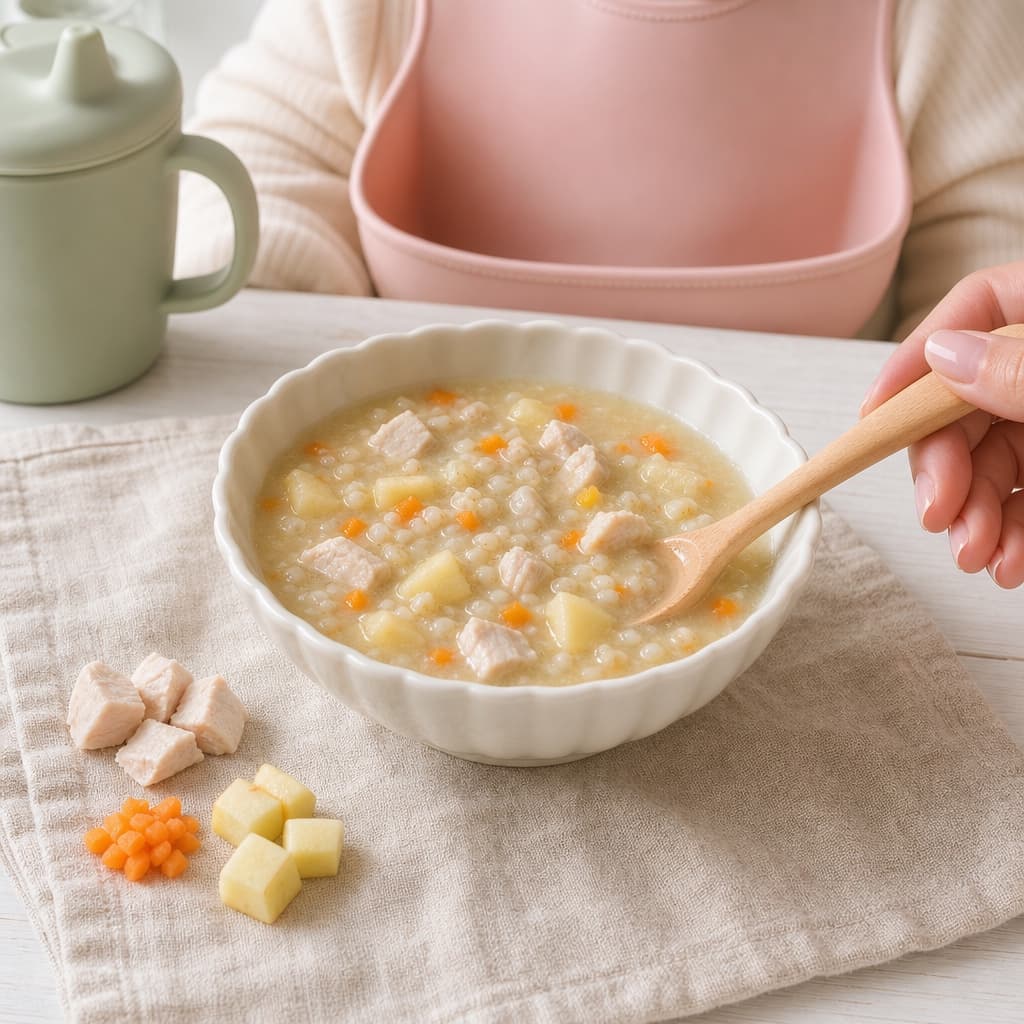
Chicken Apple Barley Soup
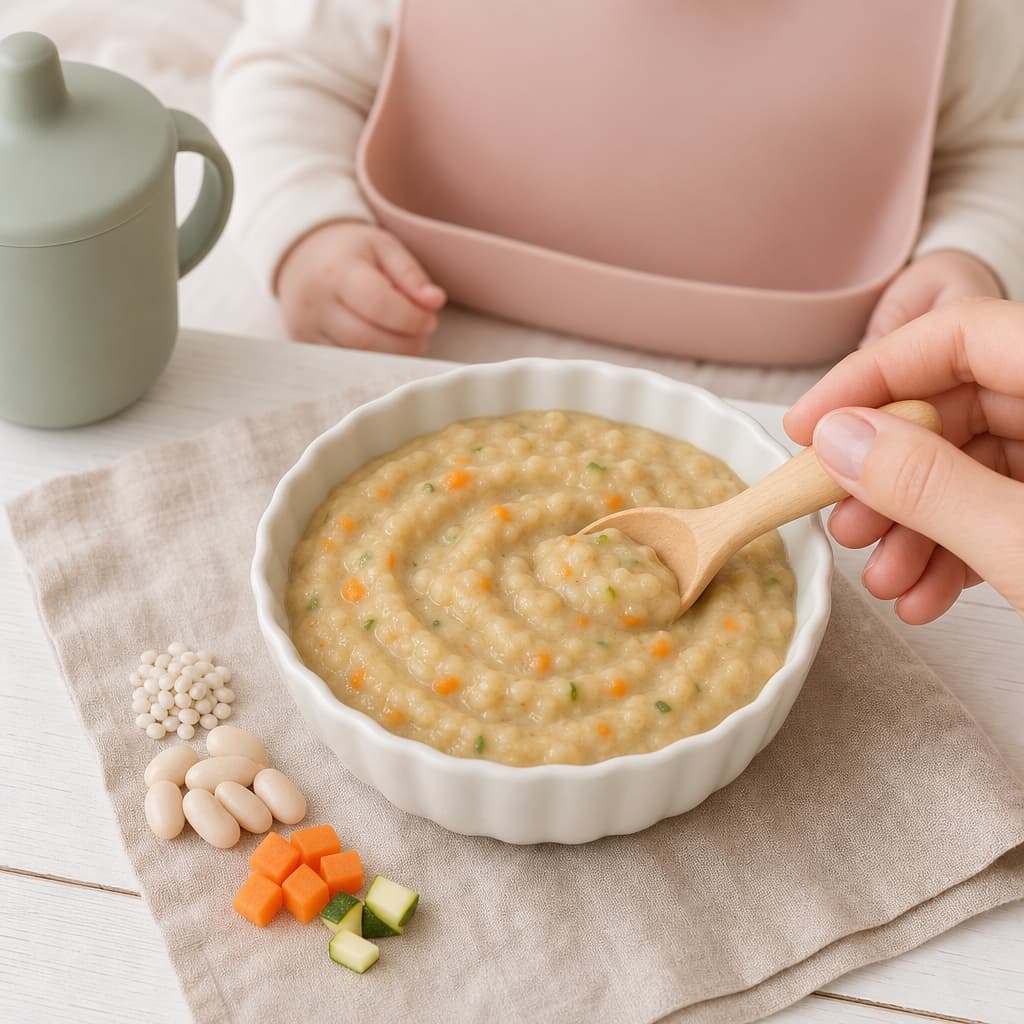
Mild Bean Barley Stew
Frequently asked questions
Is barley a common allergen for babies?
Barley itself is not one of the top allergens, but it contains gluten, the same protein found in wheat, which is a common allergen. Offer barley early rather than delaying it, and watch for any signs of a reaction the first few times.
Does barley contain gluten?
Yes, barley naturally contains gluten. If your baby has a known gluten intolerance or a family history of celiac disease, talk with your pediatrician before introducing barley and other gluten-containing grains.
Can I give my baby barley water?
Plain water and milk feeds are best for babies under 12 months, so there is no need to offer barley water as a drink. Babies get the nutrition from barley by eating it cooked and mashed rather than in liquid form.
How do I cook barley for my baby?
Rinse the barley, then simmer it in plenty of water or unsalted stock until it is very soft, which can take 30 to 50 minutes depending on the type. Drain it and mash or blend it to a smooth texture, thinning with breast milk, formula, or water as needed.
What is the difference between pearl and hulled barley for babies?
Pearl barley has the outer bran removed, so it cooks faster and turns very soft and creamy, which is convenient for purees. Hulled barley keeps more fiber and nutrients but takes longer to cook, so simmer it until fully tender before mashing.
Can babies have barley every day?
Barley can be part of a varied diet, but it is best to rotate it with other grains like oats and rice so your baby gets a range of nutrients. Variety also helps expose your baby to different textures and tastes.
How much barley should I give my baby?
Start with a teaspoon or two of soft, mashed barley and let your baby's appetite guide the amount. Babies are good at regulating how much they eat, so offer small portions and follow their hunger and fullness cues.
Get recipes + a feeding plan for your baby
Save this food to your baby's list, get age-appropriate recipes and follow a personalized feeding schedule - 350+ baby-safe meals in the app.
verifiedSources & References
This guide is informed by current guidelines from leading health organizations: