What do you want to know?
Deep dive
Kiwi →Kiwi for babies: guidance on timing, prepping and cutting to reduce acidity and choking risk, vitamin C benefits, allergy notes and gentle recipes to try at home.
Nutrition highlights
- Vitamin C - exceptionally high; supports immunity and helps iron absorption.
- Fibre - supports healthy digestion (kiwi is known to help keep things moving).
- Vitamin K - supports bone health and blood clotting.
- Folate - supports growth and cell development.
Safety quick tips
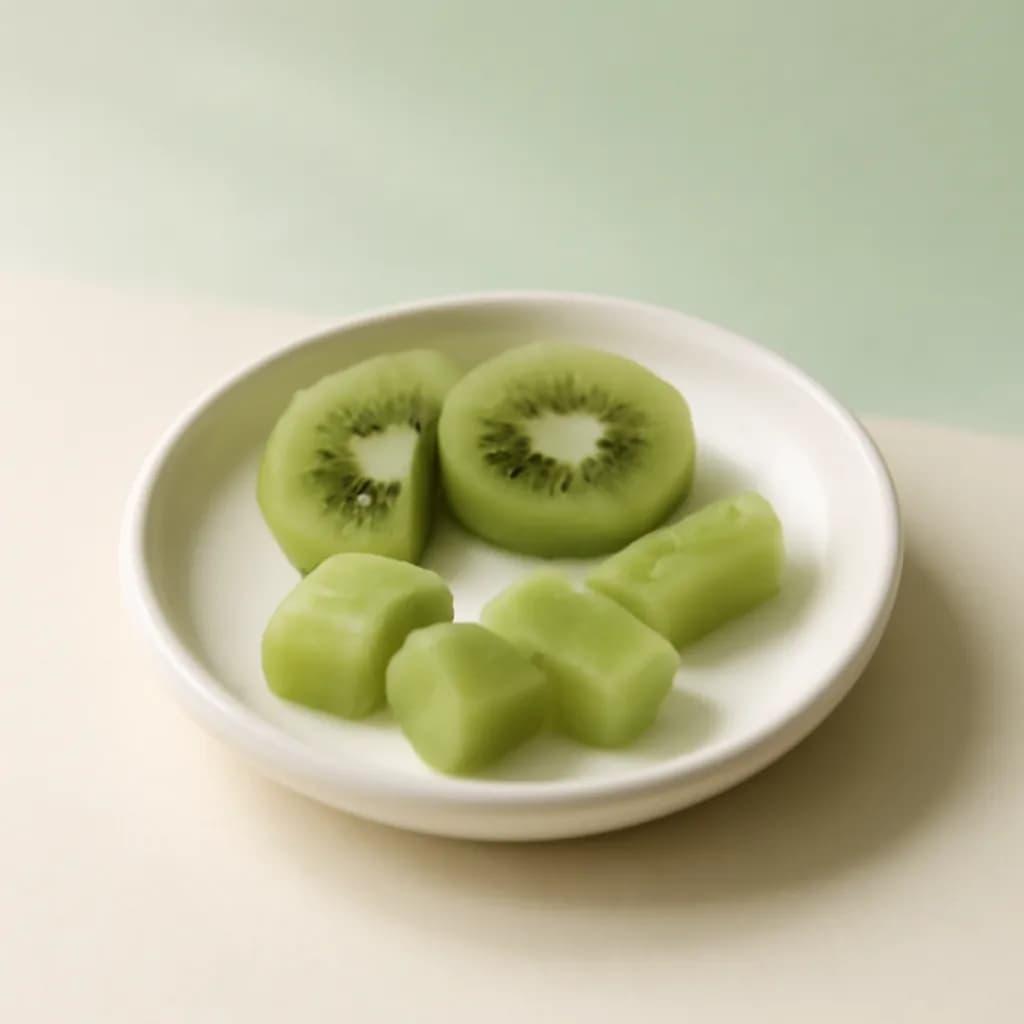
- Choose ripe kiwi that's soft and sweet; remove the skin (and the tough core if firm) for younger babies.
- Introduce kiwi on its own and watch for any reaction - it's an occasional allergen.
- Kiwi's acidity can cause a harmless red rash around the mouth; wipe the area and it usually settles.
Common questions
Can babies eat Kiwi?
Yes. Babies can eat Kiwi starting around 6 months when they begin solid foods. It should be served in a safe texture and size for babies.
When can babies eat Kiwi?
Babies can eat Kiwi from around 6 months when starting solids. Babies can eat kiwi from around 6 months, once they're starting solids. Choose ripe kiwi that yields to gentle pressure; under-ripe kiwi is firm and very tart. Kiwi is a less common allergen and its acidity may cause a temporary red rash around the mouth (not a true allergy) - introduce on its own and watch the first few times.
Is Kiwi a choking hazard for babies?
Kiwi is generally safe for babies when prepared properly. 6–9 months: Cut ripe kiwi in half and let your baby scoop with a spoon, or offer peeled wedges and spears they can hold. 6–9 months: Mash or purée ripe kiwi; mix with banana or yoghurt to soften the tartness. 9–12 months: Small peeled kiwi pieces as the pincer grasp develops. 12+ months: Kiwi in fruit salads, smoothies, and on top of porridge or yoghurt.
Is Kiwi a common allergen?
Some babies may be allergic to Kiwi. Introduce Kiwi carefully when babies start solids and watch for reactions.
How should Kiwi be served to babies?
6–9 months: Cut ripe kiwi in half and let your baby scoop with a spoon, or offer peeled wedges and spears they can hold. 6–9 months: Mash or purée ripe kiwi; mix with banana or yoghurt to soften the tartness. 9–12 months: Small peeled kiwi pieces as the pincer grasp develops. 12+ months: Kiwi in fruit salads, smoothies, and on top of porridge or yoghurt.
What nutrients does Kiwi provide for babies?
Kiwi provides nutrients like potassium, fibre, vitamin C, iron that support babies' growth and development.
How long can I store Kiwi for babies?
Cook Kiwi to a safe temperature and store it in the refrigerator for up to 2 days, or freeze in single-serving portions for up to 1 month to preserve nutrients.
Should I buy organic Kiwi for my baby?
Organic Kiwi isn't strictly necessary for babies, but some families prefer to reduce pesticide exposure. Wash conventional produce thoroughly. Variety and freshness matter most.