When can babies eat chickpeas?
Most babies are ready for solid foods, including chickpeas, at around 6 months of age. Look for readiness signs rather than focusing on the calendar alone: your baby can sit up with little or no support, holds their head steady, shows interest in your food, and can move food to the back of the mouth to swallow. Chickpeas are a soft, mild legume that mashes easily, which makes them a friendly choice for early eaters when prepared correctly.
Chickpeas are not one of the common food allergens, and there is no reason to delay them past 6 months. In fact, current pediatric guidance encourages introducing a wide variety of foods, including common allergens like peanut and egg, around the same time you start solids, rather than holding any of them back. When you introduce chickpeas, offer them on their own for a couple of days so you can watch how your baby reacts before mixing them into more complex meals.
How to serve chickpeas safely
From about 6 to 9 months, serve chickpeas as a completely smooth puree or a soft, well-mashed paste with no whole or firm pieces. You can blend cooked, very soft chickpeas with a little water, breast milk, formula, or your baby's usual cooking liquid to reach a loose, spoonable texture. Hummus made without added salt is another easy way to offer chickpeas at this stage, either on a preloaded spoon or spread thinly on a soft strip of toast your baby can hold.
From around 9 to 12 months and up, as your baby develops a pincer grasp, you can offer chickpeas that have been cooked until very soft and then flattened or gently smashed between your fingers so they are no longer round and firm. Never serve whole, firm chickpeas to a baby, because their round shape and size make them a choking hazard. Always smash, mash, or thin them, offer just a few at a time, and let your baby practice self-feeding under close supervision.
Nutritional benefits for babies
- 💚Plant-based protein to support growth and development
- 💚Iron, an important nutrient for babies starting at 6 months
- 💚Dietary fiber that supports healthy digestion
- 💚Folate, which helps with cell growth and development
- 💚Magnesium and other minerals for overall nutrition
- 💚Complex carbohydrates for steady, lasting energy
Safety considerations
- ✓Chickpeas are not a common allergen, but as with any new food, offer them on their own for a couple of days and watch for any reaction.
- ✓Whole and firm chickpeas are a choking hazard because of their round shape; always mash, puree, or flatten them well before serving.
- ✓Cook chickpeas until they are very soft so they squash easily; canned chickpeas should be low-sodium or rinsed well, and avoid adding salt.
- ✓Introduce only one new food at a time so you can tell which food caused any reaction.
- ✓Always stay within arm's reach and supervise your baby closely during every meal, and make sure they are seated upright while eating.
Recipes with chickpeas for babies
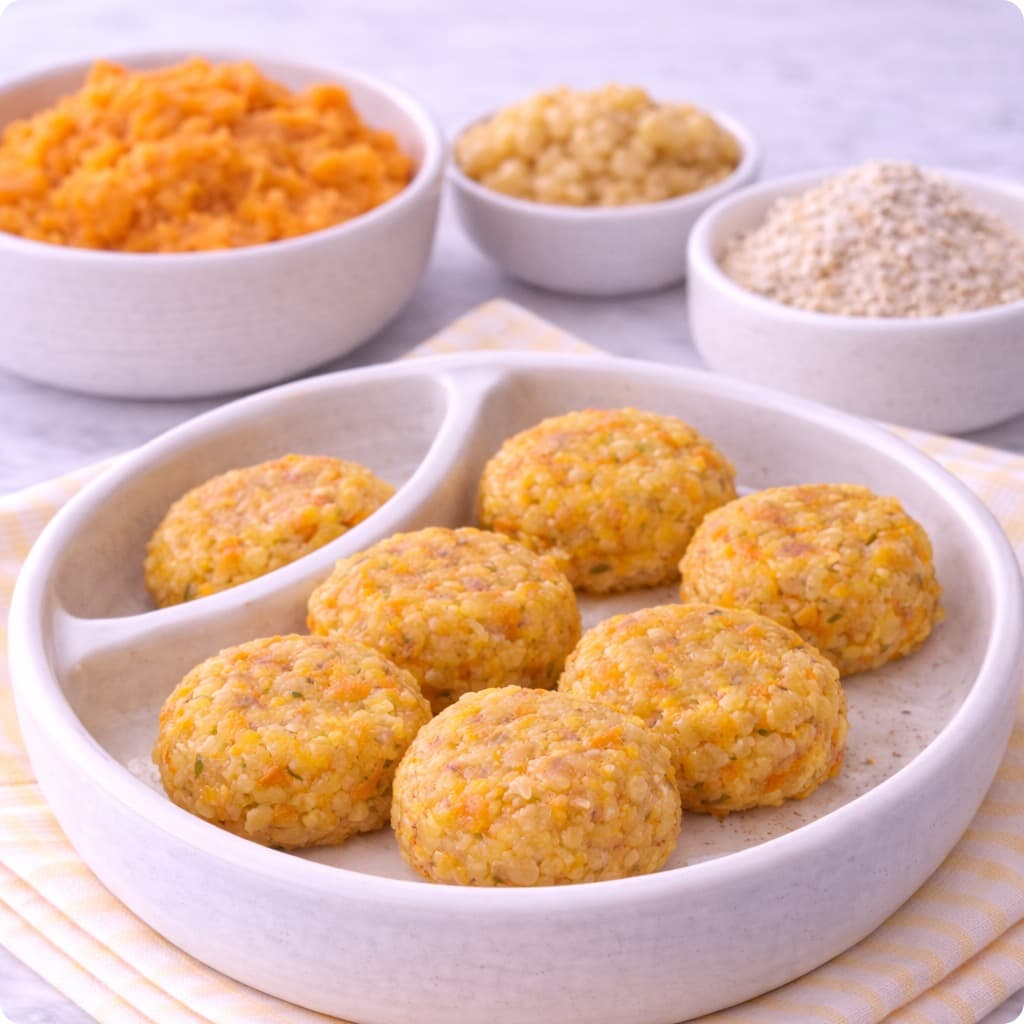
Sweet Potato Chickpea Patties
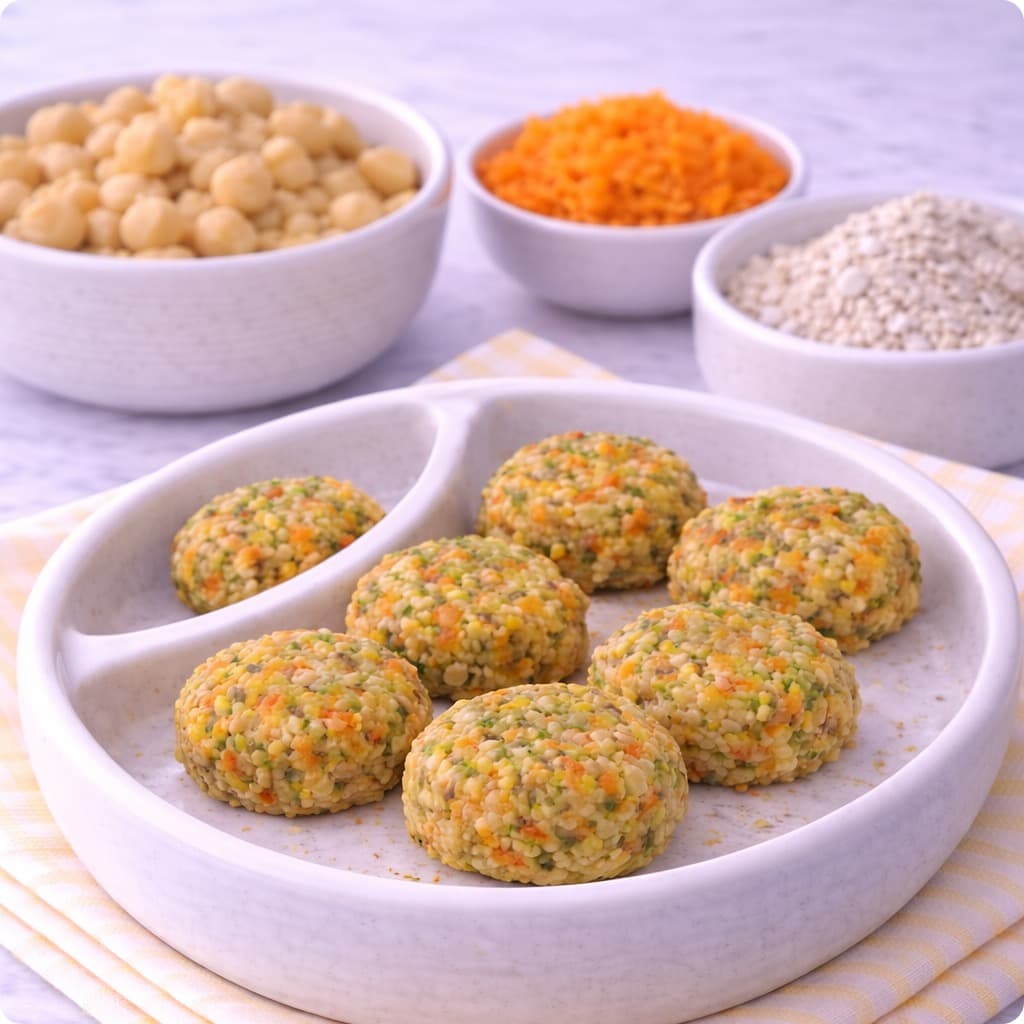
Baby Falafel Patties
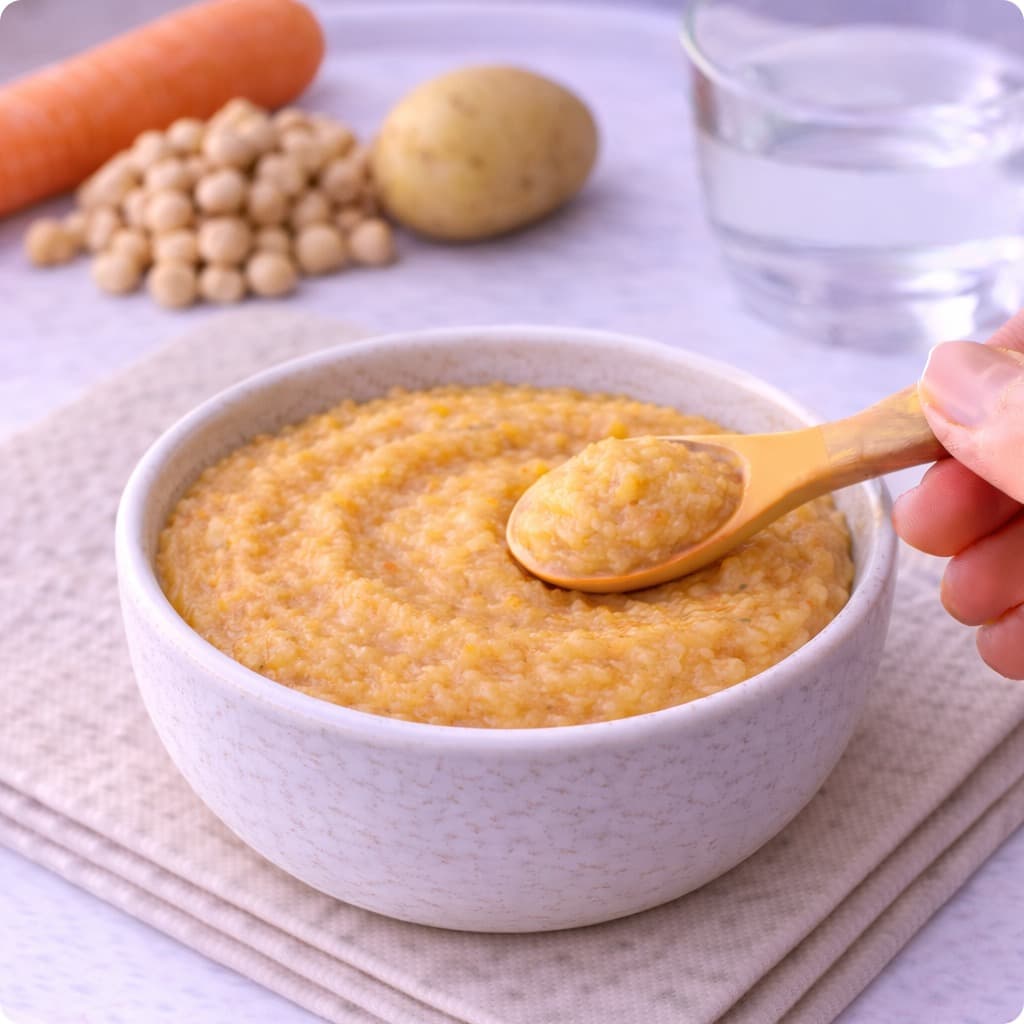
Chickpeas, Carrot & Potato Mash
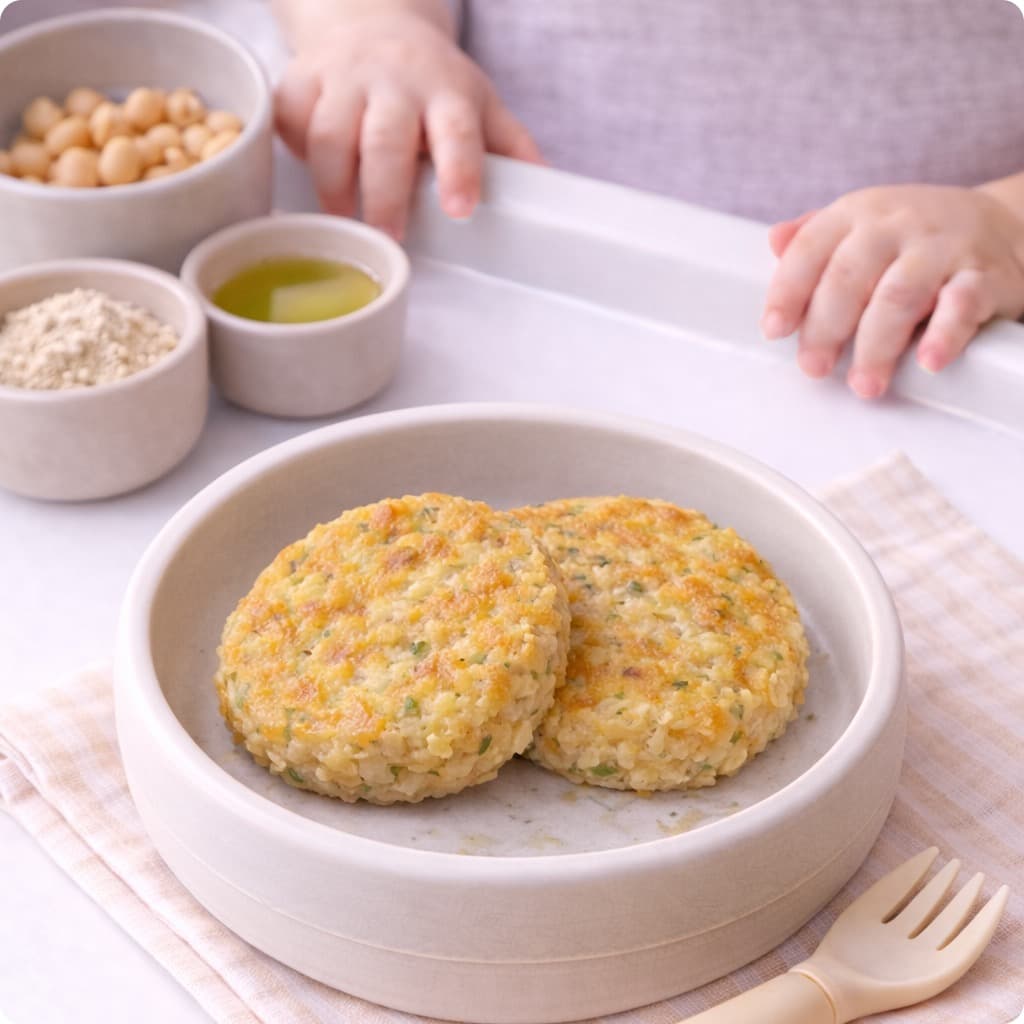
Chickpea BLW Patties
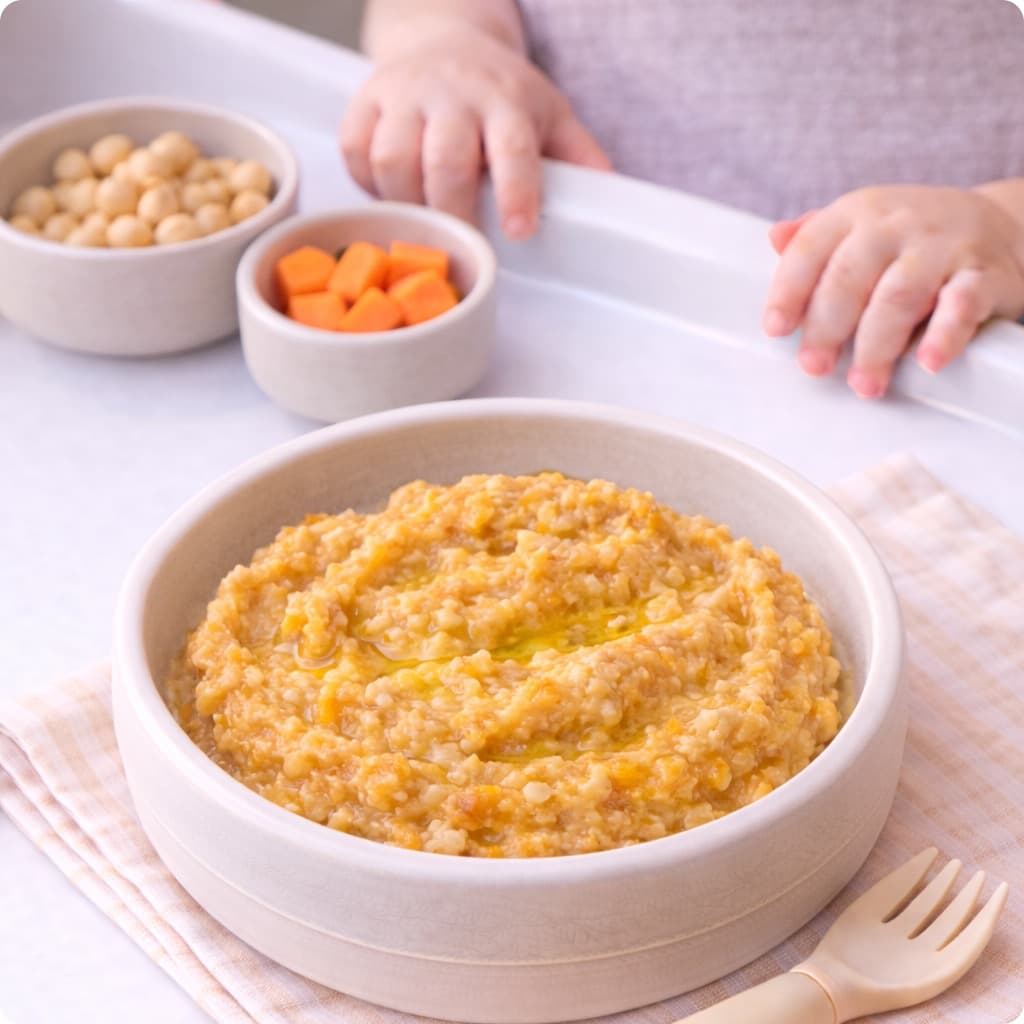
Middle Eastern Chickpea + Carrot Mash
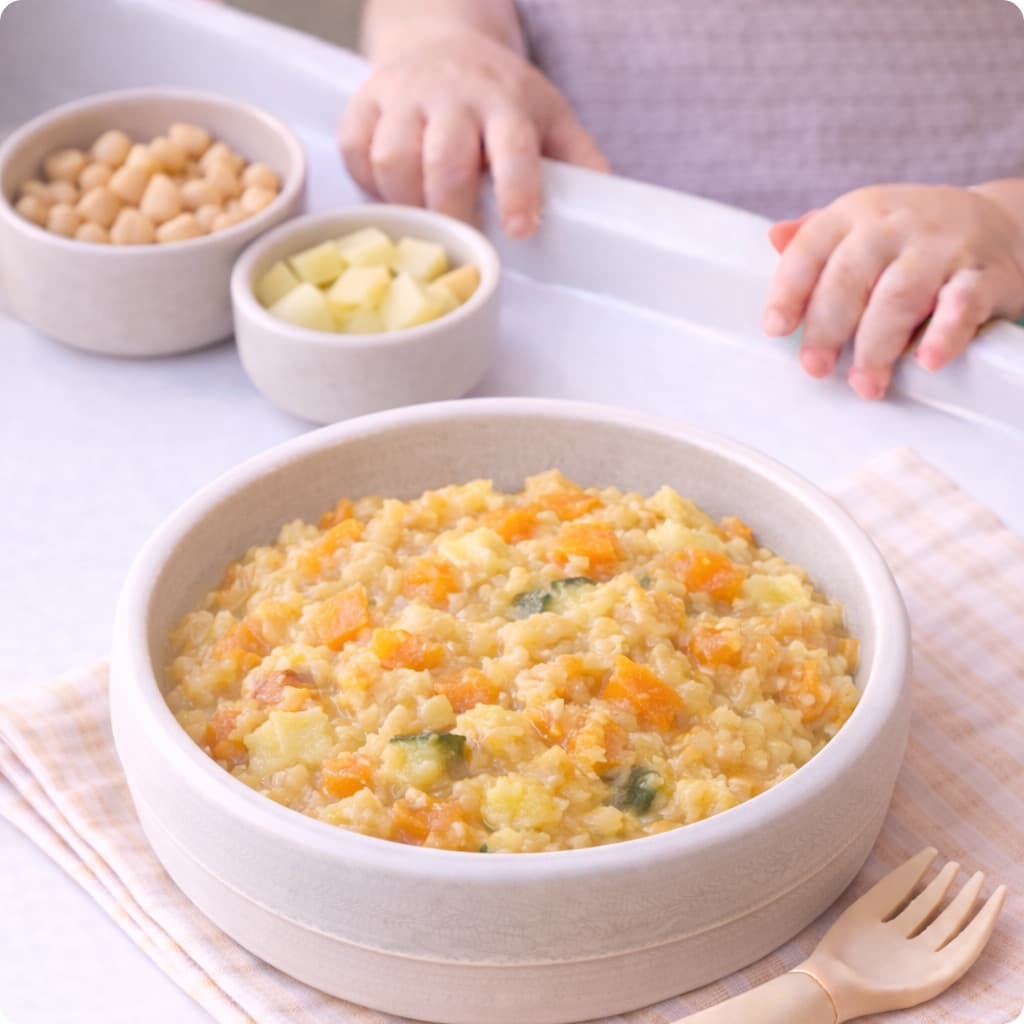
Chickpeas + Carrot + Potato Mash
Frequently asked questions
Are chickpeas a choking hazard for babies?
Whole, firm chickpeas can be a choking hazard because they are round, smooth, and bite-sized. To make them safe, cook chickpeas until very soft and then mash them, blend them into a smooth puree or hummus, or flatten each one before offering it. Always supervise your baby while they eat.
Can chickpeas cause an allergic reaction in babies?
Chickpeas are not among the most common food allergens, so allergic reactions are uncommon. Even so, it is wise to introduce them on their own for a couple of days and watch for signs like hives, swelling, vomiting, or trouble breathing. If you notice any concerning symptoms, stop the food and contact your pediatrician.
Can babies eat hummus?
Yes, babies can eat hummus from around 6 months as long as it is made without added salt. Hummus is a smooth way to serve chickpeas and can be offered on a preloaded spoon or spread thinly on soft toast strips. Note that store-bought hummus is often high in sodium, so a homemade or low-salt version is best for babies.
Can I use canned chickpeas for my baby?
Yes, canned chickpeas are convenient and fine for babies if you choose a no-salt-added variety or rinse them thoroughly to reduce sodium. Cook or simmer them until they are very soft, then mash, puree, or flatten them before serving. Always avoid adding salt to your baby's food.
How do I serve chickpeas for baby-led weaning?
For baby-led weaning, cook chickpeas until very soft and then gently flatten or smash each one so it is no longer round and firm, which removes the choking risk. You can also offer chickpea-based foods like low-salt hummus spread on a soft toast strip. Start with just a few at a time and supervise closely.
Do chickpeas cause gas in babies?
Like other legumes, chickpeas contain fiber and certain carbohydrates that can sometimes lead to gas as your baby's digestive system adjusts. This is usually harmless and tends to settle as your baby gets used to eating them. Starting with small amounts can help make the introduction gentler.
How much chickpea should I give my baby?
Start with a small spoonful of well-mashed or pureed chickpeas and let your baby's appetite guide how much they eat. There is no need to push a specific amount; some days babies eat more and some days less. Offer chickpeas as part of a varied diet alongside other foods.
Get recipes + a feeding plan for your baby
Save this food to your baby's list, get age-appropriate recipes and follow a personalized feeding schedule - 350+ baby-safe meals in the app.
verifiedSources & References
This guide is informed by current guidelines from leading health organizations: