Can babies eat spinach?
Last updated October 2026
It depends on where you live.
The NHS includes cooked spinach among vegetables offered when babies start solids around 6 months, while Spain's food-safety agency AESAN recommends avoiding spinach and Swiss chard before the first birthday because these leafy greens can contain nitrates. Follow your national advice rather than assuming one starting age applies everywhere. When spinach is appropriate, serve it cooked, finely chopped or pureed, and store it promptly.

When can babies eat spinach? Guidance differs by country
In the UK, the NHS lists spinach alongside broccoli and cauliflower as a possible first vegetable from around 6 months, provided the baby is developmentally ready. That does not establish a global minimum age: national recommendations reflect dietary patterns and contaminant exposure as well as feeding readiness.
In Spain, AESAN recommends avoiding spinach and Swiss chard during the first year. Its published nitrate guidance says that if these are nevertheless included between 6 and 12 months, the combined amount should not exceed 35 g per day. This is a national upper limit in an exception to an avoid recommendation, not a recommended serving. Follow the stricter local recommendation where it applies.
Prepare spinach to a manageable texture
Where local guidance permits spinach for your baby's age, wash it thoroughly, cook until tender, and finely chop or blend it into a moist food. Whole wilted leaves can cling together in the mouth. Mix a modest amount into an already tolerated mashed food rather than serving a large mound of spinach alone.
Avoid leaving cooked spinach or spinach puree at room temperature. Cool and refrigerate promptly for use the same day, or freeze promptly, following your local food-safety recommendations. Spain's AESAN also notes that washing, cooking and discarding the cooking water can help reduce nitrate content, but these steps do not override its infant-age recommendation.
Nitrates, texture and storage
Check national guidance: UK NHS and Spanish AESAN differ on spinach before age one. Do not present a single global 'safe age'.
AESAN recommends avoiding spinach and Swiss chard under one year; its 35 g/day figure for 6–12 months is an exception ceiling, not a target.
Cook and chop spinach so the leaves cannot form large, chewy clumps; supervise your baby seated upright.
Cool prepared spinach promptly and refrigerate or freeze rather than leaving cooked leafy greens at room temperature.
Do not rely on spinach as the principal source of iron for a baby beginning complementary foods.
What spinach contributes, and what it does not
Spinach provides folate and vitamin K and contains carotenoids.
It contains non-haem plant iron, but some of that iron is not readily absorbed; spinach alone is not a dependable way to meet an infant's iron requirements.
For iron at this stage, include appropriately prepared meat, fish, beans or iron-fortified foods according to your baby's feeding needs.
Leafy vegetables can contribute variety where suitable, but different countries may recommend choosing alternatives such as broccoli for young infants.
Recipes with spinach for babies
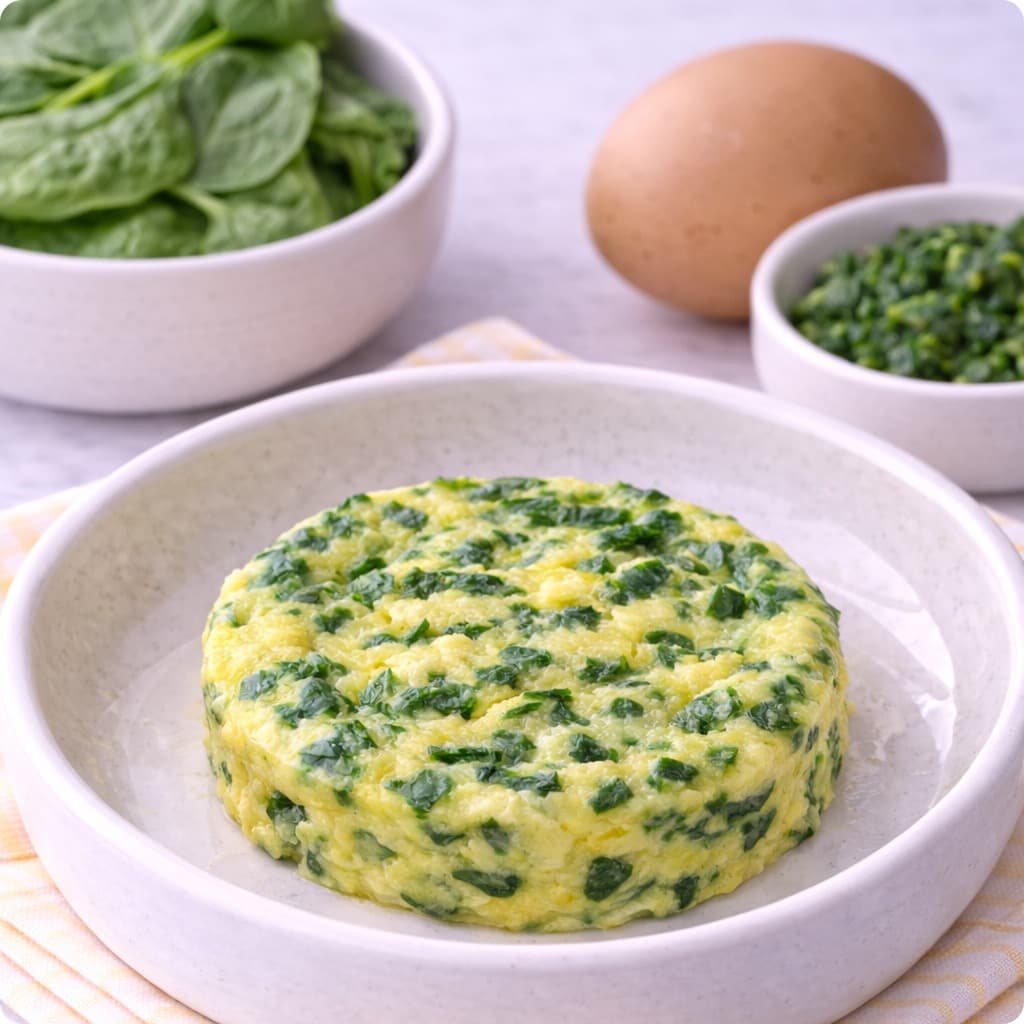
Spinach Egg Mini Omelette
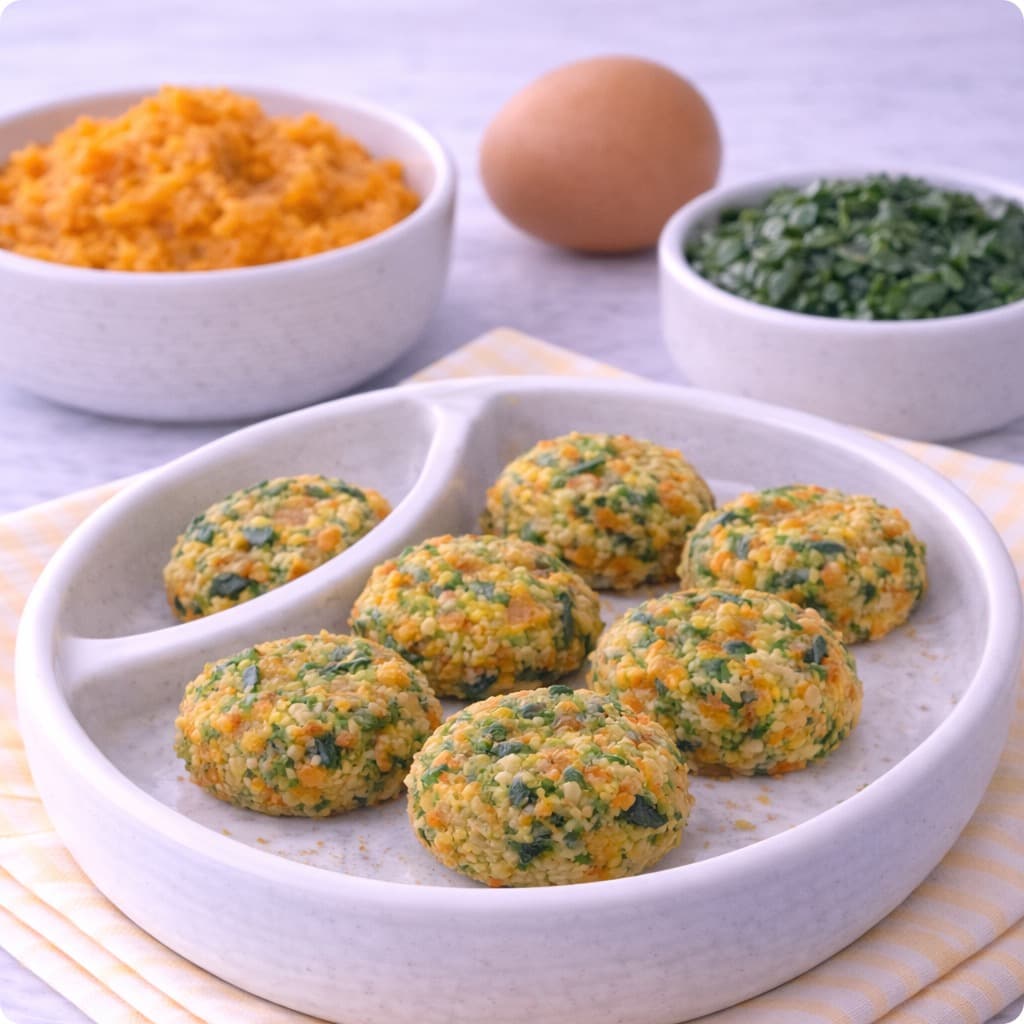
Sweet Potato Spinach Fritters
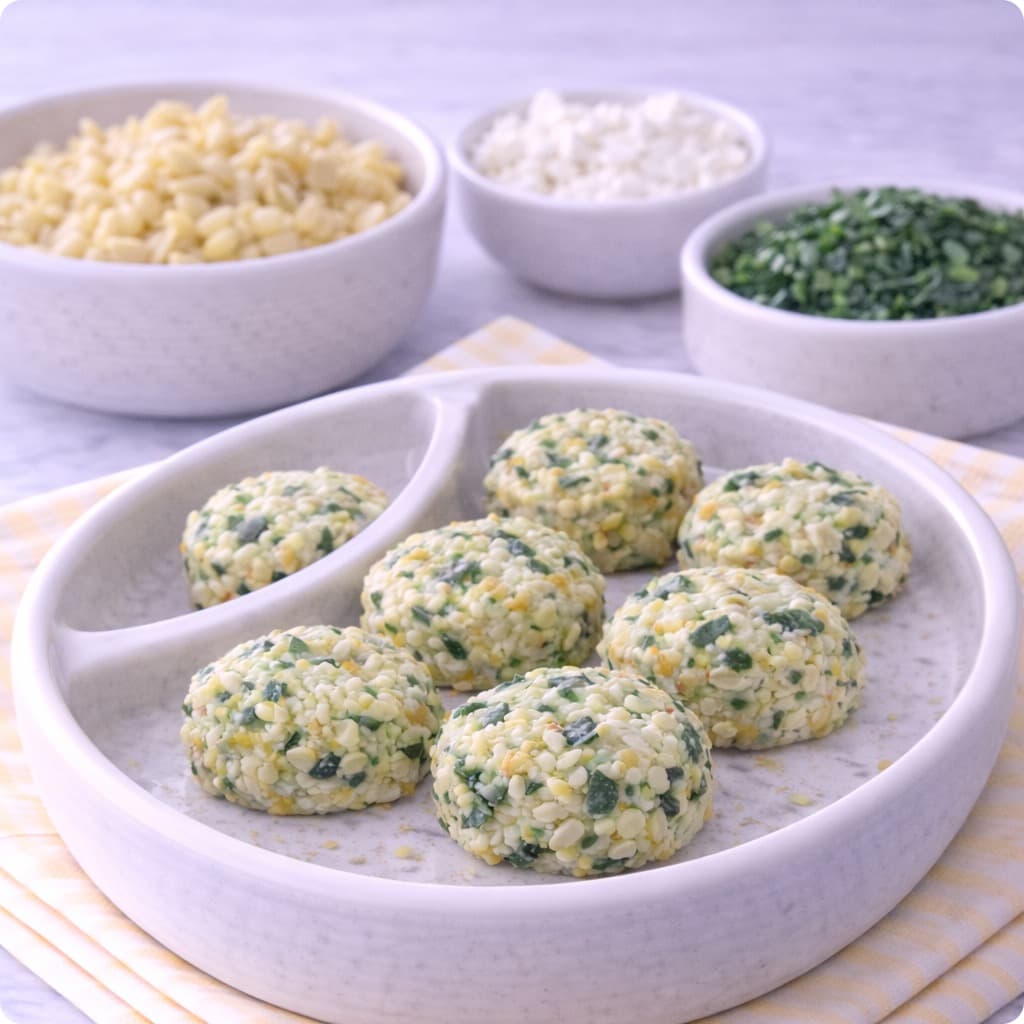
Spinach Ricotta Pasta Bites
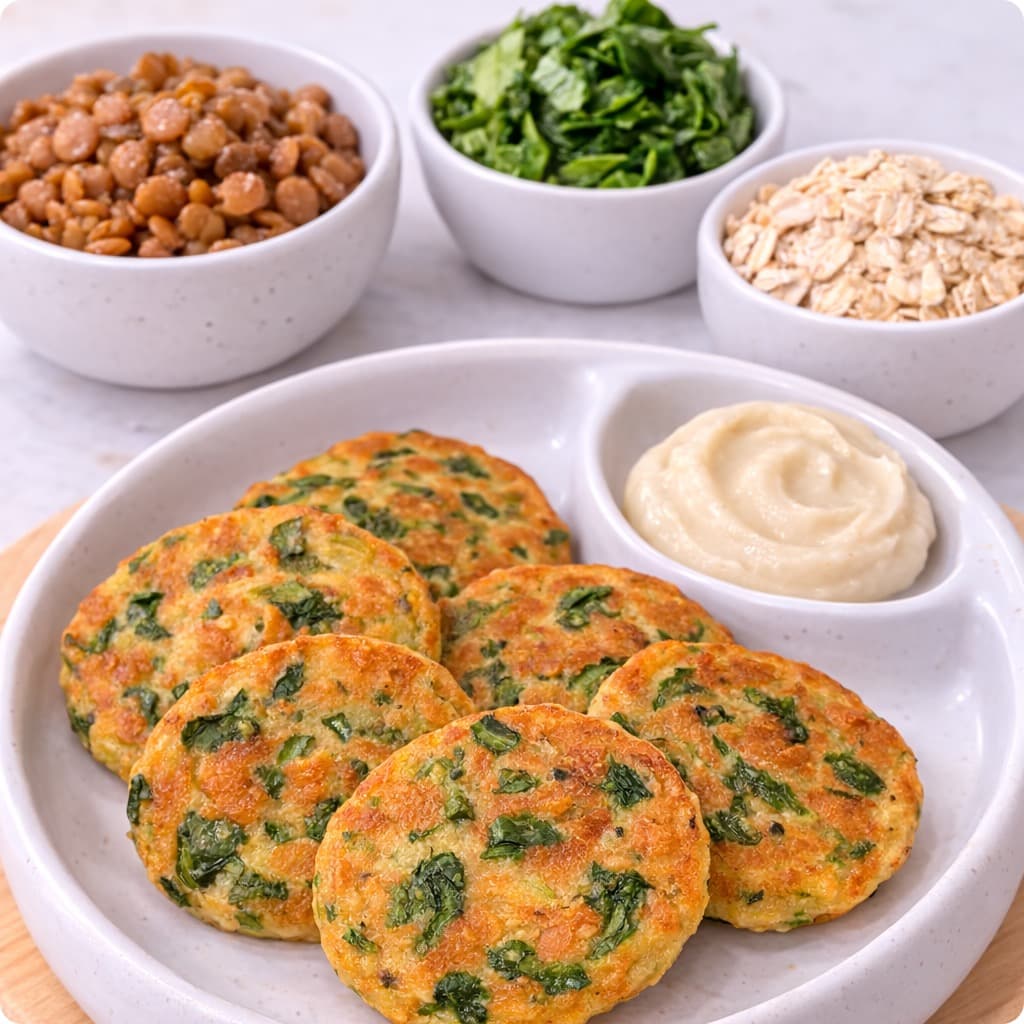
Lentil Spinach Pancakes
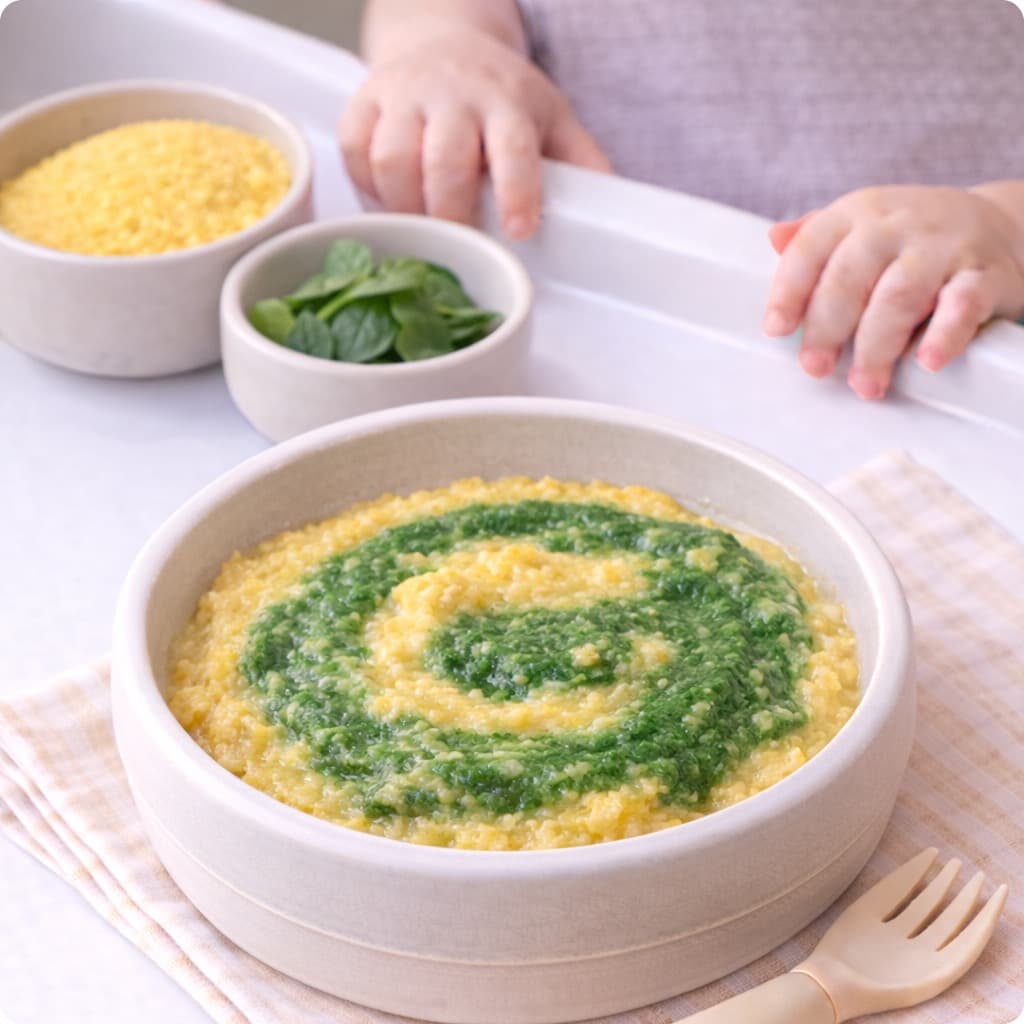
Italian Baby Polenta + Spinach Cream
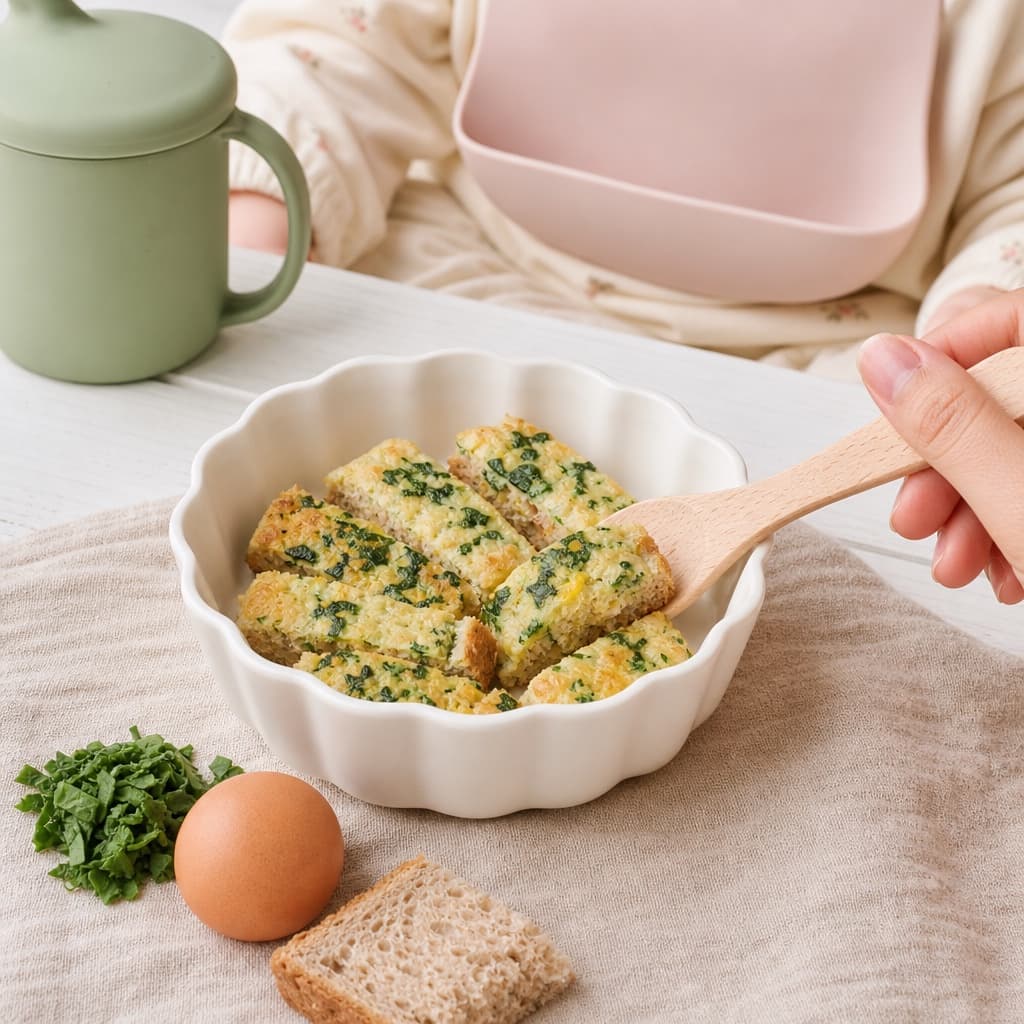
Spinach Egg Toast Bites
Related guides
Frequently asked questions
Can a six-month-old have spinach in the UK?
The NHS includes spinach among vegetables that can be offered from around six months when a baby shows readiness for solids. Serve it cooked and finely prepared, in a manageable texture.
Why does Spain advise against spinach under one year?
Spain's AESAN recommends avoiding spinach and Swiss chard before the first birthday due to nitrate exposure in leafy greens. Use the guidance for the country where you are feeding your baby.
Does AESAN recommend 35 grams of spinach daily?
No. AESAN recommends avoiding spinach and Swiss chard under one year. If these foods are nevertheless included for a child aged 6–12 months, the agency gives 35 grams per day as the combined maximum, not a daily goal.
Can spinach replace iron-fortified cereal or meat?
Not reliably. Spinach contains iron, but it is non-haem iron with limited absorption. Offer a variety of accessible iron-rich foods such as meat, pulses or iron-fortified products, following local guidance.
Are frozen spinach and homemade spinach puree okay?
Where spinach is appropriate under your local infant guidance, cook and prepare it carefully. Cool promptly, refrigerate for use the same day or freeze, and do not hold cooked greens at room temperature.
Why shouldn't I serve whole wilted leaves?
Leaves can mat together and be difficult for a new eater to control. Cook well, finely chop or puree, and mix into a moist food. Keep the child upright and supervised.
What vegetables can I use instead of spinach?
Try vegetables approved in your local infant guidance, such as well-cooked broccoli or cauliflower. Prepare to the baby's skills and include other food groups, especially iron-rich choices.
Sources & References
This guide is informed by current guidelines from leading health organizations:
- ●NHS - Feeding your baby from around 6 months NHS
- ●AESAN - Nitrates in vegetables and child-feeding recommendations Spanish Food Safety Agency (AESAN)
- ●AESAN - Infant leafy-vegetable nitrate recommendations (Spain) Spanish Food Safety Agency (AESAN)
- ●EFSA — Nitrate in Spinach and Leafy Vegetables (2010) European Food Safety Authority
- ●NHS - Storing and reheating baby food NHS
- ●CDC — Choking Hazards (reviewed March 2026) CDC
