How to Serve Spinach for Baby
Last updated October 2026
Spinach needs country-aware guidance. UK NHS includes cooked spinach among first vegetables, while Spanish AESAN recommends avoiding spinach or chard in infant purées under twelve months because of nitrate exposure. Neither rule should be misrepresented as universal.
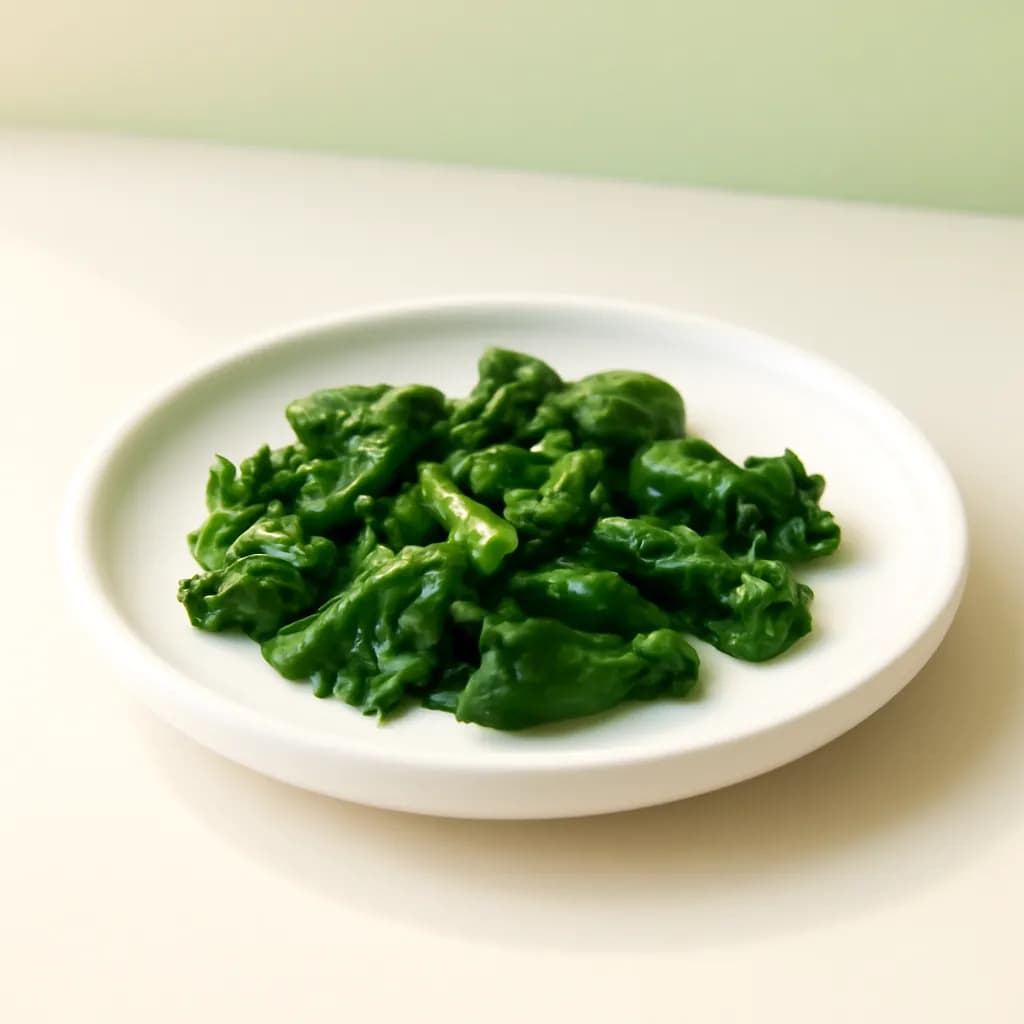
Where official local guidance allows spinach, cook until soft, chop or blend leaves to prevent difficult-to-manage clumps, and serve promptly. Spinach contains non-haem iron but cannot replace varied iron-containing foods.
Quick answer
UK NHS includes cooked spinach once a baby is developmentally ready for solids, usually around six months. Spain's AESAN recommends avoiding spinach and chard under one year; its official brochure also specifies no more than 35 g/day from six to twelve months if they are included despite that recommendation. This is a Spain-specific maximum, NOT a recommended infant portion. Follow local advice and consult a qualified clinician if unsure.
Select Baby's Age
6–8 months
Around six months: check local nitrate advice first
In Spain, follow AESAN's advice to avoid spinach in infant purées under twelve months. Where UK-style guidance allows spinach with solids, use washed, well-cooked leaves blended or finely chopped into a soft moist mash. Remove tough stalks and large clumps. Do not offer raw spinach leaves or keep cooked spinach unrefrigerated. Another soft vegetable is a practical alternative where local guidance differs.
6 month baby feeding schedule for more tips.
9–11 months
Around nine months: prepare soft leaves, not whole clumps
A nine-month birthday does not override Spain's under-one nitrate advice. If spinach is appropriate locally, cook leaves until wilted, chop well and mix into a food the baby can manage. Check any egg, milk or wheat in omelettes and mixed dishes as separate allergens. Avoid spinach during suspected bacterial gastrointestinal infection pending clinical advice. Softness and eating skills matter more than a fixed age.
12+ months
Toddlers: small chopped portions within a varied diet
After one year, follow your country's limits on nitrate-rich vegetables and avoid using spinach as the only leafy green. Serve cooked, chopped spinach in moist, low-salt family meals, checking for tough stems and food allergens. Cool and refrigerate leftovers promptly. EFSA advises against offering spinach during bacterial gastrointestinal infection; ask a clinician about feeding when the child is unwell.
When can babies try spinach?
EFSA notes that nitrate exposure can pose concerns for young children, particularly with large portions, improper storage or bacterial gastrointestinal infections. It advises against serving spinach to children with bacterial gastrointestinal infections.
Cook spinach thoroughly, chop finely and serve in a varied meal if local guidance permits. Cool and refrigerate cooked leftovers promptly; do not keep cooked spinach purée at room temperature.
See our first foods for baby guide for more ideas.
Soft spinach serving ideas where permitted
These are untested serving ideas, only for contexts where local infant guidance permits spinach.
- Chopped cooked spinach mixed into soft mashed potato
- Soft spinach stirred into already tolerated well-cooked egg
- Cooked chopped spinach in creamy low-salt polenta
- Cooked spinach and mashed lentils
Explore our baby-led weaning food list and first foods for baby for more inspiration.
More Cutting Guides
Related Guides
View all feeding guidesFrequently Asked Questions
Can a six-month-old have spinach?
Guidance varies: UK NHS includes cooked spinach among first vegetables, while Spanish AESAN advises avoiding spinach in purées for infants under one. Follow local advice.
Why do nitrates matter in spinach?
Spinach can contain nitrate. EFSA identifies risk scenarios involving high intake, improper storage and bacterial gastrointestinal infections.
Is spinach enough to meet iron requirements?
No. It contains non-haem iron, but iron absorption and meal needs vary. Offer other suitable iron foods as part of a varied diet.
Should cooked spinach purée be refrigerated?
Yes. Cool and refrigerate promptly, following food-safety advice; do not leave it unrefrigerated for long periods.
Sources & References
This guide is informed by current guidelines from leading health organizations:
- ●AESAN - Nitrates in vegetables and child-feeding recommendations Spanish Food Safety Agency (AESAN)
- ●AESAN - Infant leafy-vegetable nitrate recommendations (Spain) Spanish Food Safety Agency (AESAN)
- ●EFSA — Nitrate in Spinach and Leafy Vegetables (2010) European Food Safety Authority
- ●NHS - Your Baby's First Solid Foods NHS
- ●NHS - Preparing Food Safely for Babies NHS