What self-feeding looks like at 6 months
Six-month-olds use a palm grasp: closed fist around the food, biting from the part that pokes out the top. They cannot yet pick up small pieces with thumb and finger - that pincer grasp comes around 8-9 months.
Finger foods at 6 months are about exploration as much as nutrition. Most calories still come from milk; finger foods build oral motor skills, hand-eye coordination, and exposure to flavor and texture.
Best finger foods for 6-month-olds
Avocado spears
Cut a ripe avocado into long, thick spears. The slightly slippery texture is easier with a light coat of breadcrumbs or coconut for grip.
Banana spears
Peel halfway down so the lower peel works as a handle, or cut a thick banana spear lengthwise. Avoid round slices.
Steamed broccoli florets
Tree-shaped florets are nature's finger food. Steam until very soft so the floret crushes between two fingers.
Sweet potato sticks
Roast or steam until very soft. Cut into thick wedges (about 8-10 cm long) so baby can grasp and bite from the top.
Soft pear or peach spears
Use very ripe fruit. Cut into thick spears with skin removed, or steam firmer fruit briefly to soften.
Soft toast strips
Cut bread into long fingers (about 1.5 cm wide), lightly toasted to firm the surface so it doesn't gum up. Top with mashed avocado or hummus.
Steamed carrot batons
Steam thick carrot batons until tender enough to crush easily between fingers. Avoid raw carrot - hard chunks are a top choking hazard.
Soft chicken strips
Slow-cook chicken thigh, then shred along the grain into long, soft strips your baby can grip and gnaw.
Cucumber spears (peeled)
Lightly cooked or chilled (for teething relief). Peel and cut into thick spears - skip the firm peel and seedy core.
Chicken meatball pieces
Make small, soft meatballs and cut in half or quarters - they should crush between fingers without resistance.
What a 6-month BLW meal looks like
- ★A typical BLW meal at 6 months is 2-3 finger foods on a tray, sized as long strips, served alongside breast milk or formula. Example: a banana spear, a sweet potato wedge, and a few broccoli florets. Let your baby explore - they may eat a little, mostly play, or surprise you. Mealtime success at 6 months is exposure, not consumption.
Safety tips for 6-month finger foods
- ✓Always cut into long strips - never round slices, which match a baby's airway.
- ✓Pieces should be palm-sized: about the length of a baby's palm, thick enough to grasp.
- ✓Test soft enough: the food should crush easily between your thumb and finger.
- ✓Sit baby fully upright in a high chair, never reclined or in a car seat.
- ✓Stay within arm's reach and supervise every bite. Learn the difference between gagging (loud, normal) and choking (silent, urgent).
- ✓Avoid choking-shape foods entirely: whole grapes, cherry tomatoes, hot dog rounds, popcorn, whole nuts, hard chunks of raw vegetable or fruit.
When to call your pediatrician
Contact your pediatrician for any sign of an allergic reaction (hives, swelling, vomiting, wheezing), a true choking episode (silent, unable to breathe), or persistent food refusal. Severe symptoms like trouble breathing or sudden lethargy are emergencies - call your local emergency number and consider an infant CPR course.
BLW recipes for 6-month-olds
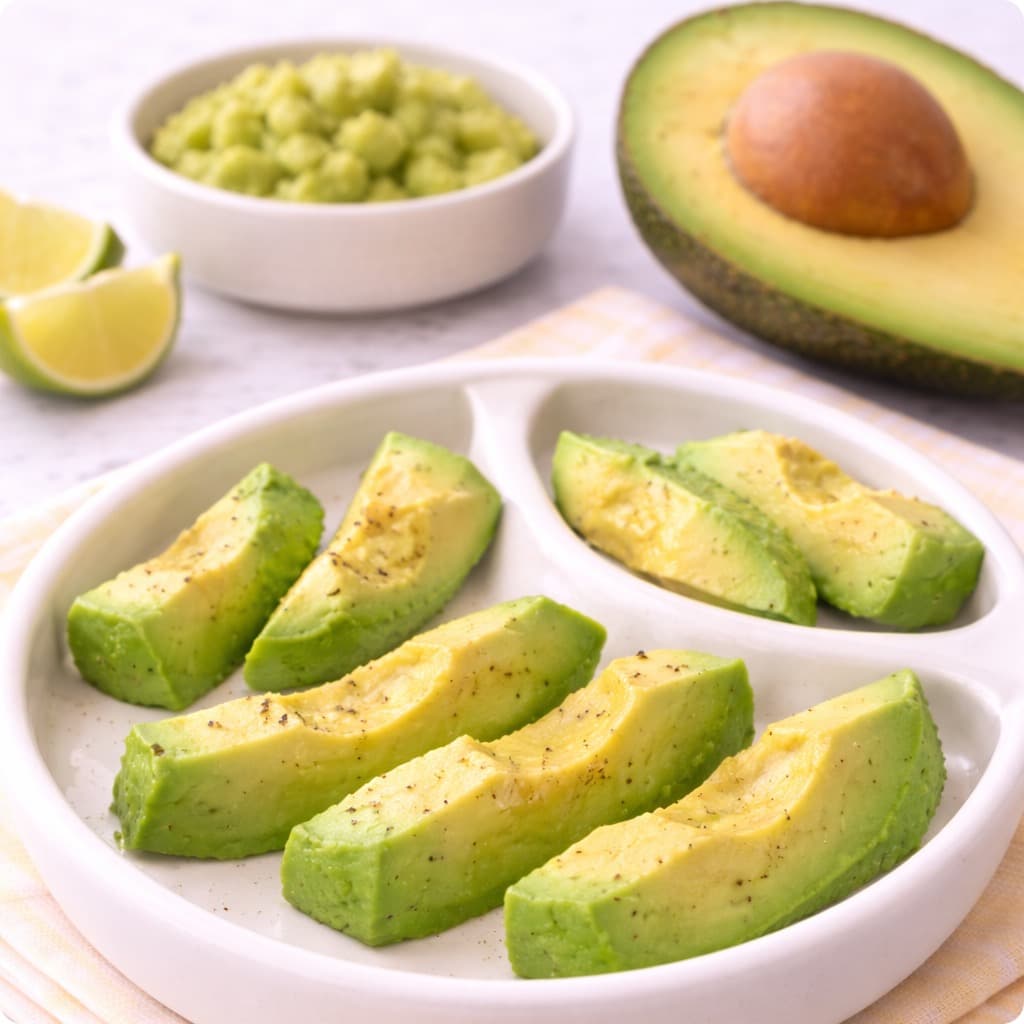
Avocado Wedges
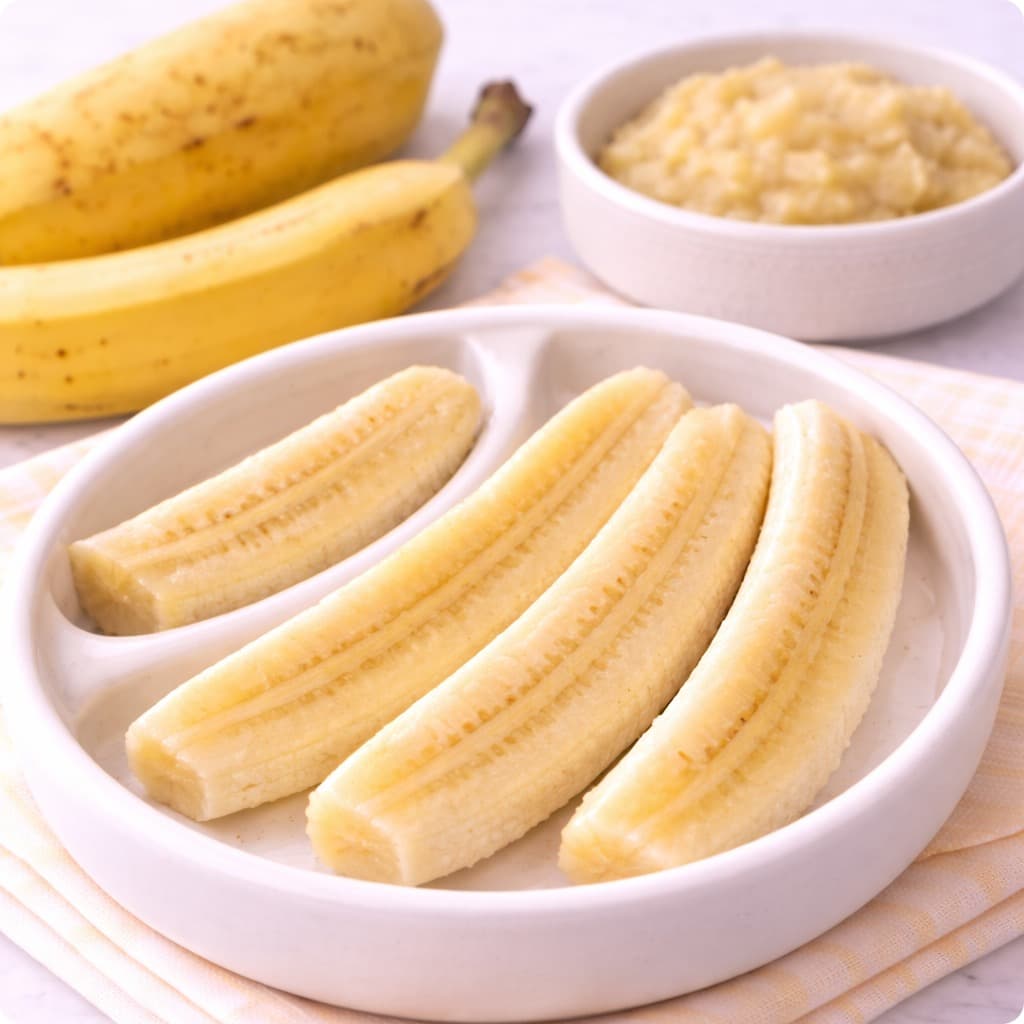
Banana Spears
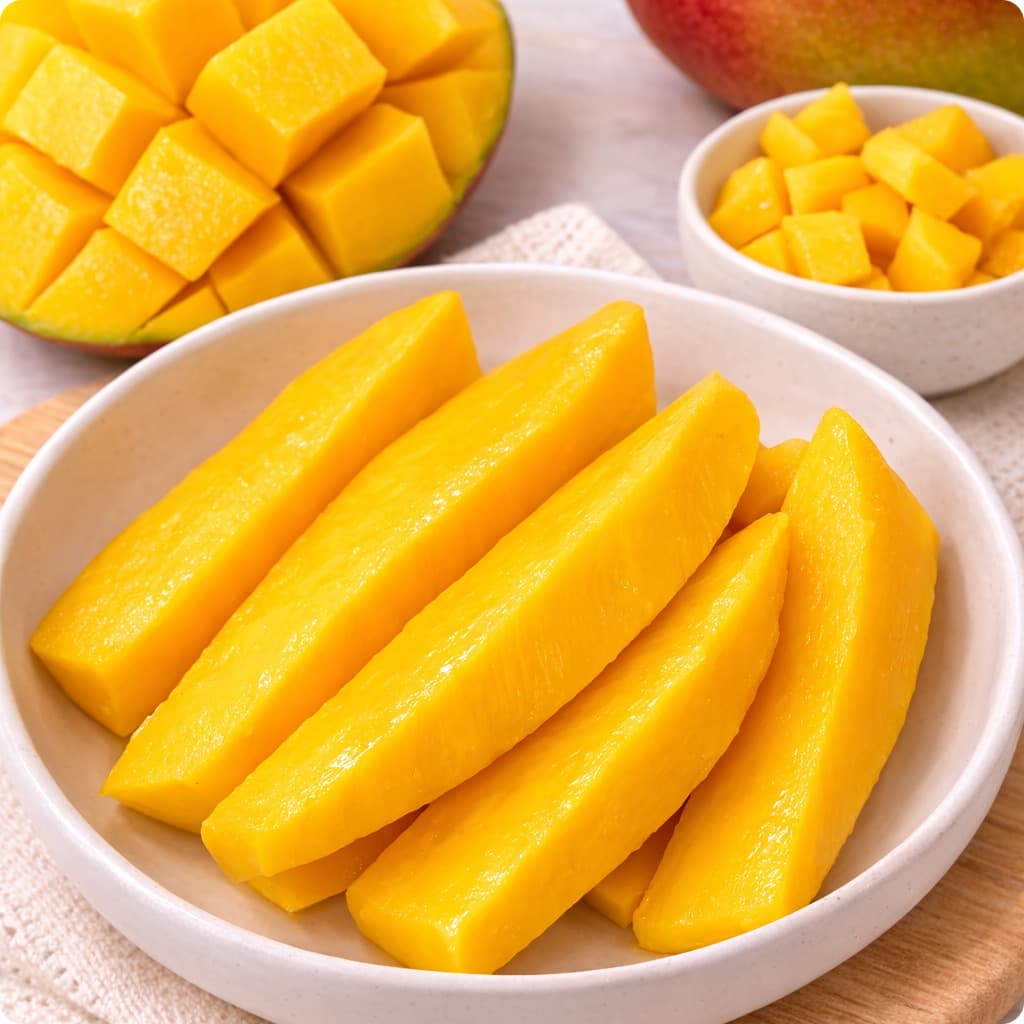
Mango Spears
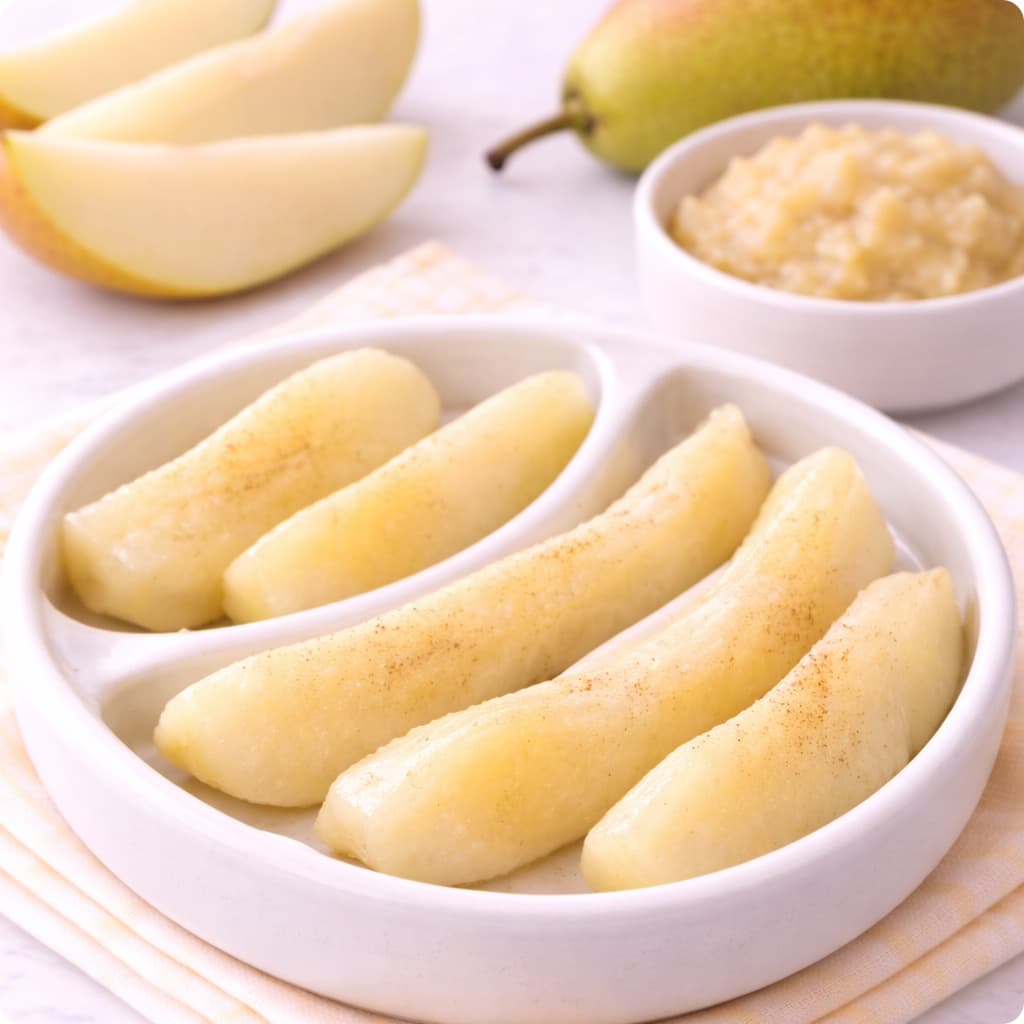
Soft Pear Wedges
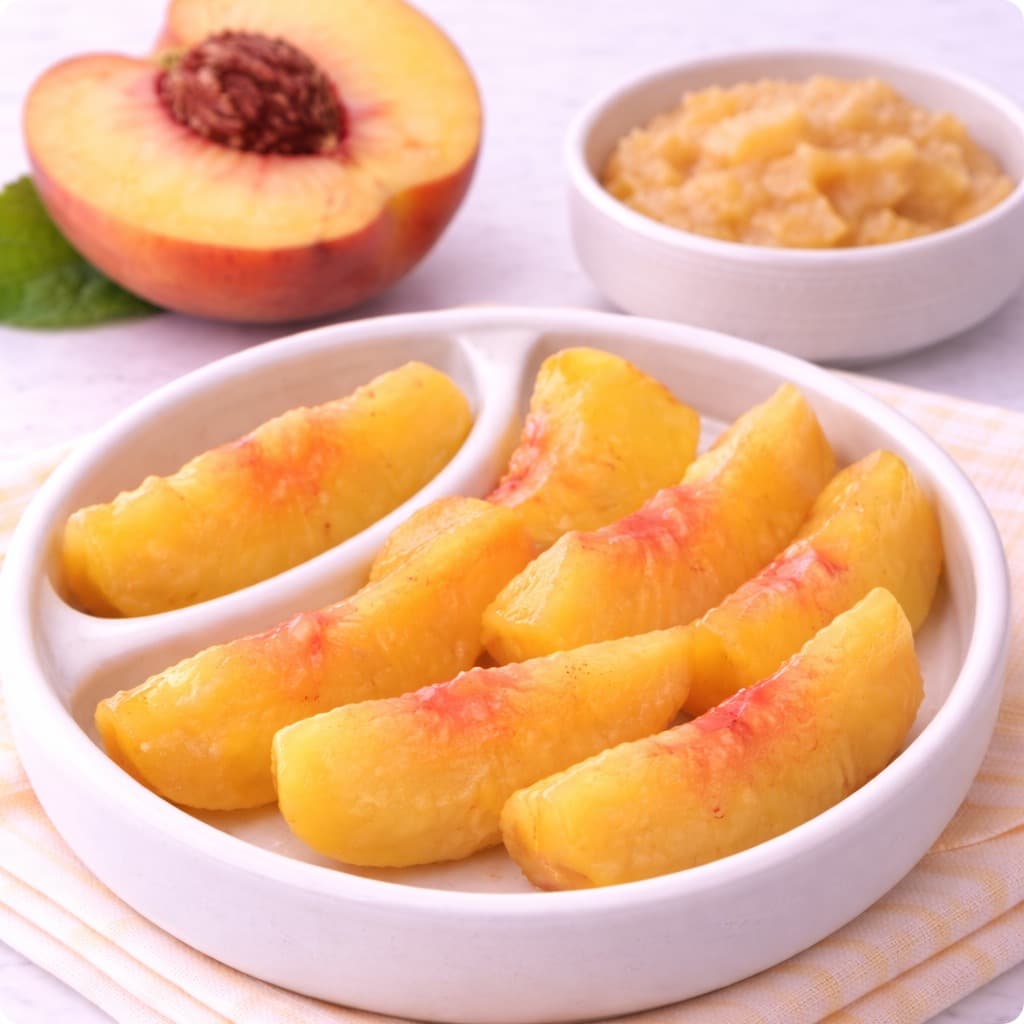
Soft Peach Slices
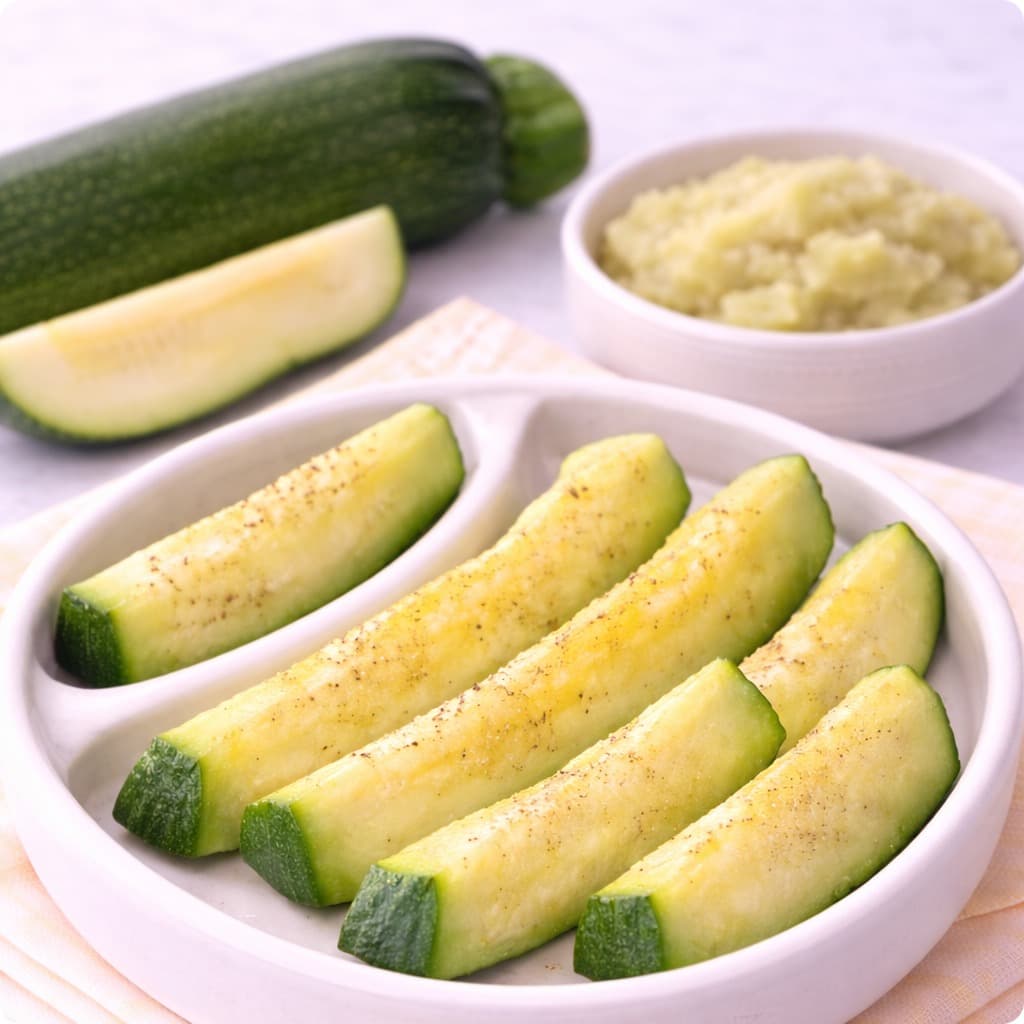
Soft Zucchini Spears
Frequently asked questions
How big should finger foods be for a 6-month-old?
Roughly the length of a baby's palm (about 8-10 cm) and as wide as an adult finger. The food should stick out of a closed fist so your baby can bite from the exposed part. Smaller pea-sized pieces work better once pincer grasp emerges around 8-9 months.
Is baby-led weaning safer than purees?
Both are safe when done correctly. BLW emphasizes self-feeding and may build chewing skills earlier; purees offer more control over volume. Many families combine both. The choking-incident rate is similar between methods when foods are sized appropriately and supervision is constant.
What's the difference between gagging and choking?
Gagging is loud, noisy, and protective - food gets pushed forward. It's normal as babies learn to manage textures. Choking is silent: airway blocked, unable to cough, possibly turning blue. Gagging needs no intervention; choking is a 911-level emergency.
Can my 6-month-old eat finger foods if they have no teeth?
Yes - babies don't need teeth to manage soft finger foods. Gums are very effective on properly cooked food. The food just needs to be soft enough to crush between two fingers.
What if my baby gags every meal?
Gagging is most common in the first few weeks of solids and decreases as babies learn. If it persists or seems severe, consider whether the foods are too small, too dry, or being offered too quickly. A feeding therapist can help if you're concerned.
Should I still offer purees alongside finger foods?
It's totally fine to do both. Many families pre-load a spoon with puree and pass it to baby (baby self-feeds the spoon) while also offering finger foods. There's no rule against mixing approaches.
How do I know if a finger food is soft enough?
Test it on yourself: place a piece between your thumb and forefinger and squash it. If it squashes easily without much pressure, it's soft enough for baby. Anything firmer needs more cooking.
Finger foods + a plan made for your baby
200+ age-matched finger foods with built-in cutting guides, plus a feeding schedule and recipes tailored to your baby's stage.
verifiedSources & References
This guide is informed by current guidelines from leading health organizations: