Pear for Baby
Last updated October 2026
Pears can be offered from around six months once a baby is ready for solids. A fully ripe pear may be soft enough to mash, while a crisp firm pear needs to be cooked or otherwise prepared into a manageable texture.
Quick answer
From around six months with signs of readiness for solids, offer peeled or washed pear prepared to a texture the baby can manage.

How to prepare pear for babies
Wash the pear, remove the stalk, seeds and entire firm core, then check the flesh with a fork. For a very young eater, remove tough peel if it does not mash readily.
If the fruit is firm, cook it by steaming or poaching until completely soft; allow it to cool before serving.
For a first spoon-fed meal, mash or blend the soft flesh. For self-feeding, use a manageable soft piece that breaks down easily rather than trusting a fixed spear or slice length.
As grasp and chewing develop, offer small soft pieces in porridge or a family meal. Reassess every pear: firm Asian pears are a very different texture from ripe European pears.
The right shape and size depend on your baby's eating skills, not on age alone. Step-by-step preparation: How to cut fruit for BLW
Also check how to cut food for baby-led weaning for general BLW cutting tips.
When can babies eat pear?
Press the flesh with a fork. If a firm pear resists, steam, simmer or bake it until tender, then let it cool and check the centre for hardness.
Pear is not on the commonly named major-allergen list, but individual reactions are possible. A food-associated rash should not be dismissed without considering symptoms.
The core and seeds should be removed before serving. For early eaters, a soft mash or purée can be simpler than a slippery wedge. Test the actual fruit rather than treating all pears as equally tender.
Pear contains fibre and water, but is not a guaranteed constipation treatment. Include it as one of several fruits and pair meals with iron-containing foods.
See our first foods for baby guide for more ideas.
Pear safety checks
Do not give hard raw pear chunks to a beginning eater; cook until mashably soft if firm.
Remove the whole core, hard seeds and any tough peel that is difficult to chew.
An age-based wedge size is not a reliable choking-safety guarantee.
Small firm fruit cubes are not automatically safer; preparation depends on the actual texture and the child's skills.
Fibre-containing fruit does not replace medical assessment for persistent constipation or blood in stools.
Seat and supervise your baby throughout meals.
Pear recipes for babies
View all recipes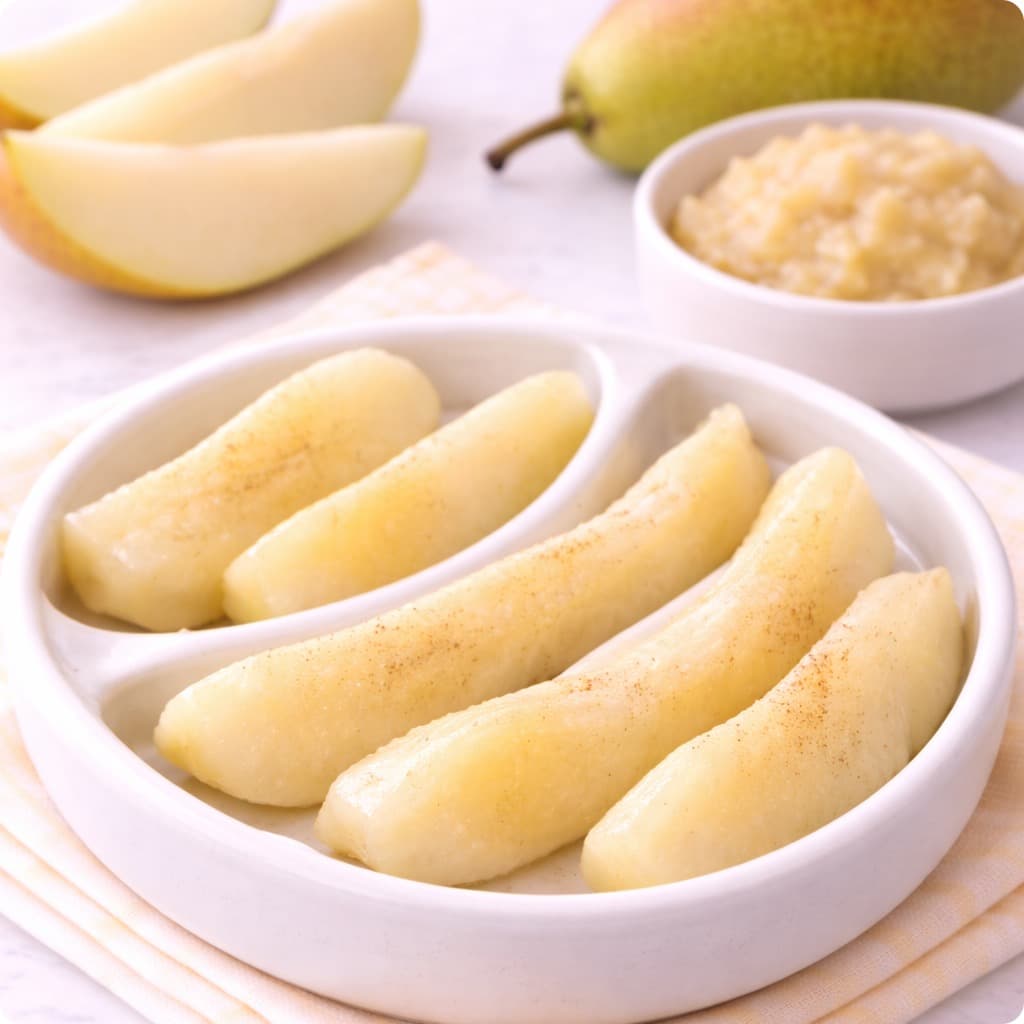
Soft Pear Wedges
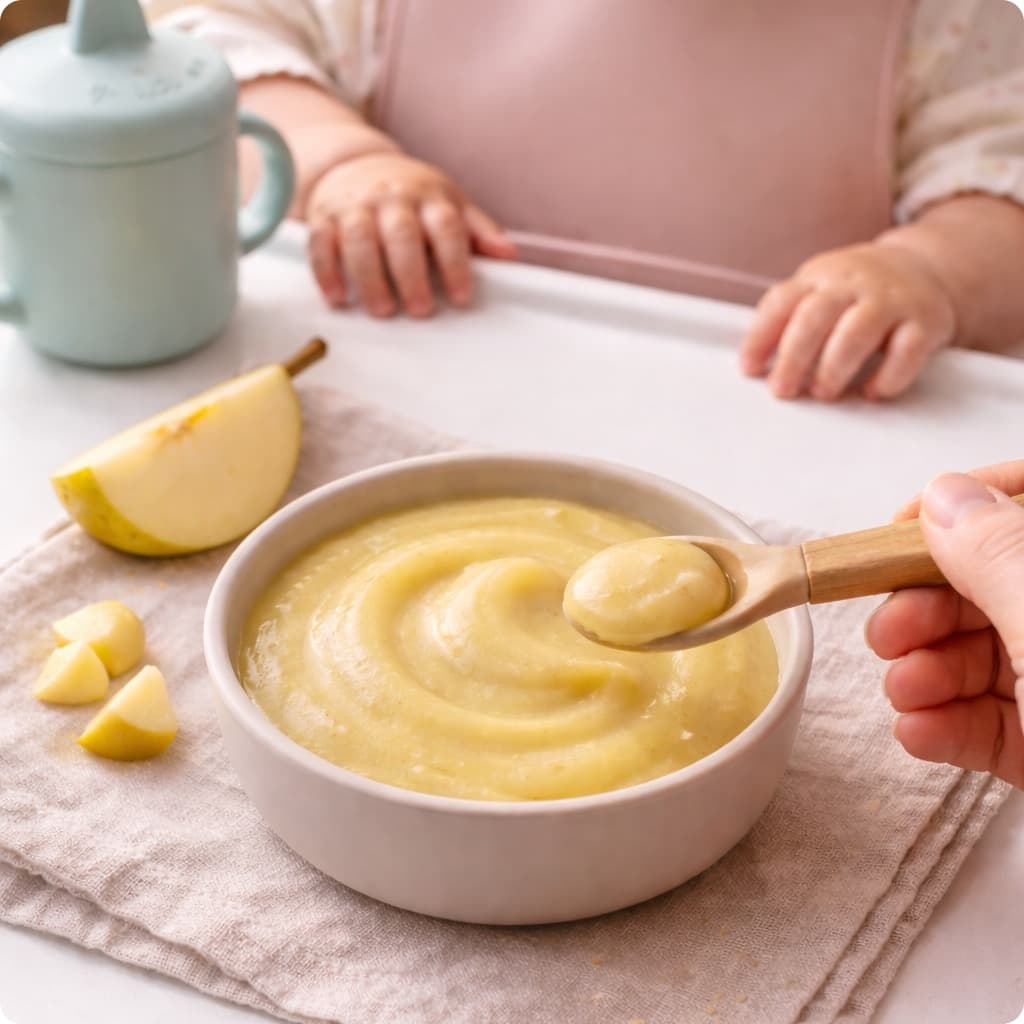
Pear Purée
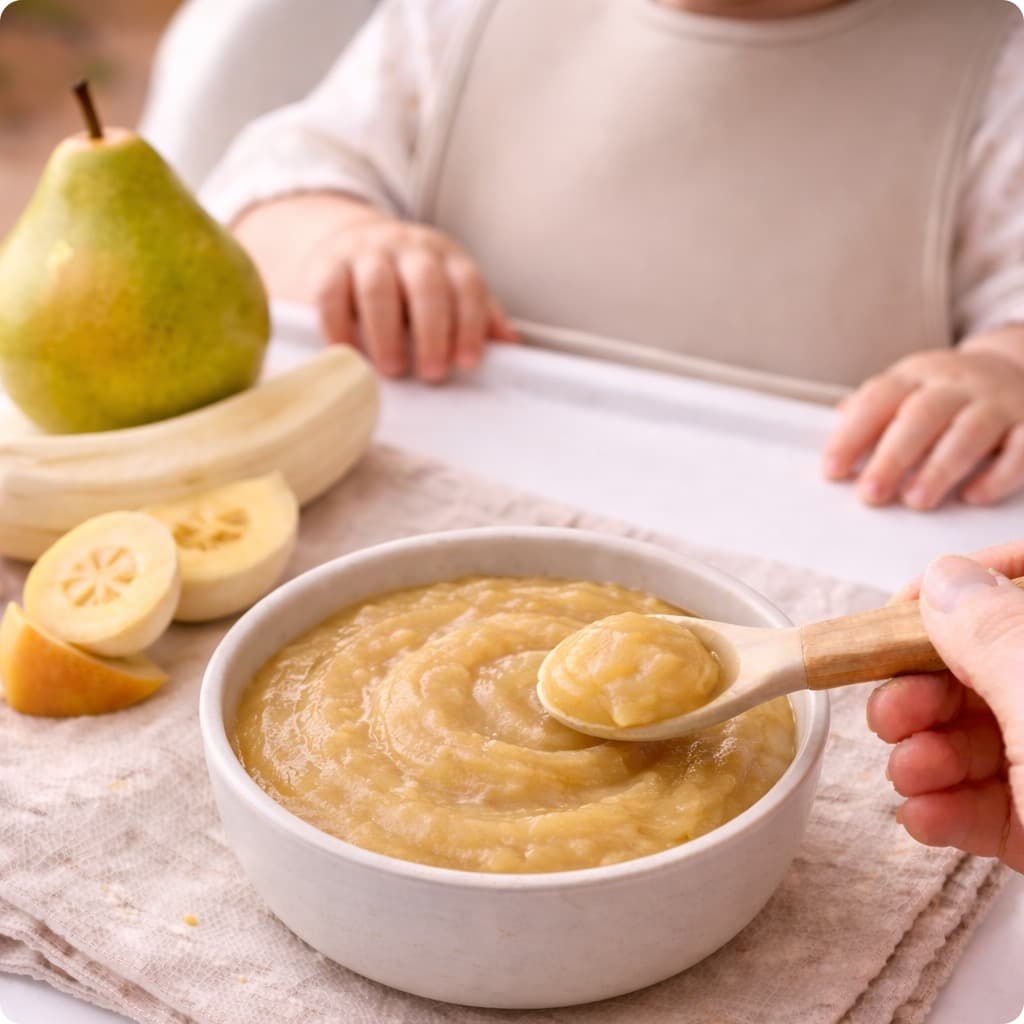
Pear & Banana Mash
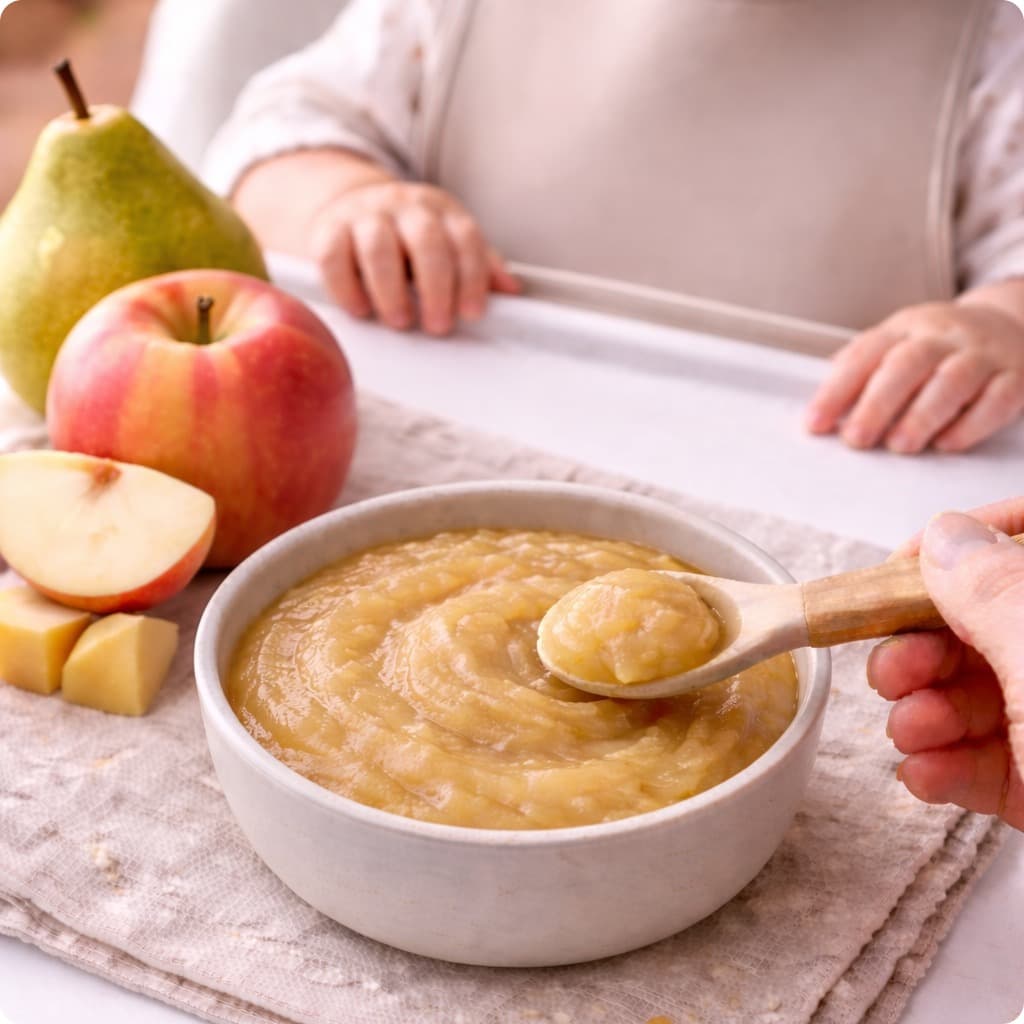
Apple & Pear Mash

Pear Barley Porridge
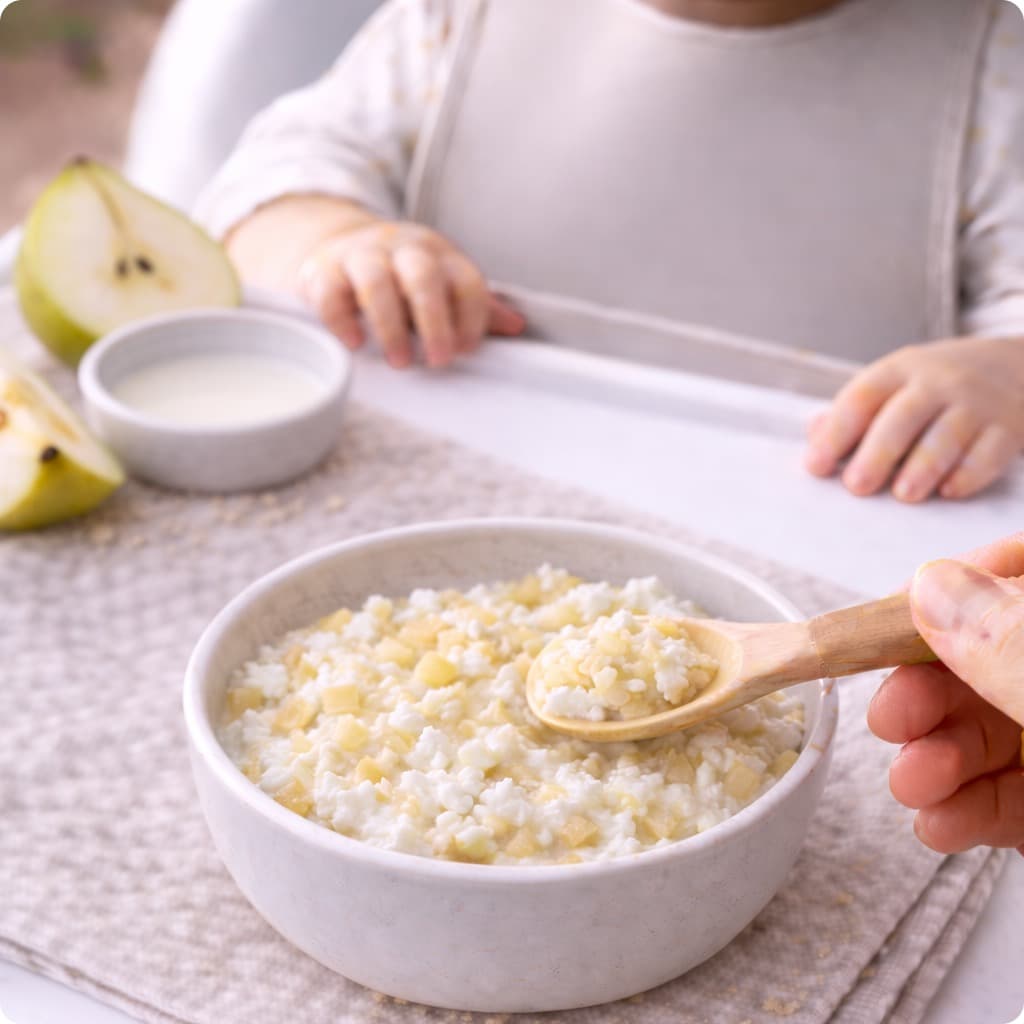
Cottage Cheese & Pear Mash
See all pear recipes for babies. Explore baby breakfast recipes, baby-led weaning recipes and first foods for baby for more ideas.
Related Guides
Frequently Asked Questions
Is Pear a common allergen?
Some babies may be allergic to Pear. Introduce Pear carefully when babies start solids and watch for reactions.
What nutrients does Pear provide for babies?
Pear provides nutrients like potassium, fibre, vitamin C, iron that support babies' growth and development.
Sources & References
This guide is informed by current guidelines from leading health organizations:
- ●NHS - Your Baby's First Solid Foods NHS
- ●NHS - Preparing Food Safely for Babies NHS
- ●CDC — Choking Hazards (reviewed March 2026) CDC
- ●CDC - When, What, and How to Introduce Solid Foods CDC
